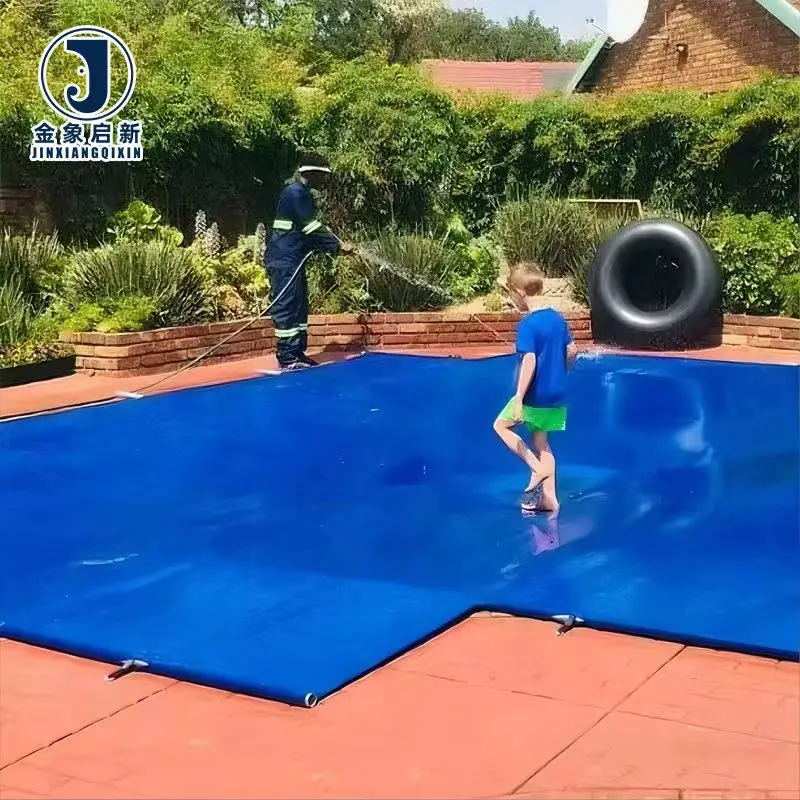
Hot-Melt Coating Control — Laminated PVC construction with verified coating weight and adhesion, tested at every production stage before dispatch.
Technical Specifications
| Parameter | Value |
|---|---|
| Product Type | PVC Coated Tarpaulin |
| Material | PVC + High-strength polyester mesh fabric |
| Coating Technology | Laminated Technology & Hot-melt Coating Technology |
| Weight Options | 350gsm / 420gsm / 500gsm / 550gsm / 600gsm / 750gsm |
| Thickness Options | 0.32mm / 0.35mm / 0.4mm / 0.45mm / 0.5mm / 0.65mm |
| Roll Width | 2m / 2.1m |
| Roll Length | 75m (2m width) / 50m (2.1m width) |
| Finish Product Size | Custom cut-to-size or sold by inventory |
| Colour Options | Blue / Red / Yellow / Light blue / Grey (custom colours available) |
| Key Features | Waterproof, sunproof, cold crack resistance, anti-mildew, best color fastness, outstanding tearing strength for welding |
| Special Treatments | Flame retardant, anti-static, anti-cold, anti-mildew, 3P — confirm the grade required for your market |
| Certifications | ISO, CE |
Application Suitability
| Application | Exposure & Requirement |
|---|---|
| Truck side curtain | Constant flexing at load points, road spray abrasion, tie-down tension on eyelets and hems |
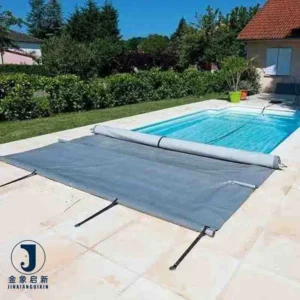
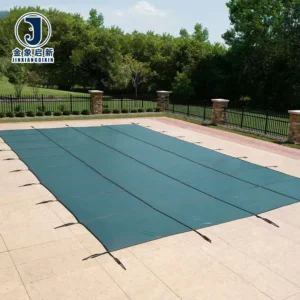
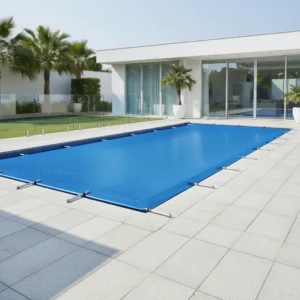
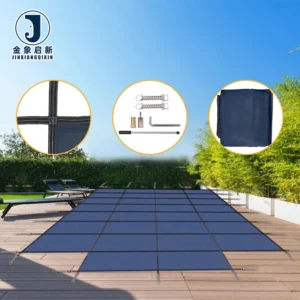
| Swimming pool cover | Prolonged UV exposure, standing water contact, chemical splash from pool treatment |
| Cargo ship cover | Salt-laden atmosphere, mechanical abrasion during loading, high wind uplift forces |
| Truck awning | Repeated deployment and retraction, sun exposure, wind loading at attachment points |
| Fish tank and reservoir cover | Continuous water immersion, algae and mildew growth, puncture from debris |
Why Coated Fabric Fails at the Weld Line on Fleet Covers
A truck or trailer cover lives and dies at the seam — yet most PVC tarpaulin failures reported by fleet operators start where two panels are joined, not in the body of the fabric itself. The adhesion between coating layers and the base fabric determines whether a welded seam holds under road vibration and load flex.
When laminated and hot-melt coating technology is applied correctly, the PVC penetrates the high-strength polyester mesh rather than sitting on top of it, creating a mechanical bond that survives repeated flex cycles [NEED_CITE: tensile and tear test methods for coated fabrics per ISO 1421]. A PVC pool cover tarpaulin that fails at the weld within the first season is typically a symptom of insufficient coating penetration or inconsistent heat during fabrication, not a defect in the base yarn. Fleet operators replacing side curtains twice a year are often paying for a coating process that was never designed for dynamic loading.
How Laminated Construction Survives Road Flex Cycles
Hot-melt lamination bonds the PVC layers through the high-strength polyester mesh fabric rather than relying on surface adhesion alone. This means the tear resistance at a welded seam depends on the yarn structure itself, not just the coating thickness. For transport applications where a PVC pool cover tarpaulin is cut, joined and tensioned over a trailer frame, the tearing strength for welding becomes the critical specification — more so than the face weight of the coating. Operators running long-haul routes with high vibration will see the difference at the hem and eyelet line first.
Matching GSM Grade to Vehicle Type and Route Exposure
The available weight range from 350gsm to 750gsm covers everything from light urban delivery curtains to heavy-duty intercity trailer covers. Thinner grades suit applications where weight savings and flexibility matter — roll-up awnings or short-haul side curtains that deploy multiple times daily. Heavier grades handle the sustained tension and abrasion of long-distance transport where the fabric is under constant load [NEED_CITE: DIN 4102 fire classification for building materials]. Selecting the right GSM grade for a PVC pool cover tarpaulin requires matching the vehicle type, route exposure and tension method rather than defaulting to the heaviest option available.
Reading the Specification Sheet Beyond Face Weight
Coating technology and base fabric density interact to produce the final tensile and tear performance. A 500gsm laminated fabric with a high-denier, tightly woven polyester base can outperform a 650gsm product built on a loosely woven, low-denier mesh — because the yarn carries the load while the coating transfers stress between yarns. Laminated and hot-melt coating delivers higher peel strength between layers compared to simple knife-over-roll application, which directly affects how well the material welds and how long the weld holds. Thickness values from 0.32mm to 0.65mm across the range reflect different ratios of coating to base fabric, not simply more or less material. Operators specifying by thickness alone may end up with a heavy coating on a weak base — a combination that looks substantial on a sample card but tears at the first flex point.
The Cost of Specifying on Price Per Square Metre Alone
When a cover arrives lighter than quoted, the shortfall is rarely noticed until the first weld fails or the eyelet pulls through at a tie-down point. Colour variation between rolls becomes visible only after the panels are installed side by side on a trailer — by which point the entire cover is already tensioned and cutting replacement panels means re-doing the whole job. Flame retardant treatments claimed without a supporting test report surface as a compliance problem only when a depot safety audit requests documentation [NEED_CITE: anti-static and flame retardant testing standards for transport textiles]. These failures are invisible at the quotation stage and expensive at the installation stage.
Why Fabrication-Ready Rolls Matter for Fleet Procurement
Three full production lines and 36 sets of professional equipment support bulk roll output with consistent coating weight across every metre — critical when a fleet operator orders multiple rolls for a standardised trailer curtain programme. A 10-person R&D team handles sample development within days, allowing you to confirm colour match, weld behaviour and fit before committing to a production run. Dedicated QA/QC runs at every production stage with full inspection before shipment, so the GSM stated on the quotation is the GSM that arrives on the dock. Custom width, length and colour are handled in-house without outsourcing to a second converter. Pre-shipment inspection records accompany every dispatch.
Documentation & Verification
- Material specification sheet confirming exact GSM, base fabric and coating weight for each roll
- UV and flame retardant test reports supplied for treated grades — confirm grade required
- Pre-shipment inspection record verifying weight, colour and dimensions before dispatch
- Roll packing list with net weight, gross weight and roll count per pallet
- Certificate of origin and customs documentation for international shipments
- Welding parameter guidance matched to the coating technology and GSM grade supplied
Fabrication, Handling & Storage
- Set hot-melt welding temperature to match the laminated PVC coating grade — test on offcuts before production runs
- Reinforce eyelet and hem zones with additional PVC strip layers to distribute tie-down load across the polyester mesh
- Store rolls upright on pallets in shaded, ventilated areas to prevent flat spots and edge deformation on the 2m or 2.1m width
- Allow cold-stored rolls to acclimatise before unrolling to prevent cracking of the anti-cold treated surface
- Use mild detergent and soft brush for cleaning — avoid solvent-based products that attack the PVC coating bond
- Plan panel layout from the 75m or 50m roll length to minimise transverse welds across high-flex zones
What to Include in Your Enquiry
To receive an accurate specification recommendation, provide the vehicle model or pool dimensions, the route or exposure conditions the cover will face, and the GSM grade or thickness you are currently using. If your market requires specific flame retardant or anti-static compliance, state the standard you need met. Indicate whether you need full rolls or finished cut-to-size panels with hems and eyelets, and whether colour matching across multiple rolls is required for your fleet or project.
Frequently Asked Questions
Q: How is GSM verified on arrival and what documentation confirms the weight grade I ordered?
A: Every roll undergoes dedicated QA/QC at each production stage with full pre-shipment inspection. You receive a material specification sheet stating the exact GSM, base fabric type and coating weight, plus a pre-shipment inspection record. Weigh-checking on arrival should match the stated grade within normal coating tolerances.
Q: Can the pool cover be cut to fit a specific trailer model, and how are hems reinforced?
A: Yes — finished product sizes are custom cut to your vehicle model or pool dimensions. The high-strength polyester mesh base provides outstanding tearing strength for welding, and hems can be reinforced with additional PVC strip layers. Eyelet spacing is matched to your tie-down configuration.
Q: What flame retardant and anti-static test reports are supplied?
A: Flame retardant and anti-static treatments are available as special options — confirm the grade required for your market and application. Where applicable, test reports are provided with dispatch documentation. State your compliance standard in the enquiry so the correct treatment is specified from the start.
Q: How do you control colour consistency across multiple rolls in one order?
A: Colour consistency is managed through in-process coating weight control and pigment batching across the production run. The laminated and hot-melt coating process supports stable colour delivery roll to roll. Samples are developed within days so you can approve the shade before full production begins.
Q: What UV treatment documentation is available for outdoor fleet and pool cover use?
A: Anti-UV treatment is available across the PVC pool cover tarpaulin range — confirm the specific UV grade required for your exposure conditions. Test reports supporting the stated treatment level are supplied where applicable, along with the material specification sheet detailing all treatments applied to your order.