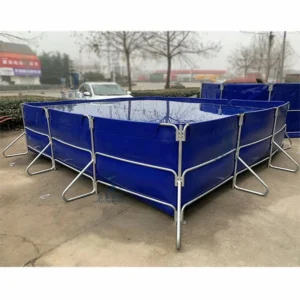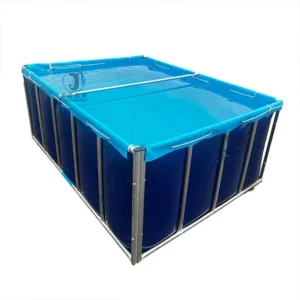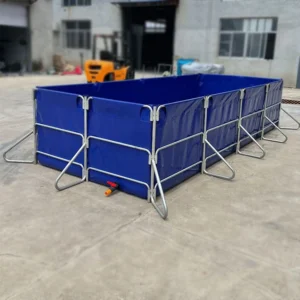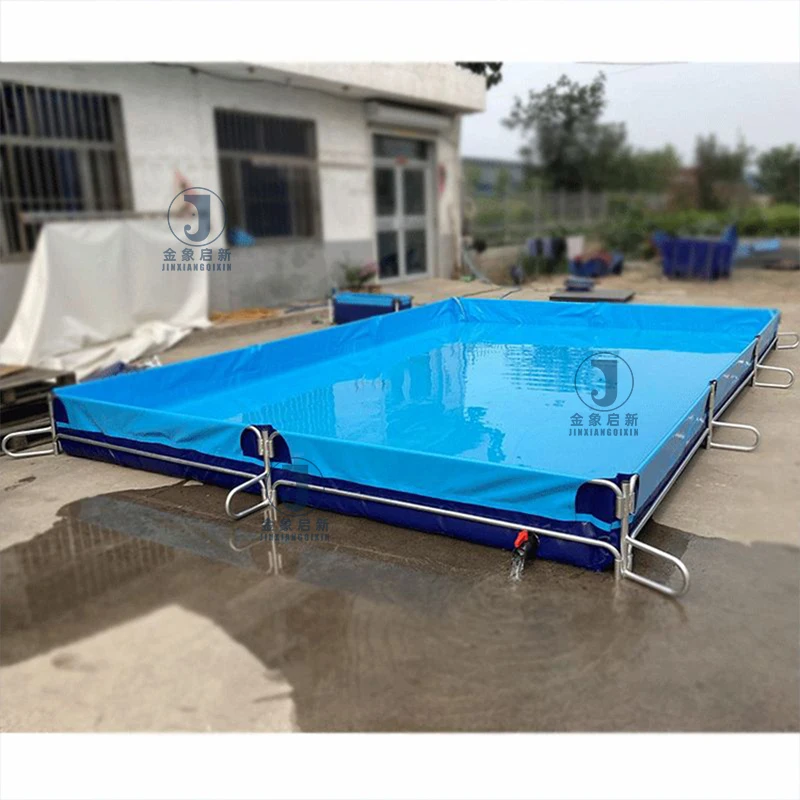
Coating Process Mastery — Every PVC Coated Tarpaulin Roll produced on our lines carries a measured coating weight verified before dispatch, not a nominal GSM printed on the label.
Technical Specifications
| Parameter | Value |
|---|---|
| Product Type | PVC Coated Tarpaulin |
| Base Fabric | High-strength polyester mesh fabric |
| Coating Material | PVC |
| Weight Options | 350gsm / 420gsm / 500gsm / 550gsm / 600gsm / 750gsm |
| Thickness Options | 0.32mm / 0.35mm / 0.4mm / 0.45mm / 0.5mm / 0.65mm |
| Coating Technology | Laminated technology / Hot-melt coating technology |
| Roll Width | 2m / 2.1m |
| Roll Length | 75m (2m width) / 50m (2.1m width) |
| Color Options | Blue / Red / Yellow / Light blue / Grey (Customized) |
| Waterproof | Stated |
| Anti-Mildew | Stated |
| Cold Crack Resistance | Stated |
| Flame Retardant | Available as special treatment (grade not stated — confirm requirement) |
| Anti-Static | Available as special treatment (standard not stated — confirm requirement) |
| Sunproof | Stated (test basis not stated) |
| Color Fastness | Stated (test basis not stated) |
| Adhesion Strength | Stated — good flexibility and adhesion strength |
| Standards | ISO, CE (per company profile) |
Application Suitability
| Application | Exposure & Requirement |
|---|---|
| Fish pond lining | Permanent water immersion, soil chemistry contact, puncture risk from substrate |
| Fish tank fabrication | Contained water load, welded seam integrity, long-term hydrolysis resistance |
| Agricultural reservoir covers | UV exposure, wind load, seasonal temperature fluctuation |
| Portable hatchery tanks | Repeated assembly and tear-down, flex fatigue at fold lines |
Why Coating Weight Verification Matters More Than the Quoted GSM
A stated GSM on paper does not guarantee the coating weight on the roll you receive.
Buyers ordering PVC tarpaulin fish pond liner aftermarket supplier grade fabric often find the material lighter than the quotation suggested, especially when the supplier sources from trading channels without in-process measurement. Coating weight directly influences puncture resistance during installation over uneven pond beds and determines how well the fabric holds a welded seam under continuous water pressure. [NEED_CITE: tensile and tear test methods for coated fabrics per ISO 1421]. When a pond liner is lighter than specified, the polyester base fabric carries a disproportionate share of mechanical stress, accelerating yarn fatigue at flex points near the water line.
Coating Adhesion and Pond Liner Longevity
The hot-melt coating technology used on these PVC coated tarpaulin rolls creates a bond between the PVC layers and the high-strength polyester mesh that resists delamination under prolonged water immersion. Laminated technology provides an alternative construction where coating films are bonded to the base fabric under heat and pressure. Both methods must deliver consistent adhesion across the full roll width — any weak zone becomes a failure origin once the liner is filled and the hydrostatic load presses the fabric against the pond substrate.
Roll Consistency Across Multi-Pond Installations
Commercial aquaculture operations frequently install multiple ponds side by side, meaning colour variation between rolls becomes immediately visible once the liners are in place and filled. Batch-to-batch colour consistency is a production control discipline, not a post-production sorting exercise. [NEED_CITE: coating weight and colour consistency standards for PVC coated fabrics]. Ordering the full roll quantity for a project in a single production run reduces the risk of shade variation and ensures all rolls share the same coating batch chemistry.
Understanding the Weight-to-Thickness Relationship
The six available GSM grades each correspond to a specific total thickness, from 350gsm at 0.32mm up to 750gsm at 0.65mm. This relationship matters because thickness alone does not determine puncture resistance — the denier and weave density of the polyester base fabric contribute equally. A heavier coating adds surface protection against abrasion from pond substrates, while a denser base fabric resists tear propagation if the liner is snagged during installation or maintenance. Selecting the right grade depends on pond depth, substrate type, and whether the liner will be covered with a protective geotextile layer.
The Cost of Specifying the Wrong Grade
Ordering a lighter GSM grade to reduce material cost creates downstream expenses that outweigh the initial savings. A liner that is too thin for the pond depth may puncture under hydrostatic pressure against sharp substrate features, requiring partial or full replacement. [NEED_CITE: common failure modes in aquaculture pond liners related to material specification]. Rolls that arrive with inconsistent coating weight across their width create weak zones that fail prematurely, and replacing a single panel in a welded liner means draining the pond, cutting out the defective section, and heat-welding a patch under conditions that rarely match factory quality.
Production Control That Supports Aquaculture Buyers
The coating lines maintain measured coating weight throughout each production run, with in-process QA checking adhesion and thickness at intervals. A dedicated 10-person R&D team develops samples within days when a specific GSM, colour, or treatment combination is needed for a new pond design. Pre-shipment inspection covers every roll, verifying that the coating weight matches the specification sheet before the material leaves the facility. Custom widths and cut sizes are fabricated to match pond geometry rather than forcing the installer to work from generic roll dimensions.
Documentation & Verification
- Material specification sheet stating base fabric type, coating weight, and GSM for each roll
- Pre-shipment inspection record with measured GSM verification against the quoted value
- Test report for flame retardant or anti-static treatments where applicable grades are specified
- Roll packing list with individual roll identification for traceability
- Certificate of origin and customs documentation for international shipments
Fabrication, Handling & Storage
- Heat-weld seams using temperature and dwell settings matched to the specific GSM and coating technology of the roll
- Store rolls horizontally on padded racks to prevent creasing that weakens the PVC coating layer
- Unroll in ambient temperatures above the cold crack threshold to avoid surface micro-cracking during handling
- Cut pond liner panels with allowance for welded seam overlap based on the fabric thickness selected
- Clean installed liners with non-solvent detergents compatible with PVC coating surfaces to preserve anti-mildew treatment
- Reinforce tie-down and anchor points at pond edges with additional PVC patches welded over the base fabric
What We Need to Quote Your Pond Liner Project
Provide the pond dimensions, water depth, and substrate type so we can recommend the appropriate GSM grade and coating technology. If your market requires specific fire classification or anti-static certification for the liner material, state the standard so we can confirm the available treatment grade. Let us know whether you need full rolls for your own fabrication or cut-to-size panels with welded seams ready for installation.
Frequently Asked Questions
Q: How do I verify the GSM matches what was quoted when the rolls arrive?
A: We provide a pre-shipment inspection record with measured coating weight for each roll. On receipt, you can cut a sample of known area from the roll edge and weigh it on a calibrated scale to confirm the GSM matches the documentation. Any discrepancy should be reported immediately with photos of the roll label and the test sample.
Q: Can you fabricate fish tank liners to my exact pond dimensions instead of selling standard roll stock?
A: Yes. We fabricate cut-to-size panels and fully welded liners based on your pond geometry drawings. The fabrication team works from the same roll batch to ensure colour consistency across all panels. Welded seam specifications are documented and included in the pre-shipment inspection record for your review before dispatch.
Q: What special treatments are recommended for long-term water immersion in fish ponds?
A: Anti-mildew treatment is standard on these PVC coated tarpaulin rolls and is important for submerged service. Cold crack resistance ensures the coating remains flexible during seasonal temperature drops. If your installation requires flame retardant or anti-static properties, confirm the specific grade your local regulations mandate so we can match the treatment accordingly.
Q: How do welded seams compare to stitched seams for pond liner durability?
A: Heat-welded seams fuse the PVC coating layers together, creating a joint that is continuous and waterproof across the bond line. Stitched seams introduce needle holes that penetrate the coating and base fabric, creating potential leak paths under hydrostatic pressure. For containment applications, welded construction is the standard approach for long-term water holding integrity.
Q: What documentation is provided to confirm material specifications and certifications?
A: Each shipment includes a material specification sheet stating GSM, base fabric, coating type, and colour reference. Pre-shipment inspection records verify coating weight per roll. ISO and CE certificates are available for the manufacturing facility. Where flame retardant or anti-static treatments are specified, the corresponding test report is included with the dispatch documentation.