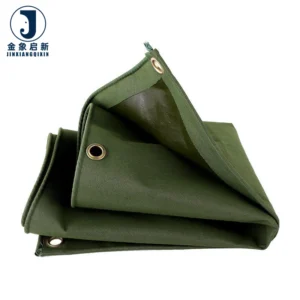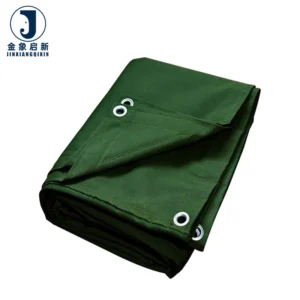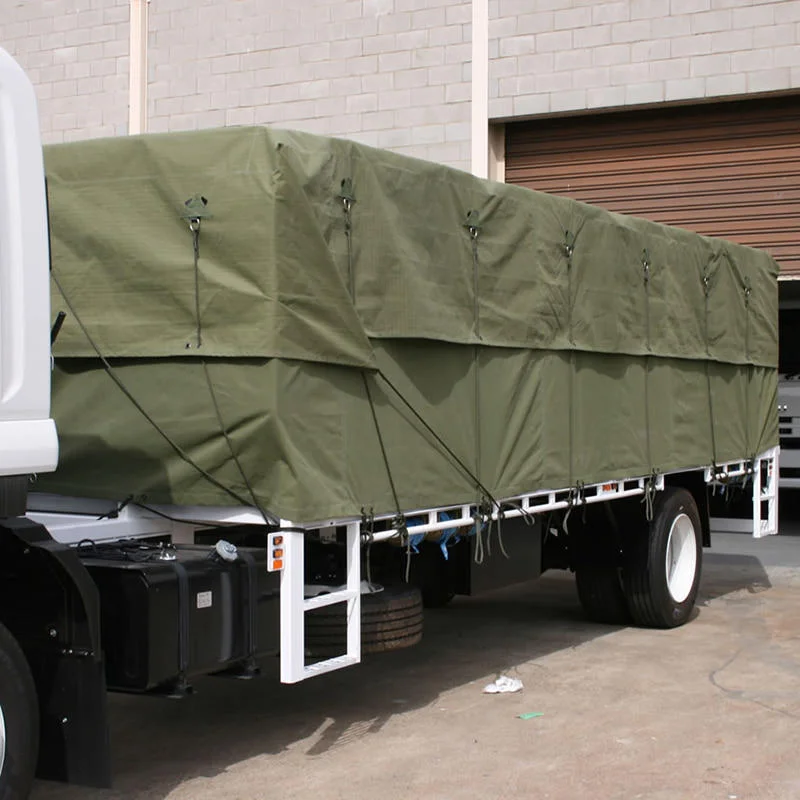
Proven Coating Expertise — Nearly 30 years of focused coated fabric production with dedicated QA/QC at every stage, ensuring PVC truck tarpaulin covers meet fleet specifications before dispatch.
Technical Specifications
| Parameter | Value |
|---|---|
| Product Type | PVC Coated Truck Tarpaulin / Truck Cover |
| Material Composition | PVC + High-strength polyester mesh fabric |
| Coating Technology | Laminated technology & Hot-melt Coating technology |
| Weight (GSM) Options | 350gsm / 420gsm / 500gsm / 550gsm / 600gsm / 750gsm |
| Total Thickness | 0.32mm / 0.35mm / 0.4mm / 0.45mm / 0.5mm / 0.65mm |
| Color Options | Blue / Red / Yellow / Light blue / Grey (Customized) |
| Roll Size | 2m width × 75m length / 2.1m width × 50m length |
| Finished Product Size | Custom cut per vehicle model and customer requirements |
| Key Features | High tenacity polyester yarns, good flexibility and adhesion strength, tearing strength for welding, cold crack resistance, anti-mildew, waterproof, color fastness |
| Treatment Options | Anti-Static treatment (grade not stated); Sunproof / UV treatment (test basis not stated) |
| Standards | ISO, CE |
Application Suitability
| Application | Exposure & Requirement |
|---|---|
| Truck and trailer load covering | Highway wind load, rain ingress, road debris abrasion, constant flexing at tie-down points |
| Side curtain fabric for transport fleets | Repeated sliding and tension, UV exposure from direct sunlight, flex fatigue at roller tracks |
| Cargo ship covers | Salt spray, high humidity, heavy wind shear during transit, need for waterproof integrity |
| Truck awnings | Prolonged sun exposure, folding and unfolding stress, weight handling for manual deployment |
Why Generic Sizing Destroys PVC Tarpaulin Truck Cover Performance
A cover cut to a standard rectangle will fail where your trailer flexes most.
When fleet operators buy off-the-shelf truck tarpaulins, the material often bunches at the corners or leaves gaps at the tailgate. Under highway speed, that loose fabric flaps and fatigues at the weld seams, leading to premature tears. We have seen heavy-grade coated rolls fail at the weld line not because the GSM was wrong, but because the cut ignored the vehicle geometry. [NEED_CITE: tensile and tear test methods for coated fabrics per ISO 1421]
Custom Fitment for Every Trailer Model in Your Fleet
Fleet operators manage mixed vehicle types, and a PVC truck tarpaulin cover for fleet and transport applications must match the exact dimensions of each trailer bed or side curtain rail. Our process starts with the vehicle model and load profile, not a standard roll width. This ensures the cover sits flush against the cargo without excess material that catches wind or creates abrasion points against the load itself.
Reinforcement at the Flex Points That Matter Most
The highest stress on any truck cover occurs where the load shifts under braking and cornering. Hot-melt coating technology provides superior adhesion between the PVC layer and the polyester mesh base, which directly improves tear resistance at welded seams. When the fabric flexes repeatedly at a tie-down strap anchor, the coating must stay bonded to the yarn — otherwise, delamination starts and the seam opens. [NEED_CITE: hot-melt coating adhesion strength testing for PVC tarpaulin]
Decoding GSM, Coating Method, and Base Fabric Density
Selecting the right PVC truck tarpaulin cover requires looking past the GSM number alone. A 550gsm fabric with a loose polyester mesh base will tear more easily than a 500gsm fabric woven with high-tenacity yarns at higher density. The hot-melt coating process pushes PVC into the mesh structure under heat and pressure, creating a mechanical bond that outperforms simple lamination in peel strength. Thickness values from 0.32mm to 0.65mm correspond to different coating weights and base fabric constructions, affecting how the material behaves when folded in cold weather or tensioned across a wide flatbed. Cold crack resistance is critical for fleets operating in winter routes, where a stiff cover can crack at the fold if the plasticiser formulation is inadequate.
The Cost of Specifying the Wrong Roll for Your Route
A transport company covering long-haul highway routes with a lightweight grade meant for short-distance deliveries will see seam failures within months. Conversely, specifying a heavy-grade cover for a light urban delivery vehicle adds unnecessary weight and makes manual handling difficult for drivers. [NEED_CITE: field performance data on PVC tarpaulin flex fatigue under highway conditions]
Batch color inconsistency across rolls in the same order becomes visible the moment two panels are installed side by side on a trailer, forcing the fleet to reject material and delay vehicle turnaround. Welded seams that fail before the fabric itself are usually a result of incorrect heat settings during fabrication, not a material defect — which is why in-process QA during welding matters as much as the raw fabric specification.
Why Transport Fleets Source PVC Truck Tarpaulin Covers Here
Three full production lines and 36 sets of professional equipment support bulk orders with consistent output, so a fleet standardising on one PVC truck tarpaulin cover across multiple depots receives identical material in every shipment.
A 10-person R&D team handles vehicle-specific pattern development, meaning custom cuts and eyelet layouts are engineered from the drawing stage rather than adapted from a generic template.
Dedicated QA/QC runs at every production stage with 100% inspection before shipment, catching GSM deviations and coating defects before rolls leave the facility.
Samples are developed within days for custom requirements, allowing fleet operators to test fit and weld performance on their own equipment before committing to a full order.
Coating weight and adhesion are controlled through established process parameters refined over nearly 30 years of coated fabric production, reducing the variability that causes batch-to-batch inconsistency.
Documentation & Verification
- Material specification sheet stating base fabric, coating weight, and color reference per roll
- Pre-shipment inspection record confirming GSM and dimensions match the purchase order
- Roll packing list with roll count and weight for container loading verification
- Test documentation for UV and flame-retardant grades where applicable
Fabrication, Handling & Storage
- Hot-melt coated seams require calibrated heat welders — test settings on a scrap piece of the same GSM before production runs
- Eyelet spacing and hem reinforcement should match the tie-down system load — specify spacing when ordering finished covers
- Store rolls horizontally on racking to prevent permanent creasing in the polyester mesh base fabric
- Cold crack resistant grades still require gradual unrolling in low temperatures to avoid surface stress fractures
- Clean with mild detergent and soft brush — avoid solvents that degrade the PVC plasticiser and coating bond
- Custom widths up to 2.1m allow full trailer coverage without a centre weld seam on most standard trailers
Request a Specification Match for Your Fleet
Tell us your truck and trailer models, the routes they run, and the exposure conditions they face — highway, urban, coastal, or cold climate. If your market requires specific fire or anti-static certification, state the standard so we can confirm the grade available. We will recommend a GSM, color, and finished size with a sample for your approval before production.
Frequently Asked Questions
Q: How do you cut truck covers to fit specific trailer models rather than generic sizes?
A: We work from the vehicle model dimensions and your tie-down layout to develop a cutting pattern. This ensures the PVC truck tarpaulin cover fits flush without loose material that flaps under highway wind load. Samples are produced for fit confirmation before full production begins.
Q: How do you ensure welded seams don’t fail at the flex points under load?
A: Hot-melt coating technology creates a strong bond between the PVC and the polyester mesh, which directly improves peel strength at weld lines. We also reinforce hem and eyelet zones where tie-down straps concentrate stress, and every weld is inspected during pre-shipment QC.
Q: How is GSM verified on arrival so the material matches the quotation?
A: Each roll is weighed and measured during our pre-shipment inspection, and the results are recorded on a verification document included with your shipment. This confirms the PVC truck tarpaulin cover you receive matches the GSM stated on your purchase order.
Q: How do you control color consistency across rolls in the same order?
A: Color is matched against a reference standard at the coating stage, and rolls from the same production batch are grouped for dispatch. This prevents visible shade variation when multiple panels are installed side by side on a trailer.
Q: What treatment grades are available for UV and flame-retardant requirements?
A: Anti-UV and flame-retardant treatments are available in various grades — confirm the specific grade required for your market and application. Where applicable, test documentation is supplied with the shipment to verify the treatment meets your stated standard.