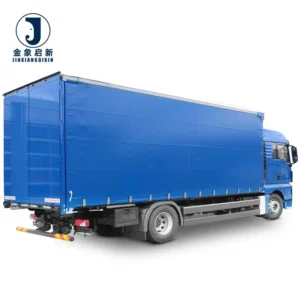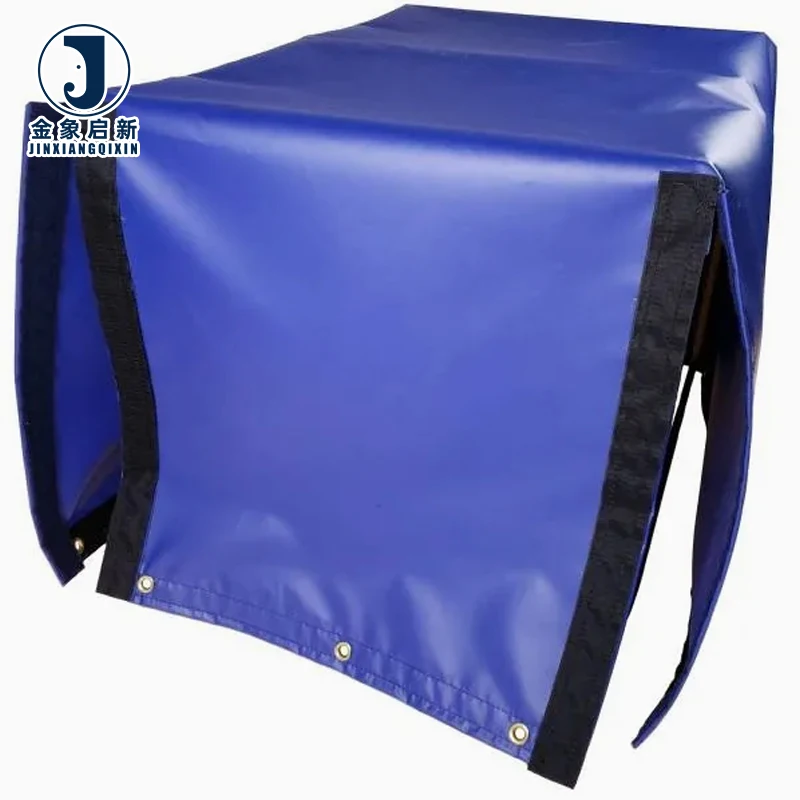
Custom-fit engineering — PVC coated truck tarpaulin cut to exact trailer dimensions with reinforced hems and welded seams tested against road flex stress.
Technical Specifications
| Parameter | Value |
|---|---|
| Product Type | PVC Coated Truck Cover |
| Material | PVC Coated Tarpaulin |
| Weight (GSM) | 250gsm-1500gsm |
| Base Fabric Denier | 200DX300D / 500DX500D / 840DX840D / 1000DX1000D |
| Surface Finish | Glossy or matte |
| UV Treatment | Available in UV treated grades — confirm the grade required for your market |
| Flame Retardant | Available in FR treated grades — confirm the grade required for your market |
| Anti-Fungal | Treated |
| Temperature Range | -15ºC to 70ºC |
| Waterproof Rating | Waterproof |
| Size Options | 3x4m / 6x8m / 8x10m / 10x12m or custom made |
| Color Options | Blue / Yellow / Black / Green / White / Custom |
| Printing | Custom logo printing |
| Standards | ISO, CE |
Application Suitability
| Application | Exposure & Requirement |
|---|---|
| Long-haul trailer load covering | Constant road debris impact, UV exposure, rain ingress at flex points, tie-down tension at hems |
| Side curtain fabric for transport fleets | Repeated curtain roll-up flex cycles, abrasion against load edges, colour matching across fleet |
| Flatbed truck cargo protection | Wind lift stress, pooled water runoff, strap pressure at reinforced eyelet zones |
| Construction site equipment covers | Prolonged static outdoor exposure, dust and chemical splash, UV and fungal resistance |
Why Generic Tarps Fail on Moving Loads — And How a PVC Truck Cover for Fleet and Trailer Solves It
A cover built around the trailer, not around a standard roll width.
Every fleet operator has seen the same problem: a truck cover bought off-the-shelf sits loose on one side, flaps in crosswinds, and leaves the rear corner of the load exposed on a wet night. The issue is rarely the fabric itself — it is the dimension mismatch between a generic cut and a specific trailer body. When a PVC truck cover for fleet and trailer is patterned to the exact vehicle model, the overlap, the drop length, and the eyelet spacing all align with the actual tie-down points on the chassis. The cover stays taut under highway speed, water runs off instead of pooling, and the cargo arrives in the same condition it left the depot. [NEED_CITE: tarpaulin dimensional fit and wind-load stress on commercial vehicle covers]
Dimensional Fitment Tied to Trailer Geometry
A PVC truck cover for fleet and trailer must account for more than length and width. Side curtain drop, rear flap overlap, and the position of ratchet strap anchors all vary between trailer manufacturers and even between model years. This cover range is sized from 3x4m through to 10x12m, with full custom dimensioning available against a vehicle model reference and dimensional drawing. Once the pattern is approved, the cutting follows the agreed geometry — not a best-fit approximation from a stock roll. The result is a cover that sits flush against the body rails without requiring the driver to improvise tension with extra bungees.
Reinforcement at the Points That Actually Fail
The highest stress on any truck cover is not in the centre panel — it is at the hems where tie-down straps pull, and at the eyelets where wind load concentrates. Reinforced hems on this PVC truck cover for fleet and trailer are built to handle repeated strap tension without the fabric pulling away from the welded edge. Eyelet placement follows the reinforcement map agreed during the pattern stage, so every anchor point aligns with the trailer’s actual load-securing hardware. [NEED_CITE: stress distribution and failure points in heavy-duty coated tarpaulins under tie-down load]
Reading the Specs Beyond the GSM Number
GSM tells you the weight per square metre, but weight alone does not predict how the fabric behaves under road conditions. The base fabric denier — from 200DX300D up to 1000DX1000D — determines the yarn thickness in both warp and weft directions. A 1000DX1000D base gives higher tensile and tear resistance, which matters when a load shifts and the cover takes a sudden point load. Coating weight and method sit on top of that base: a heavier PVC coat improves waterproofing and abrasion resistance, but it also adds stiffness that affects how the cover drapes over irregular loads. Choosing the right combination means matching denier to load type and coating weight to route severity, rather than simply selecting the heaviest GSM available. Temperature range from -15ºC to 70ºC covers cross-climate routes, but operators running in sustained sub-zero or desert conditions should confirm low-temperature flexibility and heat-softening behaviour with the supplier before specifying.
What Happens When the Specification Misses the Mark
A cover that is too light for the route will show wear at the abrasion points long before the expected service interval — typically along the bottom edge where it contacts the trailer floor and at the welded seams where load flex is greatest. Colour inconsistency across a fleet order is another frequent issue: when covers from different production batches are installed side by side, the shade variation becomes visible at the depot before the trucks even leave. Flame retardant or UV treatment claimed on the quotation but unsupported by a test report creates a compliance gap — the cover may pass a visual inspection but fail a site audit when the safety officer asks for documentation. Welded seams that separate before the fabric itself wears through point to a mismatch between welding temperature and the specific PVC formulation used. [NEED_CITE: common failure modes in PVC coated truck tarpaulins under fleet operating conditions]
Why Source This Cover From Jinxiang
Three full production lines and 36 sets of professional equipment support batch capacity with consistent output, so fleet orders of multiple covers maintain the same specification from first piece to last. The 10-person R&D team handles pattern development against specific trailer model drawings, not just standard size charts. Dedicated QA/QC at every production stage with 100% pre-shipment inspection means GSM, colour, and dimension are checked before the cover leaves the factory. Custom sizing and sample development are completed within days, allowing fleet operators to verify fitment before committing to a bulk order. Nearly 30 years of coated fabric process control provides depth in coating weight consistency and weld adhesion — the two properties that determine whether a truck cover survives its first year on the road.
Documentation & Verification
- Material specification sheet stating GSM, base fabric denier, and coating weight per cover
- Test report for UV and flame-retardant grades where applicable, citing the actual test basis
- Pre-shipment inspection record with dimension and colour check per piece
- Roll packing list with piece count and net weight for container loading
- Certificate of origin and customs documentation for cross-border shipment
Fabrication, Handling & Storage
- Weld temperature and dwell time must match the PVC coating weight — request the supplier’s recommended heat-seal parameters before fabrication
- Reinforced hems should be folded and welded rather than stitched to prevent water ingress through needle holes
- Store rolls flat or on pallets, avoid stacking heavy items on top to prevent permanent crease marks in the PVC coat
- Unroll in temperatures above 5ºC to avoid cracking the PVC coating at the fold line during cold-weather installation
- Clean with mild detergent and soft brush; avoid solvent-based cleaners that can degrade the PVC surface finish
- For on-site repair, use compatible PVC patches heat-welded to the damaged area rather than adhesive tape
Before You Request a Quote
Provide the exact trailer make, model, and body dimensions — including side curtain drop and rear flap overlap requirements — so the pattern can be drafted to fit. State the operating climate and route conditions to confirm whether standard or upgraded UV and flame-retardant treatment grades are needed. If fleet branding is required, share the Pantone or RAL colour reference and logo artwork file for print proof approval. Specify whether you need finished covers with hems and eyelets or roll stock for in-house fabrication.
Frequently Asked Questions
Q: How is the GSM of my truck cover verified before it ships?
A: Every cover undergoes a pre-shipment inspection where sample cuts are weighed and measured against the quoted GSM. The inspection record accompanies your shipment, so you can cross-check on arrival. Tolerance bands are stated on the material specification sheet — request this document with your quotation to confirm the acceptable range for your selected grade.
Q: How do you match the cover to my specific trailer model?
A: We work from the trailer manufacturer’s body drawing or from dimensions you provide — including length, width, side drop, rear overlap, and tie-down point positions. A dimensional drawing is prepared and approved before cutting begins, ensuring the PVC truck cover for fleet and trailer fits the actual vehicle rather than a generic size chart.
Q: What reinforcement is applied at high-stress points?
A: Reinforced hems are welded along all edges, and eyelet spacing is set to align with your trailer’s load-securing hardware. The weld parameters are matched to the PVC coating weight so the seam does not separate under strap tension. Additional fabric patches can be added at known abrasion zones upon request.
Q: Can you match our fleet colour and print our logo?
A: Custom colour matching is available against Pantone or RAL references, and logo printing is applied using methods suited to PVC coated surfaces. Colour consistency is verified across the production run, and a print proof is provided for approval before the full order is produced.