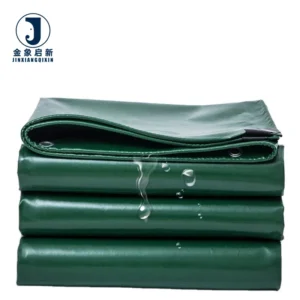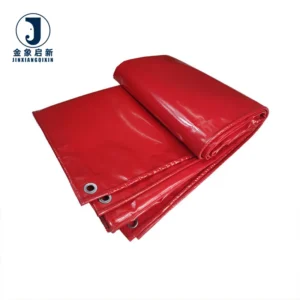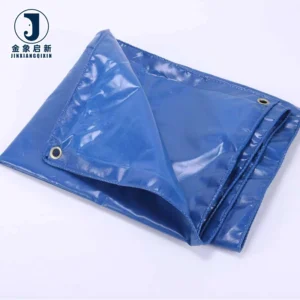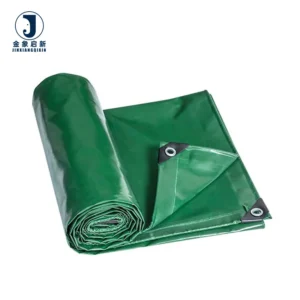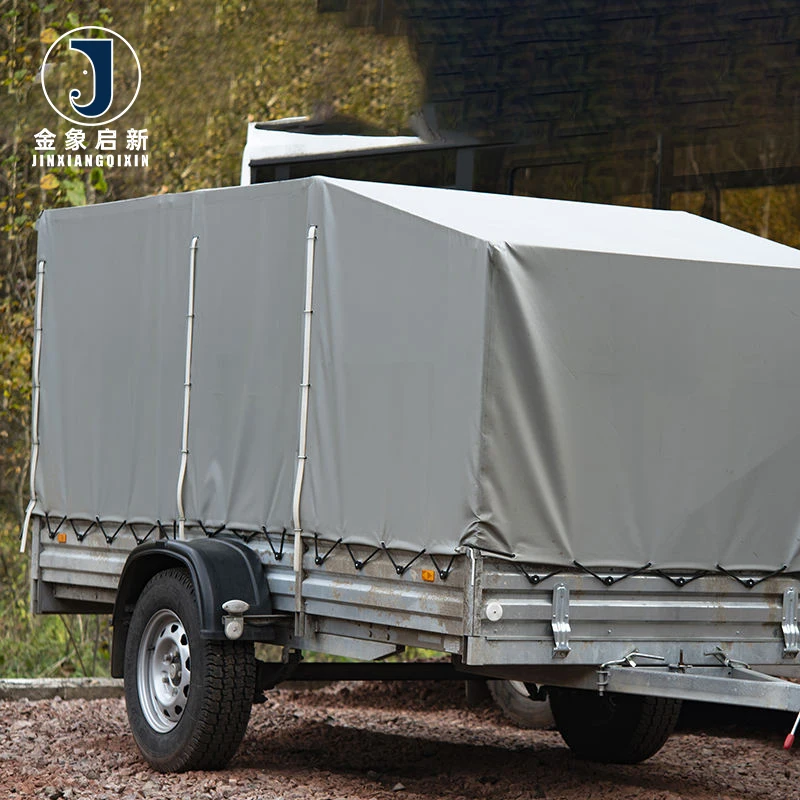
Verified Coating Weight — every roll of PVC coated tarpaulin is inspected against its quoted GSM before dispatch, ensuring the material that arrives matches the specification you approved.
Technical Specifications
| Parameter | Value |
|---|---|
| Product Type | PVC Coated Tarpaulin Roll |
| Material | 100% high toughness polyester yarn with PVC coating |
| Coating Technology | Lamination and hot melt coating |
| Flame Retardant Grade | B1 (confirm test standard required for your market) |
| Anti-Static | Treated (surface resistance value — confirm for your site requirements) |
| Cold Resistance | Cold resistant cracking formulation |
| Mildew Resistance | Mold proof treatment |
| Weather Resistance | 3–5 years outdoor exposure (test basis not stated) |
| Key Features | Waterproof, UV treated, custom colour and printing available |
Medium-Duty Grade
| Parameter | Value |
|---|---|
| Base Fabric Denier | 500D |
| Thickness | 0.35–0.45 mm |
| Weight | 400–500 GSM |
| Tensile Strength (Warp / Weft) | 1500–2000 / 1200–1800 N/5cm |
Heavy-Duty Grade
| Parameter | Value |
|---|---|
| Base Fabric Denier | 1000D |
| Thickness | 0.70–1.0 mm |
| Weight | 700–1000 GSM |
| Tensile Strength (Warp / Weft) | 2000–2500 / 1800–2200 N/5cm |
Super Heavy-Duty Grade
| Parameter | Value |
|---|---|
| Base Fabric Denier | 500D–2000D |
| Thickness | 1.2–1.5 mm |
| Weight | 1100–1500 GSM |
| Tensile Strength (Warp / Weft) | 2500–3000 / 2200–2800 N/5cm |
Application Suitability
| Application | Exposure & Requirement |
|---|---|
| Truck side curtain | Constant flexing at load points, road spray, UV exposure, abrasion from tie-down straps |
| Flatbed and tipper cover | Wind load at speed, water ingress risk, repeated folding and unfolding |
| Construction site enclosure | Debris impact, wind shear, flame retardant compliance for occupied zones |
| Warehouse door curtain | Forklift contact, daily roll-up cycles, temperature variation |
| Tensioned membrane structure | Sustained tensile load, UV and weather exposure, weld integrity under stress |
Why Welded Seams Fail Before the PVC Coated Tarpaulin Fabric Does
Seam failure is a coating adhesion problem, not a fabric strength problem.
I have seen heavy-grade coated rolls fail at the weld line while the body of the PVC coated tarpaulin remains intact. The flex point on a truck side curtain — where the load shifts under braking — concentrates stress on a narrow band of welded overlap. If the hot melt coating does not bond fully through the base fabric during welding, the seam peels open long before the tensile limit of the yarn is reached [NEED_CITE: tensile and tear test methods for coated fabrics per ISO 1421]. This is why coating method and adhesion control matter more than the stated GSM when you are specifying covers for moving loads.
Covering a Moving Load Requires More Than Weight
A PVC coated tarpaulin on a truck or trailer is not a static cover. Every braking event, cornering force, and wind gust transfers load into the fabric at the tie-down and hem points. The base yarn denier and weave density determine how that load distributes before it reaches the coating. A 1000D polyester base with hot melt lamination distributes flex stress across more yarn intersections than a lighter knit, reducing the point-load concentration that initiates coating delamination.
Where Tie-Down and Hem Reinforcement Intersect with Coating Adhesion
The reinforcement at hems and tie-down zones depends on how well the PVC coating bonds to the base fabric during fabrication. Lamination technology creates a mechanical interlock between the coating and the yarn structure, while hot melt coating achieves adhesion through thermal fusion. When a fabricator heat-welds a reinforcement strip, the second heat cycle must not degrade the original coating bond [NEED_CITE: welding tear strength test standards for PVC coated polyester]. Specifying the coating method upfront lets your fabricator set weld temperatures that preserve the primary bond.
Reading the Specification Sheet Beyond the GSM Number
GSM tells you the total mass per square metre but not how that mass is distributed between base fabric and coating. A 900 GSM material could be a heavy coating on a light base — stiff and prone to cracking at fold lines — or a lighter coating on a dense 1000D weave that flexes repeatedly without damage. The thickness range of 0.70–1.0 mm in the heavy-duty grade corresponds to a balance between coating depth for waterproofing and base fabric density for structural strength. Tensile strength values of 2000–2500 N/5cm warp on the heavy-duty grade reflect the yarn count and weave tightness working together, not the coating alone.
What Happens When the Grade Does Not Match the Trailer Duty Cycle
Specifying a medium-duty 400–500 GSM grade for a long-haul side curtain that flexes thousands of times per trip leads to coating fatigue at stress points. Conversely, ordering the super heavy-duty 1100–1500 GSM grade for a flatbed cover that is manually folded adds unnecessary weight and handling difficulty for the driver. The mismatch shows up as premature wear in the first case and operational complaints in the second — neither visible at the point of purchase [NEED_CITE: correlation between PVC coated fabric grade selection and in-service failure rates]. Batch colour variation between rolls on the same trailer order creates a visible stripe effect once installed side by side, forcing rework or acceptance of an inconsistent fleet appearance.
Process Control That Shows Up on the Roll
Coating weight is monitored at every production stage, not sampled at the end — this means the GSM you approve on the sample is the GSM that ships across the entire order. The 10-person R&D team develops samples within days for custom width, colour, or print requirements so you can verify fit and appearance before committing to bulk. Three full production lines with 36 sets of equipment handle volume orders with consistent lead times, reducing the scheduling risk that comes from single-line suppliers. Every roll undergoes inspection before dispatch, catching colour drift, coating defects, and weight deviation before they reach your dock. Custom widths and lengths are available without the minimums that force you to hold dead stock.
Documentation & Verification
- Material specification sheet listing GSM, base fabric denier, coating method, and colour reference for each roll shipped
- Flame retardant B1 grade test report matched to the production batch where applicable
- Pre-shipment inspection record confirming verified weight against the quoted specification
- Roll packing list with roll count, net weight, and dimensions for container loading planning
- Certificate of origin and customs documentation included with every export dispatch
- ISO and CE certificates available for site compliance and import clearance
Fabrication, Handling & Storage
- Hot melt coated grades require weld temperature calibration to avoid degrading the primary coating bond at seams
- Laminated PVC construction supports high-frequency welding for clean, consistent seam strength on curtain panels
- Store rolls upright on pallets to prevent flat-spot deformation on the 0.70–1.0 mm heavy-duty grades
- Unroll cold-weather deliveries gradually — cold resistant formulation reduces but does not eliminate crease risk below freezing
- Clean with mild detergent; avoid solvents that attack the PVC coating surface and compromise waterproofing
- Allow 3–5% material overage in cutting plans to accommodate pattern alignment on printed fleet branding rolls
What We Need to Quote Accurately
Provide the specific truck or trailer model, the exposure conditions your fleet operates in, and whether your market requires documented flame retardant certification for site entry. Let us know the roll width and annual volume you need, along with any colour or print requirements for fleet identification. Confirm whether you need cut-to-size finished covers or roll stock for your own fabrication line.
Frequently Asked Questions
Q: How is GSM verified on arrival to match the quotation weight?
A: Every roll undergoes weight verification against the stated GSM during pre-shipment inspection, and the inspection record ships with your documentation. If you require independent verification on arrival, we recommend cutting a measured sample from the roll end and weighing it against the specification sheet values we provide per roll.
Q: What does B1 flame retardant grade cover and which markets accept it?
A: B1 is a flame retardant classification for building and construction materials. Acceptance varies by market and application — some transport and construction sites require B1 per DIN 4102, while others specify different standards. Confirm the fire classification required for your specific project or jurisdiction before placing the order.
Q: How are welded seams reinforced at flex and tie-down points on truck covers?
A: Reinforcement strips are heat-welded over the base fabric at high-stress zones using compatible PVC material. The lamination and hot melt coating technology provides strong weld adhesion when fabricators calibrate temperature and dwell time to the specific coating method used on the roll.
Q: Can truck covers be cut to a specific trailer model rather than generic sizes?
A: Yes. Covers are cut to the exact dimensions of your trailer model, accounting for door clearance, tie-down rail position, and curtain track geometry. Provide the vehicle make, model, and year, and we develop a cut pattern with samples for your approval before production.
Q: How is colour consistency maintained across multiple rolls in one fleet order?
A: Colour is matched against a reference standard at the coating stage, and every roll in a single order is produced within the same batch run. The pre-shipment inspection includes visual colour comparison across rolls to flag any drift before dispatch, ensuring a uniform appearance once installed side by side on your fleet.