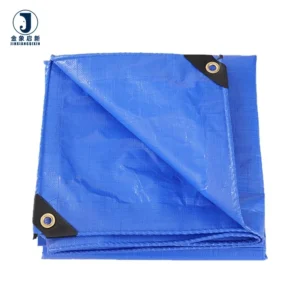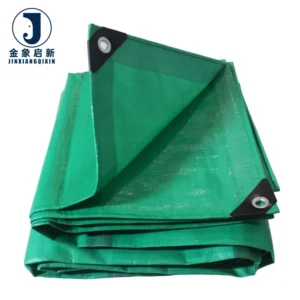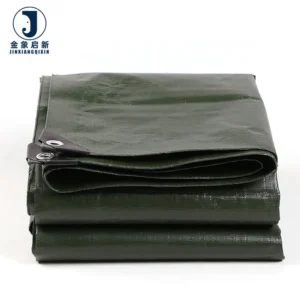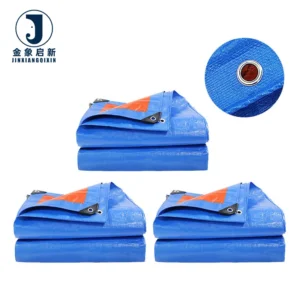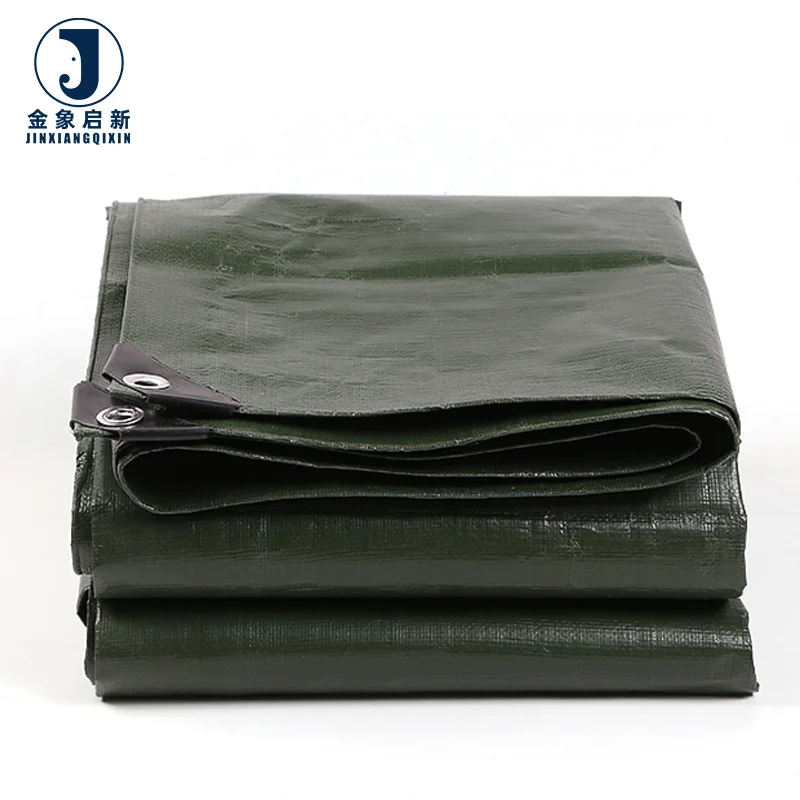
Coating Weight Verification — every roll undergoes 100% pre-shipment inspection to confirm the stated mil thickness against the quotation before dispatch.
Technical Specifications
| Parameter | Value |
|---|---|
| Product Type | PE Tarpaulin |
| Coating Material | Polyethylene (PE) |
| Thickness Options | 5 Mil / 10 Mil / 12 Mil / 16 Mil / 20 Mil |
| Waterproof Rating | Fully waterproof |
| Windproof | Yes |
| Anti-Mildew | Mildew-proof |
| Abrasion Resistance | Abrasion-resistant |
| Flame Retardant Grade | 701 (grade not stated in source) |
| UV Treatment | Anti-UV (test basis not stated in source) |
| Construction | Heavy duty |
Application Suitability
| Application | Exposure & Requirement |
|---|---|
| Truck and trailer flat covers | Road weather, wind load at tie-down points, abrasion from cargo shifting during transit |
| Vehicle yard storage covers | Prolonged UV exposure, rain ingress prevention, hail and debris impact |
| Construction material protection on open trailers | Dust, rain, site handling abrasion, UV degradation over multi-week staging |
| Tent and temporary shelter fabric | Wind uplift, repeated assembly and folding, ground moisture contact |
| Outdoor equipment and machinery covers | UV and rain exposure, mildew in humid storage, scratch from metal surfaces |
Why Mil Thickness Alone Does Not Guarantee a Reliable Heavy Duty PE Tarpaulin for Trucks and Transport
A quoted mil figure means little without physical verification on arrival.
Buyers regularly receive poly tarpaulin covers that measure thinner than the mil grade stated on the purchase order. The discrepancy often surfaces only after the cover is deployed over a load and shows early stress whitening at the tie-down zones. A heavy duty PE tarpaulin for trucks and transport must hold its specified thickness consistently across the entire sheet, particularly at the hems and reinforced areas where flex fatigue concentrates. Without documented pre-shipment measurement, the buyer carries all the risk. [NEED_CITE: coating thickness variation in polyethylene tarpaulin production]
Covering a Moving Load: What Transport Exposure Really Demands
A truck cover flexes every time the vehicle brakes, corners, or hits uneven road. The heavy duty PE tarpaulin for trucks and transport must resist abrasion where the fabric contacts sharp-edged cargo and where tie-down straps press into the surface at speed. Thinner grades may suffice for short-haul yard moves, while longer transit routes with highway wind load demand a higher mil option to prevent tearing at the eyelet line.
Matching Mil Grade to the Actual Route and Cargo Profile
Choosing between 5 Mil and 20 Mil is not simply a matter of picking the heaviest option available. A 5 Mil sheet works for temporary dust and splash protection on enclosed pallets, while 16 Mil or 20 Mil grades handle exposed steel, machinery, and timber loads that shift under braking. The correct grade depends on cargo profile, transit duration, and how many times the cover will be folded and redeployed. [NEED_CITE: polyethylene tarpaulin selection criteria for freight transport]
Reading the Thickness Options for Real-World Decisions
The five available thickness grades — 5, 10, 12, 16, and 20 Mil — each represent a step change in base fabric density and coating mass. Higher mil values deliver greater puncture resistance and stiffness, which matters when the cover must span an unsupported gap over irregular cargo. However, heavier sheets also increase handling weight for drivers who deploy and remove covers daily. The anti-UV treatment extends service life under roadside sun exposure, though the specific test basis should be confirmed for your regional climate. Mildew-proof construction prevents biological degradation when covers are stored damp or deployed in high-humidity corridors. Flame retardant 701 grade is available for sites requiring fire safety compliance — confirm the grade required for your market before specifying.
The Hidden Cost of Specifying the Wrong Grade for the Route
A transport operator who selects 5 Mil for a long-haul steel coil route will see the cover fail at the tie-down zone within a small number of trips. Conversely, specifying 20 Mil for a short-distance yard transfer wastes material cost and adds unnecessary weight for the driver to handle. Colour inconsistency across multiple covers in one shipment becomes visible when several tarps are deployed side by side on adjacent trailers, reflecting poorly on the fleet’s appearance. Covers that arrive below the quoted mil thickness often fail at the hem weld before the main fabric body shows any wear. [NEED_CITE: tarpaulin failure modes at hem and eyelet reinforcement zones]
Why Source This Heavy Duty PE Tarpaulin Cover Through Jinxiang
Three full production lines and 36 sets of professional equipment support bulk roll output with consistent thickness across each production run. A 10-person R&D team handles custom sizing, reinforcement layout, and sample development within days rather than weeks. Every roll passes through dedicated QA/QC inspection at each production stage, with 100% pre-shipment checks confirming mil thickness against the specification sheet. The facility holds ISO and CE certification, providing a documented compliance baseline for international procurement teams. Samples are developed and dispatched quickly so buyers can verify material hand, colour, and construction before committing to full production.
Documentation & Verification
- Mil thickness measurement record per roll against the stated specification before dispatch
- Flame retardant test report for 701 grade included where site fire compliance is required
- Anti-UV treatment test basis available on request to confirm outdoor durability claims
- Pre-shipment inspection record covering visual, dimensional, and weight checks
- Batch colour consistency report across all rolls in the same production run
- Certificate of origin and customs documentation prepared per destination country
Fabrication, Handling & Storage
- Heat welding temperature must match the PE coating mass to avoid hem delamination on heavier mil grades
- Eyelet spacing should account for wind load specific to the trailer profile and route speed
- Store rolls horizontally on pallets to prevent permanent creasing in 16 Mil and 20 Mil sheets
- Deploy covers in cold conditions with care, as PE stiffens below freezing and may crack if forced
- Clean with mild detergent only; aggressive solvents degrade the anti-UV surface treatment
- Repair minor punctures with PE-compatible tape applied to a clean, dry surface
What to Include in Your Enquiry
Provide the specific truck or trailer model, cargo type, and typical transit conditions so the correct mil grade can be recommended. Confirm whether your destination market requires flame retardant certification and which standard applies. Specify the required cover dimensions, eyelet spacing preference, and whether you need flat sheets or finished covers with hemmed edges.
Frequently Asked Questions
Q: How is actual mil thickness verified on arrival against the quoted specification?
A: Every roll is measured during pre-shipment inspection and the recorded thickness is documented against the purchase order specification. The inspection record accompanies the shipment so the buyer can cross-check on arrival. Random sample measurement at the receiving dock provides a second verification point.
Q: What fire retardant standard does the 701 grade meet for transport and site use?
A: The 701 grade references a flame retardant classification, but the specific test standard it satisfies should be confirmed against your local site or transport regulations. Request the test report with your sample so your compliance team can verify acceptance before full order placement.
Q: How is anti-UV performance tested and what outdoor exposure duration can be expected?
A: Anti-UV treatment is applied during production to resist degradation from prolonged sun exposure. The specific test basis and exposure rating should be requested to match your regional climate conditions. Service life depends on installation angle, latitude, and seasonal UV intensity at the deployment site.
Q: Can eyelet spacing and hem reinforcement be customised for specific truck and trailer models?
A: Yes. Eyelet spacing, hem fold width, and reinforcement patch placement can all be specified to match the tie-down configuration of your particular trailer model. A sample is produced for fitment approval before full production proceeds, ensuring the cover seats correctly under strap tension.
Q: How is colour consistency maintained across multiple tarps in the same order?
A: All sheets in a single order are produced from the same material batch to minimise colour drift between rolls. A batch consistency check is performed during pre-shipment inspection. Covers deployed side by side on adjacent trailers are compared visually before dispatch approval.