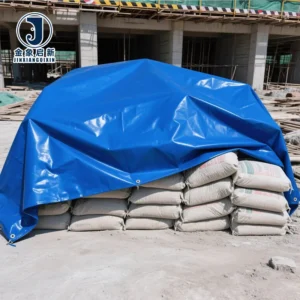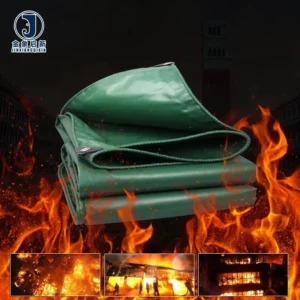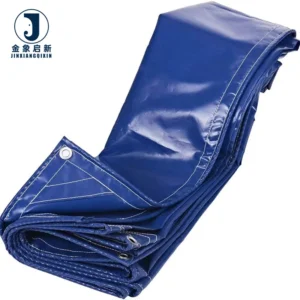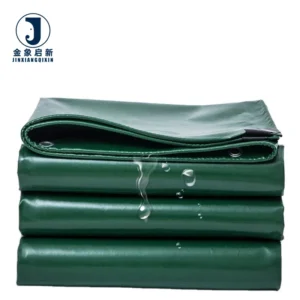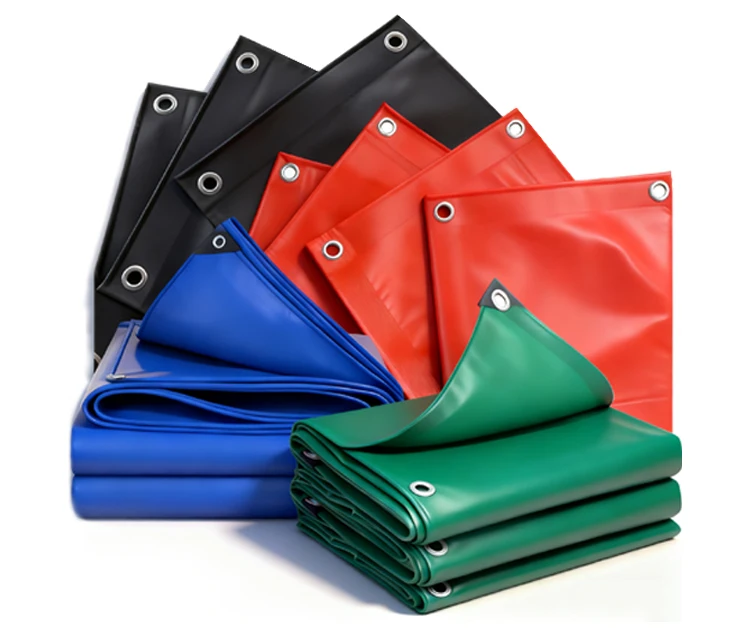
Deep Coating Process Control — Every roll of Heavy Duty PVC Coated Polyester Fabric Tarps undergoes 100% pre-shipment weight and adhesion inspection, ensuring the quoted specification matches what arrives at your dock.
Technical Specifications
| Parameter | Value |
|---|---|
| Product Type | PVC Coated Tarpaulin |
| Base Fabric | 100% high toughness polyester yarn |
| Coating Material | PVC |
| Coating Method | Lamination technology and hot melt coating technology |
| Yarn Denier Options | 500D, 1000D, up to 2000D |
| Weight Options | 400–500 g/m² (Medium), 700–1000 g/m² (Heavy-duty), 1100–1500 g/m² (Super heavy) |
| Total Thickness | 0.35–0.45 mm / 0.70–1.0 mm / 1.2–1.5 mm |
| Tensile Strength (Warp/Weft) | 1500–2000 / 1200–1800 N/5cm (Medium); 2000–2500 / 1800–2200 N/5cm (Heavy-duty); 2500–3000 / 2200–2800 N/5cm (Super heavy) |
| Treatment Options | Flame retardant (confirm grade), Anti-static (confirm standard), Anti-UV (confirm test basis), Cold resistant, Mold proof |
| Waterproof | Yes |
| Welding Tear Strength | Excellent |
| Outdoor Weather Resistance | 3–5 years |
| Standards | ISO, CE |
Application Suitability
| Application | Exposure & Requirement |
|---|---|
| Truck and trailer tarpaulin | Continuous road vibration, flexing at load points, UV exposure, wind abrasion, tie-down stress |
| Heavy truck side curtain | Repeated opening and closing cycles, weld seam fatigue, weather sealing under highway speeds |
| Flatbed load covering (hay bales, machinery) | Direct sun, rain ingress risk, puncture from irregular load shapes, strap compression |
| Engineering protective cloth | Dust containment, debris shielding, temporary enclosure on active construction zones |
| Industrial pipe canopy | Prolonged sun exposure, wind uplift tension, thermal expansion of covered assets |
Why Generic-Size Truck Covers Fail Where the Load Flexes Most
PVC coated tarpaulin for truck and transport must be finished to the exact dimensions of your trailer, not cut from a generic template.
Fleet operators who have switched from standard-size covers to model-specific cut tarps consistently report fewer mid-route failures. The root cause of premature tarp failure on a moving load is not the fabric itself but the stress concentration at hems and seams where a generic cover bunches, flaps, or stretches beyond its intended geometry. When the cover does not match the trailer profile, every braking event and crosswind gust forces the material to absorb energy in unintended ways [NEED_CITE: tensile and tear test methods for coated fabrics per ISO 1421]. This is where abrasion accelerates and where welded seams begin to delaminate well before the base fabric reaches its rated tensile capacity.
Cut-to-Model Fitment Reduces Flex-Point Fatigue
A PVC coated tarpaulin for truck and transport that mirrors the exact profile of a specific trailer model eliminates the excess fabric that flaps at highway speeds. When the cover sits flush against the load and the trailer rails, tie-down straps apply compression evenly rather than creating localized pinch points. This is especially important for curtain-side operators, where the fabric must slide along runners without catching or bunching at the corners.
Reinforcement Zones Matched to Tie-Down Patterns
Every trailer model has a defined tie-down pattern and load distribution profile. Specifying reinforcement at those precise points — rather than accepting a blanket hem treatment — means the PVC coated tarpaulin for truck and transport carries the strap load where it is highest, preventing hem distortion and eyelet pull-through during transit.
Coating Adhesion Under Repeated Thermal Cycling
Hot melt coating technology creates a molecular bond between the PVC layer and the polyester base fabric. On the road, the cover experiences rapid temperature swings from sun exposure to overnight cooling, causing the fabric to expand and contract repeatedly. If the coating adhesion is inconsistent [NEED_CITE: adhesion strength test procedures for PVC coated polyester], the bond weakens at the fold lines where the cover wraps around trailer edges, leading to delamination that exposes the base yarn to moisture and UV degradation.
How Weight Tier, Denier, and Coating Method Define On-Road Behaviour
Selecting a PVC coated tarpaulin for truck and transport requires looking beyond a single number. The 400–500 g/m² medium tier pairs 500D yarn with 0.35–0.45 mm thickness for lighter loads where weight and handling ease matter. The 700–1000 g/m² heavy-duty tier moves to 1000D yarn, giving the base fabric higher inherent tensile resistance before the coating is even applied. The super-heavy 1100–1500 g/m² tier uses up to 2000D yarn and achieves warp tensile values reaching 2500–3000 N/5cm, which directly translates to the cover resisting the pull of heavy-duty ratchet straps without deforming at the eyelet zone.
The lamination and hot melt coating method used across all tiers determines how firmly the PVC locks to the polyester weave. Hot melt coating forces the PVC into the yarn interstices under heat and pressure, producing higher adhesion than simple lamination alone. This matters at welded seams, where the bond between coating layers on overlapping panels must match the strength of the parent material. If adhesion is weak, the seam peels apart under flex stress long before the surrounding fabric shows any sign of failure.
Base fabric denier controls how a tear propagates once initiated. A 500D yarn in a medium-weight cover may resist initial puncture adequately for a flatbed agricultural load, but a 1000D or higher denier in the heavy-duty and super-heavy tiers creates a denser weave that arrests tear spread at the point of damage, keeping a small cut from becoming a full-panel failure.
What Happens When Cover Specifications Miss the Mark
A cover specified at a lighter grade than the load profile demands will show its first failure not in the field fabric but at the welded seams where flexing concentrates [NEED_CITE: weld seam fatigue testing on coated technical textiles]. Fleet operators who have ordered based on GSM alone, without considering the denier and tensile balance, often find that the material is technically within the quoted weight tolerance but structurally underperforming for the tie-down and wind loads the route imposes. Colour inconsistency across rolls in a multi-truck fleet order becomes visible the moment covers are deployed side by side at a depot, undermining brand presentation and prompting full replacement rather than selective repair.
Why Procurement Teams Consolidate Their Coated Fabric Orders Here
Three dedicated production lines and 36 sets of professional equipment give this facility the capacity to run multiple weight tiers simultaneously without cross-contamination of coating formulations. A 10-person R&D team handles pattern printing, custom sizing, and material selection, developing samples within days so fleet operators can verify fitment on specific trailer models before committing to bulk production.
Dedicated QA/QC stations at every production stage mean that GSM, coating adhesion, and colour reference are checked roll by roll rather than sampled at the end of a production run. Pre-shipment inspection records accompany every dispatch, providing the documented traceability that transport fleet compliance teams require. Full documentation packages — including ISO and CE certificates, material specification sheets, and treatment test reports where applicable — are assembled per order, not pulled from a generic library [NEED_CITE: ISO quality management documentation requirements for coated fabric manufacturers].
Documentation & Verification
- Material specification sheet listing exact GSM, base fabric denier, and coating method per roll
- Pre-shipment inspection record with weight and adhesion verification for every roll dispatched
- UV and flame retardant test reports supplied with grade or standard reference stated
- Certificate of origin and customs documentation prepared per destination country requirements
- Roll packing list with individual roll identification for receiving inspection
Fabrication, Handling & Storage
- Hot melt coated panels accept high-frequency welding; set dwell time to match the specific GSM tier being joined
- Reinforce hem folds with PVC webbing tape at tie-down eyelet positions to distribute strap load across the base fabric
- Store rolls horizontally on racking to prevent permanent creasing through the 0.70–1.0 mm heavy-duty coating layers
- Allow cold-stored super-heavy 1100–1500 g/m² rolls to acclimatize before unrolling to avoid coating crack at low temperature
- Clean with pH-neutral detergent only; solvent-based cleaners degrade the PVC coating surface and reduce UV treatment effectiveness
Preparing Your Specification for Quotation
To receive an accurate specification recommendation and sample, provide the trailer models in your fleet, the type of load you are covering, and the climatic conditions your vehicles operate in. If your market requires flame retardant or anti-static compliance, state the applicable standard so that the correct treatment grade can be confirmed and tested. Indicate whether you require roll stock for in-house fabrication or finished cut-to-size covers with eyelets and hems, and note any colour or branding requirements.
Frequently Asked Questions
Q: How is GSM verified on arrival to match the quotation value?
A: Every roll undergoes weight verification at the pre-shipment inspection stage. The recorded GSM per roll is included in the dispatch documentation so your receiving team can cross-reference the material specification sheet against the physical roll label and conduct a spot-check sample cut if required.
Q: Can truck covers be cut to fit specific trailer models rather than generic sizes?
A: Yes. Provide the make, model, and body dimensions of each trailer in your fleet. The R&D team develops a cut pattern and produces a sample cover for fitment verification before bulk production begins, ensuring hems and eyelet positions align with your tie-down hardware.
Q: How are welded seams reinforced at high-flex and tie-down points?
A: Seam construction is specified based on the load profile of your application. At high-flex zones such as corners and tie-down positions, additional PVC reinforcement strips are applied over the weld line to distribute stress and prevent peeling under repeated tension cycles.
Q: What UV or flame retardant test reports are supplied with shipment?
A: Where UV or flame retardant treatment is specified, the shipment includes a test report stating the grade or standard achieved. Confirm the specific standard required for your market at inquiry stage so the correct treatment formulation and testing protocol are applied.
Q: What are the eyelet spacing, hem reinforcement, and tie-down options for fleet covers?
A: Eyelet spacing and hem reinforcement are configured to match the tie-down pattern of your specific trailer model. Standard configurations use reinforced PVC webbing at the hem with brass or steel eyelets, and spacing can be adjusted to align with existing strap and hook positions on your fleet vehicles.