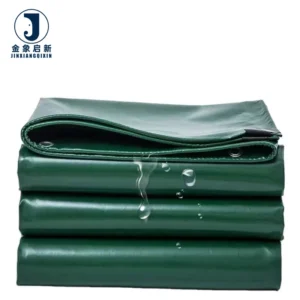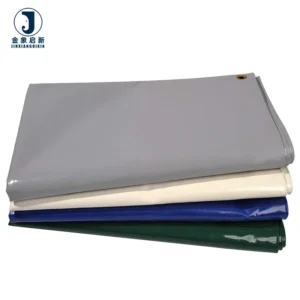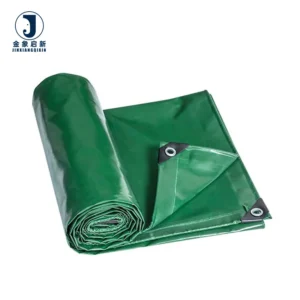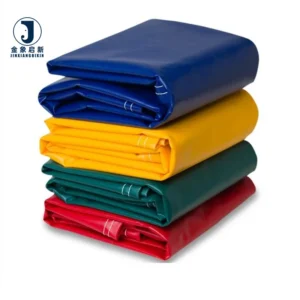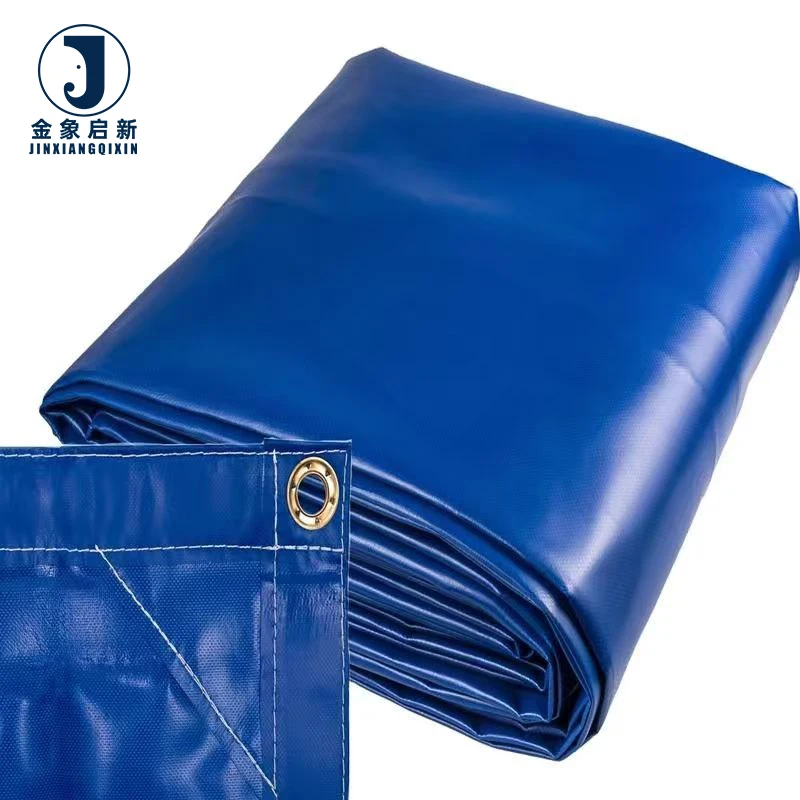
Precision Pattern Match — truck and trailer covers built from exact vehicle dimensions, not generic cut sizes, supported by three full production lines and 100% pre-shipment inspection.
Technical Specifications
| Parameter | Value |
|---|---|
| Product Type | PVC Coated Tarpaulin |
| Weight Range | 250gsm–1500gsm |
| Base Fabric Denier | 200DX300D, 500DX500D, 840DX840D, 1000DX1000D |
| Coating Material | PVC |
| Coating Method | Coated and laminated |
| Available Colors | Blue, yellow, black, green, white |
| Surface Finish | Glossy or matte |
| Width | 3 Meter |
| Size Options | 3x4m, 6x8m, 8x10m, 10x12m or custom made |
| Temperature Range | -15°C to 70°C |
| UV Treatment | Customized (test basis not stated in source) |
| Flame Retardant | FR treated (grade not stated in source) |
| Anti-Fungal | Treated |
| Waterproof | Yes |
| OEM/ODM | Accepted |
Application Suitability
| Application | Exposure & Requirement |
|---|---|
| Truck flatbed load covering | Rain and road spray, tie-down strap abrasion at edges, wind lift at highway speed |
| Curtain-sider trailer side curtains | Constant flexing at load movement points, repeated rolling and unrolling, lateral wind pressure |
| Train and intermodal container top covers | Prolonged weather exposure, standing water pooling, vibration-induced fabric fatigue |
| Fleet branding panels | Color consistency across multiple vehicle covers, surface adhesion for printed graphics |
When a Truck Cover Fails Before the Load Arrives
A PVC coated tarpaulin that tears at the hem or delaminates at the seam does not fail because the GSM was wrong — it fails because the coating adhesion and seam engineering did not match the flex forces on that specific route. The fabric itself rarely breaks first; the weld line or the reinforced edge does.
Fleet operators routinely report covers that split along the heat-welded seam where the trailer bed flexes under load. The fabric remains intact on both sides of the split, but the bond between coating and base fabric separated under repeated stress cycles. [NEED_CITE: peel strength and weld adhesion testing methods for coated fabrics per ISO 1421] Generic-sized covers compound the problem because excess material flaps in the slipstream, concentrating force on the grommets and hems far beyond what the reinforcement was designed to carry.
Sizing from the Vehicle, Not from the Roll
A PVC coated tarpaulin for truck and transport use must be cut to the trailer’s exact dimensions, including the overhang needed for tie-down hardware and the clearance for side curtain runners. Ordering by standard sheet size and trimming on-site creates unsealed edges that wick moisture into the base fabric. Each cover in a fleet order is measured against the vehicle model drawing before production begins, so the finished tarpaulin fits without excess material or shortfalls at the corners.
Reinforcement Where the Load Concentrates Force
Tie-down straps, bungee cords, and rope-through-grommet systems all impose point loads that exceed the tensile capacity of the base fabric alone. Hem reinforcement and grommet spacing must account for the specific securing method the fleet uses. Side curtain applications add a second stress vector — lateral flexing as the trailer articulates — which demands that the PVC coated tarpaulin maintain coating adhesion through thousands of bend cycles without cracking or delamination. [NEED_CITE: cyclic flex testing protocols for transport side curtain fabrics]
Reading Denier and Coating Weight Together
The base fabric denier — whether 200DX300D for lighter awning-grade covers or 1000DX1000D for heavy side curtain use — determines tear propagation resistance, while the PVC coating weight controls waterproofing and surface abrasion tolerance. A high-denier base with insufficient coating leaves the yarns exposed to moisture ingress at flex points. Conversely, a heavy coating on a light base fabric adds weight and stiffness without improving tear strength, making the cover harder to handle and more prone to crease damage during folding. Selecting the right combination depends on whether the primary demand is puncture resistance, flex durability, or tensile load-bearing capacity at tie-down points.
The Cost of a Specification That Does Not Match the Route
A transport operator running refrigerated trailers through sub-zero corridors faces a different failure mode than one hauling aggregate on dusty construction haul roads. Specify a coating formulation without low-temperature flexibility, and the PVC stiffens below its rated range, cracking when the driver folds the cover at the depot. [NEED_CITE: low-temperature flex cracking behaviour in plasticised PVC coatings] Choose a lighter denier for a curtain-sider that crosses rough terrain, and the base fabric tears at the roller track before the coating shows any wear. Batch colour inconsistency across a multi-cover fleet order becomes visible only after installation, when two covers hang side by side on adjacent trailers — forcing a full replacement rather than a targeted swap.
Why Transport Buyers Source Here
Every truck and trailer cover begins with a dimension check against the specific vehicle model, eliminating the generic-size mismatch that causes flap damage and grommet pull-out in service.
Dedicated QA at each production stage catches coating weight deviation and colour drift before the roll reaches the cutting table, not after it arrives at the depot.
The ten-person R&D team develops material samples matched to your fleet’s exposure profile — side curtain flex, flatbed tie-down load, or intermodal weathering — within days rather than weeks.
Three full production lines and 36 sets of professional equipment support fleet-scale orders with consistent batch-to-batch colour and coating weight across every cover in the shipment.
Pre-shipment inspection records document the actual GSM, colour reference, and weld seam condition for each roll or finished cover, so verification happens before dispatch rather than on the receiving dock.
Documentation & Verification
- Material specification sheet confirming GSM, denier, and coating method for each roll in the order
- Colour reference swatch matched against the approved fleet standard before dispatch
- UV and flame retardant test reports provided where specific treatment grades have been confirmed
- Pre-shipment inspection record documenting coating weight and seam integrity per roll
- Packing list detailing roll count, dimensions, and net weight for container loading
Fabrication, Handling & Storage
- Heat-weld seams at manufacturer-recommended temperature to match the PVC coating’s fusion point and avoid base fabric scorch
- Allow grommet spacing to distribute tie-down load evenly across the 3 meter width, preventing point-load tearing at the hem
- Store rolls upright on a flat pallet to prevent permanent creasing that weakens the coated surface at fold lines
- Avoid dragging finished covers across rough concrete surfaces that can abrade the glossy or matte finish before first use
- Clean with mild detergent and soft brush to preserve the anti-fungal treatment and coating integrity over time
- Use compatible PVC repair adhesive for field patches, ensuring the bond area is clean and dry before application
What to Include in Your Enquiry
Provide the trailer make and model, the securing system in use (strap, bungee, rope), and the typical route climate range so the correct denier and treatment package can be recommended. If the order covers multiple vehicles, confirm whether each cover needs individual sizing or a shared dimension set, and specify whether glossy or matte finish is required for fleet visual standards. State any colour matching requirement or regulatory treatment grade your destination market mandates before sample development begins.
Frequently Asked Questions
Q: How do you match tarpaulin size to specific truck and trailer models?
A: We work from the vehicle dimension drawing or physical measurement to pattern each cover, including overhang for tie-down hardware and clearance for side curtain tracks. This eliminates the excess fabric that flaps at speed and causes premature grommet and hem failure on generic-sized covers.
Q: What eyelet spacing and hem reinforcement options are available for tie-down systems?
A: Spacing is set to match the fleet’s securing method — strap hooks, bungee cords, or rope-through-grommet — so point loads distribute evenly. Hem reinforcement uses additional PVC layers heat-welded over the base fabric edge to prevent pull-through under tension.
Q: How is abrasion resistance at flex points ensured for side curtain applications?
A: Side curtain fabric is selected from denier grades that balance flex endurance with tear strength, and the PVC coating formulation is matched to maintain adhesion through repeated bend cycles without cracking or delamination at the roller track contact zone.
Q: What is the process for verifying GSM and coating weight before shipment?
A: Every roll undergoes pre-shipment inspection where actual coating weight is measured and recorded against the agreed specification. The inspection report travels with the shipment documentation so verification is complete before the cover leaves the production facility.
Q: How do you control colour consistency across a fleet order of multiple covers?
A: Batch colour is verified roll-to-roll against the approved reference swatch before any cover is cut. Side-by-side comparison under controlled lighting catches drift that would be visible once two covers are installed on adjacent trailers in the fleet.