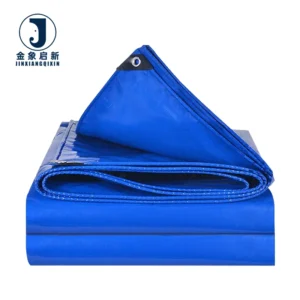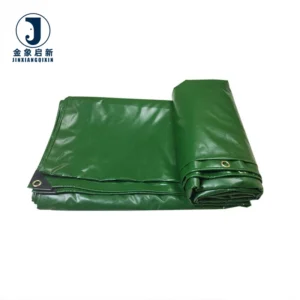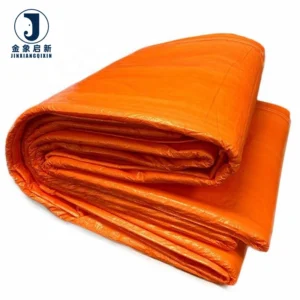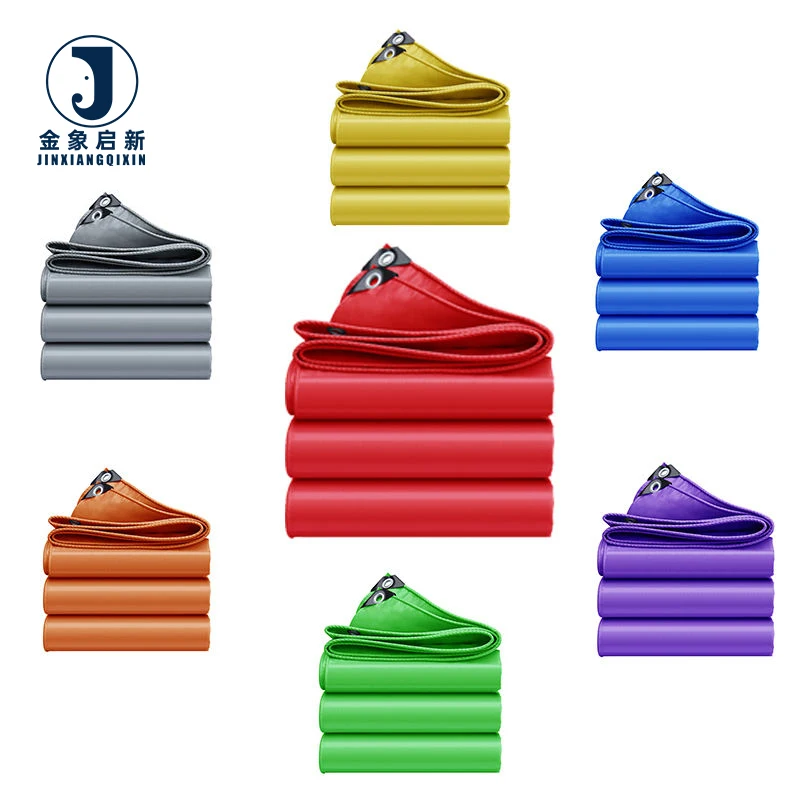
Precision Fitment Engineering — Every truck cover is sized to your exact trailer dimensions, eliminating the load exposure and rework caused by generic-fit tarpaulins.
Technical Specifications
| Parameter | Value |
|---|---|
| Product Type | PVC Coated Tarpaulin |
| Base Fabric Denier | 500D / 1000D / up to 2000D (varies by grade) |
| Total Thickness | 0.35–0.45 mm (medium); 0.70–1.0 mm (heavy-duty); 1.2–1.5 mm (super heavy) |
| Weight (GSM) | 400–500 (medium); 700–1000 (heavy-duty); 1100–1500 (super heavy) — confirm grade |
| Tensile Strength (Warp/Weft) | 1500–2000 / 1200–1800 N/5cm (medium); 2000–2500 / 1800–2200 N/5cm (heavy-duty); 2500–3000 / 2200–2800 N/5cm (super heavy) |
| Coating Material | PVC |
| Available Widths | 2m / 4m / 6m / 6ft / 8ft / 10ft / 12ft |
| Roll Length | 100 yards / 100 meters / custom |
| Colour Options | Blue, Blue/Orange, Green, Grey, Black, Clear, Grey/Green, Orange, or custom |
| UV Treatment | Available (test basis not stated in source — confirm requirement) |
| Anti-Mildew | Stated (no test basis) |
| Waterproof | Fully coated waterproof construction |
| Edge Reinforcement | PP rope reinforced hem |
| Eyelets | Galvanized, every 3ft or 1m interval |
| Corner Reinforcement | Reinforced plastic corners |
| Printing | Custom brand printing available |
Application Suitability
| Application | Exposure & Requirement |
|---|---|
| Flatbed truck and trailer covers | Constant road vibration, tie-down strap abrasion, UV exposure on long-haul routes |
| Curtain-side trailer fabric | Repeated flexing at folds, wind loading at speed, lateral tie-down stress |
| Construction equipment covers | Job-site dust and debris, intermittent UV exposure, rough handling during fitment |
| Lumber and steel tarps | Sharp-edge puncture risk, heavy strap tension, weather exposure during transit |
| Coil tarps | Concentrated point loads, high abrasion at contact surfaces, secure tie-down requirement |
Why Generic-Sized Truck Covers Fail on Real Fleets
A PVC Coated Tarpaulin for Truck and Trailer Covers must match the exact dimensions of your vehicle — not a catalogue approximation. Generic sizing is the leading cause of load exposure, strap wear, and premature cover replacement in transport fleets.
When a cover is cut to a standard size that does not account for your trailer’s specific wheel arch cutouts, tailgate clearance, or load height variation, the result is fabric that either drags on the road or leaves cargo exposed at the edges. Over time, the excess material flaps in the slipstream, concentrating fatigue at the eyelet line and causing hems to tear away from the body of the cover. Fleet operators replacing covers across mixed vehicle types often find that a one-size approach leads to rework on every second fitment [NEED_CITE: common failure modes in truck tarpaulin fitment and tie-down wear].
Sizing to Your Exact Trailer Profile
Before production begins, we confirm the precise dimensions of each vehicle in your fleet. This includes overall length and width, load height at the highest point, and any protrusions or recesses that a generic pattern would miss. A PVC Coated Tarpaulin for Truck and Trailer Covers built this way sits flush against the load, keeping wind out and reducing the flapping that accelerates wear at the hem and eyelet line.
Tie-Down Reinforcement Where Straps Apply Force
The galvanized eyelets at 3ft or 1m intervals distribute strap load across a wide section of the reinforced PP rope hem. Reinforced plastic corners add a further layer of protection at the points where tie-down hardware concentrates the most stress. This arrangement prevents the eyelets from pulling through the fabric under heavy strap tension, a failure mode that frequently appears on covers with standard grommet spacing [NEED_CITE: tie-down reinforcement standards for transport tarpaulins].
Understanding Denier and Tensile Grading for Haul Profiles
Base fabric denier directly influences how the cover handles repeated flexing and abrasion. A 500D base suits lighter loads and shorter routes where flex frequency is moderate, while 1000D to 2000D grades are specified for long-haul and heavy-load profiles where the fabric is under constant tension from wind and strap load. Tensile strength values scale with denier and coating weight together — a higher GSM alone does not guarantee better performance if the base fabric density is low. The coating method bonds the PVC to the polyester yarn, and adhesion quality determines whether the layers separate under flex load before the yarn itself reaches its breaking point [NEED_CITE: tensile and tear test methods for coated fabrics per ISO 1421].
The Hidden Cost of Specifying the Wrong Grade
Selecting a cover based on price per square metre rather than haul profile leads to early replacement cycles. A medium-grade cover on a long-haul flatbed will show abrasion at the flex zones within a short period, requiring the fleet operator to reorder before the next scheduled maintenance window. Conversely, specifying a super heavy-grade cover for a vehicle that runs short urban routes adds unnecessary weight and handling difficulty without extending service life proportionally. Welded seam integrity is also grade-dependent — a seam that holds on a 700 GSM cover may not behave the same way on a 450 GSM material if the welding parameters are not adjusted to match the coating thickness [NEED_CITE: welded seam failure rates in transport tarpaulins by GSM grade].
Why Fleet Operators Source This Fabric Here
Nearly 30 years of focused coated fabric production gives us deep process control over coating weight and adhesion, which directly affects how the PVC Coated Tarpaulin for Truck and Trailer Covers performs under road conditions. Three full production lines and 36 sets of equipment support bulk capacity so that a fleet-wide reorder can be fulfilled without splitting the order across multiple lead times. A 10-person R&D team handles model-specific pattern development, ensuring each cover matches the vehicle profile rather than a generic template. Dedicated quality control at every stage, with 100% pre-shipment inspection, catches seam defects and colour variation before the rolls leave the facility.
Documentation & Verification
- Weight verification per roll against the stated GSM before dispatch
- Pre-shipment inspection record confirming seam integrity and eyelet placement
- Material specification sheet listing base fabric denier, coating type, and colour reference
- Test report for UV treatment where applicable to the specified grade
- Roll packing list with individual roll dimensions and weights for receiving check
- Certificate of origin and customs documentation for cross-border shipments
Fabrication, Handling & Storage
- Heat-weld seams using parameters matched to the specified coating thickness for reliable adhesion
- PP rope reinforced hems should be folded and welded, not stitched, to maintain waterproof integrity
- Galvanized eyelets must be set through both the fabric and the hem rope for load distribution
- Store rolls upright on pallets to prevent flat-spot deformation on the coating surface
- Avoid dragging heavy-duty grades across abrasive surfaces during unloading to protect the coating face
- Clean with mild detergent only — solvent-based cleaners may degrade the PVC coating layer
Requesting a Fitment-Specific Quotation
To move from a generic cover to one engineered for your fleet, provide the make and model of each trailer, the load type and typical route exposure, and any colour matching requirements across the order. If you need custom brand printing or specific eyelet spacing for your tie-down configuration, include those details in the initial inquiry so the sample can reflect the final production specification.
Frequently Asked Questions
Q: How do you ensure the truck cover fits my specific trailer model?
A: We request the exact dimensions of each vehicle, including load height, wheel arch positions, and any protrusions. A pattern is developed from those measurements and confirmed with a sample before bulk production begins, so the PVC Coated Tarpaulin for Truck and Trailer Covers fits without excess material or exposed gaps.
Q: What GSM grade should I specify for my load type and route exposure?
A: Medium grades suit short-haul and lighter loads. Heavy-duty grades are specified for long-haul flatbeds with constant wind and strap load. Super heavy grades are reserved for extreme abrasion environments such as steel and coil transport. We recommend confirming the grade based on your specific route and load profile.
Q: How are welded seams tested at the flex points where loads shift most?
A: Every welded seam is inspected during the 100% pre-shipment quality check. High-flex zones, including corners and eyelet lines, receive additional attention to ensure the weld adhesion matches the fabric strength. Any seam showing incomplete bonding is flagged and reworked before dispatch.
Q: Can you match colour across multiple covers ordered for an entire fleet?
A: Yes. Colour consistency across all rolls in a single order is verified before dispatch. We use controlled coating batches to minimise variation, and the pre-shipment inspection includes a side-by-side colour check so that covers installed on adjacent vehicles present a uniform appearance.
Q: What eyelet spacing and hem reinforcement options are available for heavy tie-down use?
A: Standard galvanized eyelets are set every 3ft or 1 metre, with PP rope running through the hem for distributed load-bearing. For high-tension tie-down applications, closer spacing and reinforced plastic corners at stress concentration points can be specified to prevent eyelet pull-through under strap load.