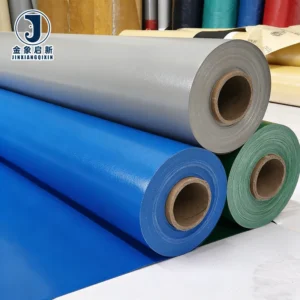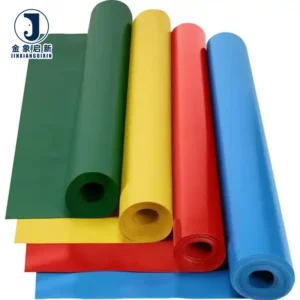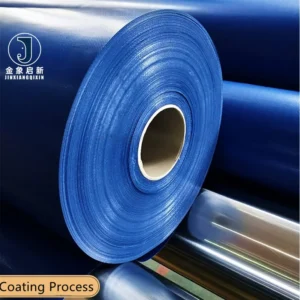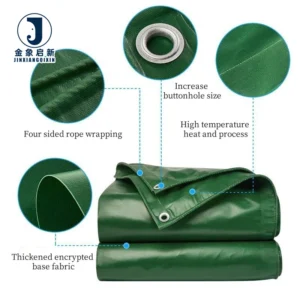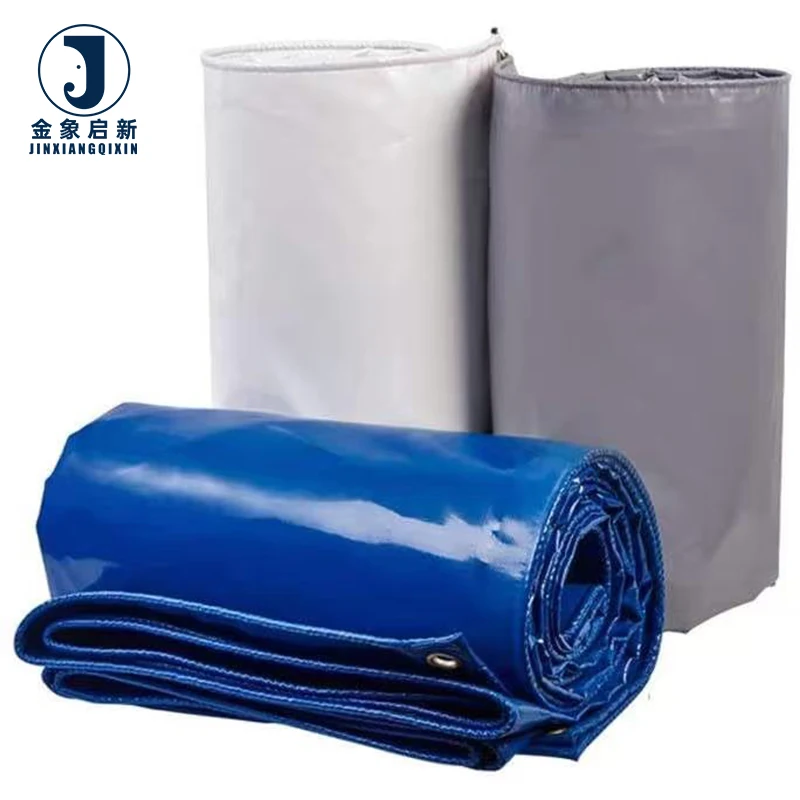
Deep Process Control Over Coating Weight and Adhesion — Every roll of PVC coated tarpaulin produced on our three full lines undergoes in-process coating weight checks and adhesion verification before leaving the facility, ensuring the truck side curtain fabric you receive matches the specification agreed at the sample stage.
Technical Specifications
| Parameter | Value |
|---|---|
| Product Type | PVC Coated Tarpaulin |
| Coating Material | PVC |
| Waterproof | Fully waterproof coated construction |
| Anti-Shrink | Dimensional stability across seasonal temperature variation |
| Flame Retardant | Available in flame retardant grades — confirm the grade required for your market |
| UV Treatment | UV-resistant treatment available — confirm test basis for your application |
| Application Grade | Industrial heavy-duty |
| Fabrication Format | Roll stock, cut to custom width and length |
Application Suitability
| Application | Exposure & Requirement |
|---|---|
| Truck side curtains (articulated trailers) | Continuous road-splash exposure, repeated flexing at buckle and rail zones, UV from highway travel |
| Rigid lorry side covers | Tie-down abrasion at strap contact points, wind-load stress on curtain panels during transit |
| Flatbed curtain-sider loads | Long-haul weather extremes, mechanical wear from curtain sliding mechanisms and track systems |
| Tent and awning fabric | Prolonged outdoor UV exposure, rain ingress prevention, structural tension on welded seams |
| Industrial transport covers | Abrasive contact with irregular loads, forklift handling damage risk, chemical splash from cargo |
Why Generic-Size Covers Fail Where Side Curtains Flex Most
Curtain fabric cut to a generic trailer size will gap at the rails and buckle points, accelerating wear precisely where the load flexes hardest.
Fleet operators frequently replace side curtains well before the fabric itself has reached the end of its service life. The failure point is almost always the hem or the eyelet zone, where the generic cut leaves insufficient overlap for the specific trailer model. Road vibration and load shift concentrate stress at these edges, and once a hem starts to lift, water ingress and fabric delamination follow rapidly [NEED_CITE: common failure modes in truck side curtain installations per transport fleet maintenance surveys]. This is why specifying PVC truck side curtain fabric for transport by exact vehicle dimension — with reinforced hems positioned at the flex zones — eliminates the premature replacement cycle that generic roll cuts create.
Sizing Fabric to the Trailer Model, Not the Catalogue Standard
Every trailer manufacturer uses different rail profiles, buckle spacing and curtain track systems. A fabric cut that works on one articulated body may leave a two-centimetre gap on another, and that gap is where road spray enters at speed. Our PVC truck side curtain fabric for transport is specified against your vehicle model dimensions, with panel width and drop calculated from the actual curtain rail to floor measurement rather than a nominal body size.
Reinforcement Placement at Stress-Concentrated Zones
The hem line and eyelet row carry the entire tie-down and track-load on a sliding curtain. We position additional coating layers and weld reinforcement at these zones based on the strap spacing and track-bead configuration of your trailer system. This targeted reinforcement approach means the PVC coated tarpaulin resists abrasion where it matters rather than adding unnecessary weight across the entire panel surface.
Coating Adhesion and the Weld Line Integrity Problem
When side curtain panels are fabricated, the welded seams must outlast the fabric itself. Coating adhesion to the base fabric is the variable that determines whether a weld holds under repeated flexing or peels away at the first cold-weather load shift [NEED_CITE: peel strength test methods for PVC coated fabrics per ISO 2411]. Our three production lines maintain controlled coating weight and thermal bonding parameters to deliver consistent adhesion, so the weld line on your curtain panels performs predictably across seasonal temperature swings.
Reading GSM, Denier and Coating Weight Together
Specifying truck side curtain fabric on GSM alone is like specifying an engine on displacement alone — it tells you the total but nothing about how that mass is distributed. A 650 GSM fabric with a heavy coating and a light base fabric will have strong waterproofing but poor tear resistance. A 650 GSM fabric with a lighter coating and a denser base will tear well but may not seal as effectively at the weld seams. The balance between base fabric denier, weave density and PVC coating weight determines the actual performance profile. The PVC coating method — whether knife-over-roll, laminating or calendering — further influences how well the coating bonds to the yarn and how the fabric behaves during thermal welding on the fabrication floor.
What Happens When Roll Consistency Is Not Verified Before Dispatch
Colour variation between rolls in the same side curtain order becomes visible the moment panels are hung side by side on a trailer. For fleet operators running a uniform livery, this means panels from different rolls cannot be mixed on the same vehicle, and replacement curtains stand out against the originals [NEED_CITE: colour measurement and batch consistency standards for coated fabrics]. Equally, coating weight variation between rolls means the GSM stated on the quotation may not match the material that arrives — and a lighter-than-specified curtain will fail prematurely under the same road-load conditions that a correctly weighted panel would withstand. These are not cosmetic issues; they are specification integrity failures that compound over an entire fleet replacement programme.
Why Sourcing From a Coating-Focused Facility Changes the Outcome
Our facility in Jinan operates three full production lines and 36 sets of professional equipment dedicated to coated fabric, meaning capacity for bulk side curtain orders without compromising coating consistency across the run. A 10-person R&D team handles material selection, custom width development and sample fabrication — so your specification is validated against a physical sample before production begins rather than assumed from a datasheet. Every roll undergoes 100% inspection at the pre-shipment stage, with coating weight, colour reference and dimensional accuracy checked against your confirmed specification [NEED_CITE: pre-shipment inspection protocols for industrial coated fabric orders]. This is not a trading operation reselling third-party production; the coating, the cutting and the quality gate all happen under one roof.
Documentation & Verification
- Material specification sheet stating GSM, base fabric denier and PVC coating weight per roll
- Flame retardant test report where applicable, matched to the grade confirmed at order stage
- Colour reference and batch consistency record for multi-roll side curtain orders
- Pre-shipment inspection record with roll-by-roll coating weight and dimensional check
- Roll packing list with individual roll identification for traceability after dispatch
Fabrication, Handling & Storage
- Thermal welding parameters should be calibrated to the specific PVC coating weight before curtain panel fabrication begins
- Reinforced hems at eyelet rows must account for the base fabric denier to prevent pull-through under tie-down tension
- Rolls stored flat on pallets in a shaded, ventilated area to prevent permanent creasing in the PVC coating layer
- Allow cold-stored rolls to reach ambient temperature before unrolling to avoid cracking the PVC coating surface
- Curtain panels cleaned with mild detergent only — solvent-based cleaners will degrade the PVC coating and UV treatment over time
- Custom width rolls cut to minimise off-cuts and reduce the number of welded seams per curtain panel
What We Need to Specify Your Side Curtain Fabric Correctly
Provide your trailer make, model and body type along with the curtain rail configuration so we can calculate exact panel dimensions rather than quoting a generic cut. Confirm your target market’s flame retardant requirement — different jurisdictions mandate different grades and test standards, and we need to match the certification to the regulation. Let us know your annual volume and colour schedule so we can plan roll consistency across your fleet replacement programme and arrange sample development before the first production run.
Frequently Asked Questions
Q: How is GSM verified on arrival and what tolerance applies to side curtain fabric?
A: Each roll is weighed and measured during our pre-shipment inspection, with the actual coating weight recorded against the stated GSM on the inspection report you receive. We control coating application through calibrated line settings rather than post-production sorting, so the material arriving at your facility matches the specification confirmed at sample approval stage. Any tolerance band is agreed before production and documented on your material specification sheet.
Q: Which flame retardant grade does my target market require for truck curtain material?
A: This depends entirely on your jurisdiction and application — European road transport, North American industrial sites and Asian mining operations each reference different standards. Confirm the specific grade with your local regulatory body or site safety officer, and we will supply the fabric with the corresponding treatment and the matching test report included in your dispatch documentation.
Q: How do you control colour consistency between rolls in the same side curtain order?
A: We record the colour reference for your order and verify each roll against that reference during the pre-shipment inspection. Rolls destined for the same fleet or project are produced within the same coating batch where scheduling allows, and the batch consistency record travels with your documentation so you can trace which panels came from which production run.
Q: How do you size the fabric to a specific trailer model rather than a generic cut?
A: We work from your trailer manufacturer, model and body dimensions — including curtain rail type, track-bead profile and buckle spacing — to calculate the exact panel width and drop. This eliminates the gap and excess material that generic cuts create at the stress points where side curtains flex most during transit and loading operations.