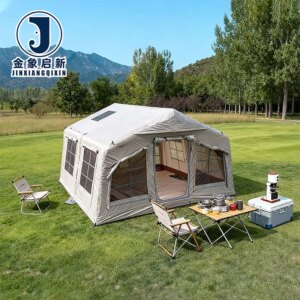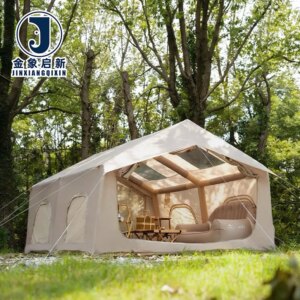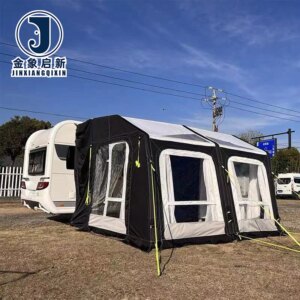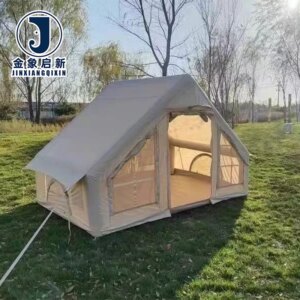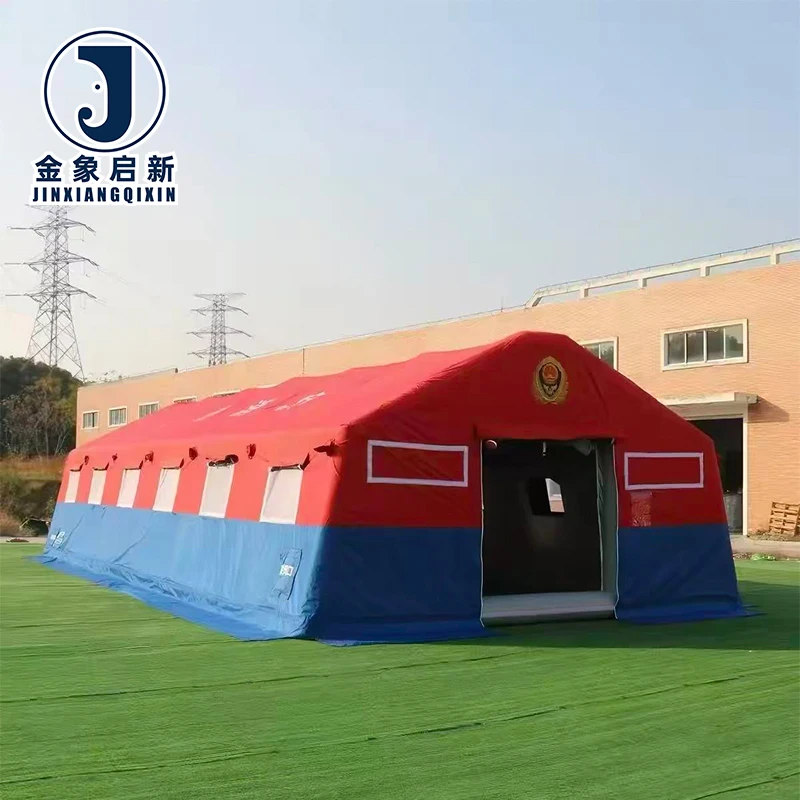
Coated Fabric Expertise — nearly 30 years of PVC tarpaulin manufacturing ensures every inflatable tent we produce meets strict coating weight and adhesion standards, verified at every production stage.
Technical Specifications
| Parameter | Value |
|---|---|
| Product Type | Inflatable PVC Tent |
| Core Material | PVC tarpaulin |
| Waterproof Rating | 3000mm |
| Design | Quick Automatic Opening, Four-Season Design, Single Layer Construction |
| Customization Service | OEM & ODM (sample customization, pattern printing) |
| Flame Retardant Grade | (grade not stated) |
| Anti-UV | (test basis not stated) |
| Certifications | ISO9001, ISO14001, ISO45001, CE |
Application Suitability
| Application | Exposure & Requirement |
|---|---|
| Temporary roadside shelter for breakdown crews | Constant weather exposure, rapid deployment required, high-visibility safety needs |
| Mobile field station at logistics yards | Frequent assembly/disassembly, equipment protection from rain and dust, wind load resistance |
| Equipment maintenance enclosure at remote delivery points | Ground moisture, temperature fluctuations, single-operator setup necessity |
| Disaster relief shelters | Emergency deployment speed, occupant protection from elements, transport efficiency in bulk |
| Temporary warehousing for logistics operations | Cargo protection from precipitation, large footprint coverage, extended outdoor exposure |
Why "Waterproof" Means Nothing Without a Verified Rating
A stated waterproof column height only matters when backed by batch-specific test documentation.
Generic tent suppliers often claim waterproof performance without providing the actual hydrostatic head test result. Transport operators and logistics fleet managers have experienced cargo damage because the shelter fabric absorbed water during extended rain exposure. The difference between a basic water-resistant coating and a verified 3000mm rating determines whether your stored equipment stays dry during a multi-day storm at a cross-dock facility. [NEED_CITE: hydrostatic head test methods for coated fabrics per ISO 811]
Rapid Deployment Without Compromising Structural Integrity
The quick automatic opening mechanism on this Inflatable PVC Tent for transport and logistics deployment allows a single operator to establish a weatherproof workspace in minutes. Fleet operators managing roadside breakdowns or load transfer operations cannot afford extended setup times when cargo sits exposed. The inflation system maintains consistent internal pressure, keeping the structure rigid against wind loads encountered at exposed logistics yards and remote delivery points.
Four-Season Performance Across Variable Climates
Transport routes span diverse temperature zones, and the shelter protecting your maintenance crew or temporary inventory must perform regardless of ambient conditions. This inflatable tent maintains fabric flexibility in cold environments while resisting excessive softening during high-temperature exposure. The four-season design addresses the thermal cycling that causes inferior materials to crack at stress points or become tacky and attract debris [NEED_CITE: low-temperature flexibility testing for PVC coated fabrics].
What the 3000mm Waterproof Rating Actually Protects
The hydrostatic head rating indicates the water column pressure the PVC tarpaulin can withstand before moisture penetrates the coating. A 3000mm rating provides substantial protection against driven rain and prolonged precipitation, critical for safeguarding sensitive cargo during temporary storage or protecting diagnostic equipment at field maintenance stations. The single layer construction balances this waterproof performance with manageable packed weight, enabling efficient transport and storage on service vehicles when not deployed.
The Hidden Cost of Underspecified Waterproof Protection
Procurement teams focusing solely on unit cost often discover the real expense after the first major weather event. Insufficient waterproof ratings lead to water ingress that damages stored electronics, corrodes metal components, or ruins packaged goods awaiting transfer. The resulting cargo claims, equipment replacement costs, and operational delays far exceed the initial savings from choosing an unverified shelter solution [NEED_CITE: cargo damage statistics from inadequate temporary shelter].
Why Procurement Teams Specify This Inflatable Tent
Our dedicated QA/QC process includes 100% inspection before shipment, catching coating inconsistencies or seam defects that could compromise waterproof integrity in the field. The 10-person R&D team handles custom sizing requests, ensuring the tent dimensions match your specific loading bay footprint or vehicle service area rather than forcing you to adapt to generic sizes. Three full production lines support bulk orders for fleet-wide deployment without extended lead times that delay your operational readiness. Pattern printing capabilities allow fleet branding integration, maintaining corporate identity across your mobile infrastructure.
Documentation & Verification
- Material specification sheet stating PVC base fabric type, coating weight, and 3000mm waterproof test result
- Pre-shipment inspection record confirming 100% inspection completed before dispatch
- CE certificate and ISO documentation package included with each shipment for compliance verification
- Roll packing list detailing quantities and dimensions for customs clearance and inventory reconciliation
- Certificate of origin supporting international trade requirements and preferential tariff applications
Fabrication, Handling & Storage
- Heat welding parameters must match PVC tarpaulin coating thickness to prevent seam delamination under inflation pressure
- Deflate completely and fold along original crease lines before storage to avoid permanent creasing in the PVC coating
- Clean with mild soap solution only; solvent-based cleaners degrade the waterproof coating and compromise the 3000mm rating
- Store in cool, dry conditions away from direct sunlight to preserve anti-UV treatment effectiveness and fabric flexibility
- Inspect inflation valves and seals before each deployment to ensure consistent internal pressure maintenance during use
Specifying Your Inflatable Tent Requirements
Provide your typical deployment scenarios including expected wind loads, temperature ranges, and duration of continuous use at each location. Share the specific footprint dimensions needed for your loading bays, vehicle maintenance areas, or temporary storage zones. Confirm whether your operation requires flame retardant certification for indoor or enclosed space use, and specify any corporate branding or high-visibility colour requirements for safety compliance.
Frequently Asked Questions
Q: How do we verify the 3000mm waterproof rating for our specific batch?
A: Each shipment includes a waterproof test report documenting the hydrostatic head result for the production batch. Request this documentation during the quotation stage to confirm the test methodology aligns with your procurement standards. We provide sample test results from recent production runs during the evaluation phase.
Q: What customization options exist for sizing and fleet branding?
A: OEM & ODM services cover custom dimensions matched to your loading bay specifications or vehicle service areas, plus pattern printing for corporate logos and safety markings. Provide dimensional drawings and brand colour codes during inquiry. Sample approval occurs before mass production begins.
Q: How does single-operator deployment work in field conditions?
A: The quick automatic opening mechanism requires only an air pump connection and inflation to achieve full structural rigidity. One person can complete deployment within minutes without specialized tools or additional crew. Detailed inflation procedures and handling guidelines ship with each unit for operator training.
Q: What documentation accompanies international shipments?
A: Each order includes CE certificates, ISO documentation, material specification sheets, pre-shipment inspection records, packing lists, and certificates of origin. These documents support customs clearance and demonstrate compliance with destination market requirements. Confirm specific documentation needs during the quotation phase.