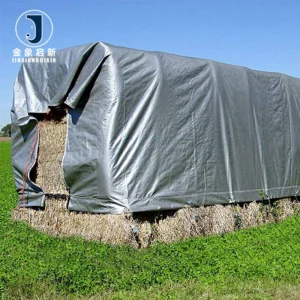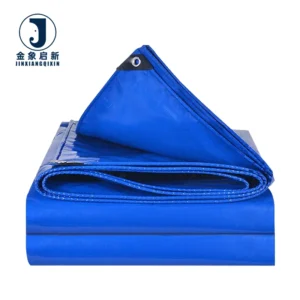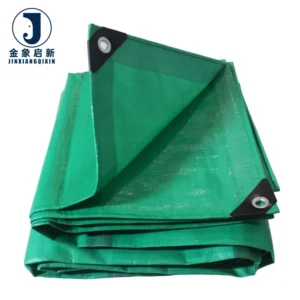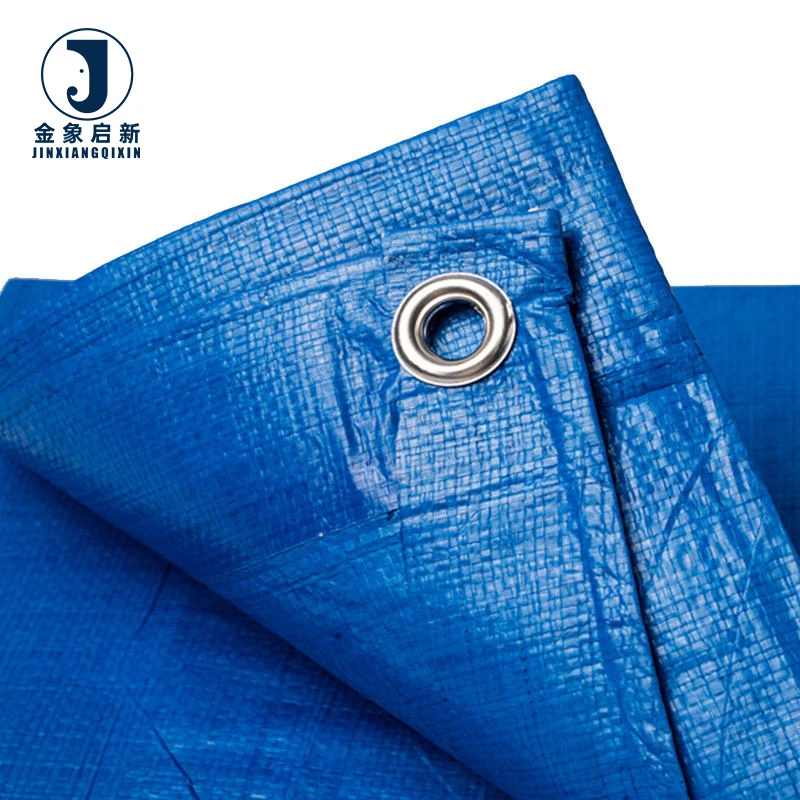
Coating process control — nearly 30 years focused on polyethylene coated fabric with deep process control over coating weight, adhesion, and dimensional accuracy for transport covers.
Technical Specifications
| Parameter | Value |
|---|---|
| Product Type | PE Tarpaulin |
| Coating Material | Polyethylene (PE) |
| Weight (GSM) | 40g~500g/m² (range covers product family — confirm the grade for this item) |
| Mesh Count | 8×8 / 10×10 / 12×12 (varies by grade) |
| Total Thickness | 0.18–0.35 mm (varies by grade) |
| Tensile Strength | Meridian 300–1200 N/5cm / Latitude 250–1000 N/5cm (test basis not stated) |
| Knitting Density | 5×5~20×20 |
| Size | Custom size |
| Color | Custom color |
| Waterproof Construction | Double waterproof surfaces |
| UV Treatment | Available (test basis not stated) |
| Anti-Mildew | Stated |
| Grommet Spacing | Center-to-center 39.4 inches, reinforced rustproof |
| Corner Reinforcement | Reinforced corners |
| Standards | ISO and CE certified |
Application Suitability
| Application | Exposure & Requirement |
|---|---|
| Truck flatbed load cover | Road vibration, wind uplift, tie-down abrasion at grommet points, rain and road-splash ingress |
| Trailer side curtain | Constant flexing at load-bearing contact points, UV exposure during transit, repeated rolling and unrolling |
| Transport equipment cover | Outdoor storage exposure, dust and moisture protection, UV and mildew resistance over extended periods |
| Fleet replacement cover | Must fit specific trailer model dimensions exactly, with grommet alignment matching existing tie-down hardware |
| Agricultural transport cover | Contact with organic material, moisture exposure, need for washable and mildew-resistant surfaces |
Why a Generic-Size PE Tarpaulin Fails on a Moving Trailer
A cover that does not match the trailer model leaves gaps where wind and water enter at highway speed.
Generic-size PE tarpaulin for truck and transport covering often arrives with dimensions that do not correspond to the actual trailer bed or side curtain frame. The result is excess material that flaps under load, creating friction points that wear through the fabric within weeks. Alternatively, a cover that is too small places constant tension on the grommets, pulling them from the hem before the fabric itself reaches end of life. [NEED_CITE: tarpaulin failure modes in transport applications per ISO 1421] Fleet operators replacing worn covers frequently discover that the original generic sizing was the root cause of premature failure, not the material grade itself.
Cut to Vehicle Dimensions, Not Stock Sizes
Every PE tarpaulin for truck and transport covering in this range is produced to the specific dimensions of the trailer or flatbed model it will protect. The cut pattern accounts for the required overlap at edges, the position of tie-down rails, and the clearance needed for tailgate or side-door operation. This eliminates the excess fabric that causes wind-flap abrasion and the shortage that overstresses grommets during securing.
Reinforcement at the Points That Actually Fail
Grommets are spaced at 39.4-inch centers and set into reinforced rustproof housings designed to distribute tie-down load across a wider area of the PE fabric. Corners receive additional reinforcement patches because they absorb the highest concentrated force when straps or ropes are tensioned. This reinforcement strategy targets the specific failure points observed in transport covering rather than applying uniform treatment across the entire sheet.
Specification Interpretation: What the Numbers Mean on the Road
The GSM weight, knitting density, and mesh count work together to determine how the fabric behaves under transport conditions. A higher knitting density such as 12×12 produces a tighter weave that resists tear propagation when a puncture occurs from contact with sharp-edged cargo. The double waterproof surfaces ensure that water does not wick through the base fabric weave, which is critical when the cover sits over moisture-sensitive loads during multi-day transit. Total thickness between 0.18 and 0.35 mm reflects the combined coating and base fabric construction — a thicker grade provides more abrasion resistance at contact points but adds weight that affects handling during manual cover deployment. UV treatment, available across grades, addresses polymer degradation from sustained sun exposure during outdoor staging and transit. [NEED_CITE: UV degradation mechanisms in polyethylene woven fabrics]
The Hidden Cost of a Spec Mismatch on Transport Covers
When a fleet orders covers based on price per unit without verifying the GSM on arrival, lighter-than-specified material enters service and fails at flex points within the first season. A batch with inconsistent color across rolls becomes visible when two covers sit side by side on adjacent trailers, prompting customer complaints about fleet appearance. Grommets installed without adequate hem reinforcement pull free under strap tension, leaving the cover unsecured and the load exposed mid-route. [NEED_CITE: grommet pull-out testing methods for coated transport fabrics] These failures are not material defects — they are specification and quality control gaps that occur before the product leaves the factory.
Why Source Transport PE Tarpaulin from Jinan Jinxiang
Three full production lines and 36 sets of professional equipment support the volume requirements of fleet orders with reliable on-time delivery across multiple trailer models. The 10-person R&D team handles pattern development for specific vehicle dimensions, ensuring each cover fits the intended model before bulk production begins. Dedicated QA/QC inspection at every production stage, with 100% pre-shipment inspection, catches grommet spacing deviations and dimensional inaccuracies before covers are dispatched. Samples are developed within days for custom sizing requirements, allowing fleet operators to verify fit on an actual trailer before committing to a full order. Material specification sheets accompany each shipment, documenting the base fabric density, coating weight, and color reference for batch traceability.
Documentation & Verification
- Material specification sheet stating GSM, base fabric density, and color reference per roll
- Pre-shipment inspection record confirming cut dimensions against specified trailer model
- Grommet spacing and corner reinforcement verification with photographic documentation
- UV and anti-mildew treatment confirmation with applicable test documentation where claimed
- Roll packing list with weight and dimension details for customs and receiving inspection
- Certificate of origin and ISO and CE certification documentation for import compliance
Fabrication, Handling & Storage
- Heat-seal parameters must match the specific PE coating thickness grade to achieve full seam adhesion
- Grommet installation at 39.4-inch centers requires reinforced hem tape to prevent pull-out under tension
- Store rolls horizontally on pallets to prevent permanent creasing of the double waterproof coating surfaces
- Avoid dragging covers across abrasive surfaces during deployment to protect the outer PE coating layer
- Clean with mild detergent and water; avoid solvent-based cleaners that degrade the PE surface treatment
- Repair minor punctures with compatible PE repair tape applied to both waterproof surfaces for full seal
What We Need to Quote Your Transport Cover Accurately
Provide the exact trailer make, model, and bed or curtain dimensions so the cut pattern matches your vehicle. Specify the load type and typical route conditions — highway transit, off-road construction sites, or coastal exposure — so the correct GSM grade and treatment package can be recommended. Indicate whether you need finished covers with grommets and reinforced hems, or roll stock for in-house fabrication.
Frequently Asked Questions
Q: How do I provide trailer dimensions for a custom-fit PE tarpaulin cover?
A: Measure the trailer bed length, width, and the required side drop or overlap. For side curtain applications, provide the frame height and rail-to-rail distance. Include the make and model year of the trailer so we can cross-reference standard dimensions and confirm the cut pattern before production.
Q: What grommet spacing works for different trailer tie-down systems?
A: The standard 39.4-inch center spacing is compatible with most ratchet strap and rope tie-down configurations on flatbed and curtain-side trailers. If your trailer uses a different rail slot interval, specify that distance and the grommet spacing will be adjusted to align with your existing hardware during production.
Q: How is the actual GSM verified against the quoted weight grade?
A: Each roll undergoes weight verification during pre-shipment inspection. A sample is cut from the production batch, measured for area, and weighed to confirm the GSM matches the specification on the quotation. Results are documented in the inspection record provided with shipment.
Q: Will color be consistent across multiple covers ordered for a fleet?
A: All covers in a single fleet order are produced from the same coating batch to ensure color uniformity. The material specification sheet includes the color reference code, and batch consistency is verified during the pre-shipment inspection before covers are packed and dispatched.
Q: What reinforcement options are available at high-abrasion flex points?
A: Corners receive standard reinforced patches. Additional reinforcement can be applied at grommet rows, along hem edges, or at specific contact points where the cover rubs against cargo or trailer hardware. Specify the abrasion zones when placing the order so reinforcement is positioned accordingly.