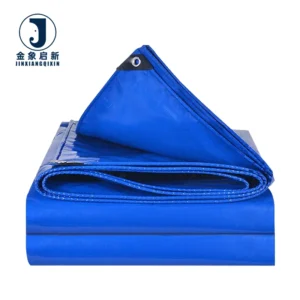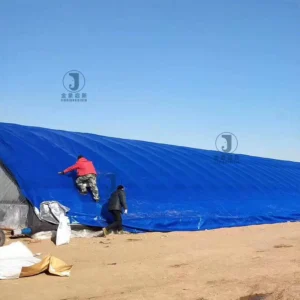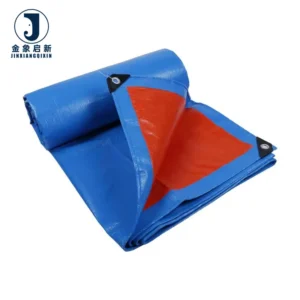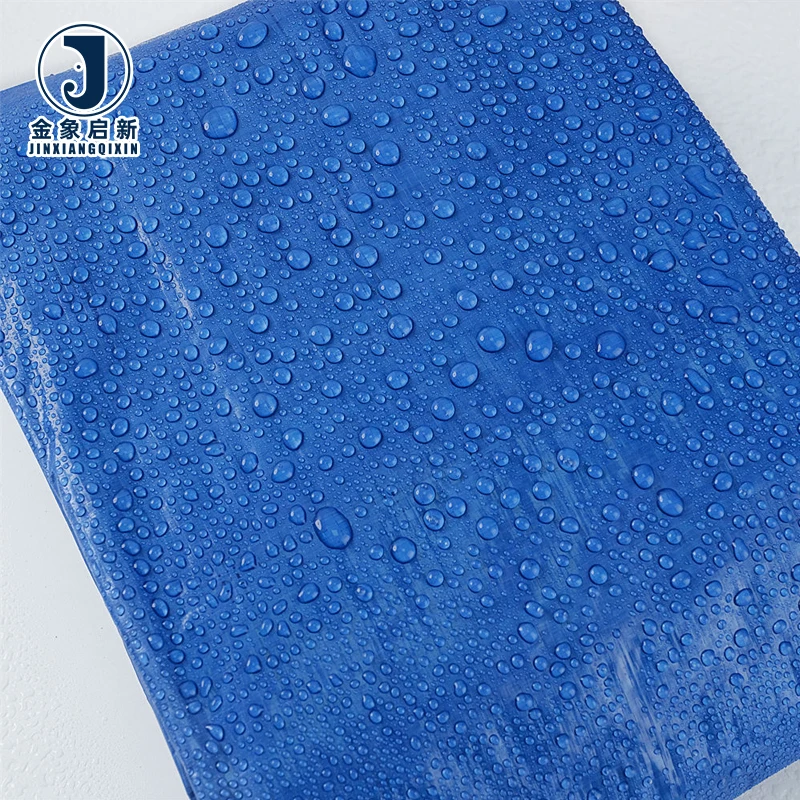
Process-Controlled Coating — nearly 30 years of focused PE tarpaulin production with dedicated QA at every stage ensuring consistent weight and adhesion across every roll shipped.
Technical Specifications
| Parameter | Value |
|---|---|
| Product Type | PE Tarpaulin |
| Material | Polyethylene |
| Weight (GSM) | 40g~500g/m2 (range covers product family — confirm the grade for this item) |
| Thickness (mm) | 0.18-0.22 (lightweight) / 0.22-0.28 (medium) / 0.30-0.35 (heavy-duty) |
| Knitting Density | 8×8 (lightweight) / 10×10 (medium) / 12×12 (heavy-duty) |
| Mesh Count | 5×5~20×20 (range covers product family — confirm the grade for this item) |
| Tensile Strength (N/5cm) | Meridian 300-500 / Latitude 250-450 (lightweight); Meridian 500-800 / Latitude 400-700 (medium); Meridian 900-1200 / Latitude 700-1000 (heavy-duty) |
| Water Resistance | Double waterproof surfaces |
| UV Treatment | Anti-UV (test basis not stated) |
| Center To Center Spacing | 39.4 Inches |
| Reinforcement | Reinforced corner |
| Size | Custom size |
| Color | Custom color |
| Standards | ISO, CE |
Application Suitability
| Application | Exposure & Requirement |
|---|---|
| Truck and trailer load covering | Constant tie-down tension, road vibration, weather and splash exposure requiring custom-fit dimensions |
| Side curtain integration | Repeated flexing at mounting rails, abrasion against cargo edges, wind load during transit |
| Fleet OEM cover replacement | Model-specific fitment, eyelet alignment with existing tie-down hardware, colour match to fleet livery |
| Transport equipment construction | Panel sizing to frame geometry, hem reinforcement at stress concentrations, long-term UV exposure on parked vehicles |
Why Generic-Size Covers Fail on Specific Trailer Models
A cover cut to a standard rectangle will never match the load profile of a curtain-side trailer or a stepped-deck flatbed.
Fleet operators routinely receive PE tarpaulin for truck and trailer cover applications that are dimensionally close but functionally wrong. The excess fabric flaps in crosswinds and abrades against itself, while the short edges leave cargo exposed at the corners. I have watched transport teams spend hours re-rigging bungees to compensate for poor fit, only to see the grommets tear through within weeks because the load path was never designed for that specific tension geometry [NEED_CITE: tie-down load distribution on curtain-side trailers]. The underlying issue is ordering by nominal size rather than by vehicle model and load profile.
Model-Specific Fitment Eliminates Transit Gaps
When a PE tarpaulin for truck and trailer cover is cut and finished to the exact dimensions of a specific vehicle model, the cover sits flush against the cargo profile without loose fabric or short falls. Reinforced corners align with the trailer’s tie-down rails, and the 39.4-inch center-to-center eyelet spacing matches standard ratchet strap and bungee hook placement. This approach removes the guesswork from daily rigging and reduces the lateral stress that causes grommet pull-out at highway speeds.
Reinforcement at the Points That Actually Fail
The corners and edges of a transport cover endure concentrated loads that the field of the fabric never sees. Reinforced corner patches distribute the tie-down force across a wider area of the base fabric, preventing the tear propagation that starts at a single overstressed grommet. For fleet operators running multi-axle trailers with high tie-down counts, specifying reinforcement at both the corners and intermediate flex points extends the service interval between cover replacements and reduces roadside re-tensioning stops.
Reading the Specs That Govern Road Performance
Tensile strength values stated as Meridian and Latitude figures reflect the woven base fabric’s resistance to pulling forces in each direction — on a truck cover, the meridian (warp) direction typically carries the tie-down load while the latitude (weft) resists wind billowing. Knitting density, whether 8×8 for lightweight grades or 12×12 for heavy-duty, determines how many yarns share the load at any stress point and directly influences tear propagation behaviour. The polyethylene coating provides waterproofing and surface abrasion resistance but contributes minimally to structural strength, which is why a heavier coating does not compensate for a loosely woven base fabric. Anti-UV treatment is available across grades — confirm the grade required for your market and request the corresponding test basis before specifying [NEED_CITE: UV degradation test methods for polyethylene tarpaulins per ISO 4892].
The Hidden Cost of Specifying Blindly
A cover that arrives lighter than the quoted GSM fails at the seams long before the expected replacement interval, forcing the fleet into unplanned downtime and emergency reorders at premium lead times. Colour variation between rolls in a single order becomes visible the moment two covers are installed on adjacent trailers in the same yard, undermining the fleet’s professional appearance. Welded hems that were not matched to the base fabric’s melting characteristics separate at the fold line under cyclic road vibration, leaving the cargo exposed mid-route [NEED_CITE: thermal welding parameters for polyethylene coated fabrics]. Each of these failures traces back to a specification that was accepted on paper but not verified in production.
What Production Discipline Looks Like Here
Three full production lines and 36 sets of professional equipment maintain consistent output across bulk fleet orders without sacrificing individual cover accuracy. A 10-person R&D team develops sample covers against your specific trailer drawings before production begins, so fitment is confirmed on the vehicle before the batch is committed. Dedicated QA/QC runs at every production stage — base fabric inspection, coating weight check, cutting dimension verification, and eyelet placement confirmation — with 100% inspection completed before any cover leaves the facility. Custom widths, colours and print requirements are handled on the same lines as standard stock, meaning lead times and minimums remain practical for fleet-scale orders. Samples are developed within days for any custom sizing or reinforcement requirement, giving procurement teams a physical reference before committing to volume.
Documentation & Verification
- Material specification sheet confirming GSM, base fabric denier and coating weight per roll
- Pre-shipment inspection record verifying each cover matches the ordered vehicle model dimensions
- UV and flame-retardant test reports where applicable grades are specified
- Roll packing list with individual cover identification for fleet allocation
- Certificate of origin and customs documentation for cross-border fleet deliveries
Fabrication, Handling & Storage
- Heat welding parameters must match the specific polyethylene coating thickness — confirm temperature and dwell time for the selected GSM grade
- Reinforced corners require grommet setting pressure calibrated to the patch thickness to avoid crushing the base fabric weave
- Store rolled covers upright on pallets in dry conditions to prevent permanent creasing at the fold lines
- Deploy covers above freezing temperatures to avoid low-temperature stiffness that stresses eyelets during initial rigging
- Clean with mild detergent only — solvent-based cleaners degrade the polyethylene coating surface and reduce waterproofing integrity
- Cut repair patches from the same GSM grade to maintain consistent flex behaviour at the repair site
What We Need to Quote Accurately
Provide the truck or trailer make, model and year along with the cargo type and typical tie-down configuration. Specify the GSM grade or thickness range suited to your route conditions — our team can recommend the appropriate knitting density and reinforcement layout based on your exposure profile. Confirm the quantity per vehicle model, colour requirements, and whether you need finished covers with eyelets and hems or roll stock for your own fabrication line.
Frequently Asked Questions
Q: How do you ensure the cover fits my specific trailer model?
A: We work from the vehicle’s dimensional drawings or physical measurements to cut each PE tarpaulin for truck and trailer cover to exact fitment. Sample covers are produced and checked against the trailer profile before batch commitment, and pre-shipment inspection confirms every unit matches the ordered dimensions within tolerance.
Q: What reinforcement options are available at tie-down and flex points?
A: Reinforced corner patches are standard, distributing tie-down loads across a wider base fabric area. Additional reinforcement strips can be applied at intermediate grommet positions and high-flex zones identified by your trailer’s load profile, matched to the selected GSM grade.
Q: How do you verify GSM on arrival matches the quotation?
A: Each roll and finished cover is weighed during production against the stated GSM specification. The pre-shipment inspection record documents actual measured values, and material specification sheets accompany every dispatch to support your incoming goods verification process.
Q: What eyelet spacing and hem options are standard for transport covers?
A: Standard center-to-center eyelet spacing is 39.4 inches, compatible with common tie-down hardware. Hem construction and grommet type are matched to the selected fabric thickness and the tension loads expected from your trailer’s tie-down rail configuration.
Q: How do you control colour consistency across multiple covers in one order?
A: All covers in a single fleet order are produced from the same coating batch to eliminate roll-to-roll colour variation. The production sequence groups identical colour specifications together, and 100% visual inspection before packing flags any units that deviate from the approved colour reference.