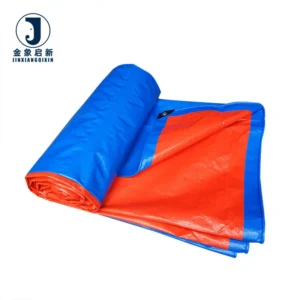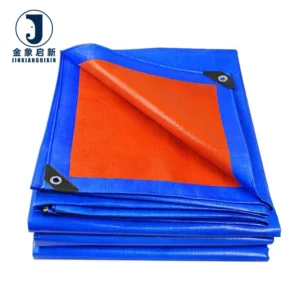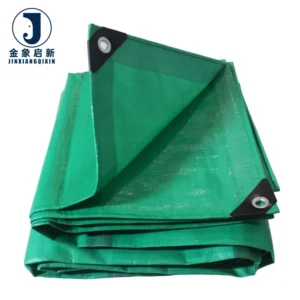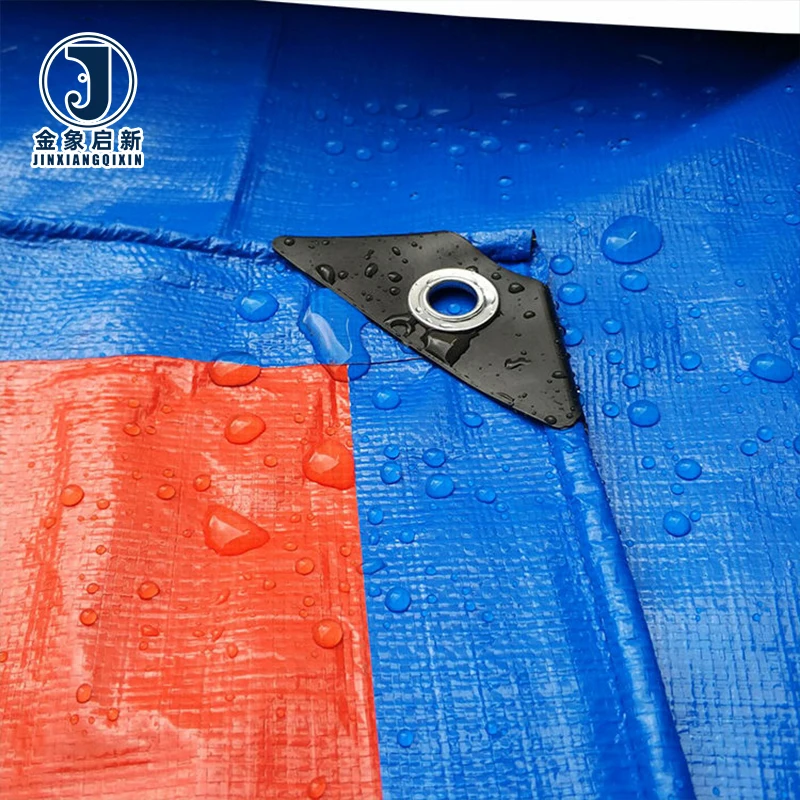
Near 30 Years of PE Coating Expertise — Our three full production lines run strict coating weight controls on every PE woven batch, delivering consistent GSM from the first roll to the last in your container load.
Technical Specifications
| Parameter | Value |
|---|---|
| Product Type | PE Tarpaulin |
| Coating Material | PE |
| Weave | Plain |
| Construction | Heavyweight (GSM not stated in source) |
| Waterproof | Yes |
| Mildew-Proof | Yes |
| UV Resistant | Available (test basis not stated in source) |
| Color Options | Various (confirm specific colors per order) |
| Size Options | Custom (confirm dimensions per order) |
| Standards | ISO, CE (company-level certification) |
Application Suitability
| Application | Exposure & Requirement |
|---|---|
| Truck and trailer load covers | Road vibration, weather exposure, repeated tie-down stress at eyelets and hems |
| Side curtain fabric for transport vehicles | Constant flexing, abrasion against cargo and frame, UV exposure during yard storage |
| Flatbed covers for irregular loads | Puncture risk from load edges, wind uplift, moisture ingress during transit |
| Fleet covers for parked trailers | Long-term UV and weather exposure, mildew risk in humid climates |
Why a Generic-Size Cover Fails Your Fleet Before the Fabric Does
A generic-size truck cover that does not match your specific trailer model leaves gaps at the corners and excess material flapping at the sides, creating wear points that destroy the fabric long before the material itself fails.
Fleet operators often specify PE tarpaulin based solely on GSM, assuming a heavier weight guarantees a longer service life on the road. In practice, the cover fails at the tie-down eyelets and along the hem where the load flexes most during transit. The woven base fabric holds up, but the finishing — the eyelet spacing, the reinforced hem, the exact cut to your trailer dimensions — determines whether the cover survives the first season [NEED_CITE: common failure points in transport tarpaulins per ISO 1421 tensile and tear test methods]. When you source PE Tarpaulin for truck and trailer cover applications, the fit and the finishing carry as much weight as the fabric grade itself.
Cut-to-Model Fitment Eliminates the Corner Gap Problem
Every trailer model has distinct corner radii, tie-down rail positions, and door clearance tolerances. A cover cut from a standard rectangle pattern will bunch at one end and pull short at the other, leaving cargo exposed and creating abrasion where excess fabric rubs against the trailer frame. Our PE tarpaulin is cut to your exact vehicle dimensions after you provide the model and body measurements, so the fabric sits flush with no drag and no gap. This cut-to-model approach is fundamental when specifying PE Tarpaulin for truck and trailer cover use across a mixed fleet.
Tie-Down and Eyelet Reinforcement Built for Road Load
The highest stress on any transport cover occurs at the tie-down points where straps or ropes pull the fabric against the load during cornering and braking. Standard eyelet spacing borrowed from general-purpose tarpaulin grades often does not match the rail configuration on your trailer, forcing drivers to improvise attachment points that concentrate load on a single eyelet. We document eyelet spacing and hem reinforcement options based on your specific tie-down configuration, so the load distributes evenly across the reinforced hem rather than tearing through a single grommet [NEED_CITE: tie-down load distribution on transport tarpaulins].
Reading the Spec Sheet Beyond the GSM Number
The GSM value on a quotation tells you the weight per square metre, but it does not tell you how that weight is distributed between the woven base fabric and the PE coating. A sheet with a heavy coating and a light base will feel substantial in the hand but tear easily at the eyelets because the woven yarn structure carries insufficient denier. Conversely, a tighter plain weave with a balanced coating delivers better tear propagation resistance even at a comparable GSM. When evaluating PE woven tarpaulin, always ask for the base fabric denier and weave density alongside the total weight. The coating provides waterproofing and mildew resistance, but the woven structure determines how the fabric behaves under the dynamic loads of road transport. UV-resistant treatment is available for orders where transit and yard storage demand sun protection — confirm the test basis required for your market.
What Happens When Eyelet Spacing Is an Afterthought
Covers that fail at the tie-down points do not fail because the fabric is too weak — they fail because the load concentrated at a single eyelet exceeds the tear strength of the surrounding woven structure. When eyelet spacing is set by a generic template rather than your trailer rail layout, drivers double up straps on the nearest available point, and the hem tears out within weeks. The replacement cost of the cover is small compared to the cargo claim from an exposed load arriving wet. Specifying eyelet placement and hem reinforcement at the order stage eliminates this failure mode entirely [NEED_CITE: hem and eyelet tear-out failure patterns in fleet tarpaulins].
Why Procurement Teams Source PE Tarpaulin Here
Our coating weight control runs through all three production lines, so the GSM stated on your quotation is the GSM that arrives at your dock — verified by dedicated QA at every production stage and confirmed in the pre-shipment inspection record.
Custom cut-to-model capability means your fleet order ships with covers fitted to each trailer type in your operation, not a single generic size forced across different body lengths and widths.
The ten-person R&D team develops samples within days when you need to confirm eyelet spacing, color match, or hem reinforcement before committing to full production.
Every roll and finished cover passes 100% inspection before dispatch, so color consistency across your fleet order is verified before packing, not discovered during installation side by side.
Full documentation travels with your shipment — material specification sheet, inspection record, packing list and certificates — so your receiving team can verify fabric weight and finish against the quotation immediately.
Documentation & Verification
- Material specification sheet stating base fabric denier, PE coating weight, and color reference for your order
- Pre-shipment inspection record confirming GSM verification against the quoted value per roll or cover
- Eyelet and hem reinforcement specification documented per your tie-down configuration
- UV-resistant test basis report provided where applicable to your market requirements
- ISO and CE certificates included with shipment documentation package
- Certificate of origin and customs support documentation for international dispatch
Fabrication, Handling & Storage
- Heat welding parameters must match the PE coating weight — request recommended temperature and dwell time before fabrication
- Store rolls flat or on padded racks to prevent permanent creasing across the plain weave structure
- Eyelet installation should use reinforced patches at every tie-down point to distribute load across the woven base
- Avoid dragging heavyweight PE covers across abrasive surfaces during installation to protect the coating finish
- Clean with mild detergent only — solvent-based cleaners may degrade the PE coating surface
- Unfold covers in moderate temperatures; cold-stored PE fabric becomes stiff and prone to crease cracking
What to Include in Your Enquiry
When requesting a quotation for PE Tarpaulin for truck and trailer cover applications, provide the trailer make, model, and body dimensions so we can confirm cut-to-model sizing. Specify your tie-down rail configuration and preferred eyelet spacing so the hem reinforcement matches your strap layout. Indicate whether UV-resistant treatment is required for your operating climate and the test basis your market expects. If your fleet order covers multiple trailer types, list each variant so we can confirm color consistency and sizing across the full production run.
Frequently Asked Questions
Q: How do you cut PE tarpaulin to fit my exact trailer model?
A: We require the trailer make, model, and body dimensions including corner radius and door clearance. Our R&D team develops a cutting pattern from these measurements and produces a sample cover for fitment confirmation before full production begins. This ensures every cover in your fleet order matches the specific vehicle it will protect.
Q: What eyelet spacing and hem reinforcement options are available?
A: Eyelet spacing is set according to your trailer tie-down rail configuration rather than a generic template. We document the spacing, grommet type, and hem reinforcement method — such as webbing-backed hems or double-fold stitching — in the specification sheet so the cover distributes tie-down load evenly across the PE woven structure.
Q: How is GSM verified on arrival to match the quotation?
A: Every roll and finished cover passes 100% inspection before dispatch, with fabric weight checked against the quoted GSM. The pre-shipment inspection record travels with your shipment, so your receiving team can verify the actual weight matches the specification. We confirm the test method used for weight measurement in the documentation package.
Q: What is the UV-resistant test basis for this PE tarpaulin?
A: UV-resistant treatment is available and the specific test basis depends on your market requirements. Confirm the standard or exposure duration your application demands at the enquiry stage, and we will provide the corresponding test report with your shipment documentation. Test basis varies by order and must be specified before production.
Q: How do you ensure color consistency across multiple covers in the same fleet order?
A: Color consistency is verified during the 100% pre-shipment inspection, where covers from the same production batch are compared side by side before packing. We document the color reference on the material specification sheet, and any variation outside the agreed tolerance is flagged and corrected before dispatch to your facility.