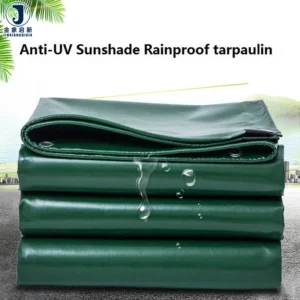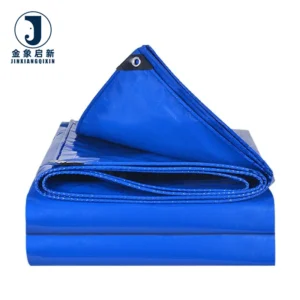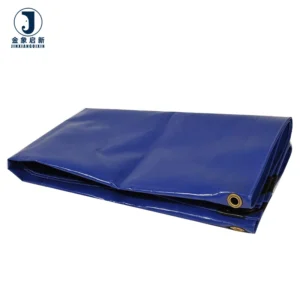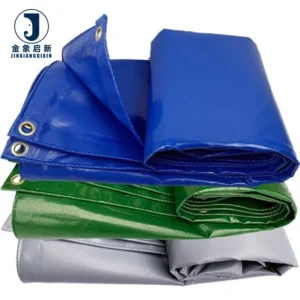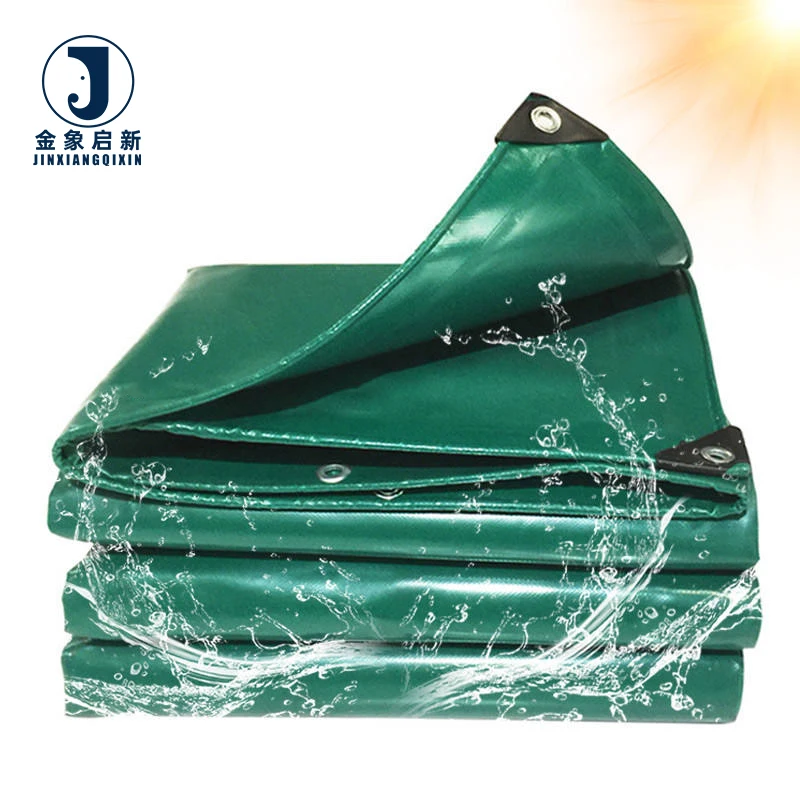
Deep Process Control Over Coating Weight and Adhesion — Every roll of PVC coated tarpaulin undergoes strict GSM verification and coating adhesion checks before leaving the production line, ensuring the fabric arrives matching the quotation.
Technical Specifications
| Parameter | Value |
|---|---|
| Product Type | PVC Coated Tarpaulin Roll |
| Coating Material | PVC Vinyl |
| Base Fabric | Woven Fabric |
| Weight (GSM) | At least 450 grams |
| Waterproof | Yes |
| Finish | High-strength, wear and tear resistant |
Application Suitability
| Application | Exposure & Requirement |
|---|---|
| Truck and trailer load covers | Constant road vibration, wind-driven rain, abrasion from tie-down straps and load shifting |
| Side curtain fabric for curtain-siders | Repeated flexing at curtain runners, UV exposure, contact with cargo edges during loading |
| Outdoor equipment and machinery covers | Standing water, dust ingress, road debris impact, seasonal temperature swings |
Why Generic-Size Covers Fail on Moving Trailers
A cover cut to a generic dimension leaves edges exposed and puts stress on seams that were never designed for your trailer’s tie-down pattern.
Fleet operators frequently receive truck covers that are close in size but not matched to their specific trailer model. The result is material that bunches at the rear, flaps in crosswinds, or pulls tight across sharp load corners. Welded seams bear the brunt of this misalignment, and failures tend to appear at the exact flex points where the load shifts during braking and cornering. [NEED_CITE: stress concentration at tarpaulin flex points during transport]
Model-Specific Fitment for Fleet Operations
When sourcing PVC coated tarpaulin for truck and transport covers, the dimensions must match the trailer’s actual profile, including the door frame clearance, curtain runner track and tie-down rail positions. A cover that fits the model avoids excess fabric that traps wind and reduces drag-related wear on the fabric surface.
Welded Seam Placement at High-Flex Zones
The seams on a truck side curtain or load cover are the first point of failure if they are positioned where the fabric flexes repeatedly. Proper fabrication places heat-welded joins away from the highest-stress fold lines and reinforces them with additional coating layers. [NEED_CITE: coated fabric weld seam tensile testing per ISO 1421]
Understanding GSM in Relation to Tear and Tensile Performance
GSM alone describes weight per square metre, but the tear resistance of a PVC coated tarpaulin depends equally on the base fabric denier and weave density. A 450 GSM fabric with a tightly woven high-denier base will outperform a heavier fabric made with a loose, low-denier weave when subjected to the point loads created by tie-down straps and cargo edges. The coating adds waterproofing and surface abrasion resistance, but it is the woven base that arrests tear propagation once the surface is punctured.
Coating Adhesion and Delamination Resistance
The bond between the PVC vinyl coating and the woven base fabric determines how well the material withstands repeated folding and unfolding on trailer curtains. Poor adhesion causes the coating to peel away from the base at fold lines, exposing the inner fabric to water ingress. Deep penetration of the PVC into the weave structure during the coating process creates a mechanical lock that resists delamination under flex fatigue. [NEED_CITE: coating adhesion test methods for PVC coated fabrics]
The Hidden Cost of Incorrect Specification Selection
Selecting a fabric without verifying the base fabric construction against the intended use leads to premature replacement cycles. A cover that fails at the weld seam within months of installation forces a fleet operator to pull vehicles off the road for re-covering, creating downtime that far exceeds the savings from choosing a lower-specification material. Colour inconsistency between rolls in the same order becomes visible once installed side by side on a fleet, undermining corporate branding. [NEED_CITE: tarpaulin replacement frequency and fleet downtime costs]
Why Procurement Teams Specify This Fabric
Production runs are supported by three full coating lines and 36 sets of converting equipment, maintaining consistent output for fleet-scale orders. A 10-person R&D team handles pattern development and model-specific sizing, producing samples within days for buyer approval. Every roll undergoes in-process quality checks at each production stage, with 100% inspection recorded before dispatch. Coating weight and adhesion are controlled through deep process parameters rather than post-production sampling alone.
Documentation & Verification
- Material specification sheet confirming GSM, base fabric type and coating weight for each roll
- Pre-shipment inspection record documenting 100% roll check results before dispatch
- ISO and CE certificates included in the shipment documentation package
- UV and flame retardant test reports provided where applicable to the specified grade
- Roll packing list with individual roll weights and dimensions for receiving verification
Fabrication, Handling & Storage
- Heat-weld seams using temperature and dwell settings matched to the 450 GSM PVC vinyl coating thickness
- Reinforce eyelet zones with additional PVC patches to distribute tie-down strap loads across the woven base
- Store rolls horizontally on a flat surface to prevent permanent creasing of the coated surface
- Allow cold-stored rolls to reach ambient temperature before unrolling to avoid coating micro-cracking
- Use mild detergent and soft brush for cleaning to preserve the PVC vinyl surface integrity
How to Request a Quotation
Provide your trailer model numbers and the number of vehicles in the fleet so that covers can be sized to match. Specify the operating environment, including whether the covers will face prolonged sun exposure or chemical contact, so the appropriate treatment grade can be recommended. Confirm whether you require finished covers with eyelets and hems or roll stock for in-house fabrication.
Frequently Asked Questions
Q: How can I verify the GSM of delivered rolls matches the quotation?
A: Each shipment includes a pre-shipment inspection record and material specification sheet stating the GSM for every roll. You can independently weigh a cut sample of known dimensions on arrival and compare it against the documented value to confirm consistency.
Q: Can eyelet spacing and hem reinforcement be matched to my trailer tie-down system?
A: Yes. The R&D team reviews your trailer model’s tie-down rail positions and strap spacing to set eyelet placement accordingly. Reinforced hem sections are added at high-load zones to prevent tearing where straps connect to the cover.
Q: What happens if welded seams fail on a truck side curtain?
A: Seam failure typically occurs at flex points where the curtain folds repeatedly during opening and closing. The fabrication process targets these zones with adjusted weld parameters and reinforcement layers to ensure the seam outlasts the surrounding fabric.
Q: Do you offer cut-to-model sizing for specific truck and trailer dimensions?
A: Covers are produced to the exact dimensions of your trailer model, including door frame clearances and curtain runner track profiles. This eliminates the excess material and edge gaps that generic-size covers produce on moving vehicles.
Q: How is colour consistency maintained across multiple rolls in one order?
A: Colour matching is controlled at the coating stage with reference standards checked at every production run. Rolls for the same order are produced in sequence under identical parameters, and each roll is inspected for shade variation before packing.