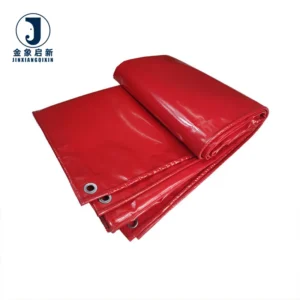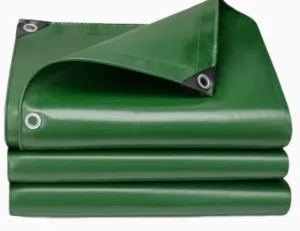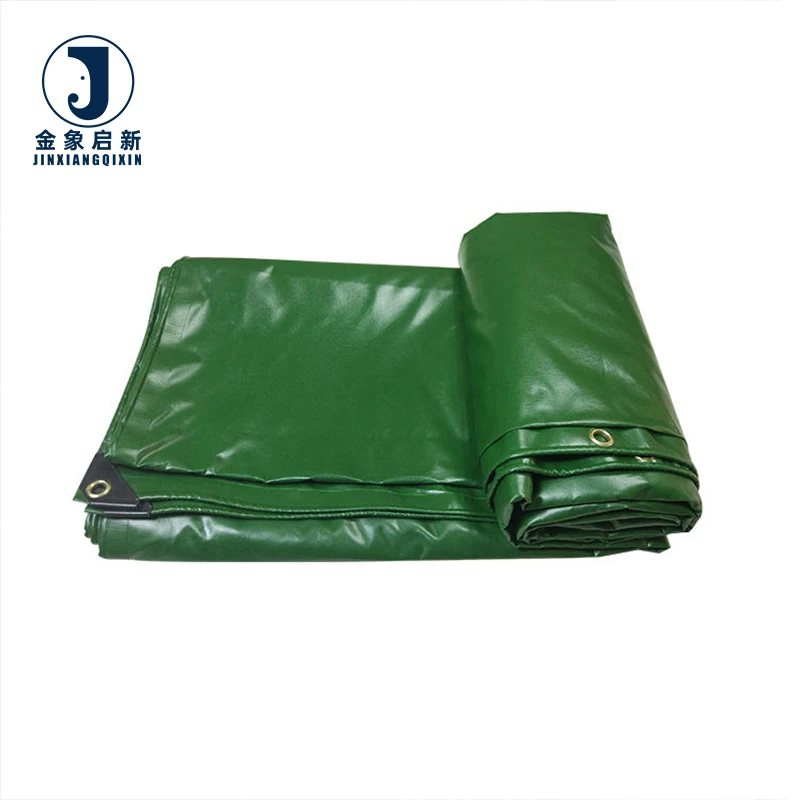
Deep Process Control Over Coating Weight — every roll of PVC coated tarpaulin for truck covers is inspected at the coating head to verify adhesion strength and GSM consistency before winding, ensuring transport-grade fabric reaches your fabrication line without variance.
Technical Specifications
| Parameter | Value |
|---|---|
| Product Type | PVC Coated Tarpaulin |
| Base Fabric | High-strength polyester mesh |
| Coating Method | Laminated technology & Hot-melt coating technology |
| Weight Options | 350gsm / 420gsm / 500gsm / 550gsm / 600gsm / 750gsm |
| Total Thickness | 0.32mm / 0.35mm / 0.4mm / 0.45mm / 0.5mm / 0.65mm |
| Roll Width | 2m / 2.1m |
| Roll Length | 75m (2m width) / 50m (2.1m width) |
| Color Options | Blue / Red / Yellow / Light Blue / Grey / Green; custom colors available |
| Key Features | Waterproof, cold crack resistance, anti-mildew, weldable seams, high tenacity polyester yarns |
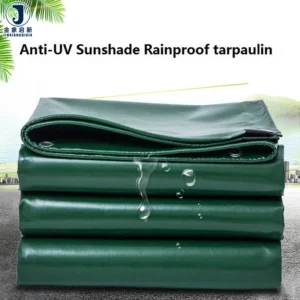
| UV Treatment | Available — confirm the grade required for your market |
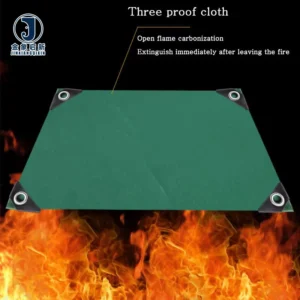
| Flame Retardant | Available in flame retardant grades — confirm the grade required for your market |
| Anti-Static Treatment | Available — confirm the standard required for your application |
| Printing | Custom printing available |
| Standards | ISO 14001, ISO 45001, CE, RoHS |
Application Suitability
| Application | Exposure & Requirement |
|---|---|
| Dump truck covers | Repeated hydraulic flex cycles, abrasive aggregate contact, road debris impact, UV exposure |
| Flatbed trailer side curtains | Constant tension from tie-downs, high-speed wind flutter, fuel and chemical splash |
| Tipper body enclosures | Heavy load shift at pivot points, weld seam stress at fold lines, weather sealing |
| Fleet-branded truck covers | Corporate colour consistency across vehicles, print adhesion under flex and weathering |
| Cargo protection sheets | Abrasion from shifting palletised loads, moisture ingress prevention, tie-down point reinforcement |
Why Generic-Size Truck Covers Fail at the Seams Before the Fabric Does
A cover cut to a generic rectangle will always fail where the load flexes most — the welded seams carry stress they were never dimensioned for.
Fleet operators who specify PVC coated tarpaulin for truck covers by price per square metre often discover that the first failure point is not the fabric body but the heat-welded join at a tie-down reinforcement patch. The cover flutters at highway speed, concentrates load at the hem, and the seam peels apart while the main panel remains intact [NEED_CITE: tensile and tear test methods for coated fabrics per ISO 1421]. This is a sizing and fabrication problem, not a material problem. Covers that are patterned to the specific trailer model distribute stress across the full panel and keep weld lines away from the highest-flex zones.
Pattern-Cut Sizing Eliminates Flutter and Hem Failure
Transport covers cut to a specific truck or trailer model sit flush against the body, eliminating the air pocket that causes high-speed flutter and premature hem fatigue. When a PVC coated tarpaulin for truck covers is sized generically, excess material gathers at corners and creates drag points that accelerate wear. Our covers are developed from trailer model drawings, with tie-down eyelet positions matched to the chassis anchor points so load transfers directly through reinforced patches rather than through the base fabric.
Welded Seam Integrity Under Repeated Flex Loading
Hot-melt coating technology produces a bond between the PVC layer and the polyester mesh that survives the thermal cycle of heat welding without delamination at the join. Laminated construction supports the same welding process while offering a different hand feel and drape characteristic suited to side curtain applications. In both cases, the tearing strength at the weld line is the critical specification — not the body fabric tensile value — because transport loads shift and settle, placing cyclic stress on every seam [NEED_CITE: weld seam peel strength testing for PVC coated polyester fabrics].
Reading the Specification Sheet Beyond the GSM Number
Weight in GSM tells you how much coating and base fabric is present per square metre, but it does not describe how that weight is distributed between the yarn and the polymer layer. A 500gsm PVC coated tarpaulin with a dense, high-tenacity polyester mesh and thinner coating will outperform a 500gsm fabric that achieves its weight through heavy coating over a lighter base when it comes to tear propagation resistance. The base fabric denier and weave density determine how far a puncture or cut will spread before the yarn structure arrests it. Coating weight governs waterproofing, abrasion resistance at contact points, and the thermal mass available for consistent heat-weld penetration. Both must be specified together to predict field performance accurately.
The Cost of Overlooking Batch Colour Consistency Across a Fleet Order
When a transport company orders multiple truck covers for a mixed fleet, even slight colour drift between rolls becomes immediately visible once the covers are installed side by side on adjacent vehicles. This is not a cosmetic issue alone — it signals inconsistent coating formulation across the production batch, which can extend to variations in UV stabiliser loading and plasticiser content [NEED_CITE: colour fastness and batch consistency standards for coated technical textiles]. Fleet operators who have received covers with visible shade variation report that the lighter rolls also tend to show earlier surface chalking, suggesting the pigment and additive package was not held constant. Dedicated QA at every production stage with pre-shipment inspection across all rolls in the order is the control that prevents this.
Why Procurement Verification Matters at Delivery
Our production process supports truck cover buyers who need confidence that the specification on the quotation matches the material on the dock. Material specification sheets state the exact coating weight and base fabric construction for each roll. Pre-shipment inspection records confirm the quoted GSM and colour reference before dispatch. Custom sizing is validated against your trailer model drawings before cutting begins, so there is no ambiguity between a generic panel and a pattern-fit cover. Where UV or flame retardant treatment is specified, test reports are provided to substantiate the claim rather than relying on quotation language alone.
Documentation & Verification
- GSM verification record per roll matched to the quoted weight grade before dispatch
- Colour reference check across all rolls in a fleet order to confirm batch consistency
- Material specification sheet stating base fabric construction, coating method, and treatment details
- UV and flame retardant test reports supplied where treatment grade is confirmed at inquiry stage
- Pre-shipment inspection record covering dimensional accuracy for model-specific cover patterns
- Certificate of origin and customs documentation for cross-border fleet supply
Fabrication, Handling & Storage
- Heat-weld at temperatures matched to the hot-melt or laminated coating type to avoid delamination at seam edges
- Reinforce tie-down eyelet positions with additional PVC patches sized to distribute load across the polyester mesh
- Store rolls horizontally on racking to prevent flat-spot creasing that weakens the coating at fold lines
- Allow cold-stored rolls to reach ambient temperature before unrolling to prevent coating micro-cracking
- Clean printed fleet branding surfaces with mild detergent only to preserve ink adhesion on the PVC layer
- Plan cutting layouts to minimise off-cuts when working with 2m or 2.1m roll widths on large trailer panels
What to Include With Your Inquiry
Provide the truck or trailer model designation, the type of cargo exposure your fleet encounters, and whether you need roll stock or finished pattern-cut covers. If your market requires flame retardant or UV treatment, state the regulatory standard so we can confirm the applicable grade. Include your colour reference or Pantone code for fleet branding consistency, and indicate annual volume to align production scheduling.
Frequently Asked Questions
Q: How do you match the cover size to my specific truck or trailer model?
A: We work from the manufacturer’s body drawings or dimensional templates you supply, building a cutting pattern that accounts for hem allowances, eyelet placement at chassis tie-down points, and clearance for hydraulic mechanisms on tipper bodies. A sample cover is produced for fitment approval before the full order is cut.
Q: What GSM grade is recommended for dump truck covers versus standard trailer tarps?
A: Dump truck covers endure abrasive aggregate contact and hydraulic flex cycles, typically requiring a heavier grade within the available range. Standard flatbed trailer side curtains operate under tension with less abrasion, suited to mid-range weights. We confirm the appropriate grade after reviewing your load type and operating conditions.
Q: How do you ensure welded seams survive the flex points where cargo shifts most?
A: Seam placement is determined during the pattern design stage, positioning weld lines away from the highest-stress flex zones identified on each trailer model. Hot-melt coated fabric provides consistent thermal response during welding, and every seam is inspected during the pre-shipment quality check.
Q: Can you print our fleet branding, and what is the expected print life on the road?
A: Custom printing is available using long-life paint formulated for PVC surfaces, applied to withstand flex cycles and weather exposure. Print durability depends on the exposure conditions your fleet operates in — we confirm the expected service performance based on your route environment and cleaning frequency.
Q: How is colour consistency maintained when ordering multiple covers for the same fleet?
A: All rolls in a single fleet order are produced within the same coating batch, with colour reference checks at the coating head and again during pre-shipment inspection. Any roll that falls outside the agreed shade tolerance is held and replaced before dispatch [NEED_CITE: colour measurement standards for industrial coated fabrics].