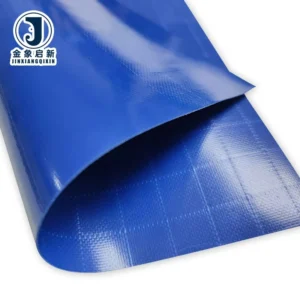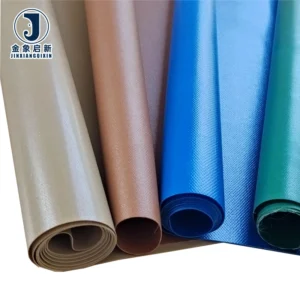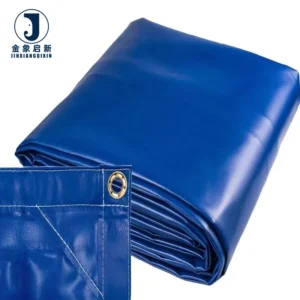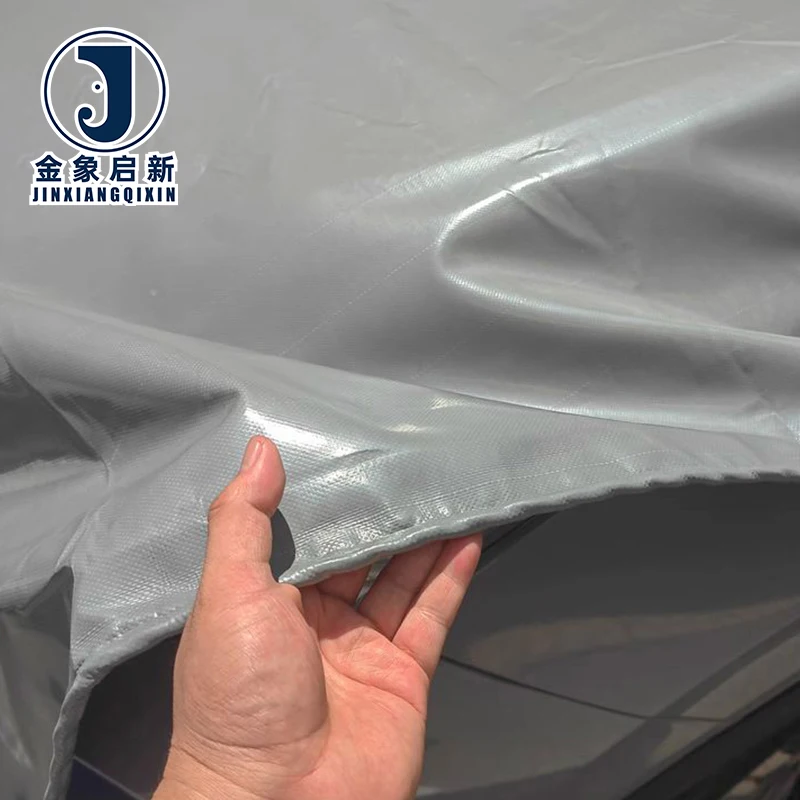
Coated Fabric Process Control — nearly 30 years of PVC coating experience translates into verified GSM and adhesion consistency on every roll of PVC coated tarpaulin for truck and transport cover leaving our facility.
Technical Specifications
| Parameter | Value |
|---|---|
| Product Type | PVC Coated Tarpaulin Roll |
| Coating Material | PVC |
| Base Fabric Type | Warp Knitted Polyester |
| Application Style | Plain |
| Waterproof | Yes — fully coated construction |
| Tear Resistant | Yes (test basis not stated in source) |
| Anti-Static | Available (grade not stated in source) |
| Color | Customizable (multiple shades available) |
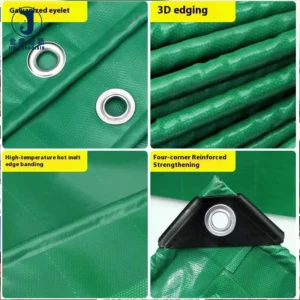
| Fabrication Compatibility | Heat welding, sewing, eyelet insertion |
Application Suitability
| Application | Exposure & Requirement |
|---|---|
| Truck and trailer side curtains | Constant flexing, road abrasion, sustained UV and weather exposure |
| Custom-fit vehicle covers | Model-specific tensioning, tie-down reinforcement, outdoor parking conditions |
| Livestock transport enclosures | Animal contact, wind load, rain ingress, repeated deployment and folding |
| Flatbed load covers | Dynamic load shifting, strap friction, highway-speed wind uplift |
Why Stated Weight Is Not the Whole Story for Transport Covers
A quoted GSM only protects you if the material that arrives actually matches it — verified per roll before dispatch.
Fleet operators ordering PVC coated tarpaulin for truck and transport cover applications frequently discover that the roll weight on the dock does not match the quotation. A lighter base fabric or thinner PVC coating layer can reduce the overall GSM while leaving the spec sheet unchanged on paper. Over thousands of highway miles, that deficit shows up as premature cracking at flex points and seam separation where the load moves most. [NEED_CITE: ISO 1421 tensile and tear test methods for coated fabrics]
Warp Knitted Base Fabric Under Dynamic Load
The warp knitted construction provides multi-directional yarn interlocking that resists tear propagation when the fabric is pulled unevenly — a common condition on trailer side curtains that flex with every corner and braking event. When a transport cover experiences lateral wind load or strap tension at tie-down points, the knitted structure distributes stress across adjacent yarns rather than concentrating it at a single failure point. This makes PVC coated tarpaulin built on a warp knitted base particularly suited to covering a moving load that shifts and settles during transit.
Waterproof PVC Coating for Sustained Road Exposure
The PVC coating encapsulates the base fabric on both sides, sealing out moisture that would otherwise penetrate during sustained rain or highway spray. For fleet operators running multi-day routes across varying climates, this waterproof barrier prevents cargo damage without requiring a separate inner liner. The coating also protects the polyester yarns from direct UV and chemical exposure, which is critical when trailers are parked in open yards between loads for extended periods. [NEED_CITE: standard UV exposure testing protocols for PVC coated textiles]
Reading the Specifications That Actually Matter
GSM alone does not determine how a PVC coated tarpaulin performs under transport conditions — it is the combination of base fabric denier, knit density, and coating weight that governs tensile and tear behaviour. A roll with a heavy coating over a light base fabric may register the correct GSM on a scale but still tear easily at stress points. The plain weave application style of this warp knitted fabric supports consistent heat welding across the full panel width, which is essential when fabricators join multiple drops to cover wide trailer bodies. Coating adhesion to the base fabric determines whether the PVC layer delaminates under repeated flex cycles, a failure mode that often appears first at hem folds and welded seams. Anti-static treatment is available in specific grades — confirm the grade required for your market and the environment the cover will operate in.
The Hidden Cost of Choosing the Wrong Specification
When a truck cover is cut to a generic size that does not match the specific trailer model, the fabric either drags on the road or leaves gaps at the corners — both conditions accelerate wear far beyond normal service expectations. Batch-to-batch colour variation becomes visible when panels from different rolls are installed side by side on the same trailer, forcing a full replacement rather than a repair. Welded seams that fail before the fabric body does are almost always traceable to incorrect heat settings for the specific coating weight, meaning the fabricator’s process was not calibrated to the roll supplied. [NEED_CITE: common failure modes in PVC coated tarpaulin welded seams]
Why Source This PVC Coated Tarpaulin Here
Three full production lines and 36 sets of professional equipment support bulk roll capacity with consistent on-time dispatch for fleet-scale orders. The 10-person R&D team develops custom width, colour, and reinforcement layouts matched to specific trailer models before production begins. Dedicated QA/QC inspection at every production stage — including 100% pre-shipment verification — catches GSM deviation and colour drift before rolls are packed. Samples are developed within days for custom requirements, allowing fabricators to confirm weld parameters and eyelet placement before committing to a full container. Material specification sheets, test reports for applicable treatments, and pre-shipment inspection records accompany every shipment, providing the documentation trail that fleet auditors require.
Documentation & Verification
- Material specification sheet confirming base fabric type, coating material, and weight per roll
- Pre-shipment inspection record verifying GSM and coating consistency roll-to-roll
- Colour reference and batch consistency documentation for multi-roll orders
- Test report for UV or anti-static treatment where applicable to the order
- Roll packing list and certificate of origin for customs clearance
Fabrication, Handling & Storage
- Heat weld temperature must match the specific PVC coating weight on this warp knitted base to avoid seam delamination
- Reinforce eyelet zones with extra PVC patches where tie-down strap loads concentrate at the hem edge
- Store rolls upright on a flat surface to prevent permanent creasing through the PVC coating layers
- Allow cold-stored rolls to reach ambient temperature before unrolling to prevent coating micro-cracking
- Clean PVC surfaces with neutral pH detergent only — solvent-based cleaners degrade the coating plasticiser
- Cut panels with allowance for hem fold-back to maintain waterproof integrity at all sewn edges
Preparing Your Specification for Quotation
To receive an accurate quote for PVC coated tarpaulin for truck and transport cover applications, share the trailer model or exact cover dimensions, the operating environment including climate and road conditions, and any fleet colour or branding requirements. Specify whether you need rolls in stock width or custom width, and whether the order is for raw material or finished covers with eyelets and reinforcement. If your market requires specific anti-static or flame-retardant grades, state the standard your end user must comply with.
Frequently Asked Questions
Q: How is GSM verified on arrival and what happens if material weight deviates from the quotation?
A: Every roll is inspected against the stated GSM before dispatch, and a pre-shipment inspection record is included with the shipment. If you measure a deviation on arrival, provide the roll number and measured weight — we investigate against our production records and resolve through replacement or credit depending on the variance confirmed.
Q: What eyelet spacing and hem reinforcement options are available for tie-down loads?
A: Eyelet spacing and hem reinforcement are configured to match the tie-down pattern of your specific trailer model. We supply PVC-coated reinforcement patches at load-bearing eyelet positions and can adjust spacing from standard intervals to custom layouts based on your strap configuration and load profile.
Q: How are welded seams tested at flex points to prevent premature failure?
A: Weld parameters are calibrated to the exact coating weight and base fabric construction of the roll being fabricated. Test welds are performed at the start of each production run, and seam peel strength is checked against internal benchmarks before full-panel welding proceeds on your PVC coated tarpaulin order.
Q: How do you control colour consistency across multiple rolls in the same order?
A: All rolls in a single order are produced from the same coating batch using a controlled colour reference. Batch consistency documentation accompanies the shipment, and our pre-shipment inspection includes a visual colour comparison between rolls to confirm no visible variation when panels are installed side by side.
Q: What is the lead time and minimum for custom width or colour on PVC coated tarpaulin?
A: Lead times depend on the custom specification and current production schedule — custom widths and colours typically require multi-week lead times with defined minimum quantities per variant. Submit your exact width, colour reference, and estimated annual volume so we can confirm availability and scheduling for your PVC coated tarpaulin for truck and transport cover project.