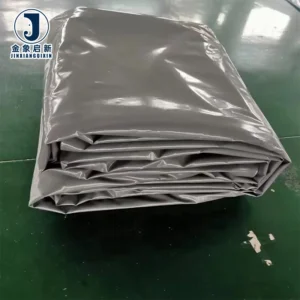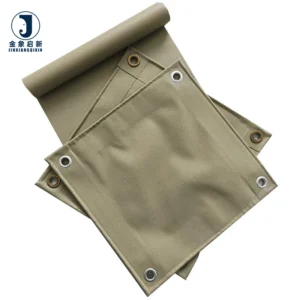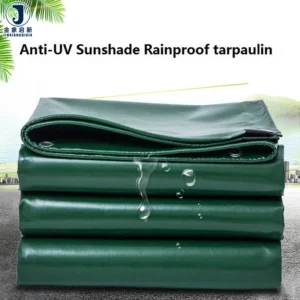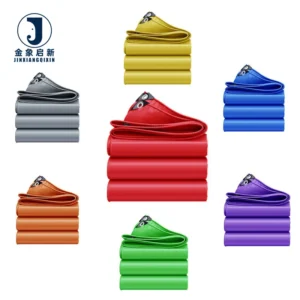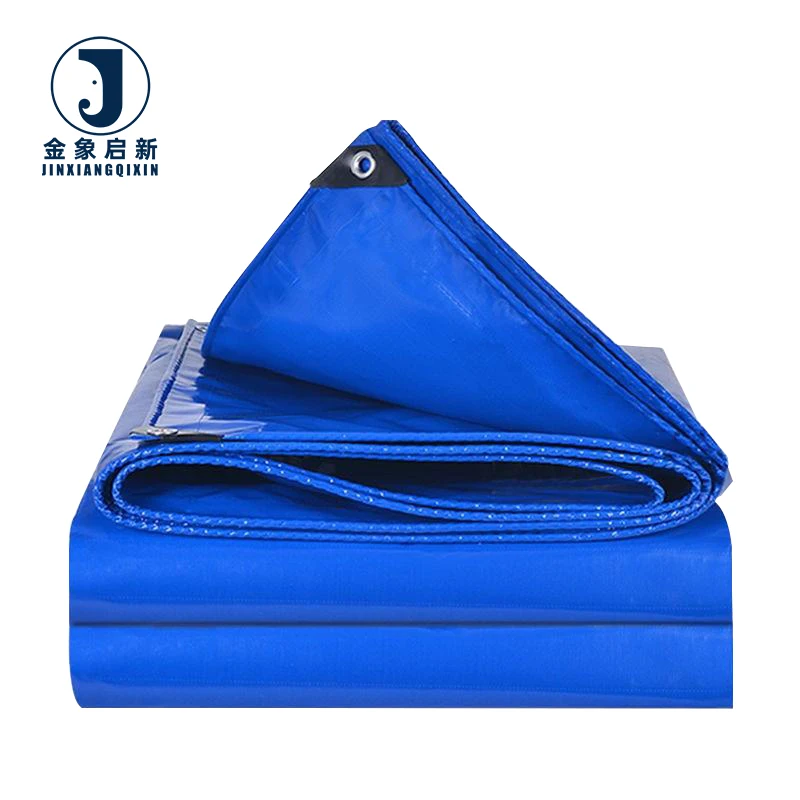
Precision Pattern Fit — Every truck cover cut to the vehicle model with reinforced hems mapped to the actual tie-down layout, eliminating generic-size gaps.
Technical Specifications
| Parameter | Value |
|---|---|
| Product Type | PVC Coated Tarpaulin |
| Base Fabric | Polyester, 500D × 500D yarn count |
| Coating Material | PVC, double-sided |
| Weight Range | 450–900 g/m² |
| Surface Finish | Smooth, leather-like texture |
| Water Resistance | Fully waterproof coated construction |
| Abrasion Resistance | Very strong |
| UV Treatment | Anti-UV (test basis not stated in source — confirm grade required for your market) |
| Flame Retardancy | Flame retardant (grade not stated in source — confirm the grade required for your market) |
| Service Life | Suited to extended outdoor and road exposure |
| Repairability | Hot air weldable |
| Key Features | Water resistant, waterproof, anti-UV option, flame retardant option |
Application Suitability
| Application | Exposure & Requirement |
|---|---|
| Flatbed truck top cover | Constant road vibration, wind flap, tie-down stress at eyelets, rain and UV exposure |
| Curtain-side trailer side curtain | Repeated flexing along curtain runners, abrasion against trailer frame, weather sealing |
| Low-loader and equipment trailer cover | Mechanical abrasion from load edges, flex fatigue at strap contact points |
| Transport fleet replacement cover | Batch colour match across vehicles, consistent GSM roll-to-roll for fleet uniformity |
Why a Generic-Size Cover Fails Where the Load Flexes Most
A cover cut to a generic dimension rather than your specific trailer model concentrates stress on eyelets and seams at the exact points the load flexes most.
Fleet operators regularly see welded seams open before the fabric itself shows wear. The failure almost always starts at the hem where the tie-down strap pulls against the eyelet, or at the weld line where road vibration works the joint through thousands of cycles per trip. PVC Coated Tarpaulin for truck and trailer covers must be patterned to the vehicle so that reinforcement sits exactly where the mechanical load lands [NEED_CITE: tensile and tear test methods for coated fabrics per ISO 1421].
Patterned to the Vehicle, Not the Catalogue
Every flatbed, curtain-side and low-loader trailer has a different tie-down layout. Our PVC Coated Tarpaulin covers are cut from patterns developed against the specific trailer model, placing eyelets and reinforced hems at the exact strap positions your fleet uses. This removes the edge gaps and uneven tension that generic covers create.
Reinforcement Where Road Vibration Concentrates Stress
The hem and eyelet zone carries the highest cyclic load on any truck cover. Double-layer PVC reinforcement patches are applied at every tie-down point before the eyelet is set, distributing the pull force across a wider area of the base fabric. The result is a cover that survives thousands of strap tension cycles without the eyelet tearing free or the weld line cracking [NEED_CITE: cyclic fatigue at hem welds on coated fabrics under transport vibration].
Reading the Specification Sheet Beyond GSM
A 500D × 500D polyester base fabric provides the tensile stability that road vibration demands, but denier alone does not tell the full story. The coating weight and the weave density of the base cloth together determine how the fabric handles tear propagation once a puncture starts. A heavier PVC coating on a loosely woven base will not outperform a moderate coating on a tight weave. The 450–900 g/m² range covers multiple grades; the right selection depends on your trailer type, exposure conditions and the flex frequency the cover will experience. Surface texture also matters — the smooth, leather-like finish resists dirt adhesion and allows water to sheet off rather than pool at seams.
The Hidden Cost of Skipping the Pattern Step
When a cover is ordered by length and width alone without a vehicle-specific pattern, the installer pulls the fabric tighter on one side to compensate for misalignment. That uneven tension transfers directly to the weld lines and eyelets. Over weeks of road use, the overstressed side develops micro-cracks at the hem weld, water enters, and the base fabric begins to degrade from the inside. Fleet operators then face premature replacement across multiple vehicles — a cost that far outweighs the time invested in developing the correct pattern at the quoting stage [NEED_CITE: premature tarpaulin failure rates attributed to incorrect sizing and uneven tension].
What You Get When You Source Here
Our ten-person R&D team develops the vehicle pattern and runs sample fabrication so you can confirm fit before bulk production starts. Three full production lines and 36 sets of professional equipment handle fleet-volume orders while keeping lead times aligned with your rollout schedule. Dedicated QA/QC inspects every cover at each production stage, with 100% pre-shipment checks on eyelet pull-out strength, hem reinforcement integrity and weld quality at flex points. Samples for custom sizing and treatment requirements are developed within days, not weeks. ISO and CE certified processes underpin the entire workflow from coating to dispatch [NEED_CITE: ISO quality management requirements for coated textile manufacturing].
Documentation & Verification
- Material specification sheet stating base fabric denier, coating weight and confirmed GSM
- UV and flame retardant test reports supplied where the specified grade applies
- Pre-shipment inspection record covering eyelet, hem and weld verification
- Roll packing list with batch identification for traceability per cover
- Certificate of origin and customs documentation included with every shipment
Fabrication, Handling & Storage
- Hot air welding suited to the double-sided PVC coating for strong, flexible seams
- Eyelet spacing matched to the 500D polyester base for pull-out resistance at tie-downs
- Store rolls horizontally on racking to prevent permanent creasing in the PVC layer
- Allow cold-stored covers to reach ambient temperature before unfolding to avoid coating crack
- Clean with mild detergent only to preserve the smooth leather-like surface finish
- Field repairs performed by hot air welding directly onto the PVC coated surface
Before You Send Your Inquiry
Provide the trailer make, model and year so we can develop the correct cover pattern. Specify whether you need the fabric in roll stock for your own workshop or as finished, eyeleted covers ready to fit. Confirm the flame retardant or anti-UV grade your market requires so the correct test reports ship with your order.
Frequently Asked Questions
Q: How do you size a truck cover to a specific trailer model rather than a generic cut?
A: We request the trailer make, model and year, then develop a cutting pattern that places eyelets and reinforced hems at the exact tie-down points. A sample cover is fabricated for fit confirmation before bulk production begins, eliminating the edge gaps and uneven tension that generic sizing causes.
Q: What reinforcement is applied at eyelet and tie-down points to withstand road vibration?
A: A double-layer PVC patch is applied to each eyelet position on the 500D polyester base before the eyelet is set. This spreads the cyclic pull force over a wider fabric area, preventing the eyelet from tearing free under repeated strap tension during transit.
Q: How is batch-to-batch colour consistency controlled across a fleet order?
A: Colour reference is locked at sample approval. During production, each roll is checked panel-to-panel against the approved standard before dispatch. The pre-shipment inspection record documents colour verification so you know every cover in the fleet will match when installed side by side.
Q: Can damaged truck covers be repaired in the field, and by what method?
A: Yes. The double-sided PVC coating allows hot air welding directly on the damaged area using standard PVC welding equipment. A patch of matching material is welded over the tear, creating a flexible, waterproof repair that restores the cover without returning it to the workshop.
Q: What documentation ships with my order so I can verify fabric specification on arrival?
A: Each shipment includes a material specification sheet stating denier, coating weight and GSM, a roll packing list with batch IDs, the pre-shipment inspection record, and applicable test reports for UV or flame retardant grades. Certificate of origin and customs paperwork are also provided.