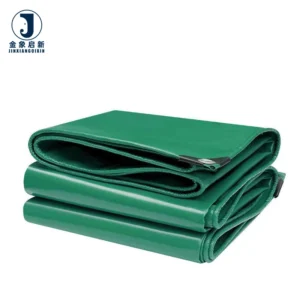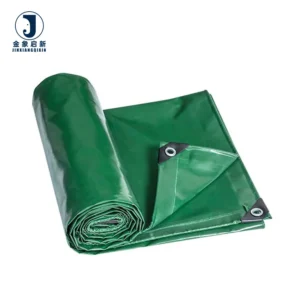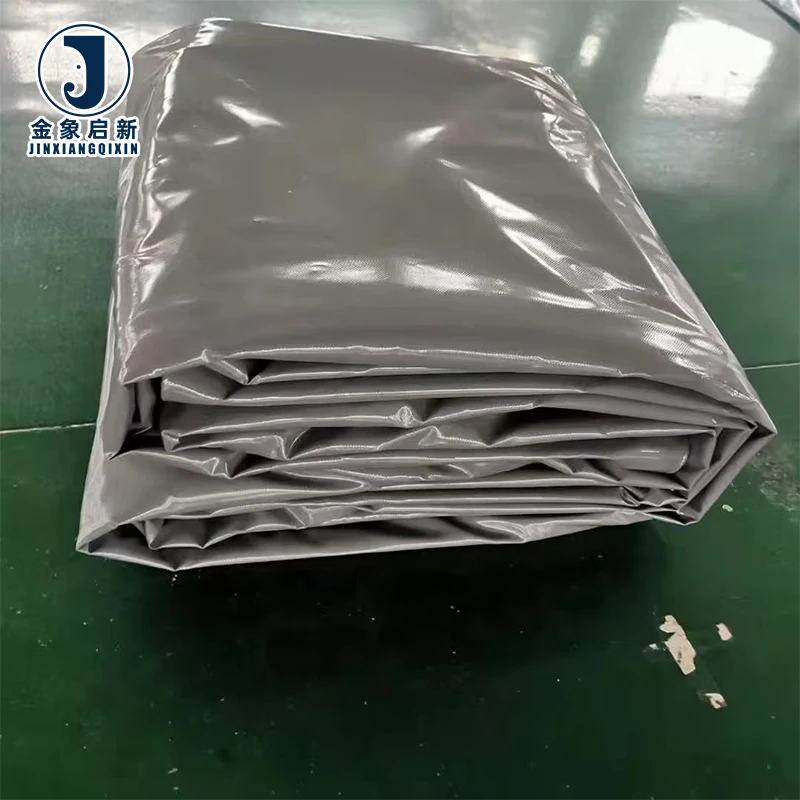
Precision Coating Control — our 630 gsm PVC coated tarpaulin for truck and trailer maintains consistent weight and adhesion across full production runs, verified roll-by-roll before dispatch.
Technical Specifications
| Parameter | Value |
|---|---|
| Product Type | PVC Coated Tarpaulin |
| Weight (GSM) | 630 gsm (product family range: 250–1500 gsm — confirm grade for your application) |
| Base Fabric Denier | 200D×300D / 500D×500D / 840D×840D / 1000D×1000D (select based on load and abrasion severity) |
| Surface Finish | Available in glossy or matte finish |
| UV Treatment | Available in UV-treated grades — confirm the grade required for your market |
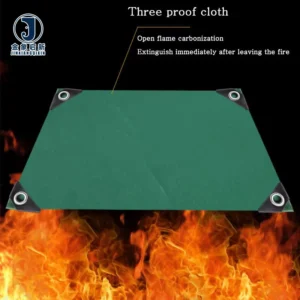
| Flame Retardant | Available in flame retardant grades — confirm the grade required for your regional compliance |
| Anti-Fungal Treatment | Treated |
| Waterproof Construction | Yes — fully coated PVC surface |
| Temperature Range | -15°C to 70°C |
| Available Sizes | 3×4 m / 6×8 m / 8×10 m / 10×12 m or custom made to trailer dimensions |
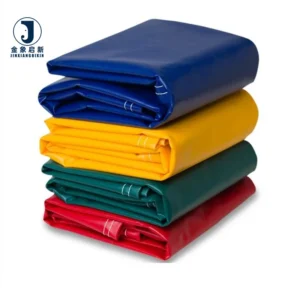
| Color Options | Blue, Yellow, Black, Green, White, and custom colors |
| Environmental Profile | Eco-friendly PVC formulation |
| OEM/ODM | Accepted |
| Standards | ISO, CE |
Application Suitability
| Application | Exposure & Requirement |
|---|---|
| Truck and trailer load covering | Constant road vibration, flexing at tie-down points, weather and UV exposure during long-haul transit |
| Side curtain fabric for transport equipment | Repeated curtain retraction cycles, edge abrasion against guide rails, wind-driven rain ingress |
| Flatbed and tipper trailer covers | High-abrasion contact with irregular cargo loads, tie-down strap friction at hems and eyelets |
| Fleet transport weather protection | Multi-season exposure including sub-zero cold crack risk and summer heat softening at the surface |
| Outdoor equipment protection on construction sites | UV exposure, dust ingress, mechanical contact with steel and timber materials |
Why GSM Alone Does Not Tell You How Strong a PVC Coated Tarpaulin for Truck and Trailer Really Is
The base fabric denier and weave density determine structural strength — the coating weight alone cannot compensate for a weak scrim.
When fleet operators specify covers by gsm alone, they often receive material that is heavy but tears easily at the seams once the load shifts during transit. I have seen PVC coated tarpaulin for truck and trailer fail within months because the base fabric was low-denier despite the overall gsm reading being high — the extra weight came from coating, not structural yarn. The denier selection and scrim density are what resist the tearing forces at high-flex zones, and these values should be specified alongside the gsm to ensure the cover matches the actual dynamic load of your route profile [NEED_CITE: tensile and tear test methods for coated fabrics per ISO 1421].
Matching Denier to Route Severity and Load Type
The PVC coated tarpaulin for truck and trailer is available in base fabric deniers from 200D×300D up to 1000D×1000D, allowing specifiers to match the scrim density to the abrasion and tear demands of their specific operation. Long-haul highway routes with high-speed wind loading and frequent tie-down cycles benefit from higher denier selections, while urban distribution with lighter cargo can operate effectively on mid-range grades. The relationship between denier and gsm should be evaluated together — a 630 gsm fabric on a 1000D×1000D base will behave very differently under load stress than the same gsm on a 500D×500D base.
Welded Seam Integrity at Dynamic Flex Points
The seams on a PVC coated tarpaulin for truck and trailer experience the highest stress concentration where the cover flexes over irregular loads and at tie-down attachment zones. High-frequency welding creates a bonded joint that should match the parent fabric in peel strength, but only when the heat and pressure parameters are calibrated to the specific coating weight and base fabric combination [NEED_CITE: high-frequency welding parameters for PVC coated polyester]. Incorrect weld settings produce joints that delaminate under road vibration before the fabric body itself shows any wear. Our production process adjusts weld parameters for each denier and gsm combination to maintain seam integrity across the full service life of the cover.
Reading the Specification Sheet Beyond the Weight Number
GSM indicates total mass per square metre, combining the base fabric and the PVC coating together, but it does not separate structural contribution from surface mass. A heavier coating improves waterproofing and abrasion resistance at the surface level, while the base fabric denier and thread count determine tensile and tear strength. When evaluating a PVC coated tarpaulin for truck and trailer, request both the gsm and the denier specification so you can assess whether the strength-to-weight ratio matches your application demands. Surface finish — glossy or matte — also affects cleanability and UV reflection behaviour, which influences long-term colour retention on fleet vehicles that are visible to customers daily.
The Hidden Cost of Specifying the Wrong Grade for Your Fleet
Covers cut to generic sizes leave gaps at the trailer edges, exposing cargo to wind-driven rain and creating flapping zones that accelerate fabric fatigue. I have seen fleet operators replace full sets of PVC coated tarpaulin for truck and trailer prematurely because the colour varied visibly between rolls installed side by side — a batch consistency failure that damages brand image on branded fleet vehicles. Undersized gsm selections that appear adequate on paper develop pinholes at high-abrasion contact points within the first season, forcing unplanned downtime for replacements. Welded seams that fail before the fabric body indicate a manufacturing calibration error, not a material deficiency, and this failure mode accounts for a significant share of early warranty claims in the transport covering sector [NEED_CITE: common failure modes in heavy-duty transport tarpaulin installations].
Why Fleet Operators Source PVC Coated Tarpaulin for Truck and Trailer Through Jinxiang
Our three full production lines and 36 sets of professional equipment allow us to run dedicated batches for fleet orders with consistent coating weight and colour across every roll. The 10-person R&D team develops model-specific cover patterns for individual truck and trailer configurations, eliminating the generic-size mismatch that causes edge exposure and premature flex fatigue. Every production stage includes dedicated QA/QC oversight with 100% inspection before shipment, confirming that the gsm delivered matches the gsm quoted. We supply UV and flame retardant treatment options supported by test reports, so compliance documentation arrives with the shipment rather than as a delayed afterthought. Custom sizing is verified against your specific trailer model dimensions before production begins, not adjusted on the cutting table from a standard template.
Documentation & Verification
- Material specification sheet stating confirmed GSM, base fabric denier, coating type, and colour reference for each roll
- Test report for UV-treated and flame retardant grades where applicable, matched to the batch shipped
- ISO and CE certificates covering the production facility and process standards
- Pre-shipment inspection record verifying weight and dimensional accuracy against the purchase order
- Roll packing list with individual roll identification for traceability across fleet installations
- Certificate of origin and customs documentation prepared for international shipment
Fabrication, Handling & Storage
- High-frequency weld settings must be calibrated to the specific 630 gsm coating weight to achieve full peel strength at seams
- Reinforced hem construction should match the tie-down spacing of the target trailer model for even load distribution
- Store rolls upright on pallets to prevent permanent creasing across the PVC coated surface
- Allow cold-stored rolls to reach ambient temperature before unrolling to avoid coating crack at low temperature
- Clean glossy finish surfaces with mild detergent — solvent-based cleaners will degrade the PVC coating layer over time
- Field repairs on minor punctures can be heat-patched using compatible PVC repair material matching the coating formulation
Preparing Your Enquiry for a Fast, Accurate Quotation
To specify PVC coated tarpaulin for truck and trailer that matches your fleet operation, provide the exact trailer model dimensions or drawing, the preferred surface finish and colour reference, and any UV or flame retardant compliance requirements for your operating region. If you need covers fabricated with specific eyelet spacing or hem reinforcement for your tie-down system, include that detail at the enquiry stage so the pattern can be developed accordingly. Confirm whether you require finished covers cut and welded to size or roll stock for your own fabrication line.
Frequently Asked Questions
Q: How is the GSM of the PVC coated tarpaulin verified against the quotation on delivery?
A: Every roll undergoes weight verification during pre-shipment inspection, with a record confirming the actual gsm matches the quoted specification. Random samples are cut and weighed to confirm consistency across the batch. If a discrepancy is detected, the roll is rejected before it leaves the factory, ensuring your fleet receives material that matches the agreed structural weight.
Q: Can covers be cut to fit a specific trailer model rather than a standard generic size?
A: Covers are developed from your exact trailer model dimensions, not from a standard size template. The pattern accounts for tie-down point locations, edge wrap requirements, and flex zones specific to your trailer configuration. Sample development is completed within days so you can verify fitment on the actual vehicle before full production begins.
Q: What flame retardant grades are available and do they meet regional compliance?
A: Flame retardant treatment is available in multiple grades — specify the standard required for your market such as regional building or transport fire codes, and we will confirm the applicable grade with a test report. Request the test documentation at sample stage to verify compliance before placing a production order, so there are no certification surprises at delivery.
Q: How is colour consistency maintained across multiple rolls in a fleet order?
A: Fleet orders are run as a single dedicated production batch using matched raw material lots to prevent visible colour variation between covers installed on adjacent vehicles. The pre-shipment inspection includes a roll-to-roll colour consistency check under controlled lighting. Any roll showing deviation from the batch colour standard is removed before packing.
Q: What eyelet spacing and hem reinforcement options are available for tie-down loads?
A: Eyelet spacing and hem reinforcement are configured to match your specific tie-down system and load securing method. Options include reinforced webbing hems, varied eyelet intervals, and additional corner patches at high-stress points. Provide your trailer tie-down layout so the cover pattern aligns eyelet placement with the actual securing hardware on your fleet vehicles.