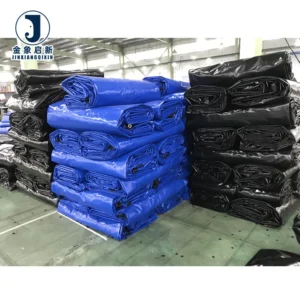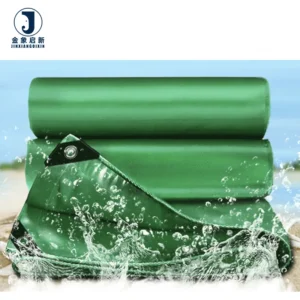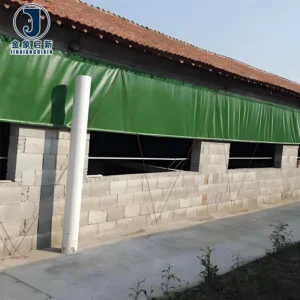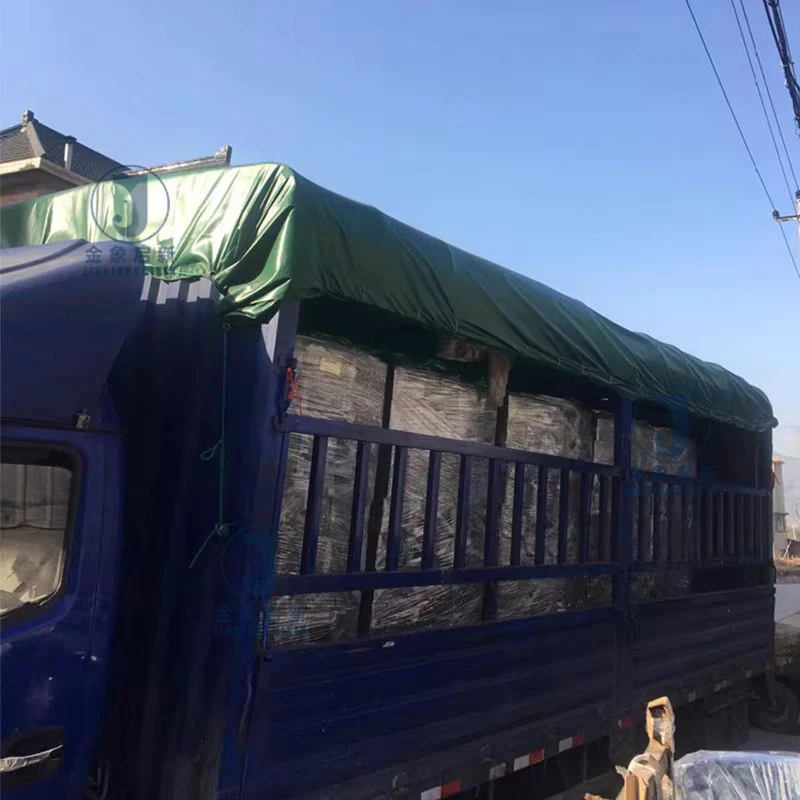
Precision Fitment Engineering — We develop PVC coated tarpaulin cover for poultry farm dimensions matched to specific transport trailer models, eliminating flapping damage caused by generic-cut covers that expose loads to weather and road abrasion.
Technical Specifications
| Parameter | Value |
|---|---|
| Product Type | PVC Coated Tarpaulin Cover for Poultry Farm |
| Coating Material | PVC |
| Base Fabric Construction | Warp knitted, woven plain |
| Waterproof Rating | Waterproof (grade not stated in source) |
| Anti-Static | Anti-static (surface resistance or standard not confirmed) |
| Tear Resistance | Tear resistant (test basis not stated in source) |
| Color Options | Customizable colors |
| Certification Standards | ISO, CE (certification details not stated in source) |
Application Suitability
| Application | Exposure & Requirement |
|---|---|
| Truck side curtains | Constant flexing at tie-down points, road spray, wind load, abrasion against trailer frame |
| Flatbed trailer covers | Direct UV exposure, high-speed wind uplift, repeated tensioning and release cycles |
| Curtain-side load enclosures | Friction at guide rails, loading dock contact, temperature fluctuation during transit |
| Transport equipment tarps | Mechanical stress from cargo shifting, chemical exposure from road de-icing agents |
Why a Generic PVC Coated Tarpaulin for Truck and Trailer Fails Before the Journey Ends
A cover cut to a standard rectangle will never seal a load shaped by a specific trailer chassis.
I have watched fleet operators replace entire curtain sets mid-contract because the factory-default dimensions did not account for the radius of the trailer corners or the extra drop needed over the tail-lift mechanism. The result is loose fabric that flaps at highway speed, concentrating stress at the hem until the weld peels back and water tracks in [NEED_CITE: tensile and tear test methods for coated fabrics per ISO 1421]. A PVC coated tarpaulin for truck and trailer must be templated to the vehicle, not to the cutting table.
Dimensional Stability Under Road Vibration
Warp knitted base fabric locks the yarn structure in three axes, preventing the elongation that woven constructions suffer when a curtain-side trailer hits cross-winds. This stability is what keeps a PVC coated tarpaulin for truck and trailer tracking straight in the guide rail instead of binding and tearing at the roller.
Coating Adhesion at Flex Points
PVC coating is applied to penetrate the warp knitted matrix rather than sitting on the surface, creating a mechanical bond that withstands thousands of flex cycles at the hem and eyelet line. Where tie-down straps pass through the fabric, the coating must resist micro-cracking that would let moisture reach the base yarn [NEED_CITE: adhesion peel strength test methods for PVC coated fabrics].
Understanding GSM, Denier and Coating Weight as a System
GSM tells you the total mass per square metre but says nothing about how that mass is distributed between base fabric and coating. A high-GSM roll with a light base fabric and heavy coating will flex well but tear easily; a heavy base with thin coating will resist tearing but crack at the weld line. The warp knitted plain weave used here balances yarn denier with coating penetration so that tensile load is shared across the structure rather than carried by the coating alone. Selecting the right combination depends on the trailer type and the cargo weight it carries.
The Cost of Specifying Colour Without Batch Control
Fleet branding demands that every curtain on every truck matches when parked side by side at a depot. I have seen orders where rolls from different production runs showed visible shade shifts once installed, forcing the operator to reject an entire delivery and delay vehicle hand-over [NEED_CITE: colour fastness and batch consistency standards for coated textiles]. Specifying the colour reference and requiring a roll-to-roll inspection record before dispatch prevents this avoidable loss.
Why Procure PVC Coated Tarpaulin Cover for Poultry Farm Here
Three full production lines and dedicated equipment sets allow bulk roll output without sacrificing on-time dispatch for transport fleet contracts.
A ten-person R&D team develops vehicle-specific templates, translating trailer drawings into cutting patterns that account for hem allowance and eyelet placement.
Dedicated QA at each coating stage checks adhesion, colour shade and GSM against the agreed specification before any roll is cleared for packing.
ISO and CE certified processes provide the documentation trail that fleet auditors and transport insurers require.
Samples for custom width, colour or print are produced within days, letting you approve material before committing to a full container load.
Documentation & Verification
- Material data sheet listing base fabric denier, coating weight and GSM per roll
- Pre-shipment inspection record confirming colour shade within agreed tolerance
- Test report for anti-static property where applicable to livestock transport
- Certificate of origin and customs support for cross-border fleet delivery
- Roll packing list matched to container loading plan by weight and count
Fabrication, Handling & Storage
- Heat weld at moderate temperature to maintain PVC coating adhesion on warp knitted base
- Reinforce eyelet zones with extra fabric ply to distribute tie-down strap load
- Store rolls horizontally on pallets to prevent permanent creasing of the PVC surface
- Avoid dragging cut panels across concrete to protect the coating finish
- Clean with mild detergent only; solvents will soften the PVC coating layer
- Repair minor cuts with PVC-compatible adhesive and a patch of matching base fabric
Moving From Enquiry to Production
Provide the truck or trailer model, the number of curtains or covers per vehicle, and the annual fleet size so we can recommend roll width and cutting yield. Specify any colour reference or print requirement for fleet branding. Confirm whether you need finished cut-and-hem panels or roll stock for your own fabrication line, and state the destination market for any compliance documentation.
Frequently Asked Questions
Q: How is PVC coated tarpaulin for truck and trailer sized to match specific vehicle models?
A: We work from the trailer manufacturer’s dimensional drawing or a physical measurement template to set the panel length, drop height and corner radius. The pattern includes hem allowance and eyelet spacing matched to the vehicle’s tie-down rail, ensuring the PVC coated tarpaulin for truck and trailer fits under tension without excess fabric that would flap or abrade.
Q: What eyelet spacing and hem reinforcement options are available for tie-down loads?
A: Spacing is set to the trailer’s load-securing points, typically with reinforced fabric patches behind each eyelet to spread strap pressure. The hem is folded and welded to enclose a reinforcement tape, preventing the PVC coating from peeling back under repeated tensioning during transit.
Q: How is batch colour consistency maintained across rolls in a fleet order?
A: All rolls for a single fleet contract are produced from the same PVC compound batch and inspected against a master colour standard under controlled lighting. A shade tolerance record is included in the pre-shipment documentation so you can verify consistency before the rolls leave the factory.
Q: What abrasion and tear behaviour can be expected at high-flex points?
A: The warp knitted base fabric resists tear propagation better than standard woven constructions, and the PVC coating penetrates the yarn structure to add surface abrasion resistance. At high-flex zones like the hem and eyelet line, additional reinforcement layers are recommended to extend service life.
Q: What is the lead time for custom width and colour on roll stock?
A: Custom width and colour orders typically require a multi-week production window after sample approval, depending on order volume and current line loading. We confirm the exact dispatch date at quotation stage and update you if raw material availability shifts the schedule.