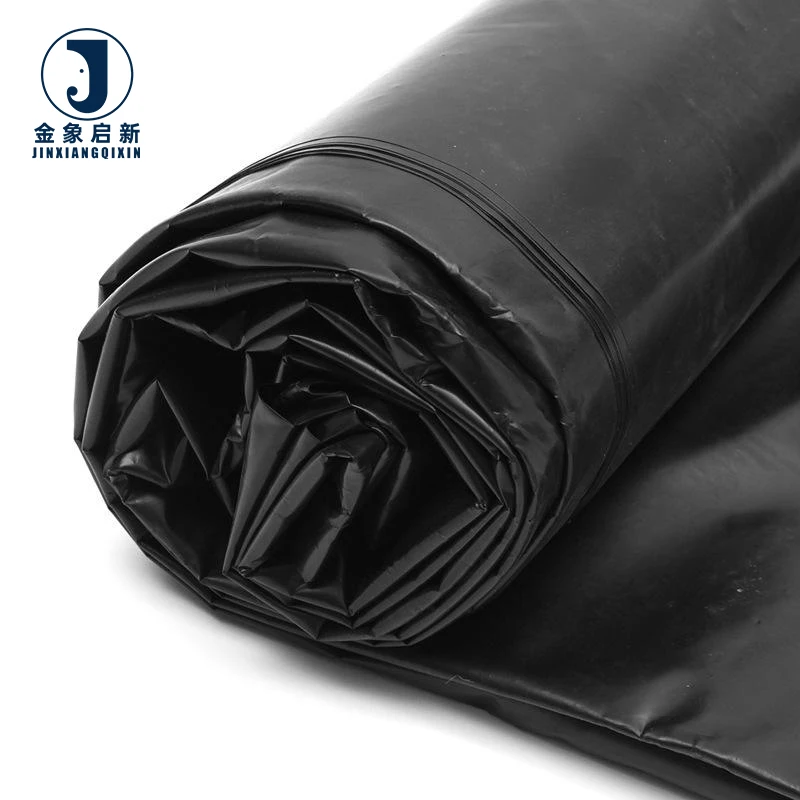
Precision Fitment Engineering — Every PVC Coated Tarpaulin for truck and trailer loads is cut to your specific trailer dimensions, eliminating the generic sizing problem that leaves loads exposed at critical flex points.
Technical Specifications
| Parameter | Value |
|---|---|
| Product Type | PVC Coated Tarpaulin |
| Weight | 550gsm |
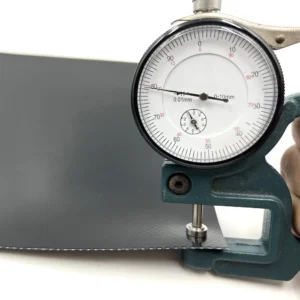
| Total Thickness | 0.45mm |
| Color | Black |
| Coating Material | PVC |
| Denier Options | 200D×300D, 500D×500D, 840D×840D, 1000D×1000D |
| Surface Finish | Glossy or matte |
| Temperature Range | -15°C to 70°C |
| UV Treatment | Customized (test basis not stated — confirm requirement for your market) |
| Flame Retardant | Available in FR grades — confirm the grade required for your market |
| Treatment | Waterproof, anti-fungal |
| Key Features | Water-proof, rain-resistant, tear-resistant, good flexibility, high adhesion strength, abrasion resistant |
| Size Options | 3x4m, 6x8m, 8x10m, 10x12m or custom made |
| Environment | Eco-friendly |
| OEM/ODM | Welcomed |
Application Suitability
| Application | Exposure & Requirement |
|---|---|
| Truck side curtain replacement | Constant flexing at load points, road debris abrasion, wind-driven rain ingress |
| Flatbed trailer cargo coverage | Direct UV exposure during long-haul transit, tie-down strap friction at edges |
| Refrigerated transport outer shell | Thermal cycling between depot and delivery, condensation buildup on inner surface |
| Fleet standardisation projects | Colour consistency across multiple units, branded appearance for company identity |
Why a Tarp That Fits Your Trailer Model Matters More Than the GSM Number
Generic sizing is the leading cause of premature tarpaulin failure on transport fleets.
When a truck cover is cut to a standard dimension rather than your specific trailer model, the fabric either hangs too loose — pooling water and flapping at highway speed — or stretches too tight across the frame, placing constant tension on the welded seams. I have seen heavy-grade coated rolls fail within months not because the fabric was weak, but because the seam sat directly over a load flex point where no fabric should bear that kind of stress. PVC Coated Tarpaulin for truck and trailer loads must be dimensioned with the actual trailer geometry in mind, including the door clearance, the tie-down rail position, and the side curtain track profile. [NEED_CITE: tensile and tear test methods for coated fabrics per ISO 1421]
Side Curtain Fabric That Survives Daily Highway Exposure
The side curtain application demands more than waterproof coverage. The fabric must flex repeatedly as the curtain opens and closes at every delivery stop, while withstanding the abrasion caused by contact with cargo edges and the curtain track mechanism. The 550gsm construction provides a balance between the flexibility needed for smooth curtain operation and the tensile strength required to resist tearing when the fabric catches on a load corner. PVC Coated Tarpaulin for truck and trailer loads in this weight class serves operators who need daily reliability across varied route conditions.
Tie-Down Points and Edge Reinforcement Under Real Strain
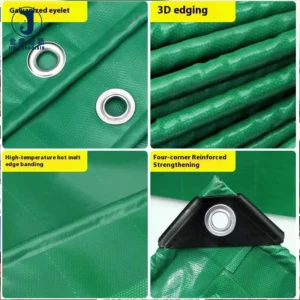
The perimeter of any truck tarpaulin takes concentrated load every time a ratchet strap is applied. The PVC coating adhesion to the base fabric determines whether the eyelet area holds or delaminates after repeated tensioning cycles. Anti-fungal treatment extends service life in humid operating environments where condensation accumulates between the tarp inner surface and the cargo. The glossy or matte finish options allow fleet operators to specify the surface that best suits their cleaning protocols and visual identity requirements. [NEED_CITE: coating adhesion peel strength testing for PVC tarpaulin materials]
How Weight and Base Fabric Density Work Together on the Road
A 550gsm rating tells you the total mass per square metre but reveals nothing about how that weight is distributed between the base fabric and the coating. The denier options — ranging from 200D×300D through to 1000D×1000D — define the tensile grid that carries the load. A higher denier base fabric with proportionally less coating may actually outperform a heavier overall grade that relies on thick PVC layers for its weight. The 0.45mm total thickness indicates a mid-range build that favours flexibility over rigidity, which is the correct choice for applications where the fabric must drape and fold rather than span a fixed frame. The temperature range of -15°C to 70°C covers most transit environments, though operators in arctic or desert corridors should confirm whether the low-temperature flexibility or high-temperature softening point meets their specific route profile.
What Happens When the Weld Fails Before the Fabric Does
The most common failure pattern on transport tarpaulins is not the fabric tearing — it is the heat-welded seam splitting at the exact point where the cargo flexes during transit. This happens when the welding temperature or pressure is set for a generic PVC grade rather than the specific coating formulation being joined. The result is a seam with incomplete fusion that holds during pre-shipment inspection but opens under the dynamic loads of highway travel. [NEED_CITE: heat welding parameters for PVC coated fabric seam integrity] Batch colour variation compounds the problem: when replacement panels do not match the original tarp shade, the repair becomes visually obvious across the fleet, undermining the professional appearance that operators invest in maintaining.
Why Transport Equipment Builders Source from This Facility
Three full production lines running dedicated PVC coating operations mean your PVC Coated Tarpaulin for truck and trailer loads is manufactured on equipment calibrated for coated fabric, not adapted from a general-purpose line. The 10-person R&D team handles pattern printing, custom sizing, and sample development specifically for transport applications where fitment precision determines on-road performance. Dedicated QA/QC at every production stage ensures the 0.45mm thickness and 550gsm weight are verified in-process, not just checked at the end. Sample development within days allows fleet operators to validate fitment on a single trailer before committing to a full fleet order. ISO and CE certified production provides the compliance documentation that cross-border transport regulators require. [NEED_CITE: ISO certification scope for PVC coated textile manufacturing]
Documentation & Verification
- Material spec sheet stating 550gsm weight, base fabric denier, and PVC coating formulation
- Pre-shipment inspection record confirming dimensions match your trailer model specifications
- Roll packing list detailing batch reference for colour traceability across the order
- UV and FR test reports provided where applicable — confirm the grade required for your market
- Certificate of origin and customs documentation to support cross-border fleet procurement
- Colour reference swatch included with dispatch for on-site verification against existing fleet tarps
Fabrication, Handling & Storage
- Heat weld at temperatures matched to the 550gsm PVC coating formulation to prevent seam delamination at flex points
- Position eyelets with reinforced hems at intervals matching your specific tie-down rail spacing pattern
- Store rolls horizontally on pallets to prevent permanent creasing through the 0.45mm coating layer
- Allow fabric to reach ambient temperature before unrolling in cold conditions to avoid low-temp cracking
- Use mild detergent for cleaning glossy surfaces to preserve coating integrity and fleet appearance
- Cut panels with sealed edges to prevent moisture wicking into the base fabric weave at raw edges
Requesting a Quotation for Your Fleet
To specify PVC Coated Tarpaulin for truck and trailer loads accurately, provide the trailer manufacturer, model designation, and the curtain track profile type. Indicate whether you require finished panels with welded hems and eyelets, or roll stock for in-house fabrication. Confirm the surface finish preference and any colour matching requirement against your existing fleet livery.
Frequently Asked Questions
Q: How do you cut tarps to fit different trailer models accurately?
A: We work from the trailer manufacturer’s dimension drawings or your on-site measurements to produce panels that align with the specific curtain track, door clearance, and tie-down rail positions of each model. Fitment samples are developed within days so you can verify dimensions on a single unit before the full order enters production.
Q: Will the colour be consistent across all tarps in one fleet order?
A: Each production batch is mixed against a single colour reference, and a verification swatch is included with your dispatch. Rolls are assigned a batch reference number on the packing list, so any future reorders can be matched to the original shade by referencing the batch code.
Q: How are welded seams tested before the tarps ship?
A: Every heat-welded seam undergoes visual inspection and peel testing at the production stage to confirm the PVC coating has fully fused across the join. The pre-shipment inspection record documents these results so you can verify seam integrity before the order leaves the facility.
Q: What denier grade should I choose for side curtain applications?
A: Side curtain fabric requires a base fabric that balances flexibility for daily opening with tensile strength to resist tearing at load contact points. The 500D×500D option provides a mid-range construction suited to standard curtain operations, while higher-denier options serve routes with heavier cargo abrasion risk.
Q: Can I order a sample to test fitment before committing to a full order?
A: Sample panels in the specified 550gsm construction and colour are developed within days of receiving your trailer dimensions. This allows you to install and assess the fitment, drape behaviour, and edge alignment on your actual trailer before authorising bulk production.