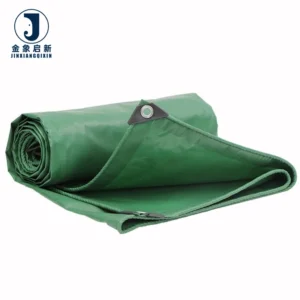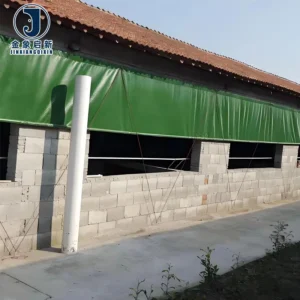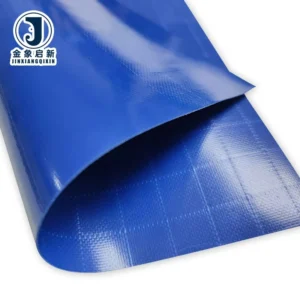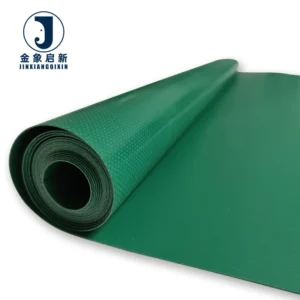
Precision-coated fabric for moving loads — every roll of PVC tarpaulin roll aftermarket supplier stock is verified against the stated specification before dispatch, matching the exact requirements of transport and load-covering applications.
Technical Specifications
| Parameter | Value |
|---|---|
| Product Type | PVC Tarpaulin Roll |
| Material Construction | HDPE weaving with LDPE lamination on both sides |
| Weight Range | 50gr/m² ~ 220gr/m² |
| Total Thickness | 0.2-0.4mm / 8 mil-16 mil / Custom |
| Color Options | Blue, Blue/Orange, Green, Grey, Black, Clear, Grey/Green, Orange, or custom color |
| Waterproof | Yes, fully waterproof laminated construction |
| UV Treatment | UV treatment available (test basis not stated — confirm requirement) |
| Anti-Mildew | Mildew proof and anti-aging treatment (test basis not stated) |
| Tear Resistance | Tear resistant construction (test basis not stated) |
| Coating Method | Laminated (LDPE lamination) |
| Printing | Custom printing available |
| Certifications | ISO 9001, ISO 14001, ISO 45001, CE |
Application Suitability
| Application | Exposure & Requirement |
|---|---|
| Truck and trailer load covers | Constant flexing at tie-down points, road abrasion, wind flap, UV exposure during transit |
| Fleet side curtain fabric | Repeated rolling and unrolling, weather and road spray, tension stress at curtain tracks |
| Construction equipment covers | Outdoor storage, dust and moisture ingress, puncture risk from sharp edges |
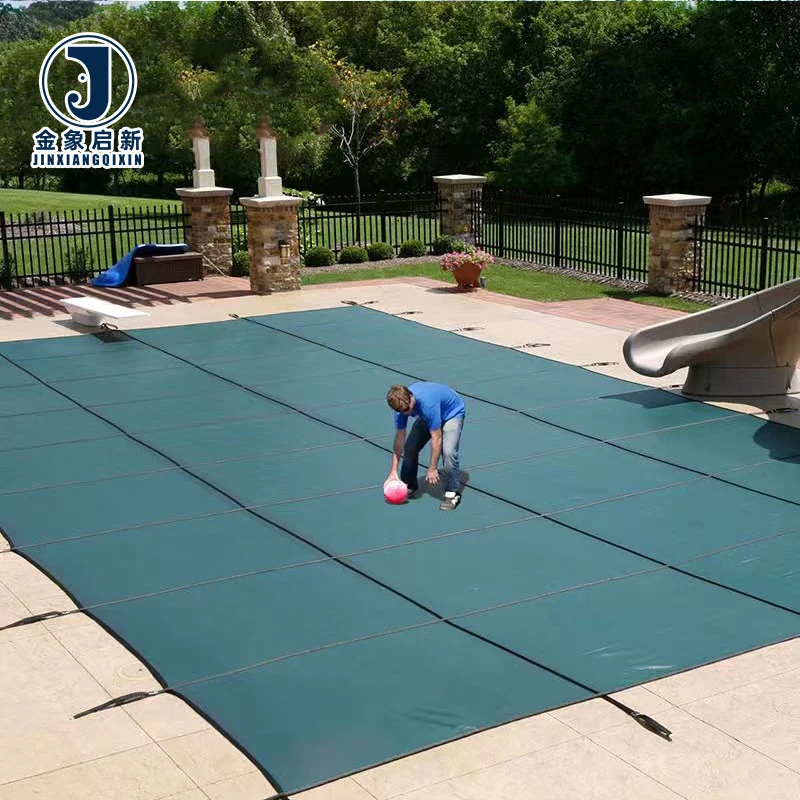
| Swimming pool safety covers | Permanent water contact, UV exposure, mildew in humid poolside environments, load-bearing across span |
| Agricultural stockpile covers | Weather exposure, chemical contact from fertilizers, wind uplift on large spans |
Why "Waterproof" on the Label Does Not Guarantee a Dry Load
The coating method and seam construction determine waterproof performance in real transport conditions, not just the fabric itself.
Fleet operators have received covers labeled waterproof only to find moisture seeping through welded seams or uncoated edges after the first rainstorm. The issue is rarely the base fabric — it is the lamination adhesion at stress points where the load flexes and the cover stretches repeatedly. [NEED_CITE: coated fabric seam failure modes under cyclic loading] A PVC tarpaulin roll aftermarket supplier that controls the coating process from weaving through lamination can address this by matching the coating weight to the flex demands of the specific trailer application. Without verified GSM and documented pre-shipment inspection, buyers are essentially trusting a label rather than a measured result.
Securing Moving Loads Against Flex and Abrasion
Transport covers face a unique combination of stresses that static covers never encounter. The fabric must withstand wind flap at highway speeds, abrasion against load edges during braking and cornering, and repeated tension cycles at tie-down points. A PVC tarpaulin roll aftermarket supplier serving fleet operators understands that the failure point is almost always where the fabric bends over a sharp edge or where a ratchet strap concentrates force. Reinforcement strategy at these zones — through additional lamination layers or strategic hem design — separates a cover that lasts a season from one that lasts years.
Matching the Fabric to the Trailer Profile
Generic-size covers that do not match the specific trailer model create slack areas where water pools and wind gets underneath, and tight areas where the fabric is overstressed at every corner. Custom sizing cut to the actual vehicle dimensions eliminates both problems. This PVC tarpaulin roll aftermarket supplier supports cut-to-model fabrication, ensuring the cover sits flush against the load profile without excess material that flaps in transit or insufficient coverage that leaves cargo exposed. [NEED_CITE: ISO 1421 tensile and tear test methods for coated fabrics]
Reading Between the Specification Lines
Weight stated in GSM is the most commonly quoted specification, but it tells only part of the story. The base fabric denier and weave density determine how the material resists tearing once a puncture starts, while the coating weight and lamination method control waterproofing and weld integrity. A lighter fabric with a tight weave can outperform a heavier one with a loose base fabric in tear resistance. Similarly, laminated construction provides consistent coating thickness across the roll, while the lamination adhesion strength determines whether the coating separates from the base fabric under flex load — a critical factor for covers that are tensioned and released repeatedly during loading operations.
The Cost of Getting the Specification Wrong
When GSM on the quotation does not match the material that arrives, the consequences extend beyond a single failed cover. A lighter-than-specified fabric fails prematurely at high-stress points, forcing the fleet operator into emergency replacement mid-contract. Color inconsistency between rolls in the same shipment becomes visible once panels are installed side by side on adjacent trailers, damaging the operator’s professional appearance. [NEED_CITE: batch color consistency standards in coated fabric production] Flame-retardant treatment claimed without a supporting test report can result in a load being refused entry at a regulated facility, causing delivery delays and contract penalties.
What This Manufacturer Brings to Transport Applications
Three full production lines and 36 sets of professional equipment mean bulk roll orders for fleet contracts are produced with consistent throughput and reliable delivery scheduling. The 10-person R&D team handles custom sizing to specific trailer models, color matching across roll batches, and sample development for new fabric grades. Every roll undergoes dedicated QA/QC at each production stage, with 100% pre-shipment inspection documented before dispatch. Custom width and length orders that typically carry long lead times and high minimums elsewhere are managed here with dedicated production scheduling. Roll-to-roll color consistency is controlled through documented color reference standards, so panels match when installed across a fleet.
Documentation & Verification
- Material specification sheet stating exact GSM, base fabric construction, and lamination type per roll
- Pre-shipment inspection record confirming weight and dimensions against the purchase order
- Roll packing list with individual roll identifiers for traceability through the supply chain
- Certificate of origin and customs documentation prepared for cross-border shipment
- UV and mildew resistance test reports available upon request to validate treatment claims
- Color reference documentation ensuring batch consistency across multi-roll orders
Fabrication, Handling & Storage
- Heat welding parameters must match the LDPE lamination thickness to achieve full seam adhesion
- Reinforce tie-down and eyelet zones to distribute ratchet strap load across the fabric surface
- Store rolls upright on hard paper tubes to prevent flat spots and permanent creasing in the coating
- Avoid dragging laminated surfaces over sharp edges during unrolling to prevent coating delamination
- Use mild detergent for cleaning; solvent-based cleaners can degrade the LDPE lamination layer
- Allow cold-stored rolls to reach ambient temperature before unrolling to prevent coating crack
Requesting a Quotation for Your Transport Cover Project
Provide the specific truck or trailer model dimensions, the type of cargo being covered, and the primary exposure conditions such as highway transit or outdoor storage. Specify the required color and whether custom printing or branding is needed on the finished cover. Indicate your target market and any compliance requirements that apply to transport cover materials in your region. Confirm whether you require finished cut-to-size covers or full rolls for in-house fabrication.
Frequently Asked Questions
Q: How do you ensure the GSM on the quotation matches the material I receive?
A: Every roll is weighed and measured during our 100% pre-shipment inspection. The inspection record documents the actual GSM against the quoted specification, and this record travels with your shipment documentation. We do not rely on production batch averages — each roll is individually verified before it leaves the facility.
Q: Can you cut the tarpaulin to fit my specific truck or trailer model?
A: Yes. Our R&D team works from your vehicle model specifications to develop cut patterns that match the exact load profile. This eliminates slack areas where water collects and tight zones where fabric overstresses at corners. We produce samples for fitment verification before committing to full production runs.
Q: How do you control color consistency across multiple rolls in one order?
A: We use documented color reference standards and control the LDPE lamination pigmentation at the coating stage. Each roll in your order is checked against the reference during pre-shipment inspection. This ensures that when panels are installed side by side on adjacent trailers, no visible color variation appears between rolls.
Q: What is the lead time and minimum order for custom colors or printed branding?
A: Custom color and printing orders carry dedicated production scheduling with lead times confirmed at the quotation stage. Our facility supports custom requirements without the extended minimums typical of generic roll stock suppliers. Provide your color reference and print artwork early so we can develop samples for your approval before production begins.