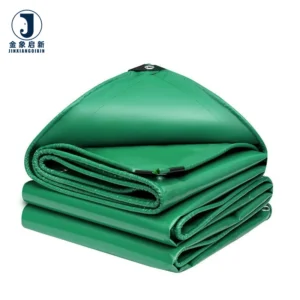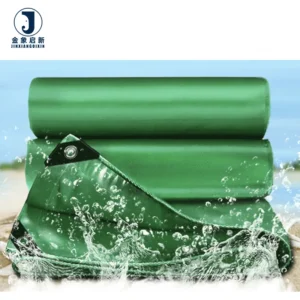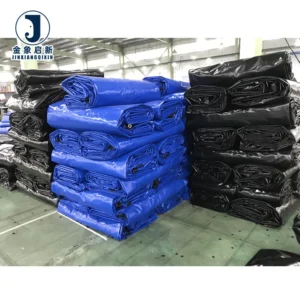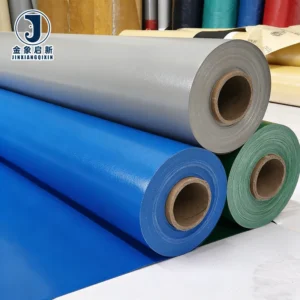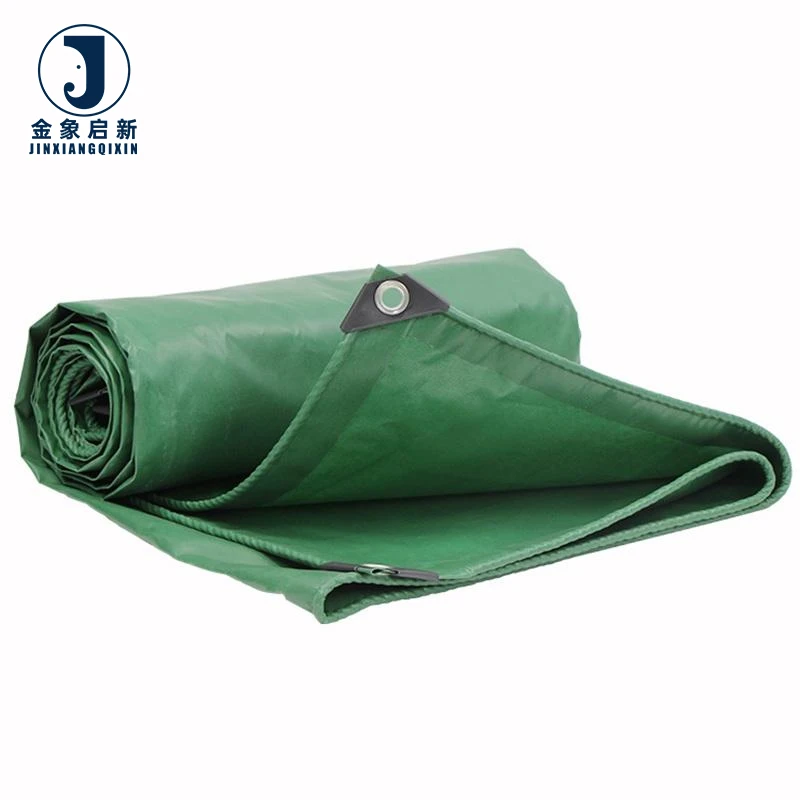
Consistent Coating Adhesion — Hot-melt and laminated coating processes on high-strength polyester mesh deliver reliable bond strength at eyelet and tie-down stress points for truck and trailer covers.
Technical Specifications
| Parameter | Value |
|---|---|
| Product Type | PVC Coated Tarpaulin Roll |
| Base Fabric | High-strength polyester mesh fabric |
| Weight (GSM) | 350gsm / 420gsm / 500gsm / 550gsm / 600gsm / 750gsm (select grade at inquiry) |
| Total Thickness | 0.32mm / 0.35mm / 0.4mm / 0.45mm / 0.5mm / 0.65mm |
| Coating Material | PVC |
| Coating Method | Laminated technology & Hot-melt Coating technology |
| Roll Width | 2m / 2.1m |
| Roll Length | 75m (for 2m width) / 50m (for 2.1m width) |
| Surface Finish | Glossy or Matt |
| Color Options | Blue / Red / Yellow / Light Blue / Grey (Customizable) |
| Waterproofing | Double-sided 100% Waterproof |
| UV Treatment | Sunproof (test basis not stated — confirm UV test standard for your market) |
| Anti-Mildew | Yes |
| Anti-Static | Anti-static treatment available (grade not stated — confirm required grade) |
| Flame Retardant | Available in flame retardant grades — confirm the grade required for your market |
| Cold Crack Resistance | Yes |
| Service Life | 3-7 years under normal conditions |
| Standards | ISO, CE |
Application Suitability
| Application | Exposure & Requirement |
|---|---|
| Truck and trailer side curtains | Constant flexing at load shift points, road abrasion, wind load, UV exposure |
| Rigid truck top covers | Water pooling, tie-down strap pressure, thermal expansion and contraction |
| Cargo ship tarpaulins | Salt spray, sustained water contact, heavy cargo compression at contact points |
| Tent and awning covers | Long-term UV exposure, wind uplift, repeated folding and deployment |
| Fish tanks and pool liners | Permanent water immersion, chemical treatment exposure, puncture risk from substrate |
| Construction site covers | Debris impact, dust containment, temporary weather barrier for materials |
Why Generic-Size Truck Covers Fail on Specific Trailer Models
Cutting to your exact vehicle dimensions from roll stock eliminates the gap and seam-stress problems that generic pre-cut covers create.
Fleet operators ordering pre-cut truck covers often find that the edges do not align with the trailer rails, leaving gaps where water and dust penetrate the load. When a cover is too large, the excess fabric flaps in highway wind, accelerating wear at the hem and eyelet line. When it is too small, the tension on the tie-down system pulls the welded seams apart at the flex points where the load shifts most during transit. Sourcing PVC Coated Tarpaulin Roll for truck and transport applications in selectable widths lets fabricators and fleet maintenance teams cut panels that match the specific trailer model, reducing offcuts and ensuring full coverage with properly positioned reinforcement. [NEED_CITE: dimensional tolerances for heavy vehicle curtain and cover fitment]
Matching GSM Grades to Fleet Operating Conditions
Selecting the correct weight grade from the available PVC Coated Tarpaulin Roll range depends on the exposure profile of your fleet. Lighter grades such as 350gsm and 420gsm suit urban delivery vehicles where covers face moderate weather and frequent manual handling, keeping the fabric easy to fold and deploy. Mid-range grades from 500gsm to 550gsm provide additional tear resistance for regional haul trucks that encounter highway-speed wind load and sustained sun exposure.
The 600gsm and 750gsm grades address long-haul and heavy-duty transport where side curtains absorb constant road vibration, cargo abrasion, and extreme temperature swings. Hot-melt coating technology bonds the PVC layer to the high-strength polyester mesh base fabric, producing strong adhesion that resists delamination at the eyelet and hem zones where mechanical stress concentrates. Each grade corresponds to a specific thickness from 0.32mm to 0.65mm, giving specifiers a clear mapping between weight, thickness, and the mechanical demands of the application.
Roll-to-Roll Colour Consistency Across a Mixed Fleet Order
When multiple panels from different rolls are installed side by side on a trailer, any shade variation becomes immediately visible. This is a recurring issue in PVC Coated Tarpaulin Roll procurement where buyers receive an order with visible colour differences between rolls, forcing them to reject material or accept a mismatched finish. Consistent colour output requires controlled pigment dosing and coating temperature management throughout the production run.
Orders for fleet replacement programmes or transport equipment builds involving several trailers benefit from batch-level colour control so that every roll in the dispatch matches the specified colour reference. Whether the requirement is blue, red, yellow, light blue, grey, or a custom shade, requesting a material specification sheet with the colour reference for each roll in the shipment provides a verifiable record. Glossy and matt surface finish options are available across the colour range, and the choice between them affects both the visual appearance once installed and the ease of cleaning during routine fleet maintenance. [NEED_CITE: colour measurement methods for PVC coated textiles per ISO standards]
How Coating Method and Base Fabric Determine Real-World Performance
The relationship between GSM and actual field performance is often misunderstood by buyers who assume a heavier roll is automatically stronger. Tensile and tear resistance depend on the base fabric denier and weave density as much as the coating weight. A 500gsm roll with a tightly woven high-strength polyester mesh base can outperform a 600gsm roll built on a looser weave if the yarn quality and thread count are superior. The GSM figure tells you the total weight per square metre of the composite material, not how that weight is distributed between yarn and coating.
Hot-melt coating technology forces the PVC compound into the mesh structure under heat and pressure, producing strong mechanical interlock between coating and yarn. This improves peel strength at welded seams, which is critical for truck side curtains where high-frequency or hot-air welding joins panels together. Laminated technology, by contrast, bonds a pre-formed PVC film to the base fabric, offering a smooth and consistent surface suitable for applications where print quality or visual finish is a priority. Understanding which coating method is used on your selected grade helps fabricators set the correct welding temperature and dwell time, reducing the risk of seam failure in service.
The surface finish also plays a functional role beyond aesthetics. A glossy surface sheds water and dirt more readily, making it practical for truck covers that need frequent washdown. A matt surface reduces glare and can improve paint or ink adhesion for operators who apply fleet branding directly to the cover. Both finishes are available across the full GSM range, and the choice should align with the maintenance regime and visual requirements of the end use.
The Hidden Cost of Specifying the Wrong Roll Grade
Purchasing a lighter GSM grade than the application demands leads to premature failure at predictable stress points. Tie-down straps cut through undersized fabric at the eyelet line within weeks of highway use, and welded seams split where the load flexes during cornering and braking. The cost of a single roadside cover replacement — including labour, vehicle downtime, and potential cargo damage claims — typically exceeds the saving from choosing a lighter grade at the point of purchase. [NEED_CITE: failure modes of PVC coated fabrics under cyclic mechanical loading]
Colour inconsistency across rolls in a single order creates a different but equally costly problem. When a fabricator installs panels from mismatched rolls on a trailer side curtain, the shade difference is visible to the fleet operator’s client, triggering a complaint and rework. Rejecting and replacing the affected rolls delays the project and adds logistics cost that was not budgeted. Confirming roll-to-roll colour consistency at the pre-shipment inspection stage prevents this outcome.
Why Source Truck Cover Roll Stock Here
Three full production lines and 36 sets of professional equipment support bulk roll output with stable delivery schedules, allowing fleet operators and distributors to plan procurement around predictable lead times rather than reactive ordering.
A 10-person R&D team handles custom width, colour matching, and sample development for transport applications, producing samples within days so fabricators can confirm fitment and welding parameters before committing to a production order.
Dedicated QA/QC runs at every production stage with 100% inspection before shipment, generating a pre-shipment inspection record that verifies GSM, width, colour reference, and roll count against the original specification.
Nearly 30 years of focused coated fabric production provides process control over coating weight and adhesion, ensuring that the hot-melt and laminated bonding on each roll meets the mechanical demands of truck and trailer cover fabrication.
Full documentation accompanies every dispatch, including material specification sheets and certificates of origin, giving importers and distributors the paperwork needed for customs clearance and end-customer compliance files.
Documentation & Verification
- Material specification sheet stating GSM, base fabric type, and coating weight per roll batch
- Pre-shipment inspection record verifying roll count, width, and colour reference against order
- UV and flame retardant test reports available — confirm required standard for your market
- ISO and CE certificates supporting import documentation and end-user compliance
- Certificate of origin and customs support documentation included with each dispatch
- Roll packing list detailing weight and dimensions for container loading planning
Fabrication, Handling & Storage
- Hot-air welding temperature and speed should be calibrated to the specific GSM grade and hot-melt or laminated coating method before production runs
- Eyelet placement at tie-down points requires reinforced hem strips, especially on 350gsm and 420gsm grades where base fabric carries less load
- Store rolls horizontally on pallets in a dry, shaded area to prevent creasing and surface marking on glossy finish panels
- Allow cold-stored rolls to reach ambient temperature before unrolling to avoid cracking in the PVC coating layer
- Use mild detergent and soft brush for cleaning; avoid solvent-based cleaners that may degrade the anti-mildew treatment
- Plan panel cutting layouts to maximise yield from 2m or 2.1m roll widths and minimise welded seam count on large covers
What to Include in Your Roll Stock Inquiry
Specify the trailer models or cover dimensions in your fleet so we can recommend the GSM grade, width, and roll length that minimise offcuts and match the mechanical exposure of each vehicle type. If your market requires fire retardant or anti-static certification, state the applicable standard so we can confirm grade availability and include the relevant test documentation with the quotation.
Indicate whether you need roll stock only for in-house fabrication or if you require cut-to-size panels with eyelet and hem reinforcement. For custom colours or fleet branding, provide the colour reference and surface finish preference (glossy or matt) and we will develop a sample for approval before production. State your target order volume and preferred dispatch schedule so we can align production capacity and container loading plans to your project timeline.
Frequently Asked Questions
Q: How do I select the right GSM grade for my truck or trailer cover application?
A: Match the grade to the exposure profile: lighter grades like 350gsm or 420gsm suit urban delivery with moderate weather, mid-range 500gsm to 550gsm handles regional haul conditions, and 600gsm to 750gsm addresses long-haul highway use with heavy road vibration and temperature extremes. Each grade maps to a specific thickness for clear specification.
Q: What width and roll length options are available to fit specific trailer models?
A: Rolls are available in 2m width at 75m length or 2.1m width at 50m length. These standard options cover most truck and trailer side curtain and top cover dimensions. For non-standard widths or lengths, submit your requirements at inquiry stage and we will confirm availability and minimum order quantity.
Q: How do you ensure colour consistency across multiple rolls in one order?
A: Production controls pigment dosing and coating temperature throughout the run. A material specification sheet with the colour reference accompanies each roll in the dispatch, and the pre-shipment inspection record verifies that every roll matches the approved shade. This prevents visible variation when panels are installed side by side.
Q: How do I verify the GSM of the tarpaulin roll when it arrives at my facility?
A: A pre-shipment inspection record is included with every dispatch, documenting the verified GSM and thickness per roll batch. On arrival, you can cross-check by cutting a measured sample and weighing it against the stated specification. Any discrepancy should be reported with the inspection record for resolution.