Deep Process Control Over Coating Weight — hot melt coating lines maintain consistent adhesion across every PVC truck tarpaulin roll dispatched from this facility.
Technical Specifications
| Parameter | Value |
|---|---|
| Product Type | PVC Coated Tarpaulin for Truck and Trailer |
| Coating Material | PVC |
| Base Fabric | 100% high toughness polyester yarn |
| Coating Method | Lamination technology and hot melt coating technology |
| Base Fabric Denier | 500D–2000D (confirm denier grade for your trailer application) |
| Tensile Strength | Warp 1500–3000 N/5cm / Weft 1200–2800 N/5cm (test standard not stated in source) |
| Treatment Options | Flame retardant (grade not stated), anti-static (surface resistance not stated), anti-UV (weather resistance claimed, test basis not stated), cold resistant, mold proof |
| Welding Tear Strength | Excellent (test standard not stated) |
| Waterproof | Fully waterproof coated construction |
| Color Options | Custom colors available |
| Certifications | ISO and CE certified facility |
Application Suitability
| Application | Exposure & Requirement |
|---|---|
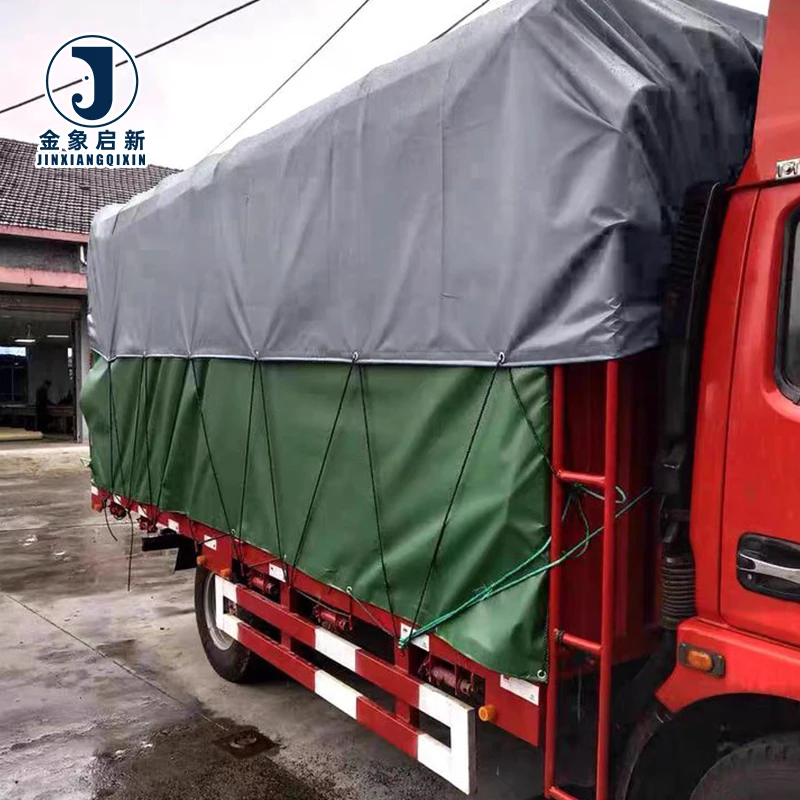
| Truck side curtain fabric | Constant flexing at load shift points, road debris abrasion, UV exposure on long-haul routes |
| Trailer top cover | Direct rainfall and pooling water, wind uplift tension on eyelets and hems, thermal cycling |
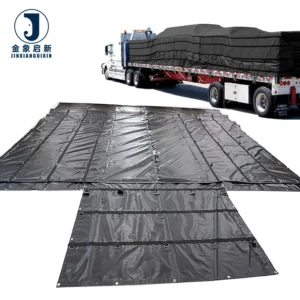
| Flatbed load containment | Tie-down strap friction, edge abrasion against steel rails, repeated folding and unfolding |
| Construction equipment cover on transit | Dust ingress, vibration-induced fabric fatigue, UV degradation on parked machinery |
Why PVC Truck Tarpaulin for Fleet and Trailer Fails at the Weld Line
Seam failure on truck covers rarely means the fabric tore — it means the weld could not keep up with the flex cycle.
Fleet operators replacing covers mid-season often discover the fabric body is intact while the welded seams have peeled apart, typically within the first few months of service. The flex points around load shifts, tie-down zones, and trailer articulation joints concentrate stress that a poorly bonded weld simply cannot survive. When hot melt coating technology is applied correctly, the PVC layers fuse with the polyester base at a molecular level, creating a weld zone that moves with the fabric rather than cracking away from it. [NEED_CITE: tensile and tear test methods for coated fabrics per ISO 1421]
How Hot Melt Coating Protects the Weld Zone on Moving Loads
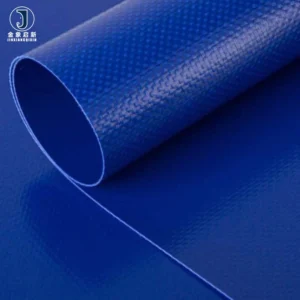
The lamination and hot melt coating process bonds the PVC layers to the 100% high toughness polyester yarn base under heat and pressure, ensuring the coating penetrates the weave rather than sitting on the surface. This deep adhesion is what allows welded seams to withstand the repeated flexing that truck side curtains and trailer covers endure during transit. When fabricators heat-weld panels together, the coating in the weld zone re-melts and fuses, creating a joint that shares the load across the base fabric rather than peeling at the interface.
Model-Specific Sizing Eliminates the Gaps That Generic Covers Leave
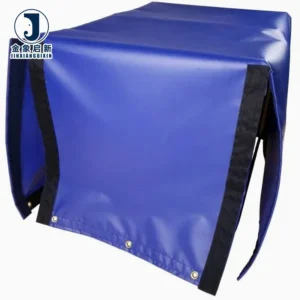
A PVC truck tarpaulin for fleet and trailer applications must match the exact dimensions of the trailer model it protects. Generic cuts leave excess material that flaps in the wind stream, accelerating abrasion at contact points, or fall short at the edges, exposing cargo to rain ingress. Custom sizing based on the specific trailer model ensures tie-down points align with the reinforced hem zones and the cover sits flush against the load profile without tension concentrations that accelerate weld fatigue. [NEED_CITE: DIN 4102 fire classification for building materials]
Reading the Specs That Actually Matter for Truck Cover Longevity
GSM alone tells you how much coating is on the fabric, but the base fabric denier and weave density determine how well that coating is anchored under tension. A 1000D base with tight weave holds the PVC coating more securely than a loosely woven lighter denier, even at identical GSM. The hot melt coating method further amplifies this by forcing the PVC into the yarn intersections rather than bridging over them. Tensile strength values in the warp and weft directions indicate how the fabric will handle the directional loads imposed by tie-down straps and wind uplift on a moving trailer. Anti-UV treatment is available in grades suited to extended outdoor exposure — confirm the grade required for your operating climate. Flame retardant options are available in various grades — confirm the classification your market requires before ordering.
What Happens When the Wrong Grade Goes on the Truck
Specifying a PVC truck tarpaulin for fleet and trailer use without verifying the coating adhesion method often leads to delamination at the weld seams within the first season of service. Covers produced with surface-only coating methods peel apart under the vibration and flex loads that long-haul routes impose. Cold-resistant formulations that are not matched to the operating climate can stiffen and crack at fold points during winter dispatches. Batch colour variation across rolls in a single fleet order becomes visible when covers are installed side by side on adjacent trailers, undermining brand consistency. [NEED_CITE: coating adhesion and peel strength testing for PVC tarpaulin materials]
Why Fleet Operators Source This PVC Truck Tarpaulin from Jinxiang
Nearly 30 years of focused coated fabric production means the hot melt coating parameters are calibrated from experience, not trial and error. Three full production lines and 36 sets of professional equipment support bulk orders with consistent on-time delivery across mixed fleets. A 10-person R&D team handles model-specific sizing, custom colour matching, and sample development within days rather than weeks. Dedicated QA/QC at every production stage with 100% pre-shipment inspection ensures the GSM on the roll matches the quotation before it leaves the factory. ISO and CE certified processes provide the documentation trail that fleet compliance officers require.
Documentation & Verification
- Material specification sheet stating base fabric denier, coating method, and tensile strength values per roll
- Pre-shipment inspection record confirming delivered GSM matches the quoted specification
- Test reports for flame retardant and anti-UV treatment grades where applicable to your market
- Roll packing list with individual roll weights and dimensions for receiving verification
- Certificate of origin and customs documentation for cross-border fleet procurement
Fabrication, Handling & Storage
- Heat-weld seams using temperature and dwell time settings matched to the hot melt coating thickness for this denier grade
- Reinforce eyelet zones with additional PVC patches bonded to the polyester base to distribute tie-down strap loads
- Store rolls upright on pallets to prevent flat spots that create permanent creases in the PVC coating
- Allow cold-stored rolls to reach ambient temperature before unrolling to avoid coating crack at the fold line
- Clean surfaces with mild detergent only — solvent-based cleaners can degrade the anti-UV treatment layer
- Plan cutting layouts to minimise off-cuts and reduce the number of welded seams on large trailer covers
What to Include in Your PVC Truck Tarpaulin Inquiry
Provide the specific trailer makes and models in your fleet so covers can be sized to match rather than estimated from generic dimensions. Specify the operating climate range and any fire safety classifications required by your regional transport authority. Indicate whether you need finished covers with welded hems and eyelets or roll stock for in-house fabrication, along with colour references and any branding requirements.
Frequently Asked Questions
Q: How is GSM verified on delivery to match the quoted specification?
A: Every roll undergoes 100% pre-shipment inspection where weight is measured and recorded against the stated GSM. The pre-shipment inspection report accompanies the shipment, and buyers can conduct independent GSM verification on arrival using the documented sampling method.
Q: What flame retardant grades are available and do they meet regional transport safety standards?
A: Flame retardant treatment is available in multiple grades suited to different markets. Provide your regional classification requirement with your inquiry, and the corresponding test report will be supplied with the material specification sheet for compliance verification.
Q: How are welded seams reinforced at high-flex points on truck covers?
A: The hot melt coating technology creates deep adhesion between the PVC layers and the polyester base, allowing heat-welded seams to flex with the fabric. High-stress zones such as tie-down areas and articulation points receive additional bonded reinforcement patches during fabrication.
Q: Can truck covers be cut to specific trailer model dimensions instead of generic sizes?
A: Covers are produced to the exact dimensions of each trailer model in your fleet, not from generic size charts. Providing the make, model, and body configuration ensures tie-down points align correctly and the cover sits flush without excess material that accelerates wear.
Q: What is the anti-UV test basis and expected service life for fleet applications?
A: Anti-UV treatment is available with weather resistance claimed for extended outdoor exposure in fleet operating conditions. The specific test basis and grade will be provided in the test report — confirm the UV classification required for your operating region before sample approval.