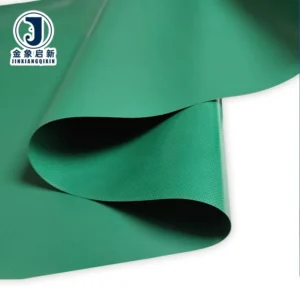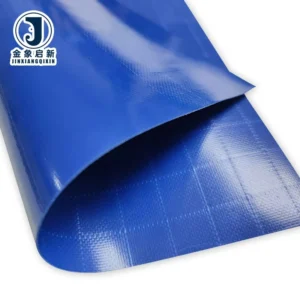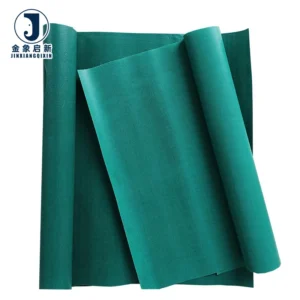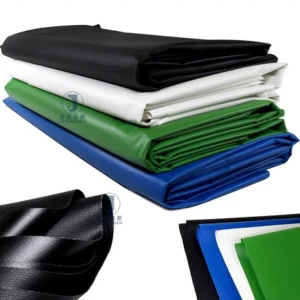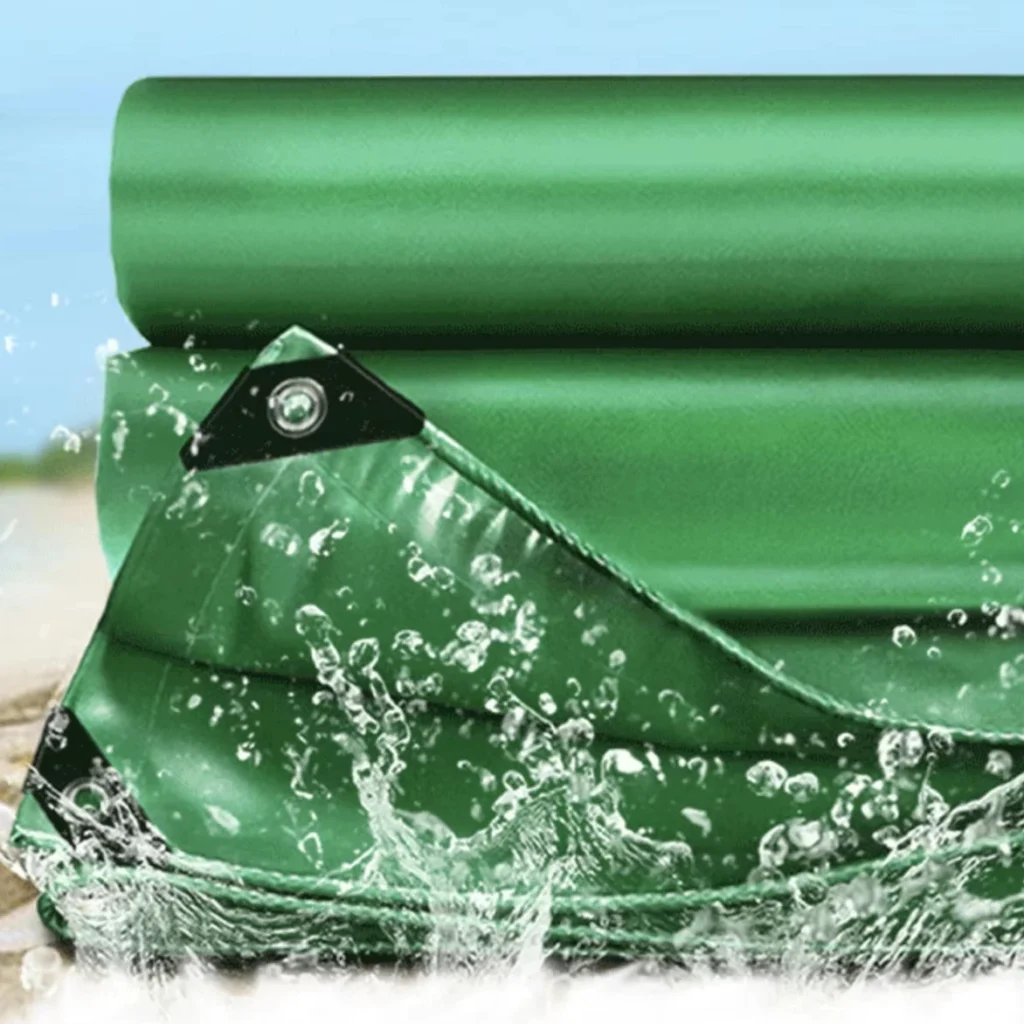
Model-Fit Cutting — generic truck covers flap and fail at seams when the trailer dimensions are off by even a few centimetres, so every roll is checked against the target vehicle profile before fabrication begins.
Technical Specifications
| Parameter | Value |
|---|---|
| Product Type | PVC Coated Tarpaulin Roll |
| Base Fabric | 500D-500D Polyester |
| Coating Material | PVC & Polyester |
| Water Resistance | Fully waterproof double-sided coating |
| Flame Retardant | Available in flame retardant grades — confirm the grade required for your market |
| UV Treatment | Anti-UV treatment available — test basis confirmed on request |
| Key Features | Water resistant, waterproof, flame retardant options, anti-UV options |
| Standards | ISO, CE |
Application Suitability
| Application | Exposure & Requirement |
|---|---|
| Truck side curtain | Constant flexing at load points, road spray abrasion, highway-speed wind load |
| Flatbed trailer cover | Direct sun exposure, tie-down strap friction, repeated folding and unfolding |
| Machinery transport cover | Vibration-induced abrasion, sharp-edge contact, weather during multi-day transit |
| Curtain-side trailer rebuild | Weld seam integrity at flex zones, colour match across replacement panels |
Why a Generic PVC Coated Tarpaulin for Truck and Transport Fails on the Road
A truck cover that fits the trailer model matters more than the GSM printed on the label.
Fleet operators who order a standard-size PVC coated tarpaulin for truck and transport covers often discover the problem at the first rest stop. The fabric is too short to reach the rear tie-down rail, or too wide so it bunches and flaps at speed. That flapping concentrates stress at the welded hem, and the seam splits long before the fabric itself shows wear. The cargo underneath is then exposed to rain and road spray, defeating the purpose of the cover entirely [NEED_CITE: tensile and tear test methods for coated fabrics per ISO 1421].
Designing the Cover Around the Trailer, Not the Roll
Most tarpaulin suppliers cut from stock widths and hand the buyer a rectangle. For transport applications, the PVC coated tarpaulin for truck and transport use must be planned around the specific trailer — its side rail height, its curtain runner track, its rear door clearance. When the pattern accounts for these dimensions, the eyelet line falls exactly where the tie-down strap meets the load bed, and the hem sits flat against the bodywork without lifting at speed.
Reinforcement Where the Load Actually Moves
A flatbed load shifts during braking and cornering, pressing the cover fabric against the cargo edges. The highest stress is not in the centre of the panel but at the hem line and around each eyelet. Reinforced hems with additional fabric layers distribute the tie-down load across a wider area, reducing the chance of the eyelet pulling through the PVC coating. This is where a generic roll, cut without knowing the strap spacing, will fail first.
Reading the Specification Sheet Beyond the GSM Number
The weight of a PVC coated tarpaulin, expressed in GSM, tells you how much material is present per square metre but not how that weight is distributed between base fabric and coating. A 500D-500D polyester base provides the tensile backbone; the PVC coating on both faces delivers waterproof sealing and abrasion resistance. A roll with a heavy coating but a light base fabric may feel thick in the hand yet tear easily when a sharp cargo edge presses against it under strap tension [NEED_CITE: relationship between base fabric denier and tear propagation in coated textiles]. Buyers should request the base fabric specification alongside the GSM figure to understand what they are actually covering their loads with.
The Hidden Cost of Specifying on Price Per Square Metre
When the purchasing decision rests on the lowest per-metre cost, the supplier has every incentive to reduce coating weight and use a lighter base fabric while still quoting the target GSM on paper. The roll arrives looking correct, but on the road the thinner coating abrades through at tie-down points within months, and the lighter base fabric tears when the load shifts. The fleet then replaces the cover twice in the time a correctly specified fabric would have lasted, paying more in downtime and cargo claims than the original saving [NEED_CITE: field failure patterns in transport tarpaulins related to coating weight reduction].
Why Transport Fleets Source This PVC Coated Tarpaulin Here
Three full production lines and dedicated coating equipment maintain consistent coating weight across the entire roll length, so the first metre and the last metre of every roll perform identically on the trailer. A ten-person R&D team develops model-specific cutting patterns for individual truck and trailer types, reducing fitment issues before the fabric reaches the fleet. Every roll undergoes in-process quality checks during coating and a full pre-shipment inspection covering GSM, colour and dimensions against the purchase order. Custom widths and colours are produced on the same lines as stock grades, avoiding the long lead times and high minimums that specialist runs normally carry. ISO and CE certification underpins the documentation package, giving fleet procurement teams the paperwork their compliance departments require.
Documentation & Verification
- GSM verification per roll measured against the quoted specification before dispatch
- Colour consistency check across all rolls within the same transport fleet order
- Pre-shipment inspection record confirming dimensions match the agreed trailer model pattern
- UV and flame retardant test reports supplied where the specified grade requires certification
- ISO and CE certificates included in the shipping documentation package
- Roll packing list with individual roll weights and dimensions for receiving inspection
Fabrication, Handling & Storage
- Heat-weld seams at recommended temperature to avoid burning through the PVC coating on 500D-500D base fabric
- Reinforce eyelet positions with additional PVC patches before punching to prevent pull-through under strap load
- Store rolls upright on a flat surface to prevent flat spots forming in the PVC coating layer
- Allow cold-stored rolls to reach ambient temperature before unrolling to avoid coating crack at the fold line
- Clean with mild detergent only; solvent-based cleaners degrade the PVC surface finish and reduce water resistance
- Plan cutting layout to place welded seams away from the highest-flex zones on the trailer side curtain
What to Include in Your Enquiry
Send the truck or trailer model, the side curtain or cover dimensions required, and the typical cargo type so the correct reinforcement plan can be prepared. Specify your target market so the applicable flame retardant grade and any regional transport compliance requirements are matched from the outset. Confirm whether you need finished covers cut to pattern or full PVC coated tarpaulin rolls for your own fabrication workshop.
Frequently Asked Questions
Q: How do you ensure the truck cover fits my specific trailer model?
A: We request the trailer make, model and year, then develop a cutting pattern that accounts for side rail height, curtain track position and rear door clearance. A sample panel is produced and checked against these dimensions before the full production run begins, so the PVC coated tarpaulin for truck and transport fits without on-site adjustment.
Q: What reinforcement options are available at eyelet and hem stress points?
A: Hems receive an additional layer of PVC coated fabric heat-welded to the main panel before the eyelets are punched. This spreads the tie-down load across a wider area of the 500D-500D base fabric, reducing the risk of the eyelet tearing through during highway transit or when straps are tensioned over irregular loads.
Q: How do you control colour consistency across rolls in the same order?
A: All rolls for a single fleet order are coated in the same production run using the same batch of PVC compound and pigment. A colour comparison check is performed during pre-shipment inspection, and any roll falling outside the agreed tolerance is replaced before dispatch to avoid visible variation when panels are installed side by side.
Q: What is the process for verifying GSM on arrival versus quotation?
A: Each roll is weighed and measured during pre-shipment inspection, and the verified GSM is recorded on the inspection report included with the shipment. On arrival, the buyer can cross-check any roll using a calibrated scale and the dimensions listed on the packing list to confirm the weight matches the original specification.
Q: Can you supply flame retardant and anti-UV test reports with shipment?
A: Yes. When flame retardant or anti-UV treatment is specified, the relevant test report is included in the documentation package. The specific grade and test standard should be confirmed at the enquiry stage so the correct treatment is applied and the matching certification is prepared before dispatch.