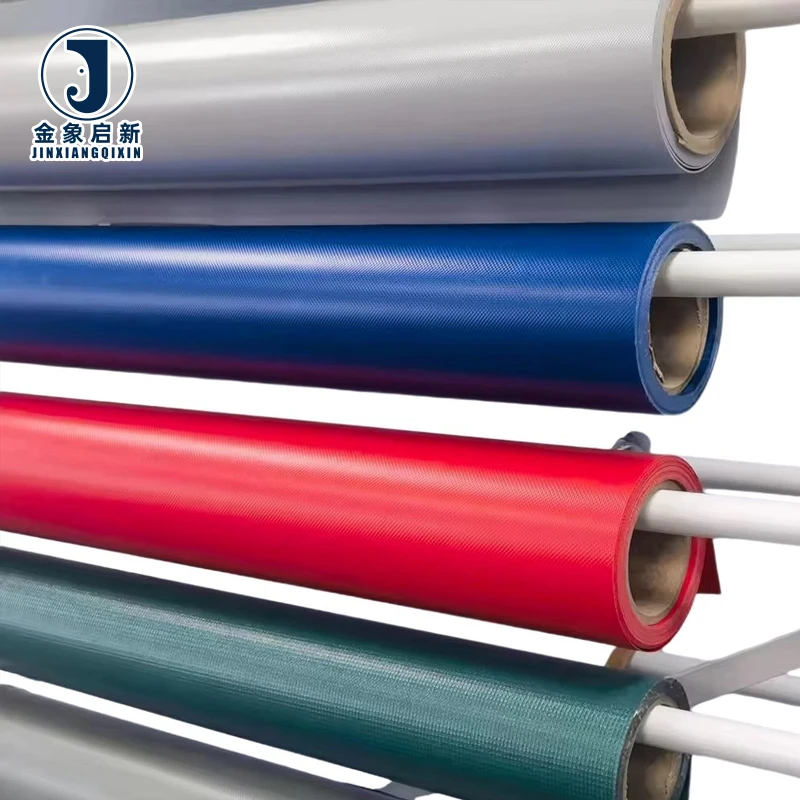
Consistent Batch Output — Every roll in a container is checked for colour match, verified GSM, and treatment compliance before dispatch, eliminating rework from panel-to-panel variation.
Technical Specifications
| Parameter | Value |
|---|---|
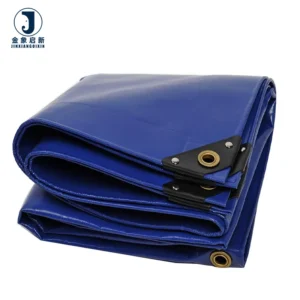
| Product Type | PVC Coated Tarpaulin |
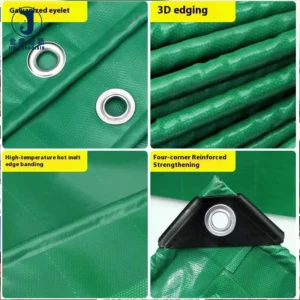
| Base Fabric | 1000D polyester |
| Treatment | Anti-UV, fire retardant, antibacterial, mildew proof |
| Chemical Resistance | Oil, stain, acid and alkali resistant |
| Temperature Range | High temperature and cold resistance |
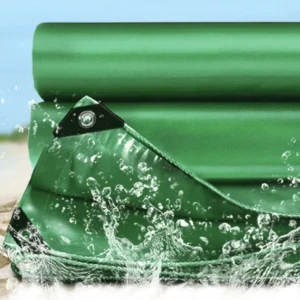
| Surface Property | Anti-oxidation, weather resistance, self-cleaning |
| Flexibility | Highly flexible yet resistant to cracking |
| Welding Options | HF, hot air, sewing |
| Finish | Blackout |
Application Suitability
| Application | Exposure & Requirement |
|---|---|
| Event exhibition tents | High foot traffic, frequent assembly and teardown, UV exposure, light control required |
| Tensile and architectural membrane structures | Sustained mechanical tension, wind load cycling, long-term UV and weather exposure |
| Airport hangars and stadium roofs | Large-span tension, fire safety compliance, structural wind and snow loads |
| Portable storage structures | Abrasion from stored goods, temperature fluctuation, moisture ingress prevention |
| Shade systems and shadings | Continuous direct sun, thermal expansion, colour stability over adjacent panels |
Why GSM Alone Does Not Predict Structural Performance in Tensile Fabric
Base fabric denier and weave density determine how a coated fabric behaves under sustained tension, not the weight stamped on the label.
When a tensile structure fabricator orders material for a stadium canopy, the specification sheet often leads with GSM. But a heavy coating applied over a loosely woven base will peel at the seams under cyclic wind load long before the fabric itself fails. I have seen heavy-grade coated rolls delaminate at the weld line on site because the base fabric density was never verified against the tension requirement. A PVC tarpaulin roll aftermarket supplier should provide the full construction breakdown — denier, weave count, coating weight — so the fabricator can match material to engineering load, not just to a weight class. [NEED_CITE: tensile and tear test methods for coated fabrics per ISO 1421]
Batch Colour Consistency Across the Full Container
Architectural shade structures and large event tents use dozens of panels installed side by side. Even a slight shade drift between rolls becomes immediately visible once the structure is tensioned and lit by sunlight. Our production process controls coating pigment dispersion at the mixing stage, and every roll is compared against the approved master sample under standardised lighting before packing. When you source a PVC tarpaulin roll aftermarket supplier for a high-visibility project, colour match verification is not a courtesy — it is the difference between a clean handover and a costly panel replacement.
Fire Retardant Grades and Market-Specific Compliance
Fire retardant treatment is stated on the quotation, but the grade required depends entirely on the installation jurisdiction and building use classification. Available in fire retardant grades — confirm the grade required for your market before placing the order. Event tents in public assembly spaces typically demand different certification from industrial storage shelters, and airport hangar membranes follow aviation-specific fire codes. We supply test reports matched to the batch being shipped so the fabricator can submit compliant documentation to the approving authority. [NEED_CITE: DIN 4102 fire classification for building materials]
How Base Fabric Construction Governs Weld Integrity
The 1000D polyester base fabric provides the tensile backbone that the PVC coating bonds to during manufacturing. When HF or hot air welding is applied at the seams, the heat penetrates the coating and fuses at the fabric-coating interface. A stable, tightly woven 1000D construction ensures the weld zone does not become the weakest point in the structure. This is why fabricators specifying material for large-span membranes need confirmation of both base denier and coating adhesion strength — not just overall fabric weight.
Surface Finish and Long-Term Cleanability in Shade Applications
The self-cleaning surface property and anti-oxidation treatment work together to reduce dirt accumulation on shade systems exposed to dust and pollen. A blackout finish blocks light transmission, which is critical for event tents where interior lighting must be controlled independently of external conditions. The combination of anti-UV treatment and anti-oxidation resistance helps maintain both the mechanical properties and the visual appearance of the fabric through extended outdoor exposure, reducing the frequency of cleaning cycles for the end user.
Reading the Specification Beyond the Weight Number
The 1000D base fabric denier indicates the yarn thickness used in weaving, which directly influences tear propagation resistance. A higher denier base generally means the fabric resists tear spread more effectively once a puncture or cut occurs. The PVC coating method — whether knife coated, laminated, or calendered — determines the bond strength between coating and base, which in turn governs how well welded seams hold under flex and tension. Blackout finish requires a specific coating build-up that adds to overall opacity but must be balanced against flexibility; a coating too thick will crack at fold lines during transport and installation. Understanding these relationships helps fabricators select material that performs in their specific structure design rather than relying on a single headline number.
The Hidden Cost of Unverified Treatment Claims
When anti-UV or fire retardant treatment is claimed on a quotation but no batch-specific test report accompanies the shipment, the risk falls entirely on the fabricator. Panels installed in a commercial shade structure that fail a fire inspection after installation mean the entire membrane must be removed and replaced. Similarly, UV degradation that appears as surface chalking or embrittlement within the first season points to treatment that was either under-dosed or not applied at all. Specifying verified treatment documentation upfront avoids these post-installation failures. [NEED_CITE: UV accelerated weathering test standards for coated textiles]
Why Fabricators Source This Material Here
Three full production lines with 36 sets of professional equipment support volume roll output with consistent coating weight across the batch. A 10-person R&D team develops custom width, colour, and treatment combinations with samples produced within days for approval before bulk commitment. Dedicated QA/QC inspection runs at every production stage, with 100% pre-shipment verification of GSM, colour match, and treatment compliance against the order specification. Nearly 30 years of coated fabric manufacturing experience means process parameters for the 1000D PVC construction are well established, reducing the variability that causes batch-to-batch inconsistency. Custom width and length options are available with realistic minimums for production planning.
Documentation & Verification
- Material specification sheet stating base fabric denier, coating weight, and blackout finish confirmation
- Fire retardant and anti-UV test reports matched to the specific production batch shipped
- Pre-shipment inspection record covering GSM, colour consistency, and surface quality per roll
- Roll packing list with individual roll identification for traceability through fabrication
- Certificate of origin and customs documentation for international shipment clearance
Fabrication, Handling & Storage
- HF and hot air welding both compatible with this PVC coating — adjust temperature and dwell time to the 1000D base thickness
- Sewn seams should use UV-stable thread matching the fire retardant grade of the base fabric
- Store rolls horizontally on padded racks to prevent permanent creasing across the blackout coating surface
- Allow cold-stored rolls to acclimatise to workshop temperature before unrolling to avoid coating crack at fold lines
- Use mild detergent for cleaning — solvent-based cleaners may degrade the self-cleaning surface treatment
- Plan panel cutting layout to minimise off-cut waste, especially on custom-width rolls for large-span structures
What to Include in Your Enquiry
Provide the structure type, expected span dimensions, and the fire safety classification required by your local building authority so we can match the correct treatment grade. Specify your preferred roll width and whether you require sample approval before bulk production. Indicate annual volume and whether you need rolls only or finished cut panels, as this affects both lead time and minimum order configuration.
Frequently Asked Questions
Q: How do you guarantee GSM matches the quotation on arrival?
A: Every roll is weighed and measured during pre-shipment inspection, and the verified GSM is recorded against the roll identification number. The inspection record is included with the shipment documentation so you can cross-reference the physical material against the original specification sheet before cutting begins.
Q: Can I get the fire retardant and anti-UV test report for my specific batch?
A: Yes. Test reports are generated per production batch and reference the specific roll numbers shipped. We provide these with the dispatch documentation so the reports you submit to your approving authority match the material actually installed on site.
Q: What is the minimum order for a custom width or colour?
A: Custom width and colour are available with sample development before bulk commitment. Minimums depend on the coating run setup and pigment batch size. Submit your required width and colour reference, and we will confirm the production minimum along with a sample lead time for your approval.
Q: Will colour be consistent across all rolls in one container?
A: Roll-to-roll colour consistency is verified at the 100% pre-shipment inspection stage under standardised lighting conditions against the approved master sample. All rolls in a single order are produced from the same coating batch to minimise shade variation across panels installed side by side.
Q: How do I specify welding method and seam reinforcement for my structure design?
A: This material supports HF welding, hot air welding, and sewing. Provide your structure engineering drawings indicating seam locations and load directions, and we will confirm the recommended welding method and any seam reinforcement requirements based on the 1000D base fabric construction and coating characteristics.