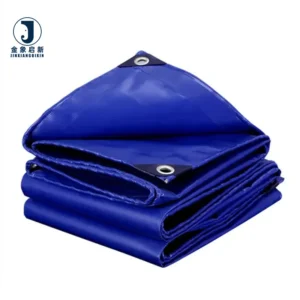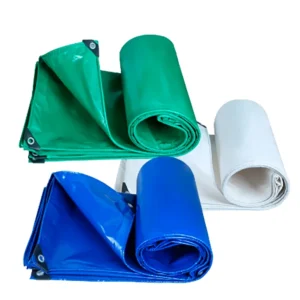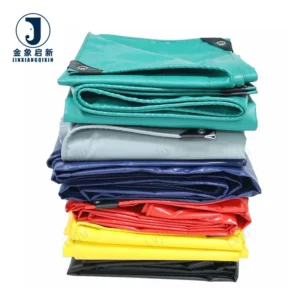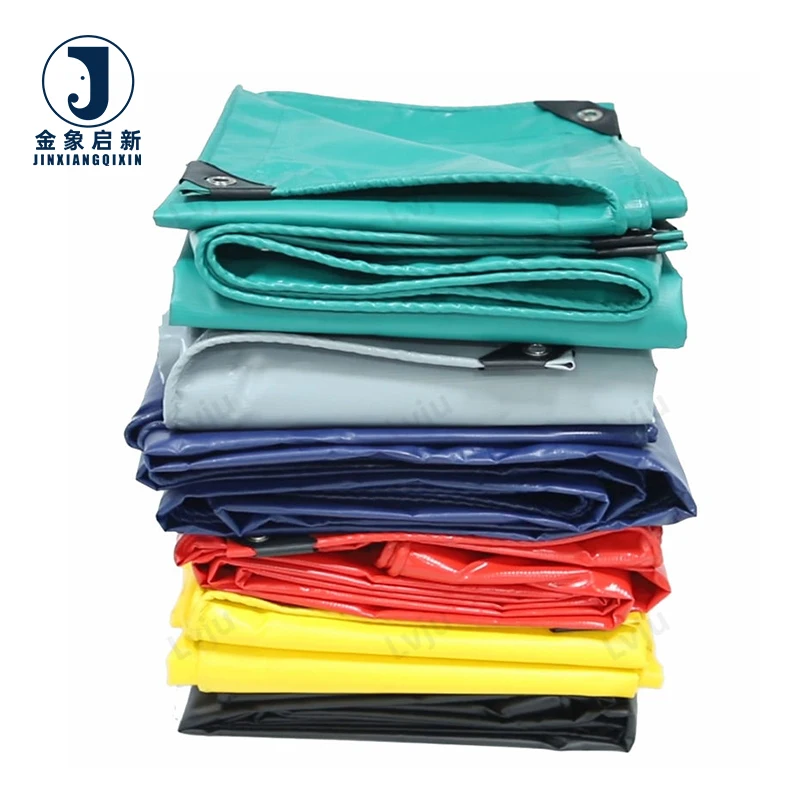
Consistent Coating Weight Control — Knife-coated 500 GSM PVC tarpaulin verified at every production stage, ensuring roll-to-roll weight consistency matched to your fleet cover specifications.
Technical Specifications
| Parameter | Value |
|---|---|
| Product Type | PVC Knife-Coated Tarpaulin |
| Material | High Density Virgin PVC |
| Weight | 500 GSM |
| Coating Method | Knife Coated |
| Waterproof | Yes |
| Color Options | Multiple colors available |
| Flame Retardant | Available in flame retardant grades — confirm the grade required for your market |
| UV Treatment | Available with UV treatment — request test report for specific grade |
| Application Forms | Truck Cover / Ship Cover / Tent / Canopy / Awning |
| Standards | ISO, CE |
Application Suitability
| Application | Exposure & Requirement |
|---|---|
| Truck and trailer side curtains | Constant flexing at load points, road spray, abrasion from tie-down straps |
| Flatbed load covers with eyelet reinforcement | Concentrated stress at grommet zones, weather exposure during transit |
| Ship and marine cargo tarps | Salt spray, sustained UV, heavy rain and deck wash-down |
| Fleet standardised top covers | Repeated removal and refitting, wind flap fatigue, colour matching across units |
Why Generic Sizing Fails Moving Loads — And What 500 GSM PVC Knife-Coated Tarpaulin for Truck and Transport Cover Changes
A cover cut to your trailer model survives the flex points that destroy an off-the-shelf tarp.
Fleet operators frequently replace side curtains and load covers not because the fabric wore out, but because a standard-size tarp was stretched over a non-standard load. The fabric then fails where the ratchet strap bites or where the curtain track bends. When a 500 GSM PVC Knife-Coated Tarpaulin for truck and transport cover is specified by roll and cut to actual vehicle dimensions, the stress distributes through the base fabric instead of concentrating at an arbitrary hem line [NEED_CITE: tensile and tear test methods for coated fabrics per ISO 1421]. The result is fewer mid-route failures and longer intervals between re-covers.
Covering Moving Loads Demands More Than Weight
A 500 GSM knife-coated virgin PVC fabric sits at a practical midpoint for transport covers — heavy enough to resist abrasion from strap contact and road debris, light enough for a single operator to handle during daily rigging. The knife coating process forces the PVC compound into the base fabric weave under pressure, producing adhesion that holds through repeated flexing at curtain track rollers and load shift zones. This matters for fleet operators running mixed trailer types where side curtain fabric must flex thousands of times per trip without delaminating.
Weld Integrity at the Points That Matter Most
The high-density base fabric in this 500 GSM PVC Knife-Coated Tarpaulin for truck and transport cover supports strong hot-air welded seams — the join method used for side curtains and panel replacements. Unlike stitched seams, which create needle holes that admit water, a properly welded seam reaches the same tensile value as the parent fabric. For flatbed covers, this means the reinforced hem and eyelet zones transfer tie-down load into the body of the fabric rather than tearing at the seam line [NEED_CITE: hot air welding parameters for PVC coated polyester fabrics]. Fleet maintenance teams replacing individual curtain panels benefit from consistent weld behaviour roll after roll.
Reading Beyond the GSM Number
GSM tells you the total weight per square metre, but it does not reveal how that weight is split between base fabric and coating. A 500 GSM fabric with a heavy coating over a light base may resist puncture yet tear easily along the warp or weft. The knife coating method used here applies virgin PVC in controlled layers onto a high-density base, balancing coating thickness with yarn count. For transport buyers, this balance determines whether a side curtain track roller wears through the coating first or the base yarn ruptures first under wind load — two different failure modes that require different specification choices.
What Happens When Roll Consistency Is Skipped
A batch of truck covers that vary in colour or weight between rolls creates problems that only surface after installation. Side panels installed next to each other on the same trailer show visible shade differences in daylight — a cosmetic issue that signals deeper inconsistency in coating weight and therefore flex performance. Similarly, a roll that arrives lighter than quoted may pass initial inspection but fail earlier at abrasion points [NEED_CITE: pre-shipment inspection standards for coated textile rolls]. Verifying weight and colour against the purchase specification at dispatch prevents these downstream costs.
Why Source This Fabric Here
Three full production lines and 36 sets of professional equipment support bulk roll output with consistent coating weight control across long production runs. A dedicated 10-person R&D team handles custom width slitting, colour matching and sample development within days rather than weeks. Every roll passes 100% pre-shipment inspection with documented GSM verification before dispatch. Material specification sheets issued per roll include base fabric denier and coating weight so your receiving team can cross-check on arrival. Nearly 30 years of coated fabric production underpins the process control that keeps roll-to-roll variation within tolerance.
Documentation & Verification
- Material specification sheet stating GSM, base fabric denier and coating weight per roll
- Roll weight cross-check record confirming 500 GSM on arrival
- Welded seam strength inspection at high-flex zones before dispatch
- Colour consistency check against reference swatch under controlled lighting
- ISO and CE certificates issued with each shipment batch
Fabrication, Handling & Storage
- Hot-air weld at temperature matched to 500 GSM knife-coated PVC for full adhesion
- Reinforce eyelet zones with extra fabric patches to spread tie-down strap loads
- Store rolls horizontally on racking to avoid flat spots on the virgin PVC coating
- Allow cold-weather rolls to acclimatise before unrolling to prevent surface cracking
- Clean with mild detergent — avoid solvent-based cleaners that attack the PVC compound
Before You Request a Quote
Specify the truck or trailer models the covers must fit, including side curtain track type and flatbed dimensions, so we can recommend roll widths that minimise waste. Indicate whether you need roll stock for your own fabrication or finished covers cut and welded to model, and state any colour requirements for fleet livery consistency across multiple rolls. If your transport operation requires flame retardant or UV-treated fabric, name the standard your market demands so we include the correct test report with your documentation package.
Frequently Asked Questions
Q: How do you verify the GSM on arrival matches the quotation?
A: Each roll is weighed and cross-checked against the stated 500 GSM before dispatch. We provide a roll packing list showing net weight per roll. On your side, cutting a measured sample from the roll end and weighing it on a calibrated scale confirms the specification was met throughout production.
Q: Can you supply colour-consistent rolls for a full fleet re-cover?
A: Yes. When you order multiple rolls for the same fleet, we match production batches so panels installed side by side show no visible shade difference. A reference swatch from the first approved roll is kept on file for comparison during subsequent production runs.
Q: What reinforcement is recommended at eyelet and tie-down zones?
A: For 500 GSM knife-coated PVC tarpaulin used as flatbed covers, we recommend welded reinforcement patches at eyelet rows and along hem edges where ratchet straps concentrate load. This spreads stress into the base fabric rather than relying on the coating alone.
Q: Do you provide cut-to-model truck covers or only roll stock?
A: Both are available. We supply roll stock for transport equipment builders running their own fabrication, and we produce finished covers cut to specific truck and trailer models with welded hems, eyelets and reinforcement matched to the vehicle dimensions you provide.
Q: What test reports support UV or flame-retardant claims?
A: Where UV or flame-retardant treatment is specified, we supply test reports from accredited laboratories confirming the grade achieved. State the standard required for your market — such as the fire classification or UV exposure duration — and we include the matching report with your shipment documentation.