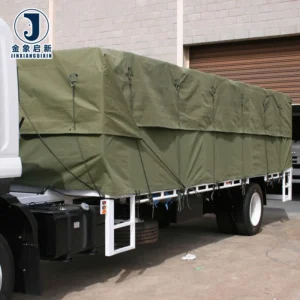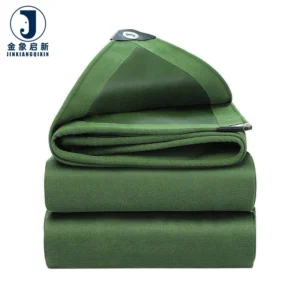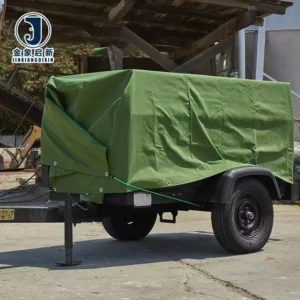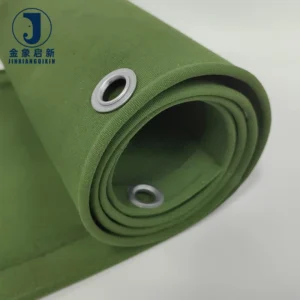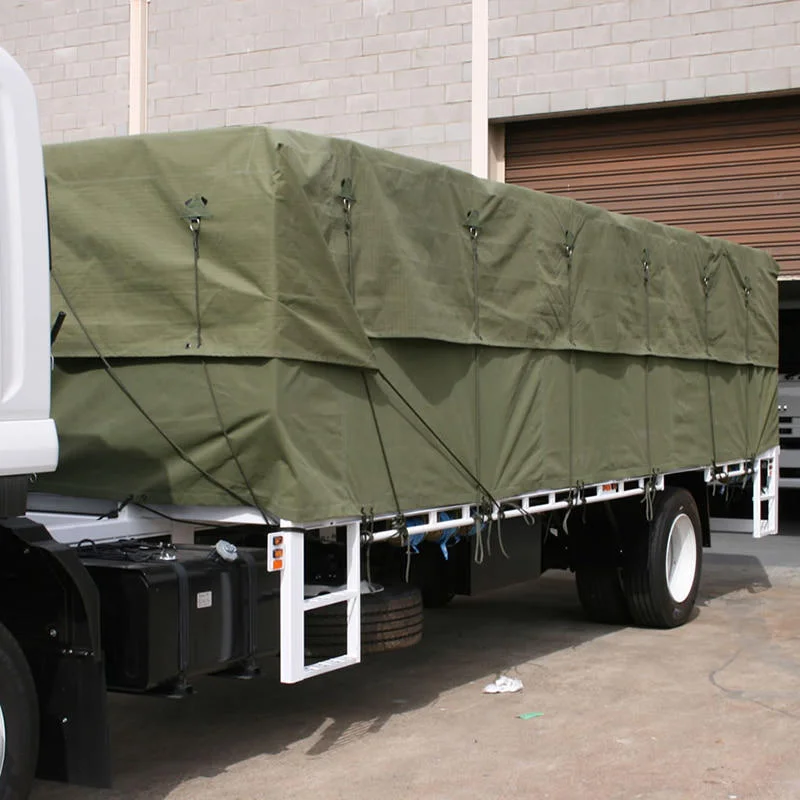
Model-Specific Fitment — Covers are cut to exact truck and trailer dimensions rather than generic sizes, eliminating edge gaps and tie-down stress that lead to early seam failure.
Technical Specifications
| Parameter | Value |
|---|---|
| Product Type | Truck Tarpaulin |
| Material | Silicone canvas tarpaulin |
| Weight Range | 250gms-600gms (confirm the grade required for your application) |
| Width | 0.2m-0.4m de largura (source value — verify against manufacturer catalog) |
| Waterproof | Stated |
| Wear-Resistant | Stated |
| Scratch Resistant | Stated |
| Tensile Resistant | Stated |
| Custom Options | Edge wrapping, punching, buttonhole, size, color |
| Standards | ISO, CE |
Application Suitability
| Application | Exposure & Requirement |
|---|---|
| Long-haul flatbed truck cargo | Highway wind load, road debris abrasion, constant UV exposure |
| Side curtain systems for curtain-siders | Repeated flexing at roller and rail mounts, lateral tension |
| Tipper and dump truck load covers | Heavy material contact, hydraulic frame movement, dust ingress |
| Tricycle and light commercial transport | Urban stop-start loading, manual handling abrasion, wet weather |
| Retractable tarp systems on heavy trailers | Mechanical roll stress, guide rail friction, seasonal temperature shift |
Why a Generic-Size Truck Tarpaulin Cover Fails Before the Fabric Does
A cover that does not match the trailer model concentrates load at the eyelets and seams, not the fabric.
When a truck tarpaulin cover is ordered to a standard dimension that does not match the specific trailer bed, the overhang flaps in crosswind or the cover pulls tight across corners. The tie-down points take load the fabric was never meant to carry, and the welded seams split at the flex zones long before the canvas itself shows wear. I have seen operators replace covers after a single season, blaming the material, when the real cause was a dimensional mismatch that overstressed the edges on every load cycle [NEED_CITE: tensile and tear test methods for coated fabrics per ISO 1421].
Dimensional Accuracy and Vehicle-Specific Cutting
The fit of a truck tarpaulin cover depends on matching the exact trailer make, model, and bed dimensions. This canvas tarps range supports custom sizing so the cover wraps the load without excess material that flaps or insufficient material that strains at the corners. Edge wrapping and punching are positioned to align with the trailer’s existing tie-down hardware, keeping tension evenly distributed across the fabric surface.
Reinforcement at the Points That Take the Most Abuse
Flex zones and tie-down points are where covers fail first on moving loads. Buttonhole reinforcement and edge wrapping are applied at these high-stress locations so the truck tarpaulin cover handles the repeated load-and-release cycle of strapping without tearing through the canvas. The punching pattern can be specified to match the spacing of your trailer’s rope rail or ratchet strap anchors, rather than forcing a generic spacing that leaves unsupported sections.
Reading the Specs Beyond the Weight Number
The stated weight range of 250gms-600gms covers multiple grades within this silicone canvas tarpaulin family, and selecting the right grade depends on the specific exposure the trailer faces. Heavier grades use a denser base fabric weave with a thicker coating application, which together determine tensile and tear resistance — the coating weight alone does not define how the fabric behaves under load. A lighter grade may suit urban tricycle transport where the cover is handled manually every day, while long-haul highway exposure demands the higher end of the range to resist sustained wind lift and road debris abrasion. The waterproof and scratch-resistant characteristics of the silicone coating help the surface shed water and resist scuffing from contact with cargo edges and loading equipment.
What Happens When the Specification Does Not Match the Route
Ordering a lighter grade for a long-haul route that sees sustained highway speeds means the cover absorbs more UV and mechanical stress than it was designed for, leading to surface degradation and coating breakdown well before the expected replacement cycle. Similarly, if color is specified for fleet branding but not controlled across the production run, panels installed side by side on the same trailer show visible variation in sunlight — a problem that only appears once the entire order is fitted and cannot be corrected without a full replacement [NEED_CITE: color consistency standards for coated fabrics in fleet applications].
Why Procurement Teams Source This Truck Tarpaulin Cover Here
Three full production lines and 36 sets of professional equipment support the volume and custom sizing required for fleet orders across mixed vehicle types. The 10-person R&D team handles pattern development and sample cutting so the cover is verified against your trailer dimensions before bulk production begins. Dedicated quality control inspects every cover before shipment, checking dimensional accuracy, edge wrapping integrity, and buttonhole placement against the order specification [NEED_CITE: ISO quality management requirements for coated fabric manufacturers]. Color references are confirmed across the production run so covers for the same fleet match when installed.
Documentation & Verification
- Material specification sheet stating base fabric type, coating material, and confirmed GSM for the grade supplied
- Pre-shipment inspection record verifying cover dimensions match the specified trailer model
- ISO and CE certificates supporting the production facility’s quality management system
- Color reference sheet confirming shade consistency across all covers in the fleet order
- Test report for any specified treatment, provided when the grade and standard are confirmed at inquiry stage
Fabrication, Handling & Storage
- Heat welding parameters should be set for silicone canvas tarpaulin — confirm temperature and dwell time with sample offcuts before production welding
- Edge wrapping must cover the full perimeter to distribute tie-down load across the silicone-coated canvas rather than concentrating stress at raw cut edges
- Store rolls flat or vertically supported to prevent permanent creasing that weakens the coating at fold lines
- When unfolding in cold conditions, allow the canvas tarpaulin to reach ambient temperature before tensioning to avoid cracking the silicone coating
- Clean with mild detergent only — solvent-based cleaners can degrade the silicone surface and compromise waterproof performance
- For field repair, use compatible silicone-based patch adhesive matched to the canvas coating chemistry
What to Include in Your Truck Tarpaulin Cover Inquiry
Specify the exact trailer make, model, and bed dimensions so the cover can be cut to fit rather than supplied to a generic size. Indicate the operating environment — long-haul highway, urban distribution, or off-road site work — so the correct grade within the 250gms-600gms range is selected. If fleet branding is required, provide the color reference and any print artwork early so color consistency and logo placement can be confirmed on a sample before the full production run.
Frequently Asked Questions
Q: How do I specify size for my specific trailer model?
A: Provide the trailer make, model, bed length, width, and any side height or headboard dimensions. We develop a cutting pattern from these measurements and produce a sample cover for fitment verification before bulk production. This eliminates the gap and overhang problems that generic-size truck tarpaulin covers create on specific vehicle models.
Q: What eyelet spacing and hem reinforcement options are available?
A: Buttonhole and punching spacing can be set to match your trailer’s rope rail or strap anchor positions. Edge wrapping is applied around the full perimeter, and reinforcement patches can be added at known high-stress corners. Confirm your hardware layout so the truck tarpaulin cover tie-down points align with your existing equipment.
Q: How do you ensure color consistency across multiple rolls?
A: A color reference is established before production, and every roll in the order is checked against it. This is critical for fleet orders where covers are installed side by side — any shade variation is caught during pre-shipment inspection rather than after installation on the vehicles.
Q: What is the lead time for custom-size truck tarpaulin covers?
A: Lead time depends on the order volume, the number of different trailer models in the fleet, and whether sampling is required for fitment approval. Custom sizes and colors require additional production scheduling. Confirm your delivery timeline at the inquiry stage so the production plan can be aligned.