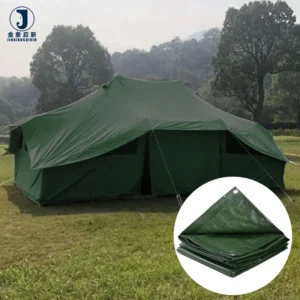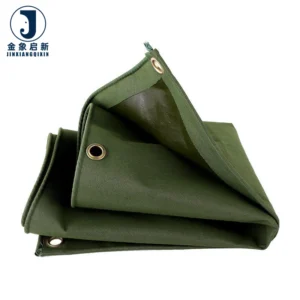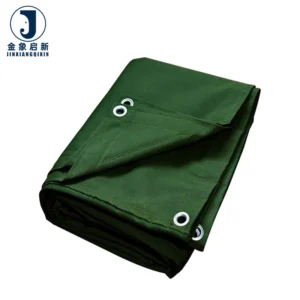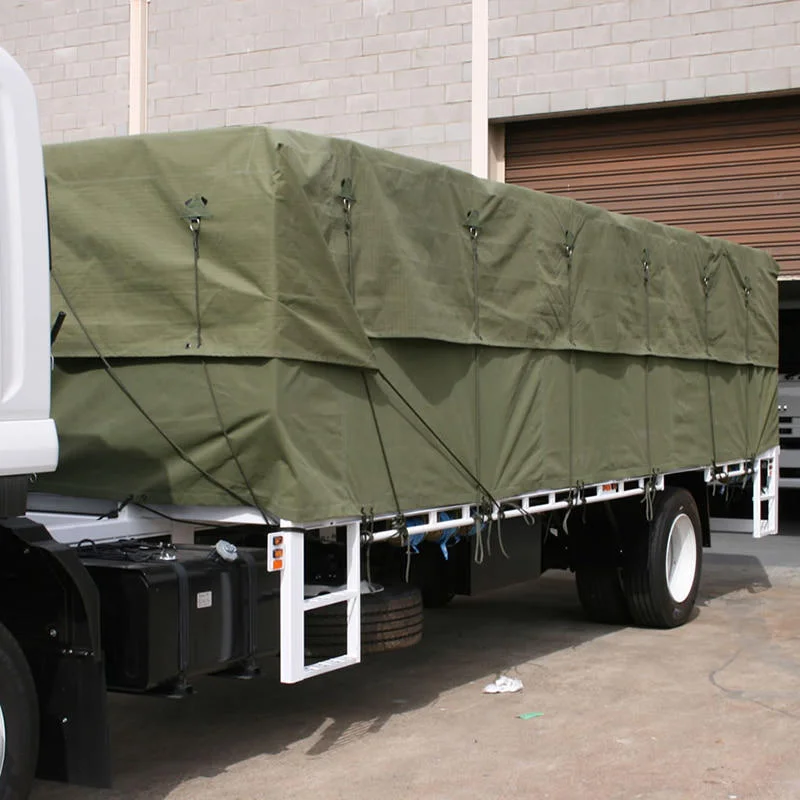
Truck Fitment Precision — tarps cut to your specific trailer model dimensions with reinforced tie-down zones where road vibration concentrates most.
Technical Specifications
| Parameter | Value |
|---|---|
| Product Type | Heavy Duty Vinyl Canvas Truck Tarp |
| Material | Silicone coated canvas |
| Weight Range | 250gms-600gms (confirm the grade for this item) |
| Key Features | Waterproof, wear-resistant, scratch resistant, tensile resistant |
| Color | Customizable |
| Customization Options | Edge wrapping, punching, buttonhole, size |
| Standards | ISO, CE |
Application Suitability
| Application | Exposure & Requirement |
|---|---|
| Flatbed trailer cargo covering | Road vibration, wind flap, tie-down tension at edges, weather exposure |
| Curtain-side trailer protection | Constant flexing at fold lines, abrasion against trailer frame, UV exposure |
| Tipper trailer load cover | Abrasive contact with bulk material, repeated folding and unfolding cycles |
| Tricycle cargo cover | Lightweight load protection, frequent manual handling, urban weather exposure |
Why Generic Sizes Cost More Than Custom Fitment on the Road
A truck tarpaulin cut to your exact trailer model eliminates edge flap, reduces tie-down failures, and prevents cargo exposure during transit.
Fleet operators who purchase off-the-shelf covers sized by nominal width often find the tarp overhangs at the rear while pulling short at the cab end. The excess material flaps in crosswinds, accelerating edge wear and tearing eyelets from the hem within the first season [NEED_CITE: tarpaulin failure patterns related to fitment tolerance in transport applications]. Custom-fit canvas truck tarpaulin for trailer and cargo protection resolves this by matching the actual bed length, bolster height and side drop of the vehicle.
Dimensional Accuracy for Mixed Fleet Standardisation
When a logistics company runs multiple trailer types — flatbeds, curtain-siders and tippers — a single generic tarp size forces compromises on every vehicle. Our custom sizing starts from the specific trailer model dimensions, ensuring the heavy duty vinyl canvas truck tarp reaches each tie-down point without stretch or slack. Edge wrapping, punching and buttonhole placement are positioned to match the fleet’s existing ratchet strap and rope patterns.
Reinforcement Where Load Flex Concentrates Stress
The point where a loaded trailer flexes over uneven road surfaces is also where the tarp experiences the highest cyclic tension. Eyelet zones along the bottom hem and corners receive reinforced punching with additional canvas layers before finishing. This local reinforcement addresses the failure mode where standard grommets pull through the fabric under tie-down load [NEED_CITE: tensile concentration at eyelet zones in heavy transport tarpaulins].
Silicone Coated Canvas for Road Transport Durability
The silicone coating applied to the canvas base fabric delivers waterproof protection while maintaining the flexibility needed for repeated folding during loading operations. Unlike rigid PVC coatings that can crack at fold lines in cold conditions, silicone-coated canvas retains pliability across the temperature range encountered during over-the-road transport. The coating also provides scratch resistance when the tarp contacts abrasive cargo surfaces or trailer frame edges during securing.
GSM, Base Fabric and the Relationship to Actual Tensile Performance
Buyers often specify tarpaulin weight in GSM as the sole indicator of strength, but weight alone does not determine how the fabric performs under load. The base fabric denier and weave density work together with the coating weight to produce the final tensile and tear characteristics. A 400 GSM canvas with a tightly woven high-denier base may outperform a 550 GSM fabric that achieves its weight through heavier coating on a looser weave. The silicone coating on this truck tarp adds waterproofing and surface protection, while the underlying canvas construction determines how the material handles tie-down tension and load shift forces. Available in flame retardant grades — confirm the grade required for your market and application compliance needs.
The Consequence of Welded Seams Failing Before the Fabric Does
When a truck tarp is assembled from multiple panels, the welded or stitched seams become potential failure lines that experience different stress patterns than the body fabric. If the seam construction does not account for the flex behaviour of silicone-coated canvas under road vibration, the joins can separate while the surrounding fabric remains intact [NEED_CITE: seam failure modes in multi-panel tarpaulin assemblies for transport use]. Reinforced edge wrapping and buttonhole positioning distribute load away from the seam lines, directing tie-down forces into the body of the canvas rather than concentrating stress at panel intersections.
What This Production Process Delivers for Your Fleet
Three full production lines with dedicated cutting and finishing stations allow custom truck tarpaulin orders to move from specification to dispatch without queue bottlenecks. The 10-person R&D team develops sample covers within days so you can verify fitment on your actual trailer before authorising bulk production. Dedicated QA inspection at the cutting, punching and edge-wrapping stages catches dimensional deviations before the tarp reaches the packing stage. Pre-shipment checks verify eyelet spacing, hem reinforcement and colour consistency across multiple covers in the same fleet order.
Documentation & Verification
- Material specification sheet stating confirmed GSM, base fabric construction and silicone coating details per roll
- Pre-shipment inspection record covering dimensions, eyelet placement and hem reinforcement for each cover
- Colour reference documentation for fleet orders requiring visual consistency across multiple tarpaulins
- Roll packing list with individual cover identification for fleet allocation on receipt
- ISO and CE certificates available for compliance documentation in regulated transport markets
Fabrication, Handling & Storage
- Heat sealing parameters must be adjusted for silicone-coated canvas, which requires different temperature profiles than standard PVC tarpaulins
- Edge wrapping at buttonhole and punching zones should use matching canvas strips to maintain coating continuity and waterproof integrity
- Folded covers should be stored flat rather than rolled to prevent permanent crease lines in the silicone coating layer
- Cleaning requires mild detergent compatible with silicone surfaces; solvent-based cleaners may degrade the coating finish
- Field repairs on minor abrasions use silicone-compatible patch adhesive rather than PVC repair cement
Specifying the Right Cover for Your Trailer Configuration
To ensure the custom canvas truck tarpaulin for trailer and cargo protection fits your fleet precisely, provide the trailer make, model and year along with bed dimensions including any bolsters or headboards. Specify whether the cover will be used with rope tie-down, ratchet straps or elastic cords so the punching and buttonhole configuration matches your existing securing hardware. Indicate the number of covers required and whether colour matching across the order is necessary for fleet visual standards.
Frequently Asked Questions
Q: How do you ensure the tarpaulin fits my specific truck and trailer model?
A: We request the trailer make, model and production year, then develop a sample cover for physical fitment check before bulk production. Dimensions are verified against the actual vehicle rather than a generic template, accounting for bolsters, headboards and tie-down rail positions specific to your equipment.
Q: What eyelet spacing and reinforcement options are available for tie-down loads?
A: Standard spacing follows the trailer’s existing tie-down rail pattern, with additional canvas layers applied at each punching point before the grommet is set. Corner zones and high-flex areas along the bottom hem receive extra reinforcement to handle concentrated ratchet strap tension during transit.
Q: How are welded seams and hem edges reinforced at high-flex points?
A: Seam construction accounts for the flex behaviour of silicone-coated canvas under road vibration, with edge wrapping directing tie-down forces into the body fabric rather than concentrating stress at panel joins. Hem edges receive folded reinforcement before final stitching or welding.
Q: What is the lead time and minimum order for a custom-size truck tarpaulin?
A: Sample covers are developed within days for fitment confirmation, with bulk production scheduled after sample approval. Minimum order quantities depend on the colour specification and whether the canvas grade is a stock item or requires a dedicated production run.
Q: How do I verify the canvas weight and coating on arrival against the quotation?
A: Each shipment includes a packing list with material specification details, and our pre-shipment inspection record documents the GSM verification performed before dispatch. You can conduct independent weight sampling on received rolls to confirm the specification matches the agreed grade.