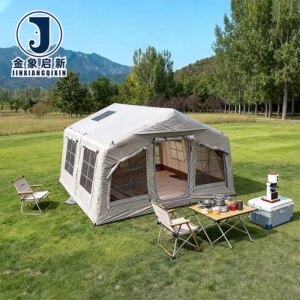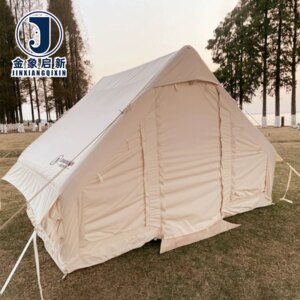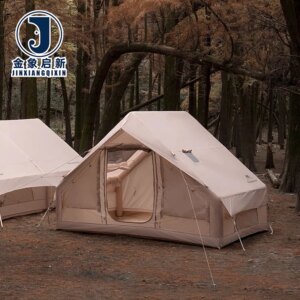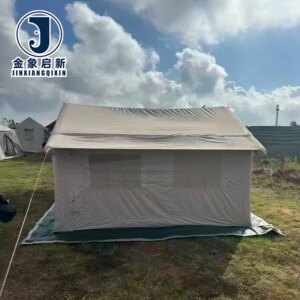
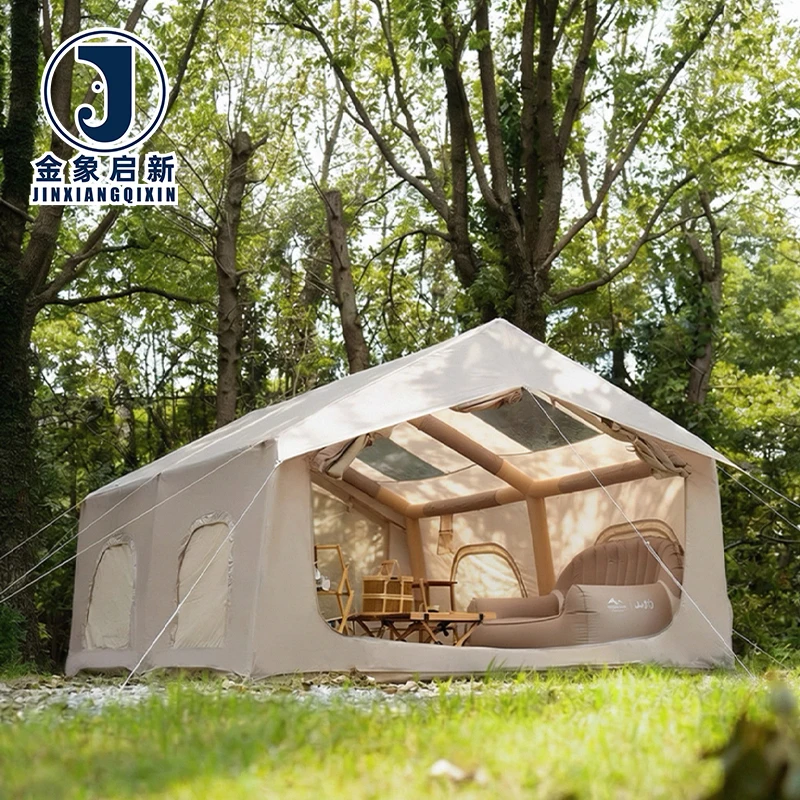
Process Control Over Coating — every roll of PVC tarpaulin we produce is verified for adhesion and weight consistency before leaving the facility, ensuring inflatable tent structures hold pressure without seam delamination.
Technical Specifications
| Parameter | Value |
|---|---|
| Product Type | Inflatable Tent |
| Core Material | PVC tarpaulin |
| Waterproof | Yes (grade not stated in source) |
| UV Treatment | Anti-UV (test basis not stated in source) |
| Tear Resistance | Tear-resistant (test basis not stated in source) |
| Flame Retardant | Fire-retardant (grade not stated in source) |
| Anti-Static | Anti-static (standard not stated in source) |
| Product Form | Inflatable structure with quick automatic opening |
| Customization Service | OEM & ODM (sample customization, pattern printing) |
| Certifications | ISO 9001, ISO 14001, ISO 45001, CE |
Application Suitability
| Application | Exposure & Requirement |
|---|---|
| Fleet emergency shelter at roadside breakdown sites | Constant UV exposure, road debris abrasion, wind load on inflated panels |
| Transport corridor disaster staging | Rapid deployment under time pressure, repeated inflation cycles, wet ground contact |
| Mobile logistics equipment storage | Forklift and pallet movement inside, dust ingress, temperature fluctuation |
| Field medical operation tent | Infection control surface requirements, frequent chemical cleaning, weather isolation |
Why "Fire-Retardant" Means Nothing Without a Test Report Behind It
An Inflatable Tent for Truck and Transport Emergency Shelter often sits near fuel stores, idling vehicles or electrical staging equipment — yet many procurement teams accept a supplier’s fire-retardant claim without requesting the underlying test documentation.
A fire-retardant claim without a named standard and passing result is a marketing statement, not a compliance document.
Transport and logistics sites frequently operate under local fire authority audits that demand specific flame classification — for example, a depot adjacent to a motorway may require a different grade than a remote mining laydown area. When the inflatable tent fabric arrives with no supporting certificate, the site safety officer either rejects the delivery or assumes the liability personally. [NEED_CITE: fire classification standards for temporary structures used near fuel storage] We have seen transport contractors forced to remove shelters hours before an audit because the paperwork did not match the site’s fire management plan.
Rapid Inflation and Structural Integrity Under Road-Side Conditions
When a heavy goods vehicle breaks down on a motorway hard shoulder or at a remote loading point, the crew needs shelter within minutes — not hours spent assembling poles and cross-members. The quick automatic opening mechanism of this Inflatable Tent for Truck and Transport Emergency Shelter eliminates manual frame erection entirely. The PVC tarpaulin panels are engineered to hold internal air pressure across the beam and roof sections, maintaining headroom and usable floor area even when cross-winds press against the inflated form.
Withstanding the Transport Corridor Environment
Transport corridors expose temporary structures to a combination of diesel particulate, road salt spray, UV radiation and mechanical abrasion from nearby vehicle movement. The PVC tarpaulin used in this inflatable shelter is treated for UV resistance — confirm the specific UV test basis required for your operating region before placing a fleet order. Anti-static treatment is also available to address environments where fuel vapour or fine combustible dust may accumulate around the shelter perimeter. Request the anti-static surface resistance test documentation to verify suitability for your site’s safety classification. [NEED_CITE: anti-static surface resistance thresholds for temporary structures in fuel-adjacent zones]
Reading the Specs That Actually Determine Field Performance
The PVC tarpaulin core material defines the inflatable tent’s behaviour under sustained air pressure and external wind load. Tear resistance is a function of the base fabric denier and weave density working together with the coating adhesion — a heavier coating alone does not prevent a tear from propagating once the base yarn is cut. The coating method influences how well adjacent panels bond during heat welding; poor peel strength at the weld line will cause the beam structure to leak air long before the fabric body fails. Fire-retardant grades available for this material should be confirmed against the specific standard enforced in your destination market — different jurisdictions recognise different test methods, and shipping a tent with an unrecognised grade creates a compliance gap at the point of use. Waterproof performance depends on full coating coverage across both faces and sealed seams; any stitch line that is not subsequently heat-taped becomes a potential water entry path under sustained rain.
The Hidden Cost of Specifying on Price Alone
When procurement teams award inflatable tent contracts primarily on unit price, the delivered fabric often arrives lighter than the GSM stated on the original quotation. The panels inflate initially but lose pressure faster because the thinner coating cannot maintain airtightness across the weld seams. [NEED_CITE: coating weight verification methods for PVC tarpaulin per ISO standards] In transport emergency scenarios, a shelter that slowly deflates during use forces the crew to run compressors continuously — burning fuel, adding noise and defeating the purpose of rapid autonomous deployment. Batch colour variation across multiple tent units in a single fleet order can also create a visible mismatch when shelters are erected side by side at a staging area, undermining the professional image the fleet operator intended to project.
Why Sourcing This Inflatable Structure Here Makes Sense
The coating weight and adhesion on every roll are controlled through dedicated QA and QC checkpoints at each production stage, not sampled only at final inspection. Three full production lines and 36 sets of professional processing equipment support volume output while maintaining batch-to-batch consistency across tent panel fabric. A 10-technician R&D team handles sample development, pattern printing and sizing customisation — meaning you can request a trial unit cut to your exact staging footprint before committing to a fleet quantity. Pre-shipment inspection covers 100 percent of finished tent units before dispatch, reducing the risk of receiving a shelter with a leaking beam seam. ISO 9001, ISO 14001, ISO 45001 and CE certification underpin the factory management system, giving your procurement file the audit trail it requires.
Documentation & Verification
- Material specification sheet stating PVC coating type, base fabric construction and colour reference per batch
- Fire-retardant test report — confirm the grade required for your transport site before ordering
- Anti-static surface resistance test documentation where fuel-adjacent deployment is planned
- Pre-shipment inspection record confirming 100 percent check of inflated beam integrity
- ISO 9001, ISO 14001, ISO 45001 and CE certificates for factory management compliance
- Certificate of origin and customs documentation for international shipment
Fabrication, Handling & Storage
- Heat-weld PVC tarpaulin seams using temperature and dwell settings matched to the coating thickness to prevent beam air leakage.
- Store rolled inflatable tent fabric upright on pallets to avoid permanent crease marks across the coated surface.
- Avoid dragging the PVC tarpaulin panels over abrasive ground during deployment to protect the outer coating face.
- Clean inflated surfaces with mild detergent only — solvent-based cleaners may degrade the PVC coating plasticiser.
- Carry a portable heat-weld repair kit for field patching of punctures in the tarpaulin beam sections.
What We Need to Quote Your Inflatable Shelter Requirement
Send us the intended deployment scenario — roadside breakdown, depot staging, disaster relief corridor — along with the floor dimensions and headroom your operation requires. Specify any fire-retardant or anti-static standard your destination market enforces so we can match the correct fabric grade. Advise whether you need OEM pattern printing for fleet branding and the quantity of tent units per order, and we will return a specification recommendation with lead time.
Frequently Asked Questions
Q: What fire-retardant documentation comes with each inflatable tent shipment?
A: We supply a test report for the fire-retardant grade applied to the PVC tarpaulin. Confirm the specific classification your transport site or local authority requires before ordering, as different jurisdictions recognise different standards. We can align the fabric treatment to your compliance target during the specification stage.
Q: How is anti-static treatment verified before dispatch?
A: Where anti-static PVC tarpaulin is specified, the surface resistance test result is recorded and included in the shipment documentation. Request the test method reference when you place the inquiry so we match the correct measurement protocol for your fuel-adjacent or industrial staging environment.
Q: Can the inflatable tent dimensions and layout be customised for our fleet?
A: Yes. Our R&D team develops samples based on your floor plan, headroom and beam configuration requirements. Pattern printing for fleet branding is available. Sample development is completed before mass production so you can approve fit and appearance.
Q: Will multiple tents in one order match in colour?
A: Batch colour consistency is managed through controlled pigment dosing and in-process QA checks. For large fleet orders we recommend confirming the colour reference at sample approval stage so all units are produced within the same batch run, minimising visible variation when shelters are deployed side by side.
Q: How does the sample approval process work before bulk production?
A: We produce a sample unit to your size and specification, ship it for your evaluation, and proceed to mass production only after written approval. Any adjustments to dimensions, seam construction or fabric treatment are addressed at this stage, preventing costly corrections after the full order is manufactured.