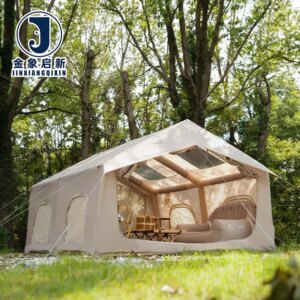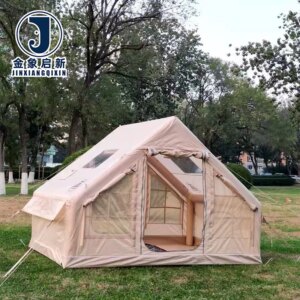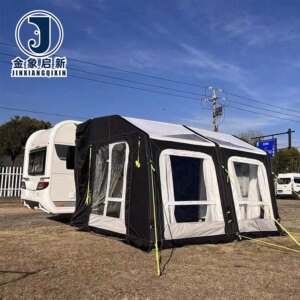
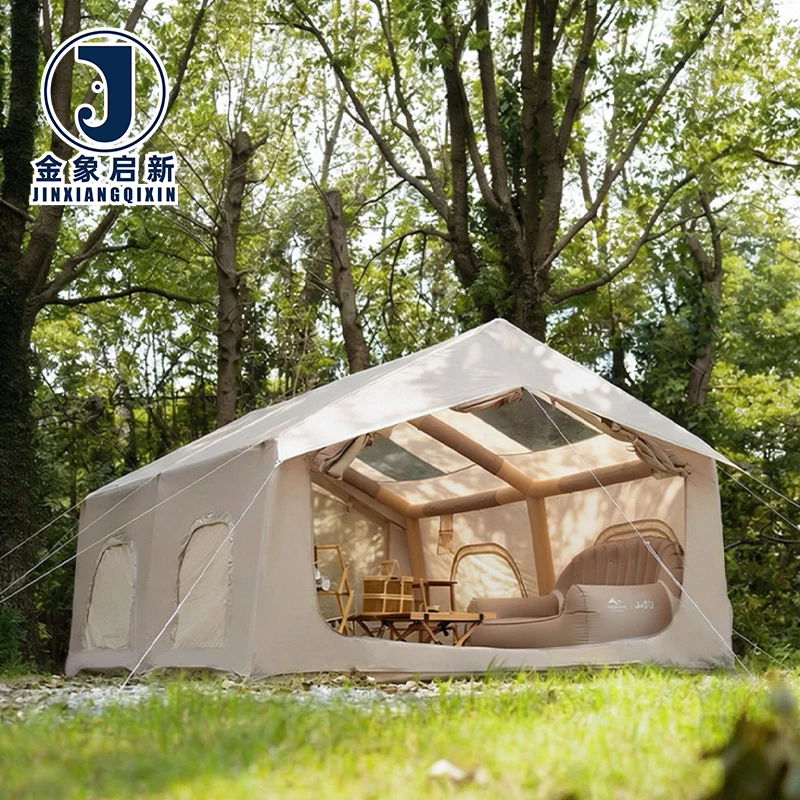
Proven Process Control — Our dedicated QA/QC team inspects every production stage of this PVC inflatable tent fabric, ensuring consistent coating weight and adhesion from the first roll to the last before it reaches your transport or field operation.
Technical Specifications
| Parameter | Value |
|---|---|
| Product Type | Inflatable Tent Fabric |
| Core Material | PVC tarpaulin |
| Product Forms | Inflatable Camping Tent |
| Capacity | 1-12 Person |
| Season Rating | Four-Season |
| Opening Mechanism | Automatic Opening (Inflatable) |
| Seam Construction | Heat-sealed seams |
| Waterproof | Yes |
| UV-Resistant | Available with UV treatment — confirm the test basis required for your market |
| Fire-Retardant | Available in flame retardant grades — confirm the grade required for your market |
| Anti-Static | Available in anti-static grades — confirm the standard required for your market |
| Tear-Resistant | Yes |
| Customization | OEM & ODM (sample customization, pattern printing, material selection, product design) |
| Certifications | ISO9001, ISO14001, ISO45001, CE |
Application Suitability
| Application | Exposure & Requirement |
|---|---|
| Temporary site accommodations for construction crews | Continuous outdoor weather, heavy foot traffic, wind loading on inflatable tubes, need for rapid deployment |
| Base camp setups for outdoor event management | High visibility requirements, repeated inflation and deflation cycles, varied ground surfaces |
| Mobile field stations for research expeditions | Extreme temperature fluctuations, remote transport handling, prolonged sun exposure |
| Emergency response shelters for disaster relief operations | Rapid deployment under pressure, rough handling during transport, compliance with relief agency standards |
When "Heavy Duty" Is Stated but the Fabric Fails in the Field
Material durability depends on verified coating adhesion and base fabric density, not just a marketing label on the inflatable camping tent.
Fleet operators and field contractors frequently specify tents for mobile base camps or crew shelters, only to discover that the PVC coating delaminates at the seam after repeated inflation cycles. The inflatable tube structure places constant flexing stress on the heat-sealed joints. When the coating weight or base fabric denier is insufficient for this dynamic load, the first failure point is almost always the weld line, not the panel fabric. I have seen heavy-grade coated rolls fail at the weld line simply because the thermal parameters during fabrication were not matched to the material’s actual melt characteristics [NEED_CITE: tensile and tear test methods for coated fabrics per ISO 1421].
How Inflatable Structures Demand More from the Fabric Envelope
Unlike a static frame tent, an inflatable camping tent commercial shelter relies entirely on internal air pressure to maintain its shape. The PVC tarpaulin envelope must resist continuous outward force while remaining flexible enough to fold and transport. This means the base fabric’s tear strength and the coating’s peel adhesion are both critical. A material that performs well as a flat truck cover may behave differently when formed into a pressurized tube, where stress concentrates at every curve and junction.
The Role of Heat-Sealed Seams in Pressurised Envelopes
Stitched seams create needle holes that compromise waterproof integrity under sustained rain. Heat-sealed seams fuse the PVC layers directly, eliminating penetration points. The effectiveness of this seal depends on precise temperature control matched to the specific coating formulation. An Inflatable Tent for truck and transport support operations must maintain seam integrity across temperature swings, from cold morning deployments to midday heat that softens the coating. Inconsistent heat-sealing parameters during fabrication lead to weak bonds that separate under pressure [NEED_CITE: heat-sealing parameters for PVC coated fabrics].
Reading Beyond the Spec Sheet for Inflatable Tent Fabric
The capacity rating of 1-12 persons determines the overall envelope size and the internal volume of air the structure must hold. Larger capacities require larger tube diameters, which increases the hoop stress on the fabric. The base fabric denier and weave density must be matched to this stress level. UV-resistant formulation is essential for structures deployed in open areas for extended periods, as UV degradation embrittles the PVC coating and reduces tear resistance over time. Fire-retardant treatment becomes a compliance requirement when the tent is used on industrial sites or at public events, but the specific grade must match local regulations. Anti-static properties are relevant when sensitive electronic equipment is housed inside the shelter.
What Specification Gaps Cost You on Site
Ordering an inflatable camping tent aftermarket supplier product without verifying the fire-retardant grade against your site’s safety plan can result in the entire batch being rejected upon delivery. Similarly, if the UV-resistance test basis is not documented, you have no way to estimate the material’s service life in your specific climate zone. A batch with inconsistent colour across rolls forces you to either accept a patchwork appearance or return the entire order, delaying your project timeline. Weld failures under pressure can cause sudden structural collapse, creating safety hazards for occupants and liability exposure for the operator [NEED_CITE: DIN 4102 fire classification for building materials].
Why Procurement Teams Source This PVC Tent Fabric Here
Our 10-person R&D team handles material selection and sample development for custom inflatable tent configurations, allowing you to evaluate fabric weight, colour, and seam construction before committing to a full production run. Three full production lines and 36 sets of professional equipment provide the capacity to fulfil bulk orders with consistent on-time delivery, even when you need multiple custom colours or sizes. Dedicated QA/QC inspection at every production stage, with 100% pre-shipment inspection, ensures that the GSM stated on your quotation matches the material you receive. Our deep process control over coating weight and adhesion, developed over nearly 30 years of focused coated fabric production, directly addresses the seam failure and delamination issues that plague generic tent suppliers.
Documentation & Verification
- Material specification sheet stating GSM, base fabric denier, and coating weight for each roll
- Test report for UV and flame-retardant grades where applicable to your order
- ISO and CE certificates supporting international procurement compliance
- Pre-shipment inspection record with photographic evidence of seam integrity
- Roll packing list detailing batch numbers for traceability
- Certificate of origin and customs support documentation
Fabrication, Handling & Storage
- Match heat-sealing temperature to the specific PVC coating formulation to ensure weld strength on inflatable tube seams.
- Store PVC tarpaulin rolls upright on pallets to prevent permanent creasing that weakens the coating at fold lines.
- Allow cold-transported fabric to acclimatise to ambient temperature before unrolling to avoid cracking the PVC surface.
- Use PVC-compatible cleaners only; solvent-based products can dissolve the plasticisers and degrade the coating.
- Conduct a test inflation after fabrication to verify that all heat-sealed seams hold pressure before final dispatch.
- Repair minor field punctures with PVC patch kits that match the coating formulation for proper adhesion.
Initiating a Technical Inquiry
To specify the correct PVC tarpaulin for your inflatable camping tent application, provide details on your typical deployment environment, expected duration of continuous outdoor exposure, and any fire-retardant or anti-static compliance requirements specific to your operational zones. Indicate the capacity range you need to accommodate and whether you require OEM fabrication services or are sourcing the inflatable camping tent fabric by the roll for your own production line. Specify if you need pre-production samples to validate colour consistency and seam performance before placing a volume order.
Frequently Asked Questions
Q: How is the fire-retardant grade verified and which standards does it meet?
A: Fire-retardant grades are available for the PVC tarpaulin used in our inflatable tent fabric. The specific standard (such as DIN 4102, NFPA 701, or M2) must be confirmed at the inquiry stage to match your site’s compliance requirements. We provide a batch-specific test report with each shipment documenting the grade achieved and the test method applied.
Q: What is the test basis for UV-resistance claims and expected outdoor service life?
A: UV-resistant formulation is available for extended outdoor exposure in diverse climates. The specific test basis and exposure hours must be confirmed based on your geographic location and deployment conditions. We provide the test report documentation upon request, allowing your technical team to evaluate suitability for your specific application and estimate the material’s service life.
Q: What OEM/ODM customization options are available for size, color, and structural modifications?
A: Our 10-person R&D team supports full customization including custom sizing for specific capacity requirements, colour matching to your brand or visibility standards, pattern printing, and structural modifications to the inflatable tube design. Samples are developed within days for your approval before bulk production begins, ensuring the final product meets your exact specifications.
Q: How do you ensure batch-to-batch consistency across large orders?
A: Our 100% pre-shipment inspection process verifies GSM, colour consistency, and seam integrity for every roll. Dedicated QA/QC at each production stage, combined with our deep process control over coating weight and adhesion, ensures that repeat orders match the specifications and quality of your initial approved sample. Batch traceability is maintained through our documentation system.
Q: What documentation ships with each order for compliance and procurement records?
A: Each shipment includes a material specification sheet, pre-shipment inspection record, roll packing list with batch numbers, ISO and CE certificates, and certificate of origin. Test reports for UV and flame-retardant grades are included where applicable to your order, providing full documentation for your compliance files and procurement audit trail.