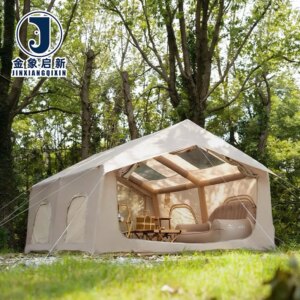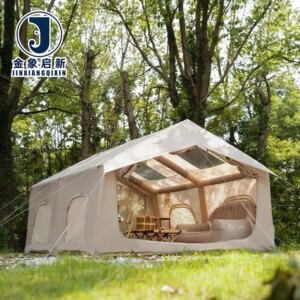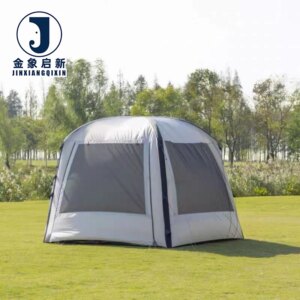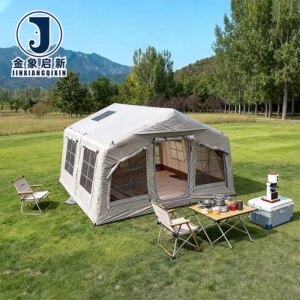
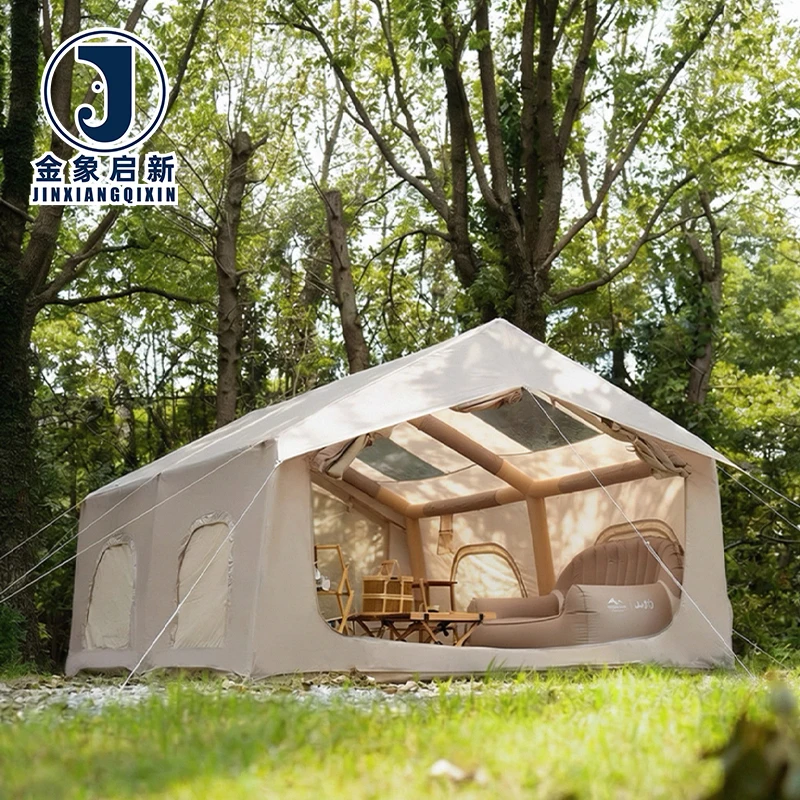
Process-Controlled Coating — Nearly 30 years of focused PVC coating experience ensures every roll of inflatable tent fabric maintains consistent adhesion, weight, and surface finish from edge to edge.
Technical Specifications
| Parameter | Value |
|---|---|
| Product Type | Inflatable Tent |
| Core Material | PVC tarpaulin |
| Product Forms | 2-3 Person Quick Automatic Opening |
| Construction | Single layer |
| Key Performance | Waterproof, UV-resistant (test basis not stated in source), tear-resistant, fire-retardant (grade not stated in source), anti-static (surface resistance not stated in source) |
| Customization | OEM & ODM, sample customization, pattern printing |
| Certifications | ISO9001, ISO14001, ISO45001, CE |
Application Suitability
| Application | Exposure & Requirement |
|---|---|
| Construction site temporary shelter | Continuous weather exposure, wind loading, site abrasion, rapid deployment need |
| Outdoor event logistics | UV exposure, rain ingress risk, frequent packing and unpacking |
| Industrial storage facilities | Dust and moisture protection, long-term static deployment |
| Mobile field operations | Transport vibration, flex stress at seams, quick setup under pressure |
| Emergency response support | Immediate shelter requirement, harsh environmental conditions, portability |
| Temporary workspace solutions | Weather protection, interior climate separation, repeated relocation |
Why Fabric Weight Alone Cannot Guarantee Tent Durability
Coating adhesion and base fabric density determine real-world strength far more than GSM stated on a quotation.
When a buyer specifies a certain weight for PVC inflatable tent fabric, the number on paper does not always translate into field performance. A lighter-coated fabric with a tight base weave can outperform a heavier one with poor coating penetration. Fleet operators and transport contractors have received material that measured below the quoted GSM on arrival — a discrepancy that only surfaces when the tent is under wind load or being dragged across a loading dock surface. The specification sheet must state not just weight but base fabric construction and coating method to give a complete picture of what the inflatable tent will handle in actual use. [NEED_CITE: tensile and tear test methods for coated fabrics per ISO 1421]
How Inflatable Structures Place Unique Demands on Coated Fabric
An inflatable tent relies entirely on internal air pressure to maintain its shape, meaning the PVC inflatable tent fabric must resist stretching uniformly across every panel. Unlike a frame tent where poles carry the structural load, the fabric itself is the structure. Any weak point in coating adhesion or base fabric weave becomes a failure origin under sustained pressure. This makes tear resistance and seam weld integrity non-negotiable for inflatable deployment in transport and field environments.
The Transport Logistics Angle: Deployment Speed Meets Material Performance
For fleet operators and transport equipment builders, the inflatable tent must deploy in minutes at a roadside stop or loading bay, then pack away without surface damage. The PVC tarpaulin core must tolerate repeated folding without developing crease-line cracks in the coating. Single-layer construction keeps packed volume manageable for vehicle stowage while still delivering waterproof and tear-resistant protection during use. Transport environments add road vibration and flex stress that generic camping fabrics simply cannot endure across multiple deployment cycles. [NEED_CITE: DIN 4102 fire classification for building materials]
Reading Between the Specification Lines
The core PVC tarpaulin material defines the tent’s baseline behaviour in the field. Waterproofing comes from the coating itself — a continuous PVC film that prevents moisture passage through the fabric body. Tear resistance depends on base fabric denier and weave density working together with coating penetration; a high-denier yarn in a loose weave may still tear easily if the coating does not lock the fibres in place. Fire-retardant and anti-static treatments are available, but the specific grade must be confirmed against your site safety requirements or market regulations before production begins. UV-resistant treatment is offered to extend outdoor service life, though the test basis should be requested and verified for your target climate. Single-layer construction reduces weight and packed size while relying on the PVC coating’s inherent insulation properties.
What Happens When Material Specification Is Skipped
Ordering inflatable tents without confirming coating adhesion, base fabric construction, and treatment grades leads to predictable failures. Welded seams separate before the fabric body shows any wear, typically at the points where the structure flexes most during inflation and deflation. Batch-to-batch colour variation becomes visible when multiple units are deployed side by side at an event or site — a cosmetic issue that signals deeper inconsistency in coating weight. Flame-retardant claims without a documented grade can result in site inspectors rejecting the shelter outright, leaving crews without cover and procurement teams scrambling for replacement. [NEED_CITE: coating adhesion test methods for PVC tarpaulin per ISO standards]
Why Source Inflatable Tent Fabric From This Production Facility
Dedicated QA and QC personnel inspect every production stage, catching coating weight deviations and surface defects before they reach the packing area. Three full production lines with 36 sets of professional equipment provide capacity to fulfil bulk inflatable tent orders without splitting production across incompatible machines. A 10-person R&D team handles custom sizing, pattern printing, and sample development, allowing transport equipment builders to validate fit and finish before committing to volume. Strict full-process quality inspection ensures the PVC inflatable tent fabric leaving the facility matches the approved sample in weight, colour, and treatment. The production facility holds ISO9001, ISO14001, ISO45001, and CE certifications, providing documented assurance for compliance-driven procurement.
Documentation & Verification
- Material specification sheet stating PVC coating type, base fabric construction, and treatment claims for each inflatable tent batch
- Pre-shipment inspection record confirming weight and visual quality against approved sample before dispatch
- Fire-retardant and anti-static test reports provided where applicable, matched to order specifications
- ISO and CE certificates included in shipping documentation for compliance verification
- Certificate of origin and customs support documents prepared for cross-border inflatable tent shipments
Fabrication, Handling & Storage
- Heat-weld seams using temperature and dwell settings matched to the single-layer PVC tarpaulin construction to prevent weld-line failure
- Store rolled inflatable tent fabric in a cool, dry environment away from direct sunlight to preserve UV-resistant treatment effectiveness
- Avoid sharp folds during packing to prevent permanent crease damage in the PVC coating surface
- Clean with mild detergent and soft cloth — abrasive cleaners can degrade the PVC tarpaulin coating and compromise waterproofing
- Inspect welded seams and valve attachment points after each deployment cycle for early signs of stress or delamination
Before You Request a Quote
To ensure the PVC inflatable tent fabric matches your operational needs, share the deployment environment — whether roadside logistics, construction staging, or emergency response — along with expected frequency of use. Specify any fire-retardant or anti-static grade required by your site safety policy or local regulations. Indicate whether you need finished tents in a specific size or roll fabric for your own fabrication, and confirm if pattern printing or branding is part of the project scope.
Frequently Asked Questions
Q: How is UV resistance verified and what test basis supports the claim?
A: UV-resistant treatment is applied to the PVC tarpaulin during coating, but the specific test standard and exposure duration should be confirmed for your market. Request the test report with your sample so you can validate the treatment matches your regional climate requirements and expected outdoor deployment frequency.
Q: Can the inflatable tent be sized to fit specific trailer or vehicle models?
A: OEM and ODM customization includes sizing the inflatable tent to match specific vehicle dimensions or trailer footprints. The R&D team develops a sample based on your drawings or measurements, allowing you to verify fit, valve placement, and inflation clearance before bulk production begins.
Q: What seam and weld methods are used to prevent failure at flex points?
A: Welded seams on the single-layer PVC tarpaulin are processed using controlled heat and pressure settings calibrated to the coating thickness. High-stress areas around inflation valves and base attachment points receive additional reinforcement to distribute load and prevent peel-back during repeated inflation cycles.
Q: How is batch-to-batch colour consistency controlled across multiple units?
A: Each production run uses matched pigment formulations, and dedicated QA staff inspect colour under standardized lighting before packing. For orders requiring multiple inflatable tents deployed side by side, pre-shipment inspection records document colour consistency across the entire batch.
Q: What documentation ships with each order?
A: Every shipment includes a material specification sheet, pre-shipment inspection record, and applicable test reports for fire-retardant or anti-static treatments. ISO and CE certificates, certificate of origin, and packing lists are provided to support customs clearance and on-site compliance verification.