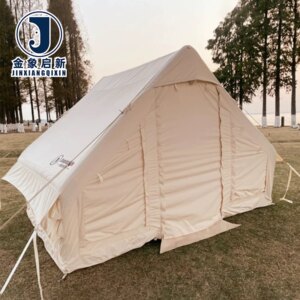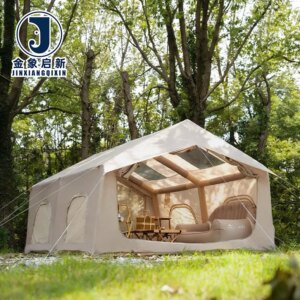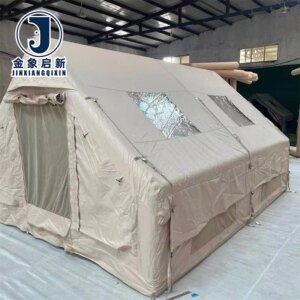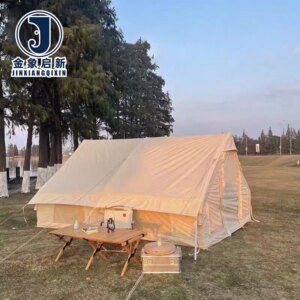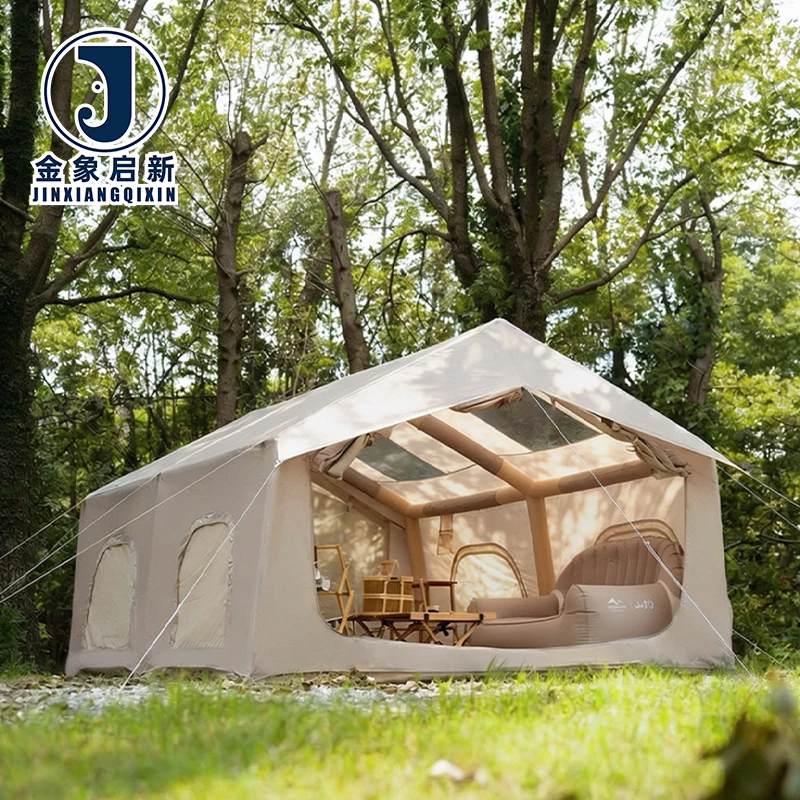
Rapid Sample Turnaround — our 10-person R&D team develops custom inflatable tent samples within days, letting you confirm material, sizing and print before committing to full production.
Technical Specifications
| Parameter | Value |
|---|---|
| Product Type | Inflatable Tent |
| Core Material | PVC Tarpaulin |
| Capacity | 2-8 Person |
| Season Rating | 4-Season |
| Opening System | Quick Automatic Opening |
| Construction | Single Layer |
| Configuration | Extended Type |
| Waterproof | Fully waterproof coated construction |
| UV Resistance | Available in UV-resistant grades — confirm the grade required for your market |
| Fire Retardancy | Available in flame retardant grades — confirm the grade required for your market |
| Anti-static | Available in anti-static grades — confirm the surface resistance required for your site |
| Tear Resistance | Tear-resistant PVC tarpaulin construction |
| Customization | OEM & ODM — sample customization, pattern printing, size adjustments |
| Standards | ISO 9001, ISO 14001, ISO 45001, CE |
Application Suitability
| Application | Exposure & Requirement |
|---|---|
| Disaster relief operations | Rapid deployment in unprepared terrain, exposure to rain and wind, need for immediate weatherproof shelter |
| Construction site temporary shelters | Dust, debris, mechanical abrasion from site traffic, prolonged UV exposure across seasons |
| Mobile command posts | Frequent inflation and deflation cycles, requirement for stable internal environment and equipment protection |
| Equipment storage facilities | Long-term static load, moisture ingress prevention, protection against condensation and ground seepage |
| Emergency medical camping | Hygiene-critical environment, repeated setup and teardown, resistance to cleaning agents |
Why Claimed Performance Fails Without Verified Test Data
When a custom inflatable tent arrives on site and the material feels lighter than the quoted specification, the entire shelter system is compromised — seams stress earlier, the inflatable frame loses rigidity under wind load, and the PVC tarpaulin skin becomes vulnerable to puncture at contact points. Sourcing an inflatable camping tent manufacturer without demanding batch-level documentation turns a procurement decision into a field gamble.
Most buyers focus on the headline specification and overlook whether the stated performance — fire retardancy, anti-static behaviour, UV stability — is backed by a test report tied to the actual roll used in production. [NEED_CITE: coated fabric test methods per ISO 1421 for tensile and tear properties] Without that traceability, a tent specified for disaster relief or industrial command use may not meet the compliance requirements of the receiving authority. The consequence is not a delayed shipment but a rejected installation, with crews exposed and project timelines stalled.
Rapid Deployment Demands Material That Performs from the First Inflation
An inflatable camping tent designed for disaster relief and emergency response must achieve full structural rigidity within minutes of inflation. The PVC tarpaulin core material provides the necessary tear resistance to withstand the internal air pressure that holds the frame upright, while remaining flexible enough for compact packing and transport. For a 2-8 person capacity configuration, the single-layer construction reduces pack weight without sacrificing the waterproof integrity needed in prolonged rain exposure.
Four-Season Rating Means the Fabric Carries the Thermal and Weather Load
A 4-season inflatable tent must handle temperature swings that cause condensation on the inner surface and thermal stress on the coated fabric itself. The PVC tarpaulin used here maintains flexibility in cold conditions and resists softening under direct summer sun, supporting the quick automatic opening system across diverse climates. Extended-type configuration adds usable floor area, which matters when the shelter serves as a mobile command post with equipment and personnel inside simultaneously.
Understanding the Relationship Between Coating Weight and Structural Integrity
The tear resistance of a PVC tarpaulin inflatable tent depends on the interplay between base fabric denier, weave density, and coating weight — not on any single parameter in isolation. A heavier coating improves waterproof performance and abrasion resistance but adds pack weight, which matters for disaster relief teams carrying shelters over rough terrain. The coating method determines how well the PVC adheres to the base fabric under repeated inflation and deflation cycles; poor adhesion leads to delamination at the air tube channels, which is where structural failure typically begins. [NEED_CITE: adhesion strength test methods for coated fabrics] Fire retardant grades must be specified to match the regulatory framework of the destination market — a grade accepted in one jurisdiction may not satisfy the fire safety officer on a different project site. UV-resistant treatments slow the degradation of the PVC surface under continuous sun exposure, preserving both appearance and mechanical properties over the deployment period.
The Hidden Cost of Undocumented Batch Variations
When colour shifts between rolls in the same order, the effect becomes visible the moment two tent panels are erected side by side at a disaster relief staging area — undermining the professional appearance that emergency response organisations require. More critically, if the fire retardant grade is claimed but not verified by a test report tied to that specific production batch, the tent may pass visual inspection but fail the documentation check that industrial and government procurement officers conduct on arrival. [NEED_CITE: fire classification standards for temporary structures and shelters] Welded seams on inflatable tube channels carry the highest stress during inflation; if the welding parameters do not match the coating thickness and formulation of that particular batch, the seam fails before the fabric itself does.
Why Procurement Teams Specify This Inflatable Tent
The 10-person R&D team handles material selection, custom sizing and pattern printing, developing samples within days so buyers can verify performance before production begins. Three full production lines with 36 sets of professional processing equipment provide the capacity to fulfil large-scale disaster relief orders on schedule. Dedicated QA and QC staff conduct inspection at every production stage, with 100% pre-shipment inspection ensuring each custom inflatable tent meets the agreed specification before it leaves the facility. Nearly 30 years of focused experience in PVC coated fabric translates into process control over coating adhesion and weight consistency across every batch. OEM and ODM capability covers size modifications, printed branding and material formulation changes to match the specific compliance requirements of your project.
Documentation & Verification
- Material specification sheet stating GSM, base fabric, coating type and colour reference for each inflatable tent order
- Test reports for UV-resistant and flame retardant grades provided where applicable to your market requirements
- Pre-shipment inspection record confirming 100% inspection of each tent before dispatch
- ISO 9001, ISO 14001, ISO 45001 and CE certificates accompanying every shipment
- Certificate of origin and customs documentation supporting international logistics
Fabrication, Handling & Storage
- Heat-weld inflatable tube channels using parameters matched to the specific PVC tarpaulin coating weight to prevent seam failure
- Store rolled tent fabric in a dry, temperature-stable environment to avoid creasing that weakens the coating at fold lines
- Use compatible PVC-based repair patches for field repairs, matching the coating formulation of the tent material
- Avoid dragging the packed tent over abrasive surfaces to protect the PVC tarpaulin outer layer from puncture
- Allow the fabric to reach ambient temperature before inflation in cold conditions to maintain coating flexibility
Requesting a Quotation for Your Inflatable Tent Project
Provide your intended application — disaster relief, construction site shelter or equipment storage — along with the environmental conditions the tent will face, including temperature range and exposure duration. Specify the fire retardant or anti-static grade required by your local regulations so the correct treatment can be applied and documented. Indicate whether you need the standard 2-8 person configuration or a custom size, and confirm whether pattern printing or branding is required on the PVC tarpaulin surface.
Frequently Asked Questions
Q: What customization options are available for inflatable tents?
A: OEM and ODM services cover custom sizing beyond the standard 2-8 person configuration, pattern printing and branding on the PVC tarpaulin surface, and material specification modifications to meet your project requirements. Our R&D team develops samples within days so you can evaluate material feel, print quality and inflation performance before authorising full production.
Q: How are fire-retardant and anti-static properties verified?
A: Fire retardant and anti-static treatments are available in grades matched to your market regulations. We provide test reports for the specific grades applied to your order, documenting the classification achieved. Buyers should confirm the required standard with their local authority before ordering so the correct treatment is specified from the outset.
Q: What is the sample development process before mass production?
A: Once you provide your application requirements, capacity needs and any custom sizing or printing specifications, our R&D team produces a sample within days. You evaluate the PVC tarpaulin material, inflation behaviour and construction quality, then approve or request adjustments before we begin full production on our three dedicated lines.
Q: How do you ensure colour and performance consistency across batches?
A: Dedicated QA and QC staff inspect at every production stage, and 100% pre-shipment inspection verifies each custom inflatable tent against the agreed specification. A material specification sheet accompanies each order, stating the colour reference so any batch-to-batch variation is caught before dispatch rather than discovered on site.