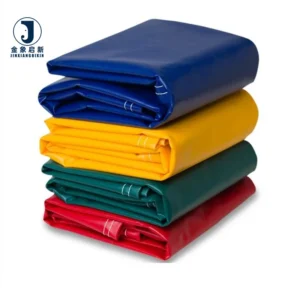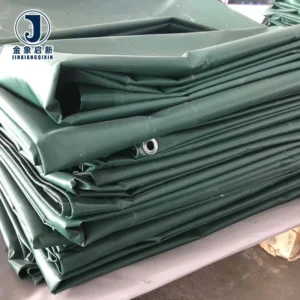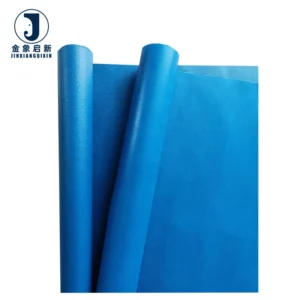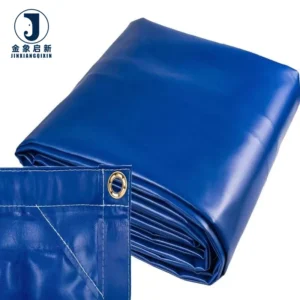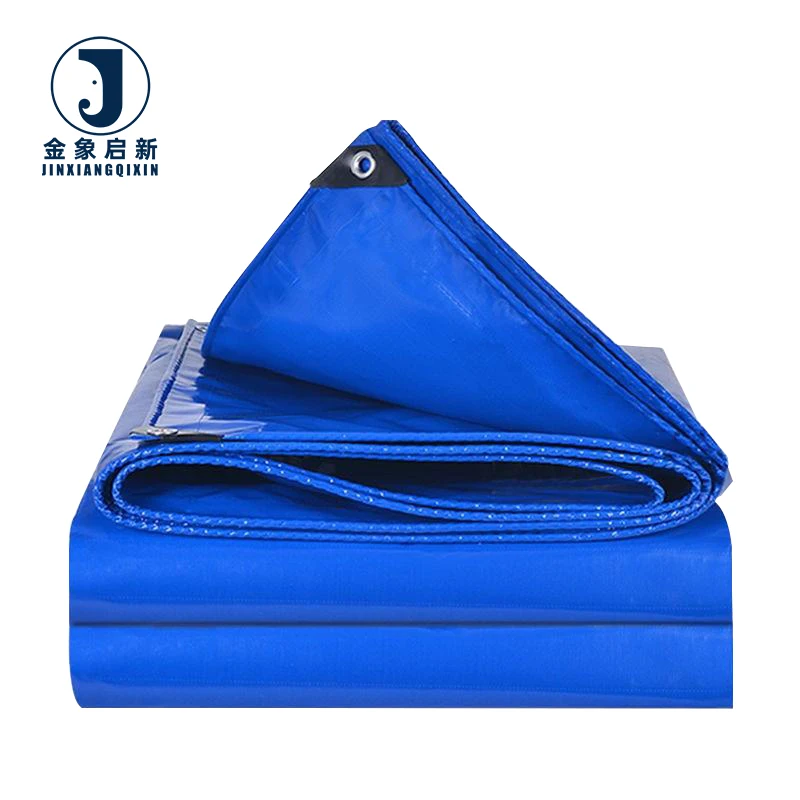
Coating Adhesion Mastery — Nearly three decades focused on coated fabric gives us process control over how tightly the PVC bonds to the polyester base, reducing delamination risk at welded seams and high-flex zones on truck and trailer covers.
Technical Specifications
| Parameter | Value |
|---|---|
| Product Type | PVC Coated Tarpaulin |
| Yarn Count | 500D-500D |
| Base Fabric | Polyester |
| Coating Material | PVC |
| Thickness Measurement | 450-900 g/m² (source value — verify against manufacturer catalog) |
| Service Life | 3-5 years (source value — verify against manufacturer catalog) |
| Repairability | Repairable by hot air welding |
| Key Features | Water Resistant, Flame Retardant (grade not stated in source), Waterproof, Anti-UV (test basis not stated in source) |
| Usage | Truck / Car / Trailer / Machine / Wood Cover / Awning / Tent |
| Package | Roll Packing, Bale Packing, Carton |
| Standards | ISO, CE (from company profile, not product-specific test reports cited) |
Application Suitability
| Application | Exposure & Requirement |
|---|---|
| Truck side curtain fabric | Constant flexing at load points, road debris abrasion, wind flap fatigue, UV exposure |
| Flatbed trailer top cover | Direct rain and snow load, tie-down strap friction, thermal expansion and contraction |
| Rigid truck rear door cover | Frequent roll-up and deployment, contact with dock levellers, forklift impact risk |
| Machinery and timber load wrap | Puncture from sharp edges, prolonged outdoor storage, strap tension concentration |
| Custom-fit vehicle cover | Model-specific panel tension, hem and eyelet pull-out resistance at corners |
When "Heavy-Duty" Is Just a Word Without the Data Behind It
A PVC coated tarpaulin for truck and trailer cover applications must survive forces that generic specifications cannot predict — and relying on a quoted weight alone leaves the most critical failure points unaddressed.
Coating adhesion and base fabric construction determine real-world durability far more than GSM figures printed on a quotation.
I have reviewed too many field returns where the fabric itself held up but the PVC layer peeled away from the polyester base at the exact point the load flexes during transit. The base yarn count, the weave density, and how the coating penetrates the fabric structure are what actually keep the panel intact under road vibration and wind load. A 500D-500D polyester base provides a specific structural balance, but without verified coating weight and adhesion data, you are essentially buying on faith. [NEED_CITE: coating adhesion test methods for PVC coated fabrics]
Covering a Moving Load: Why Fitment Dictates Fabric Behaviour
A PVC coated tarpaulin for truck and trailer cover use behaves completely differently depending on whether it is cut to a generic rectangle or shaped to the specific trailer model. When a cover is too loose, the excess material flaps at speed, generating cyclical fatigue at every welded seam until the weakest joint opens. When it is too tight, the hem and eyelet line bears the full tension load, and pull-out failure becomes inevitable at the corners.
Our approach starts with the vehicle dimensions — wheelbase, body height, door configuration, side curtain track profile — so the PVC coated tarpaulin panel lands under the correct tension from the first installation. The 500D-500D base fabric handles the resulting load distribution without over-stressing individual yarn paths.
Welded Seams Under Road Conditions: Where Most Covers Actually Fail
The most common failure point on any transport cover is not the fabric panel itself but the welded seam where two panels join. Road vibration, load shift, and thermal cycling all concentrate stress at these junctions, and if the coating formulation or welding parameters are mismatched, the seam opens long before the fabric reaches its rated life.
Double-sided PVC coating across the full panel surface means that hot air welding creates a continuous bond through both coating layers into the base fabric structure, rather than a surface-only join that peels under flex. [NEED_CITE: hot air welding parameters for PVC coated polyester fabrics] This matters most at the points the load flexes most — typically the mid-span of side curtains and the transition zone between the top and rear panels of a rigid truck cover.
Reading the Specification Sheet: What the Numbers Actually Mean
The 500D-500D yarn count describes the denier of both the warp and weft polyester yarns, indicating a balanced weave where tensile load is shared equally in both directions. This balance matters for truck covers because road-induced forces do not arrive from a single predictable angle — they shift as the vehicle corners, brakes, and encounters crosswinds.
The 450-900 g/m² thickness measurement covers a range of weight grades, and selecting the right point within that range depends on whether the cover faces constant deployment like a side curtain or intermittent use like a flatbed load wrap. Lighter grades reduce handling weight and roll-up effort, while heavier grades add puncture resistance for timber and machinery loads. The PVC coating method determines not just waterproofness but also how cleanly the material welds and how well it resists delamination under repeated thermal cycling. Available in flame retardant grades — confirm the grade required for your market, as compliance expectations differ between transport jurisdictions.
The Cost of Specifying on Price Per Square Metre Alone
When procurement decisions reduce PVC coated fabric to a cost-per-metre comparison, the failures that follow are never cheap to resolve. An underweight delivery that passes visual inspection but falls short on actual GSM typically shows up six months later as premature tearing at the hem line, by which point the fleet is already in service and replacement means vehicle downtime.
Colour variation across rolls in the same order becomes visible the moment two panels are installed side by side on a trailer, forcing a cosmetic rejection even if the material is structurally sound. [NEED_CITE: batch colour consistency standards in coated fabric manufacturing] Flame retardant claims without supporting test documentation create compliance exposure at every border crossing and depot inspection where transport cover materials are checked against local fire safety requirements.
Why Transport Operators Source This Fabric Here
Our three full production lines and 36 sets of professional equipment maintain batch consistency across the roll quantities that fleet cover orders require, so colour and coating weight stay uniform from the first roll to the last.
A 10-person R&D team handles model-specific pattern development for truck and trailer covers, translating vehicle dimension drawings into cutting templates that minimise waste and place seams away from the highest-stress flex zones.
Dedicated QA/QC inspection at every production stage includes verifying the 500D-500D base fabric denier and PVC coating weight against the quotation before any roll is packed, rather than relying on end-of-line spot checks.
Samples for custom width, colour, or treatment requirements are developed within days, allowing fabricators to validate welding parameters and eyelet placement before committing to a full production run.
Nearly 30 years of focused coated fabric production means the process variables that cause delamination, seam failure, and colour drift have been systematically controlled rather than learned through customer complaints.
Documentation & Verification
- Weight verification per roll against the stated GSM before dispatch, recorded on the pre-shipment inspection report
- Test report for UV and flame retardant treatment where applicable, matched to destination transport compliance requirements
- Roll packing list specifying exact width, length, and net weight per roll for customs and receiving verification
- Colour reference documentation linking production batch to the approved sample for multi-roll fleet cover orders
- Material specification sheet stating base fabric denier, coating material, and treatment options for each order line
Fabrication, Handling & Storage
- Hot air welding temperature and speed must be matched to the PVC coating formulation to achieve full-thickness bond at seams
- Eyelet spacing on 500D-500D base fabric should concentrate reinforcement at corners and tie-down anchor points
- Store rolls upright on end cores to prevent flat-spot compression marks on the PVC coating surface
- Allow cold-stored rolls to reach ambient temperature before unrolling to avoid coating crack at low-flex points
- Clean with mild detergent only; solvent-based products may degrade the PVC coating plasticiser over time
- Field repairs on this PVC coated tarpaulin are achievable by hot air welding compatible PVC patch material
Requesting a Quotation: What We Need From You
To recommend the correct weight grade and treatment level from the 450-900 g/m² range, share the trailer model or vehicle dimensions, whether the cover deploys daily like a side curtain or covers a static load. If your destination market requires flame retardant compliance, specify the standard so we can align the test documentation. Confirm whether you need roll stock for your own fabrication or finished cut-and-hemmed panels with eyelet reinforcement.
Frequently Asked Questions
Q: How is GSM verified on arrival and what documentation supports the quoted weight?
A: Each roll undergoes weight verification against the quoted GSM during our 100% pre-shipment inspection, and the results are recorded on the inspection report included with your shipment. The roll packing list also states the net weight per roll, allowing you to cross-check on receipt before the material enters your fabrication line.
Q: What flame retardant or UV test reports are available for transport cover compliance?
A: Flame retardant and anti-UV treatments are available as options, and we provide test documentation matched to your destination market requirements. Specify the standard applicable in your jurisdiction at inquiry stage so the correct treatment grade is formulated and the corresponding test report is prepared before dispatch.
Q: How do you ensure colour consistency across multiple rolls for a fleet cover order?
A: All rolls in a single order are produced from the same coating batch with inline colour monitoring, and a colour reference is recorded against the approved sample. This reference appears on the material specification sheet, allowing your receiving team to verify visual consistency before panels are cut and installed side by side.
Q: What eyelet spacing and hem reinforcement options suit high-flex trailer cover applications?
A: Eyelet spacing and hem reinforcement are specified based on the trailer model and the tension loads at each anchor point. For high-flex zones on side curtains, closer eyelet spacing distributes pull-out force across more base fabric yarns, and additional PVC reinforcement patches at corners prevent tear propagation under strap tension.