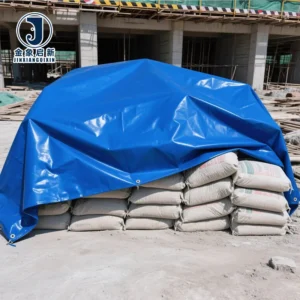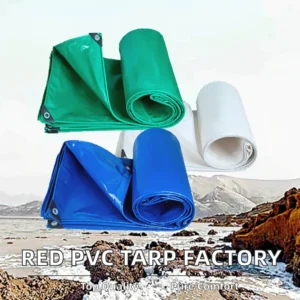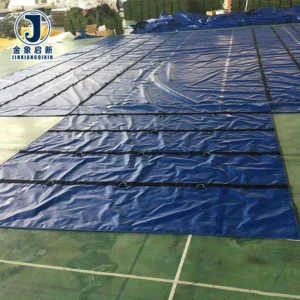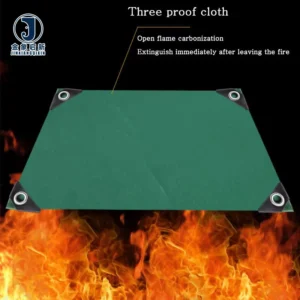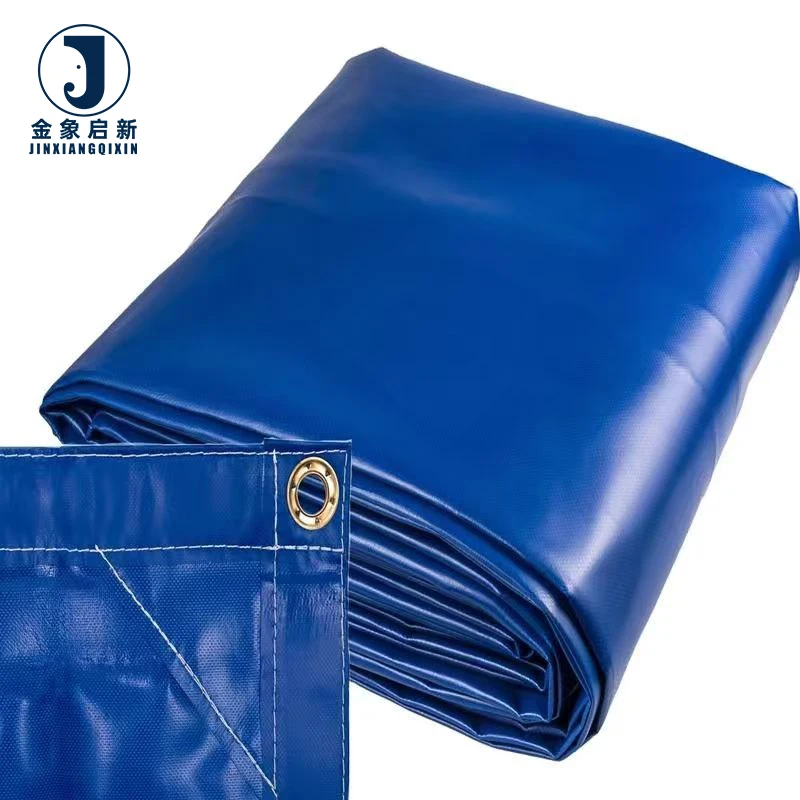
Deep Process Control Over Coating Weight — Every roll of PVC coated tarpaulin for truck and transport is verified against the stated GSM before dispatch, ensuring fleet operators receive the exact material weight specified at quotation.
Technical Specifications
| Parameter | Value |
|---|---|
| Product Type | PVC Coated Tarpaulin |
| Weight (GSM) | 250gsm-1500gsm |
| Base Fabric Denier | 200DX300D / 500DX500D / 840DX840D / 1000DX1000D |
| Coating Material | PVC (coated and laminated) |
| Width | 3 Meter |
| Size Options | 3x4m / 6x8m / 8x10m / 10x12m or custom made |
| Color | Blue / Yellow / Black / Green / White / etc. |
| Surface Finish | Glossy or Matte |
| Temperature Range | -15°C to 70°C |
| Treatment | Waterproof, UV, FR and anti-fungal treated (confirm specific grade for your market) |
| Working Life | 3-10 years depending on usage environment |
| Printing | Custom printing accepted (OEM/ODM) |
| Standards | ISO, CE |
Application Suitability
| Application | Exposure & Requirement |
|---|---|
| Truck and trailer tarpaulin | Constant road vibration, flexing at load edges, UV exposure, weather protection for cargo |
| Side curtain fabric | Repeated rolling and unrolling, abrasion at guide rails, tensile load from tensioning systems |
| Top cover materials | Direct sunlight exposure, rain pooling risk, wind uplift forces at highway speed |
| Sunshade and protection awning | Extended UV exposure, thermal cycling, occasional snow or wind load |
| Swimming pool covers | Permanent water contact, chemical exposure from treatment agents, puncture risk from debris |
Why a Generic-Cut Truck Cover Fails Before the Fabric Does
A cover that does not match the trailer model leaves load edges exposed and concentrates stress at the wrong points.
When a PVC coated tarpaulin for truck and transport is cut to a generic rectangle, the material bunches at corners and pulls tight across protrusions. The tension points shift away from the reinforced hems and land on unsupported fabric. I have seen heavy-grade coated rolls fail at the weld line not because the seam was poorly made, but because the cover was sized to a standard sheet rather than the specific trailer dimensions. The cargo shifts during transit, the fabric flexes at a point the eyelets were not placed to handle, and the tear starts [NEED_CITE: tensile and tear test methods for coated fabrics per ISO 1421]. The specification sheet may state the correct denier and GSM, but if the cut is wrong, the material properties never get a chance to perform.
Matching the Cover to the Trailer Model
Specifying a PVC coated tarpaulin for truck and transport requires more than width and length. The trailer model determines where the load flexes, where the tie-down straps press, and where the cover meets the frame. A curtain-sider operates under different tension than a flatbed top cover. The base fabric denier must align with these mechanical demands — higher denier grades such as 840DX840D or 1000DX1000D handle the sustained tensile load of side curtains tensioned across a trailer frame, while lighter grades serve lighter-duty top covers.
Finish Selection for Fleet Consistency
Fleet operators running branded trailers need colour and finish consistency across every roll in an order. A glossy finish sheds road grime more readily during long-haul routes, reducing the buildup that dulls printed branding over time. A matte finish reduces glare and may be preferred for certain military or low-visibility transport contracts. The critical factor is that the selected finish remains uniform roll-to-roll, so when two panels hang side by side on the same trailer, no visible difference appears at the seam line [NEED_CITE: colour consistency standards for coated fabric batches].
Reading the Specification Beyond GSM
GSM tells you the weight per square metre, but it does not tell you how that weight is distributed between base fabric and coating. A 650 GSM material with a high base fabric proportion and thin coating will tear differently than one with heavy coating and lighter yarn. The denier — 500DX500D versus 1000DX1000D — defines the yarn thickness in warp and weft, which governs how a tear propagates once started. A higher denier base fabric resists tear extension, while the coating weight governs abrasion resistance and waterproofing integrity. The temperature range of -15°C to 70°C means the PVC formulation stays flexible in winter starts and does not soften excessively on a sun-exposed trailer deck in summer. Surface finish, whether glossy or matte, influences how the material handles during fabrication — glossy surfaces may require different heat welding parameters than matte to achieve consistent peel strength at the seam.
The Cost of Specifying on Weight Alone
When a buyer selects PVC coated tarpaulin for truck and transport based on GSM without confirming denier and coating ratio, the delivered material may pass the weight check but fail in service. A lighter base fabric with heavier coating reaches the target GSM but lacks the tensile backbone for side curtain tensioning. The coating cracks at fold points after repeated rolling. I have seen fleet operators receive rolls that matched the quoted weight yet showed visible colour variation when unrolled side by side — a batch consistency failure that only appears once the covers are installed and viewed in daylight [NEED_CITE: batch-to-batch colour variation in PVC coated fabric production]. The rework cost of replacing installed covers far exceeds the effort of verifying denier, finish, and colour reference at the sample stage.
Why Source This Material Here
Three full production lines and 36 sets of professional equipment support bulk roll output with consistent on-time delivery for fleet-scale orders. The 10-person R&D team handles model-specific sizing, pattern printing for fleet branding, and sample development within days for custom colour or treatment requirements. Dedicated QA/QC runs at every production stage with 100% inspection before shipment, catching colour drift and GSM deviation before rolls are packed. Nearly 30 years of focused coated fabric production provides the process control that keeps coating weight and adhesion within tolerance across long production runs. Material specification sheets, test documentation, and pre-shipment inspection records travel with every dispatch.
Documentation & Verification
- Material specification sheet confirming GSM, base fabric denier, and coating weight per roll
- Test reports for UV and flame retardant grades where applicable to your market requirements
- Pre-shipment inspection record with 100% QC check for colour consistency across the order
- ISO and CE certificates confirming manufacturing quality management standards
- Roll packing list with individual roll weights and dimensions for receiving verification
- Certificate of origin and customs documentation for international freight clearance
Fabrication, Handling & Storage
- Heat welding parameters vary between glossy and matte finishes — confirm peel strength on test pieces before full production
- Reinforce hem and eyelet zones according to the denier grade to prevent tear-out under tie-down strap tension
- Store rolls upright on pallets to prevent flat-spotting and permanent creasing of the PVC coating
- Allow cold-stored rolls to reach ambient temperature before unrolling to avoid coating micro-cracking
- Use non-solvent cleaners on the surface to preserve the anti-fungal treatment and coating integrity
- Plan cut patterns around the 3-meter width to minimize off-cuts and welded seams on large covers
Preparing Your Enquiry
To specify the right PVC coated tarpaulin for truck and transport, provide the trailer model or exact cover dimensions, the denier grade or tensile requirement, and the operating climate for temperature and UV exposure context. Confirm whether you need roll stock or finished cut-to-size covers with eyelets and reinforced hems. If fleet branding is required, supply artwork and confirm the finish — glossy or matte — so samples can be developed for approval before production.
Frequently Asked Questions
Q: How is GSM verified on arrival and what is the re-inspection process if weight falls below quotation?
A: Each roll is inspected against the stated GSM before dispatch, and a pre-shipment inspection record is provided. On arrival, you can verify weight by cutting a measured sample and weighing it. If the result falls below the quoted specification, the inspection record provides the basis for a claim, and replacement material is arranged based on the documented discrepancy.
Q: How do you match truck cover dimensions to a specific trailer model rather than a generic cut?
A: Provide the trailer manufacturer, model number, and year, or supply detailed measurements including rail positions, corner radii, and tie-down point locations. The R&D team develops a cut pattern specific to that model and produces a sample for fitment confirmation before full production runs begin, ensuring the cover matches the actual trailer geometry.
Q: What eyelet spacing and hem reinforcement options are available for tie-down points on side curtains?
A: Eyelet spacing and hem reinforcement are configured based on the denier grade and the tension requirements of your curtain system. Options include reinforced webbing hems, double-layer eyelet patches, and varied spacing intervals. Confirm your tie-down hardware and strap spacing so the reinforcement is placed exactly where load concentrates.
Q: How is colour consistency maintained across multiple rolls in a single fleet order?
A: All rolls in a single order are produced in one continuous batch run with inline colour monitoring. The QA/QC team checks each roll against the approved colour reference under standard lighting before packing. The pre-shipment inspection record documents this check, ensuring no visible variation appears when panels are installed side by side on trailers.
Q: What test basis supports the anti-UV claim for long-haul highway exposure?
A: UV treatment is available in grades matched to different exposure levels. The specific test basis and performance data depend on the grade selected for your route conditions and market requirements. Request the test report for the UV grade applicable to your application to confirm it meets your expected service exposure before placing a production order.