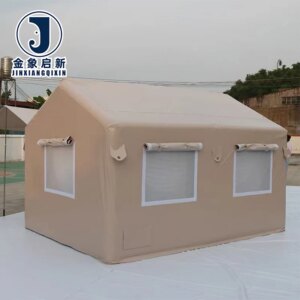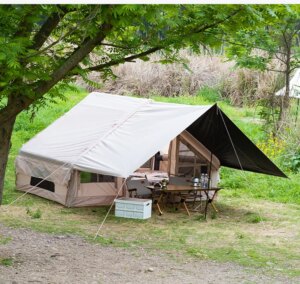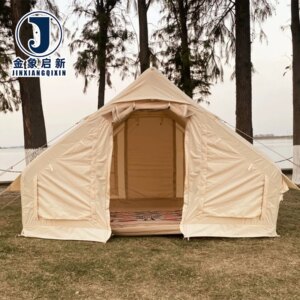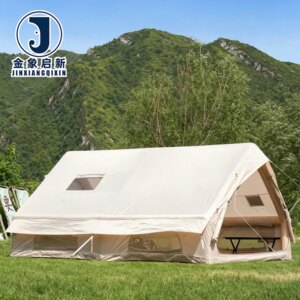
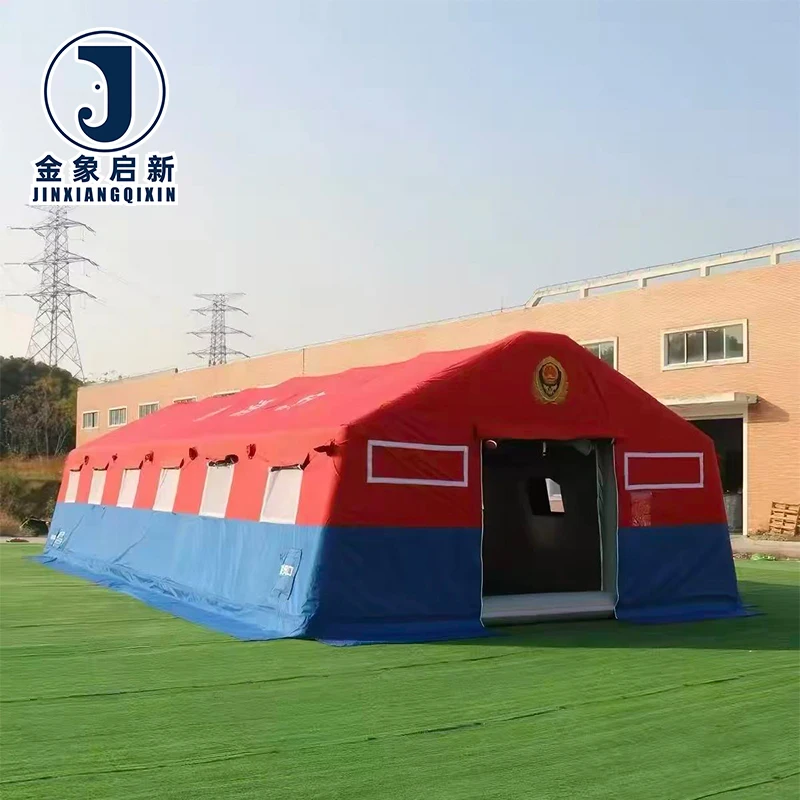
Rapid Deployment Assurance — Every inflatable shelter undergoes full-process QA inspection with batch traceability documentation before leaving our 9,180 m² facility, ensuring fleet operators receive units that perform identically across repeat orders.
Technical Specifications
| Parameter | Value |
|---|---|
| Product Type | Inflatable Tent |
| Core Material | PVC Tarpaulin |
| Construction | Extended Type, Single Layer |
| Key Performance | Waterproof, Tear-resistant |
| UV Resistance | Available with treatment — confirm specific UV grade required for your operating region |
| Customization Scope | OEM & ODM including size adjustment and pattern printing |
| Quality System | Full-process inspection with dedicated QA & QC staff |
| Certifications | ISO9001, ISO14001, ISO45001, CE |
Application Suitability
| Application | Exposure & Requirement |
|---|---|
| Emergency command centers on infrastructure sites | Constant assembly/disassembly cycles, abrasion from ground contact, rapid inflation stress |
| Mobile shelter for logistics staging areas | Wind loading, UV exposure, repeated transport and repacking |
| Disaster relief rapid deployment | Extreme weather variability, minimal setup crew, immediate structural integrity required |
| Temporary equipment protection at construction zones | Dust ingress, heavy rain, mechanical impact from nearby operations |
What "Certified" Means When Shelters Arrive Without Paperwork
A PVC Inflatable Tent for disaster relief must carry verifiable documentation matching the batch that arrived, not a generic certificate from a previous production run.
Fleet operators and emergency response coordinators frequently source rapid-deployment shelters only to discover upon arrival that the fire-retardant claims or material specifications lack supporting test reports tied to their specific order [NEED_CITE: ISO 9001 quality management documentation requirements for batch traceability]. This creates compliance failures at site audits and forces procurement teams into emergency re-sourcing under time pressure. The gap between quoted performance and delivered documentation represents a systemic risk in emergency shelter supply chains.
Rapid Inflation Architecture for Time-Critical Deployment
The quick automatic opening mechanism addresses the core operational requirement: shelters must achieve full structural rigidity within minutes using minimal personnel. Fleet operators managing breakdown response or construction contractors establishing emergency command posts cannot allocate skilled labor to complex assembly procedures. This PVC Inflatable Tent integrates inflation channels designed for compatibility with standard portable air pumps, reducing setup time from the multi-hour assembly typical of frame tents to a rapid deployment cycle that keeps operations moving.
Single-Layer Extended Design Balancing Volume and Transport Weight
The extended type configuration maximizes usable interior space while maintaining a packed footprint compatible with standard transport vehicles. Single-layer PVC tarpaulin construction eliminates the weight penalty of dual-wall systems without compromising waterproof integrity, a critical consideration when shelters must be airlifted or carried over rough terrain to reach disaster zones. The material choice delivers tear-resistant performance that withstands the stress concentration points created during inflation and deflation cycles [NEED_CITE: tensile stress distribution in inflatable membrane structures during pressurization].
How PVC Tarpaulin Grade Determines Field Performance
The waterproof and tear-resistant properties of PVC tarpaulin depend on the relationship between base fabric denier, weave density, and coating weight applied during manufacture. Higher denier yarns in the base fabric resist tear propagation when the material encounters sharp edges or abrasion during ground contact, while adequate coating thickness ensures waterproof integrity is maintained across welded seams and high-flex zones. The coating method — whether knife-over-roll, dip, or calender — directly influences peel strength at seam junctions, which becomes the failure point if inflation pressure creates sustained tension at welded connections. Surface finish selection between glossy and matte affects both cleanability in muddy deployment conditions and the adhesion characteristics for custom pattern printing when fleet branding is specified.
The Hidden Cost of Undocumented Material Performance
When procurement teams accept shelters without batch-specific material specification sheets, they inherit risk that manifests during site inspections or after deployment failure. Inflatable tents that arrive with UV treatment claims unsupported by test documentation may experience accelerated degradation in high-exposure environments, leading to premature material embrittlement and structural compromise during wind events [NEED_CITE: accelerated weathering test methods for PVC coated fabrics]. Similarly, waterproof claims that lack hydrostatic pressure test backing can result in equipment damage when shelters are deployed in sustained rainfall conditions. The cost of emergency replacement sourcing during active disaster response operations multiplies the initial procurement savings many times over.
Why Procurement Teams Specify This Manufacturing Source
Thirty years of focused coated fabric production creates process control depth that newer operations cannot replicate, particularly in maintaining coating weight consistency across large-volume inflatable tent orders. The 10-technician R&D team handles material selection and sample development, enabling buyers to validate performance characteristics before committing to bulk production rather than discovering mismatches after container arrival. Dedicated QA and QC staff conduct full-process inspection with 100% pre-shipment verification, supported by 36 sets of professional processing equipment that maintain dimensional accuracy during cutting and welding operations. Three full production lines provide capacity to fulfill time-sensitive emergency procurement without sacrificing inspection rigor or documentation completeness.
Documentation & Verification
- Material specification sheet confirming PVC tarpaulin grade, coating weight, and base fabric construction for each order
- Batch-level quality inspection report with order traceability linking shelter units to production records
- ISO9001, ISO14001, ISO45001, and CE certification documentation available for compliance audits
- Pre-shipment inspection record accessible before container dispatch for buyer verification
- UV and fire-retardant test reports provided where specific treatment grades are specified and confirmed
Fabrication, Handling & Storage
- Welded seam parameters must match PVC tarpaulin coating thickness to prevent joint failure during inflation cycles
- Single-layer construction requires careful folding procedures to avoid permanent crease marks that compromise waterproof integrity
- Custom pattern printing adhesion depends on surface preparation matching the specified PVC finish grade
- Extended type units demand adequate packed volume to prevent compression damage to inflation channel structures
- Storage away from direct UV exposure preserves material flexibility for rapid deployment readiness
Initiating Your Specification Dialogue
Provide your deployment scenarios including expected wind loading, temperature ranges, and ground conditions to receive material grade recommendations aligned with actual field exposure. Specify any fire-retardant or compliance requirements mandated by your operating jurisdictions so we can confirm treatment availability and testing documentation before sample development. Indicate whether you require OEM sizing adjustments or pattern printing to match fleet identification standards, along with your annual volume projection for production planning.
Frequently Asked Questions
Q: What UV resistance verification supports the product claims?
A: UV treatment is available as a customization option with test documentation provided upon specification confirmation. We supply test reports from accredited laboratories showing performance under accelerated weathering protocols when you specify the UV grade required for your deployment region. Confirm your local exposure classification and we will match the appropriate treatment level with supporting documentation before production begins.
Q: Which certifications accompany each shipment for site audits?
A: Every PVC Inflatable Tent order ships with ISO9001, ISO14001, ISO45001, and CE certification documentation tied to our manufacturing facility. Batch-level quality inspection reports provide traceability linking your specific units to production records. For projects requiring fire-retardant compliance, we provide test reports matching the specified grade when confirmed during the quotation phase.
Q: Can dimensions and branding match our fleet specifications?
A: OEM and ODM customization includes size adjustment to your specified dimensions and pattern printing for fleet identification or project branding. Our 10-technician R&D team develops samples for your approval before bulk production commences, ensuring printed graphics maintain clarity on the PVC tarpaulin surface and dimensional tolerances meet your deployment requirements.
Q: How do you inspect welded seams to prevent inflation failures?
A: Dedicated QA and QC staff conduct full-process inspection including seam integrity verification at high-stress junctions where inflation pressure concentrates. We match welding parameters to the specific PVC tarpaulin coating weight and thickness to achieve peel strength that exceeds the base fabric tear strength, preventing joint failure during repeated inflation and deflation cycles.