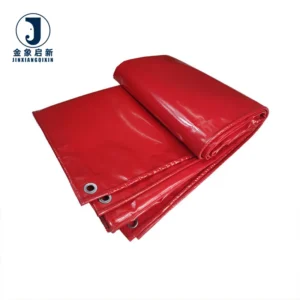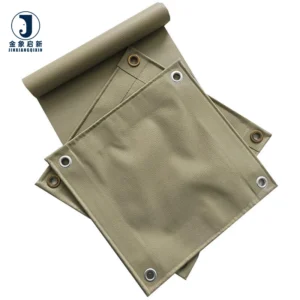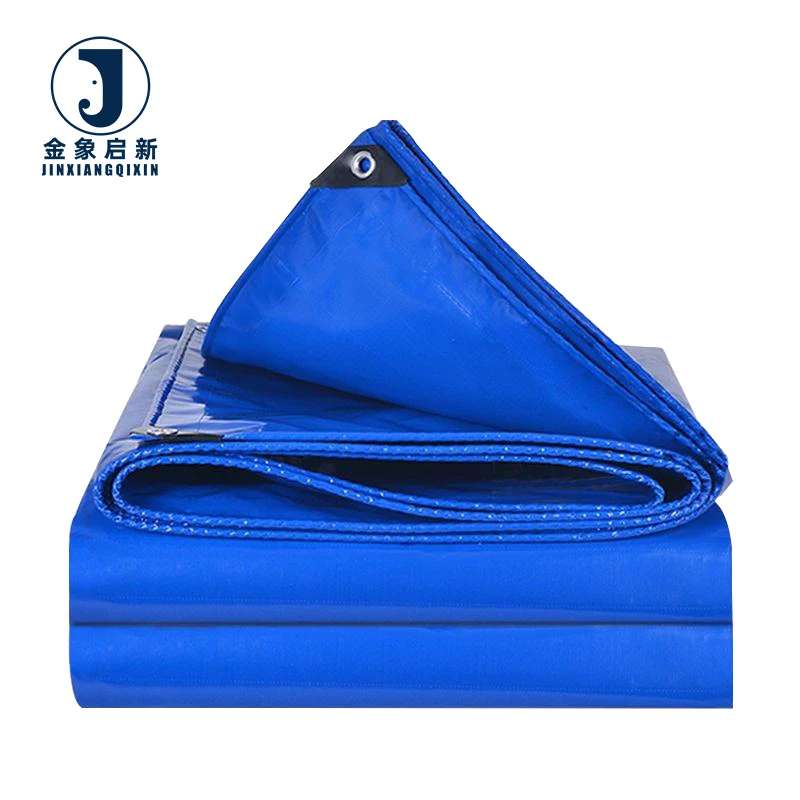
Model-Specific Fabrication — Each PVC coated tarpaulin truck cover is developed from trailer dimensions and in-process QA records, not cut from generic roll stock.
Technical Specifications
| Parameter | Value |
|---|---|
| Product Type | PVC Coated Tarpaulin |
| Material | PVC Coated Fabric |
| Weight | 700 GSM / 850 GSM / 900 GSM (confirm grade for your application) |
| Coating | PVC |
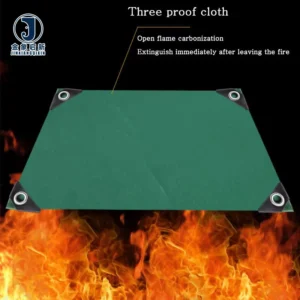
| Flame Retardant | Available (grade not stated — confirm the grade required for your market) |
| Anti-Static | Available (test basis not stated — request test report) |
| Anti-Cold | Available |
| Anti-Mildew | Available |
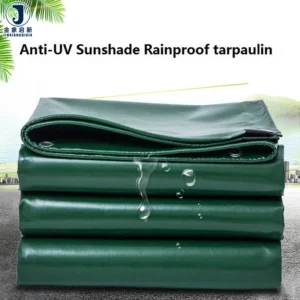
| Waterproof | Yes |
| Outdoor Life Assurance | 1–3 years |
| Customization | Sizing, colour, eyelet layout per truck or trailer model |
| Certifications | ISO, CE |
Application Suitability
| Application | Exposure & Requirement |
|---|---|
| Flatbed trailer cargo cover | Highway-speed wind load, tie-down abrasion, UV exposure, rain ingress at seams |
| Curtain-side truck fabric | Repeated flexing at roller tracks, road spray, contact with load edges |
| Fleet replacement cover | Match to existing eyelet pattern, batch-consistent colour across multiple vehicles |
| Equipment transport cover | Puncture risk from sharp cargo edges, wind flap fatigue at hems |
Why a Generic PVC Tarpaulin Truck Cover Fails on a Real Trailer
A cover cut to standard dimensions will gap at the corners, flap in crosswinds, and concentrate load at the wrong eyelets.
Fleet operators who buy off-the-shelf PVC tarpaulin truck covers often discover that the hem line sits too high or too low on the trailer side rail, leaving cargo exposed to road spray. The eyelets rarely align with the fleet’s existing ratchet strap pattern, forcing drivers to improvise tie-downs that tear the fabric within weeks [NEED_CITE: field reports of generic cover misalignment on standard European trailers]. When the cover does not match the trailer profile, wind gets underneath and accelerates fatigue at every welded seam.
Sizing the Cover to the Trailer, Not the Catalogue
Every transport fleet runs a specific mix of trailer models, and a PVC coated tarpaulin for truck cover must match each one. We take the exact deck length, side rail height, and corner radius of the trailer model before cutting. Eyelet spacing follows the fleet’s strap pattern, not a default interval, so drivers secure the load without stretching the fabric off-axis.
Welded Seams That Outlast the Flex Zone
Where the load shifts under braking, the cover flexes repeatedly against the cargo edge. Standard high-frequency welding can leave a stiff seam that cracks before the surrounding fabric degrades. We adjust weld width and overlap at these high-flex zones so the seam moves with the PVC coated tarpaulin instead of resisting it [NEED_CITE: coated fabric weld fatigue testing per ISO 1421 tensile methods].
What GSM, Coating and Base Fabric Mean for a Truck Cover
The 700 GSM, 850 GSM and 900 GSM options reflect different balances of handling weight and mechanical resistance. A higher GSM typically pairs with a denser base fabric weave, which resists tear propagation when a sharp load edge catches the material. However, GSM alone does not predict performance — a 900 GSM fabric with a loose weave can tear more easily than an 850 GSM fabric with a tight denier count. PVC coating adhesion to the base fabric determines whether the coating delaminates under repeated flexing or stays bonded through the service life. Anti-mildew treatment protects the fabric when covers are stored damp, and anti-cold formulation keeps the PVC pliable during winter dispatches so the cover can be unfolded and secured without cracking.
The Cost of Ignoring Batch Colour and GSM Verification
When a fleet orders ten covers and the GSM on arrival is lighter than the quotation stated, the thinner coating wears through faster at abrasion points. Colour variation between rolls becomes visible the moment two covers are installed on adjacent trucks in the same yard [NEED_CITE: visual colour tolerance standards for coated fabrics in fleet applications]. These are not cosmetic complaints — a lighter cover fails earlier, and a colour-mismatched fleet undermines the operator’s brand at every delivery point.
Why Source Your PVC Truck Covers Through This Facility
Three full production lines and 36 sets of professional equipment support bulk fleet orders with consistent lead times. A 10-person R&D team develops cut-to-model samples within days, letting you verify fitment before committing to a full production run. Dedicated QA/QC runs at every production stage, with a 100% pre-shipment inspection against the agreed GSM and dimensions. Nearly 30 years of coated fabric process control means coating weight and adhesion are managed in-line, not checked only at the end. ISO and CE certification underpins the documentation package that accompanies every dispatch.
Documentation & Verification
- Material specification sheet stating exact GSM, base fabric denier and coating weight per roll
- Pre-shipment inspection record confirming dimensions match the agreed trailer model
- Flame retardant test report provided for the specific grade ordered
- Roll and cut-size packing list with piece count and gross weight per unit
- Certificate of origin and customs documentation for cross-border fleet supply
Fabrication, Handling & Storage
- Confirm weld temperature and dwell time for the selected 700 GSM, 850 GSM or 900 GSM grade before production runs
- Reinforce hem folds at eyelet positions to distribute tie-down load across the PVC coated fabric
- Store rolls upright on pallets to prevent flat-spot creases that show through the coating
- Allow cold-stored covers to reach ambient temperature before unfolding to avoid coating crack
- Use mild detergent and soft brush for cleaning; avoid solvent-based products that attack PVC coating
What to Include in Your Enquiry
Provide the trailer make, model and year, along with the deck length, side rail height and existing eyelet pattern if replacing an old cover. State whether your market requires flame retardant or anti-static certification and which standard applies. Indicate the quantity per trailer model and whether you need a physical sample for fitment approval before the bulk run proceeds.
Frequently Asked Questions
Q: How do you ensure the GSM stated on the quotation matches the material on arrival?
A: Every roll is weighed and measured during our 100% pre-shipment inspection. The actual GSM is recorded on the inspection report that ships with your order, so you can verify it against the quotation before the covers leave our facility.
Q: How are truck covers sized to fit specific trailer models rather than generic dimensions?
A: We request the trailer make, model, deck length and side rail height. Our R&D team produces a cut-to-model sample within days. Once you approve the fitment on your trailer, we replicate those exact dimensions for the full production run.
Q: What flame retardant grade is available and does it meet my transport market’s requirements?
A: Flame retardant treatment is available in grades suited to transport applications. Specify the standard your market requires — such as a regional fire safety code — and we will confirm the matching grade and supply the corresponding test report with your shipment.
Q: How are welded seams reinforced at the points where the load flexes most?
A: We widen the weld overlap and adjust the high-frequency welding parameters at high-flex zones such as cargo contact edges and hem corners. This allows the seam to flex with the PVC coated tarpaulin rather than cracking under repeated load movement.