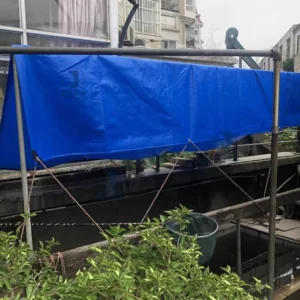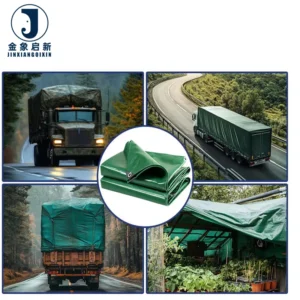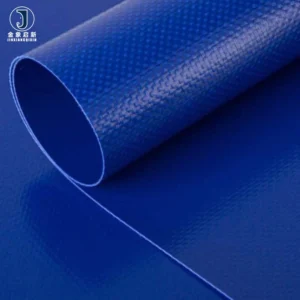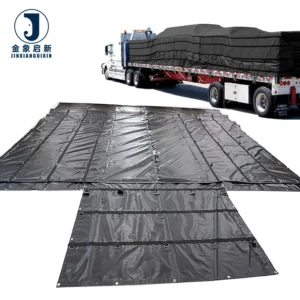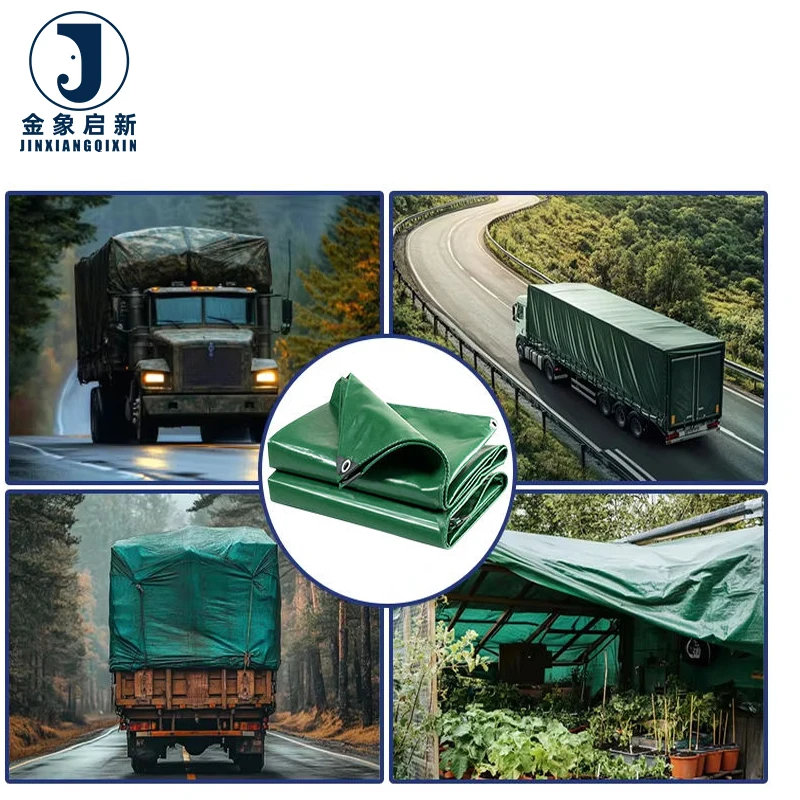
Custom Fitment Engineering — every PVC Truck Cover is cut to match your trailer’s deck length and drop dimensions, not pulled from a generic size chart.
Technical Specifications
| Parameter | Value |
|---|---|
| Product Type | PVC Truck Cover |
| Coating Material | Vinyl-coated polyester mesh fabric (100% PES dipping coating process) |
| Alternative Base Fabric Option | HDPE weaving with LDPE lamination on both sides (PE Tarpaulin) |
| Weave / Knit Construction | Knitting and plain weave (mesh); HDPE weaving (PE tarpaulin) |
| Weight (GSM) | 50 g/m² ~ 220 g/m² (range covers product family — confirm the grade for your application) |
| Total Thickness | 0.2–0.4 mm / 8 mil–16 mil / Custom |
| Roll Widths Available | 6 ft, 8 ft, 10 ft, 12 ft, 2 m, 4 m, 6 m |
| Roll Lengths Available | 100 yards, 100 meters, or as per buyer’s requirement |
| Color Options | Blue, Blue/Orange, Green, Grey, Black, Clear, Grey/Green, Orange, or custom color |
| UV Treatment | Available (test basis not stated in source — confirm requirement) |
| Mildew & Aging Resistance | Mildew proof and anti-aging (grade not stated in source) |
| Waterproof Construction | Yes |
| Edge Reinforcement | All four edges reinforced with PP rope in hem |
| Eyelet Specification | Galvanized eyelets every 3 ft or 1 meter interval |
| Corner Reinforcement | Reinforced plastic corners |
| Custom Printing | Brand printing supported |
| Finished Sizes Available | 2x2m through 8x10m plus imperial equivalents |
| Industrial Sewing Options | Lumber Tarps, Steel Tarps, Coil Tarps, Snow Tarps, Mesh Tarps |
Application Suitability
| Application | Exposure & Requirement |
|---|---|
| Flatbed trailer load covering | Highway wind load, tie-down abrasion at eyelet points, UV exposure over multi-day transit |
| Lumber and steel tarp deployment | Sharp edge contact, heavy point loads from steel coils, repeated folding and stacking |
| Curtain-side truck side panels | Constant flexing at folds, road spray and weather ingress, lateral wind pressure |
| Fleet equipment and stockpile covers | Prolonged outdoor storage, mildew risk in humid conditions, UV degradation over extended periods |
| Oversized and heavy-haul freight | Custom dimensions required, high-wind uplift on wide loads, reinforced tie-down security |
Why Generic-Size Covers Cost More Than Custom-Cut PVC Truck Covers
A cover that fits the shelf, not the trailer, fails at the first highway exit.
Fleet operators routinely replace generic tarps mid-route because excess fabric flaps under wind load, fatiguing the coating and pulling eyelets from the hem. When a PVC Truck Cover is cut to the exact deck length and drop of your trailer model, the fabric sits flush, the tie-down points align with your load-securing hardware, and the seams avoid the high-flex zones where cargo shifts during transit. [NEED_CITE: tarpaulin failure analysis at hem and eyelet stress points per ISO 1421 test methods]
Generic covers also introduce a hidden cost: batch inconsistency. When you source ten truck covers from a catalog size, colour variation between rolls becomes visible once installed side by side on a fleet — forcing rework or partial returns that delay dispatch schedules.
Model-Specific Cut and Hem Dimensions
Every flatbed, curtain-side and tipper trailer has unique deck lengths, side-drop heights and rear-door clearances. A PVC Truck Cover aftermarket supplier that cuts from standard roll widths without accounting for these variables leaves you with loose fabric that catches wind or tight fabric that strains the hem stitching. Our approach starts with your trailer model reference and deck drawings, translating those into cut patterns that place hems and eyelets exactly where your ratchet straps and bungees connect. This eliminates the trial-and-error fitting that delays fleet commissioning.
Reinforced Tie-Down Points at Load-Bearing Intervals
Galvanized eyelets set at regular intervals along a PP rope-reinforced hem distribute tie-down tension across the fabric edge rather than concentrating it at a single punch point. Reinforced plastic corners at each high-wear stress point prevent the eyelet from tearing through when a strap is tensioned against a shifting load. On a PVC Truck Cover built for highway freight, this construction matters because the dynamic load on a tie-down point at 90 km/h is substantially higher than the static load measured in the yard. [NEED_CITE: dynamic vs. static load testing for tarpaulin tie-down points]
Reading the GSM Range Across the Product Family
The available weight range of 50 g/m² to 220 g/m² spans from lightweight mesh-grade covers for ventilation-sensitive loads to heavier laminated PE tarpaulin grades for full weather protection. The GSM figure alone does not determine tear resistance — the base fabric denier, weave density and coating adhesion all contribute. A dipping-coated vinyl mesh at a mid-range GSM with a tight knit base can outperform a heavier laminated sheet in puncture resistance because the mesh structure arrests tear propagation. Thickness options from 0.2 mm to 0.4 mm reflect this construction variance, and selecting the right grade depends on whether your cargo needs breathability or full waterproof sealing.
The Cost of Skipping Pre-Shipment Verification
A cover that arrives lighter than the GSM stated on the quotation does not just underperform — it fails prematurely at weld seams and eyelet pull points, leaving cargo exposed and triggering insurance disputes. When UV or mildew treatment is claimed without a supporting test report, the fabric degrades under sun and moisture exposure far sooner than expected, and fleet managers face replacement cycles that were never budgeted. Welded seams on a PVC Truck Cover that fail before the fabric itself does indicate a heat-seal parameter mismatch at the factory, a defect that only pre-shipment inspection catches before the cover is loaded onto a trailer. [NEED_CITE: pre-shipment inspection standards for coated fabric products]
Why Fleet Operators Source PVC Truck Covers Here
Three full production lines and 36 sets of professional equipment support bulk fleet orders with consistent roll-to-roll output, so your replacement covers match the originals in weight and colour. A 10-person R&D team handles pattern development for custom trailer dimensions and brand printing for fleet identification, turning your drawings into production-ready cut files within days. Dedicated QA/QC runs at every production stage — coating weight, hem stitching, eyelet pull strength — with 100% inspection before dispatch, not just a final visual check. Sample development for custom sizes, colours and print layouts is completed quickly so you can verify fitment on one trailer before committing to a full fleet order. The documentation package accompanying each shipment includes material specification sheets, inspection records and customs support for cross-border procurement.
Documentation & Verification
- Material specification sheet stating confirmed GSM, base fabric type and coating method per order
- Pre-shipment inspection record covering eyelet pull strength, hem reinforcement and dimensional check
- Batch colour consistency verification across all covers in a fleet order before dispatch
- UV and mildew treatment test documentation where applicable to the specified grade
- Roll packing list, certificate of origin and customs documentation for cross-border shipment
- ISO and CE certificates supporting quality management and product compliance claims
Fabrication, Handling & Storage
- Heat-weld seams using temperature and dwell settings matched to the dipping-coated vinyl mesh thickness to avoid coating burn-through
- Specify galvanized eyelet placement intervals at 1 m or 3 ft to align with your fleet’s standard strap and bungee hardware
- Store rolls flat or suspended on cores to prevent permanent creasing in the 0.2–0.4 mm coating layer
- Allow cold-stored rolls to reach ambient temperature before unrolling to prevent coating crack at fold lines
- Cut patterns from the available 2 m to 6 m widths to minimize off-cuts and reduce seam count on wide covers
- Clean with mild detergent only — abrasive solvents degrade the LDPE lamination surface on PE tarpaulin variants
Before You Request a Quotation
To match the right material grade and construction to your fleet, provide your trailer model references, deck dimensions and the primary cargo type your covers will protect. Specify whether your market requires documented UV or mildew treatment grades, and confirm whether you need finished cut-and-sewn covers or roll stock for in-house fabrication. If fleet colour consistency or brand printing is required, share your reference samples or Pantone codes so we can develop a matched production sample before your full order enters the line.
Frequently Asked Questions
Q: How do you ensure PVC Truck Covers match specific trailer model dimensions?
A: We request your trailer model reference, deck length, side-drop height and rear clearance drawings. These dimensions are converted into cut patterns that position hems, eyelets and reinforced corners to match your load-securing hardware layout. A production sample is developed for fitment verification on your trailer before the full fleet order proceeds.
Q: How are eyelets and hems reinforced to survive flex-point abrasion on the road?
A: All four edges are reinforced with PP rope sewn inside the hem, and galvanized eyelets are punched at regular 1 m or 3 ft intervals. Reinforced plastic corners are added at high-stress points. This construction spreads tie-down tension across the hem rather than concentrating it at the eyelet punch, preventing tear-out under highway wind load.
Q: What GSM grades are available and how is weight verified on arrival?
A: The product family covers 50 g/m² to 220 g/m² across mesh and laminated PE variants. The specific grade for your application is confirmed at quotation stage and stated on the material specification sheet. Weight is verified during pre-shipment inspection, with results recorded and included in your documentation package before dispatch.
Q: How is batch colour consistency controlled across a multi-cover fleet order?
A: All covers in a single fleet order are produced from the same coating batch where possible. Colour consistency is checked visually and against reference standards during pre-shipment inspection. Covers are then grouped and packed together so that any minor shade variation is documented and flagged before the shipment leaves the facility.
Q: What documentation is provided for cross-border fleet procurement?
A: Each shipment includes a material specification sheet, pre-shipment inspection record, roll packing list, certificate of origin and applicable ISO and CE certificates. For markets requiring UV or mildew treatment verification, test documentation for the specified grade is included. Customs support documentation is prepared to match your destination country’s import requirements.