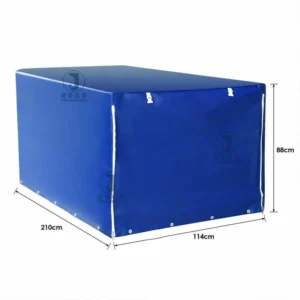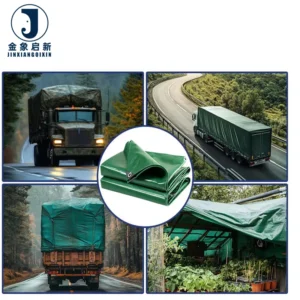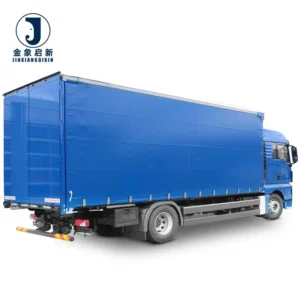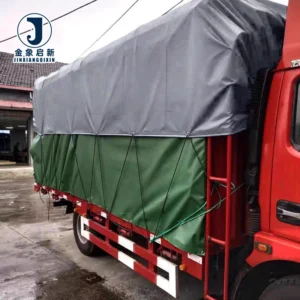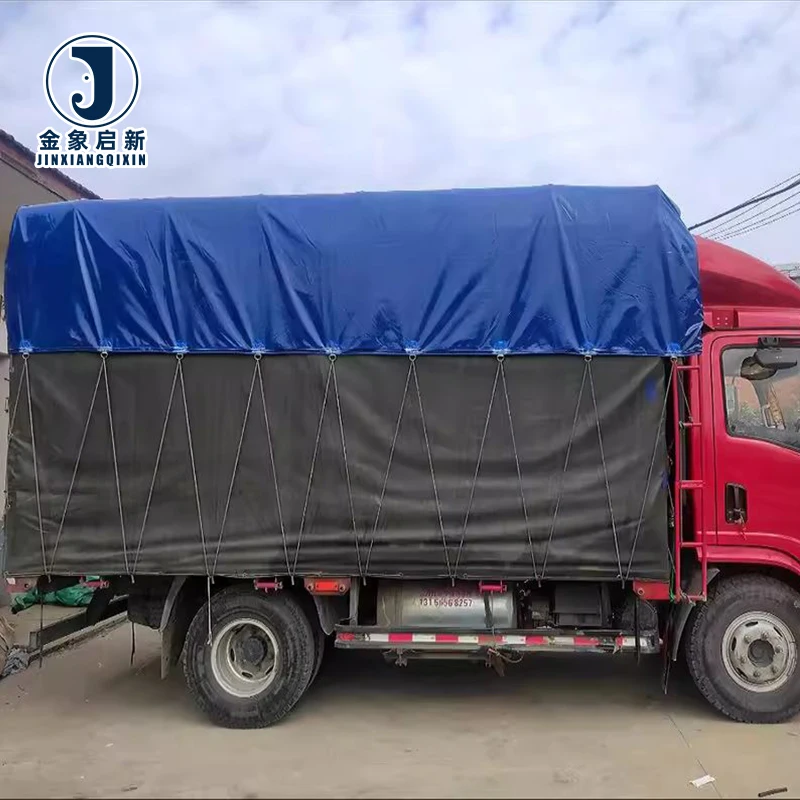
Precision Fitment Over Generic Sizing — custom PVC truck cover dimensions are verified against specific trailer models before cutting, eliminating the flapping and abrasion that generic tarps cause at flex points.
Technical Specifications
| Parameter | Value |
|---|---|
| Product Type | PVC Truck Cover |
| Coating Material | PVC / Vinyl |
| Construction | Double-Faced |
| Water Resistance | Fully waterproof coated construction |
| Anti-UV Treatment | Available — test basis to be confirmed per order |
| Flame Retardant | Available in flame retardant grades — confirm the grade required for your market |
| Color Options | Multiple colors available — confirm fleet match |
Application Suitability
| Application | Exposure & Requirement |
|---|---|
| Truck and trailer side curtains | Constant flexing at load shift points, road abrasion, UV exposure, tie-down stress at hems |
| Truck and trailer top roof covers | Direct rainfall pooling, thermal expansion and contraction, sustained sun exposure |
| Pallet and load covers | Long-haul transport vibration, wind uplift, frequent removal and refitting |
| Transport equipment side curtain systems | Repeated sliding track operation, edge abrasion, fleet colour matching across units |
Why Generic Covers Fail Where Your Trailer Flexes Most
A PVC Truck Cover for fleet and transport must match the exact dimensions and flex behaviour of your trailer — not a catalogue size rounded to the nearest half-metre.
Fleet operators replacing side curtains frequently discover that a cover cut to a generic rectangle does not account for the specific trailer’s curvature, tie-down spacing or track system geometry. The result is a loose panel that flaps at highway speed, chafes against the load edge and develops seam failure within months rather than seasons [NEED_CITE: common failure modes in transport side curtain systems]. The material itself may be adequate; the failure originates in the fit.
Sizing to the Trailer, Not the Catalogue
Every PVC Truck Cover for fleet and transport operation requires dimensional input that goes beyond length and width. Side curtain applications demand measurement of the track channel depth, buckle or ratchet strap spacing and the distance between vertical load bars. Top roof covers must account for the bow spacing and any camber in the roof structure. Our R&D team reviews these measurements against the cutting pattern before production begins, adjusting hem allowances and eyelet placement to the specific hardware your fleet uses.
Reinforcement Where the Load Shifts
Side curtains experience the highest stress not at the centre of the panel but at the lower hem where tie-downs anchor and at vertical seams adjacent to load bars. The double-faced PVC construction provides uniform tensile behaviour on both surfaces, which matters when one face contacts the cargo and the other faces road spray. Reinforcement patches are applied at high-stress zones using heat-welded lamination rather than adhesive bonding, ensuring the bond survives the flex cycles that adhesive patches cannot tolerate [NEED_CITE: heat welding versus adhesive bonding in coated fabric assemblies].
Reading the Specification Sheet Correctly
The performance of a PVC truck cover depends on how coating weight, base fabric construction and surface treatment interact as a system. Coating weight contributes to abrasion resistance and waterproofing, but tensile and tear strength derive primarily from the base fabric denier and weave density — a heavier coating on a light base fabric produces a stiff panel that cracks at fold lines rather than a stronger one. The double-faced construction distributes coating adhesion across both surfaces, improving peel strength at welded seams compared to single-coated alternatives. Where flame retardant treatment is specified for your destination market, the grade must be confirmed against local transport safety regulations before ordering, as requirements differ between European ADR classifications and North American FMVSS standards. Anti-UV treatment similarly varies in formulation and must be validated by test report for the climate zone where the fleet operates [NEED_CITE: test methods for UV degradation in coated fabrics].
What Happens When Colour Is Not Verified Per Batch
Fleet operators ordering multiple truck covers in the same colour have encountered visible shade variation between panels installed side by side on adjacent trailers. This inconsistency usually traces to pigment batching differences between production runs rather than a coating defect. The consequence is a re-order or rework that delays fleet deployment and damages the operator’s brand image. Colour reference samples approved before production and batch-matched during coating eliminate this exposure [NEED_CITE: batch colour consistency standards in PVC coated fabric manufacturing].
Why Procurement Verification Matters at Every Stage
The specification agreed at quotation must still be the specification loaded into the container. Weight verification per roll confirms that GSM on the delivery note matches the order. Inspection of hem construction and eyelet spacing catches deviations before the cover reaches the loading bay. These checkpoints exist because a PVC Truck Cover for fleet and transport use that fails in service costs far more in cargo damage claims and vehicle downtime than any material saving achieved by accepting lighter or untreated fabric.
What We Bring to Your Specification
Our production process addresses the specific failure points fleet operators encounter. Three full production lines handle bulk orders without pushing delivery dates, because capacity does not bottleneck at coating or lamination. The 10-person R&D team develops cutting patterns and reinforcement layouts from your trailer drawings, not from a generic template library. Every roll and cut panel passes dedicated QA inspection at each production stage, with 100% pre-shipment verification covering weight, colour, weld integrity and dimensional accuracy. Custom widths and colours carry practical minimums rather than prohibitive ones, so mid-sized fleet orders remain viable without inflating inventory.
Documentation & Verification
- Material specification sheet stating base fabric, coating method and colour reference per order
- Pre-shipment inspection record confirming GSM and coating weight match the quotation
- Test report for UV and flame retardant grades where applicable, citing the standard or grade
- Roll packing list with individual panel dimensions and batch traceability codes
Fabrication, Handling & Storage
- Heat welding parameters must be adjusted to the double-faced PVC coating thickness for full seam penetration
- Store rolls horizontally on pallets to prevent edge creasing that transfers to cut panels
- Allow material to acclimate to ambient temperature before unrolling in cold conditions to avoid coating stiffness
- Clean with mild detergent only — solvent-based cleaners degrade the PVC surface layer
- Field repair of minor abrasion damage using PVC-compatible adhesive patches matched to coating weight
What to Include with Your Enquiry
To provide a dimensional and specification recommendation, we need the trailer make and model or the measured dimensions including track system details, the operating climate and any UV or flame retardant requirements mandated by your market, the quantity and whether you need finished covers with hardware or cut panels for your own fabrication line. Colour references or Pantone codes help us confirm batch match feasibility before quoting.
Frequently Asked Questions
Q: How is truck cover sizing matched to specific trailer models and what measurements are needed?
A: We request the trailer make, model and year along with track channel type, bow spacing, tie-down hardware positions and any obstructions such as vents or ladder mounts. If drawings are unavailable, a measurement template guides your team through the key dimensions. The cutting pattern is developed from these inputs and reviewed with you before production begins.
Q: How are welded seams reinforced at flex and abrasion points on side curtains?
A: High-stress zones at the lower hem and adjacent to load bars receive heat-welded reinforcement patches using the same PVC material as the main panel. This creates a homogeneous bond that flexes with the curtain rather than peeling away under cyclic loading, which is the failure mode of adhesive-only patches.
Q: What flame retardant grade is available and does it meet the destination market’s transport safety requirement?
A: Flame retardant treatment is available in multiple grades. We supply the grade that matches your destination market’s regulation once you confirm the required standard. The test report accompanying the shipment cites the specific classification achieved.
Q: How is batch-to-batch colour consistency maintained across multiple covers in one fleet order?
A: A master colour sample is approved before production. Each coating batch is matched against this reference under controlled lighting, and the inspection record documents the match before panels are cut. Rolls for one fleet order are allocated from the same production batch where volume permits.