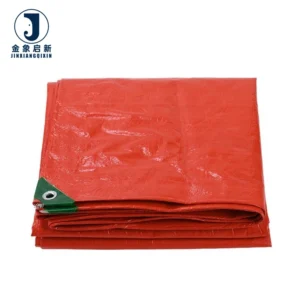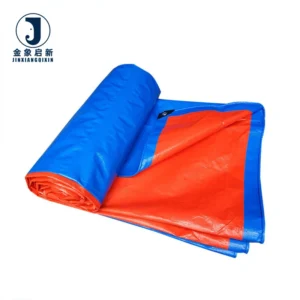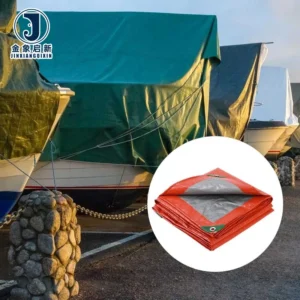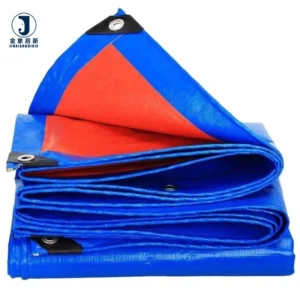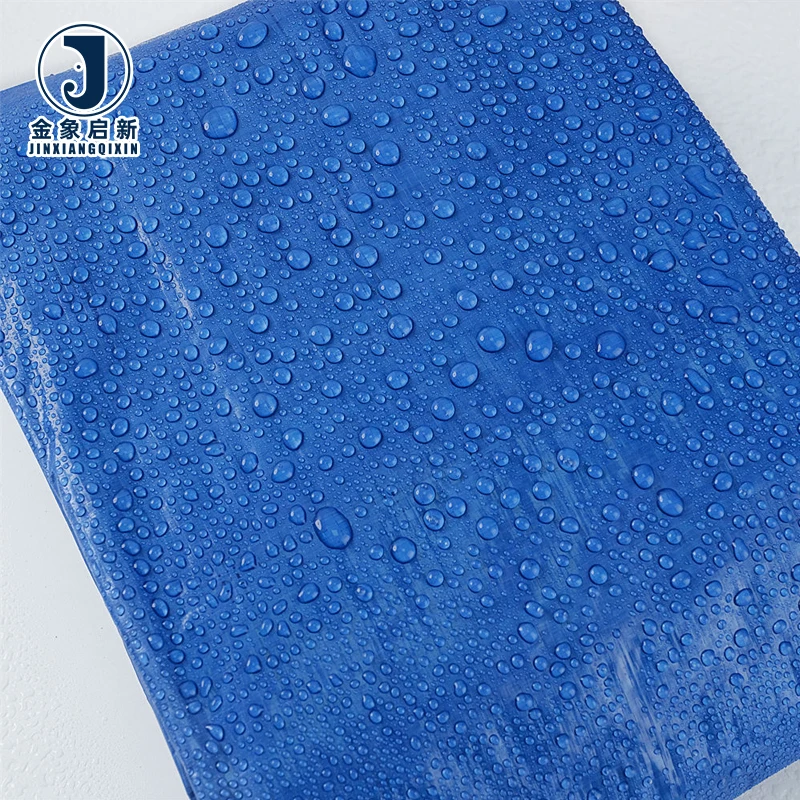
Model-Specific Fitment — PE tarpaulin cut to trailer dimensions with reinforced tie-down zones, backed by three full production lines supporting custom sizing and batch consistency across fleet orders.
Technical Specifications
| Parameter | Value |
|---|---|
| Product Type | PE Tarpaulin |
| Material | Polyethylene |
| Weight (Lightweight) | 80-110 g/m² |
| Weight (Medium) | 120-150 g/m² |
| Weight (Heavy-duty) | 160-240 g/m² |
| Thickness (Lightweight) | 0.18-0.22 mm |
| Thickness (Medium) | 0.22-0.28 mm |
| Thickness (Heavy-duty) | 0.30-0.35 mm |
| Knitting Density (Lightweight) | 8×8 |
| Knitting Density (Medium) | 10×10 |
| Knitting Density (Heavy-duty) | 12×12 |
| Tensile Strength (Lightweight) | Meridian 300-500 / Latitude 250-450 N/5cm |
| Tensile Strength (Medium) | Meridian 500-800 / Latitude 400-700 N/5cm |
| Tensile Strength (Heavy-duty) | Meridian 900-1200 / Latitude 700-1000 N/5cm |
| Water Resistance | Double waterproof surfaces |
| Reinforcement | Reinforced corner |
| Eyelet Spacing | 39.4 Inches |
| UV Treatment | Available (test basis not stated) |
| Size | Custom size |
| Color | Custom color |
Application Suitability
| Application | Exposure & Requirement |
|---|---|
| Truck and trailer load cover | Road vibration, wind uplift at edges, UV exposure during long-haul transit, secure tie-down at reinforced corners |
| Fleet side curtain fabric | Constant flexing at load pivot points, abrasion against cargo, weather exposure on open-road segments |
| Warehouse-to-truck transfer cover | Dragging across loading docks, puncture from pallet edges, repeated folding and stacking between shifts |
| Transport equipment builder supply | Consistent roll-to-roll colour for fleet branding, custom sizing matched to vehicle model, abrasion-resistant flex zones |
Why a Generic-Size Cover Fails Your Fleet on the First Trip
PE tarpaulin for truck and transport must be cut to the trailer model, not to a generic rectangle with eyelets added as an afterthought.
A cover that is too short leaves the rear edge exposed to road spray. A cover that is too wide flaps in crosswinds, accelerating wear at the hem and pulling eyelets out of the fabric. Fleet operators report that generic-size covers shift on the load within the first fifty kilometres, requiring drivers to stop and re-secure — a safety risk and a delivery delay. When the size does not match the trailer, the reinforced corners end up in the wrong position relative to the tie-down rails, so the load is never properly restrained. [NEED_CITE: load restraint standards for road freight transport]
Cutting to the Trailer Model Instead of the Catalogue Page
Every trailer model has different deck dimensions, side rail heights, and tie-down point locations. This PE tarpaulin for truck and transport is sized to your specific vehicle, with corner reinforcements positioned to align with the actual tie-down hardware on your trailer. The result is a cover that sits flat without excess material to catch wind or drag on the road surface.
Where the Flex Points Actually Fail
The highest abrasion on a transport cover occurs where the fabric flexes against the load during braking and cornering. On a generic cover, these flex points fall randomly. When the cover is cut to the trailer model, the panel seams and reinforcement zones can be placed to match the load profile — reducing the chance that the fabric wears through before the rest of the cover reaches the end of its service life. [NEED_CITE: tensile and tear test methods for coated fabrics per ISO 1421]
Reading the Weight Grade Against the Tensile Figures
GSM alone does not determine how a cover handles road stress. The knitting density and base fabric denier work together with the coating weight to produce the final tensile and tear values. A 160-240 g/m² heavy-duty grade with 12×12 density delivers Meridian 900-1200 N/5cm, which suits long-haul loads exposed to sustained wind pressure. The lightweight 80-110 g/m² grade with 8×8 density suits short-distance transfer covers that are folded and handled frequently. Choosing the correct grade depends on haul distance, load profile, and how often the cover is removed and refitted.
What Happens When the Wrong Grade Reaches the Loading Bay
A lightweight cover specified for a long-haul route will show abrasion damage at the tie-down points within the first few trips. Conversely, a heavy-duty cover used for short warehouse-to-truck transfer adds unnecessary weight for the driver to handle and costs more per trip than required. When UV treatment is claimed without a test report, the buyer has no way to verify whether the cover will withstand months of sun exposure on parked trailers — the surface may chalk and become brittle earlier than expected. [NEED_CITE: UV degradation testing methods for polyethylene fabrics]
Why Procurement Teams Source This Cover Here
Three full production lines run simultaneously, allowing bulk fleet orders to be completed without splitting the batch across machines — this is how roll-to-roll colour consistency is maintained when you order covers for an entire fleet.
A 10-person R&D team develops the cut pattern for each trailer model, confirming eyelet placement against the buyer’s tie-down layout before production starts.
Dedicated QA/QC checks GSM at every production stage with 100% inspection before dispatch, so the weight arriving at your dock matches the quotation.
Samples for custom sizes are developed within days, giving fleet operators a physical cover to test-fit on the trailer before committing to the full order.
Documentation & Verification
- Weight verification per roll against the stated GSM grade before dispatch
- Material specification sheet listing base fabric density, coating weight, and colour reference
- UV treatment test report confirming exposure rating for road conditions
- Pre-shipment inspection record with roll-by-roll measurements and photos
- Certificate of origin and customs documentation for cross-border fleet supply
- ISO and CE certificates covering the production facility
Fabrication, Handling & Storage
- Heat-seal reinforced corners at recommended temperature to maintain waterproof integrity on PE tarpaulin edges
- Confirm 39.4-inch eyelet spacing matches the tie-down rail pattern before final punching
- Store rolls upright on pallets to prevent permanent creasing across the polyethylene coating
- Allow cold-stored rolls to reach ambient temperature before unrolling to avoid coating crack
- Clean double waterproof surfaces with mild detergent only — solvents damage the PE coating layer
- Repair minor abrasion at flex points with compatible PE patch material and heat bond
What to Include with Your Inquiry
Provide the trailer make, model, and deck dimensions so the cover pattern can be drafted to the actual vehicle. State the typical haul distance and whether trailers are parked outdoors between trips, as this determines the weight grade and UV treatment level. If you are ordering for a mixed fleet, list each vehicle type separately to ensure every cover is cut to the correct model rather than a single generic size.
Frequently Asked Questions
Q: How is GSM verified on arrival to ensure the tarpaulin matches the quoted weight grade?
A: Every roll undergoes GSM measurement during production and again at pre-shipment inspection. The inspection record travels with the shipment, listing actual weight values roll by roll. If your receiving team wants to cross-check, a simple cut-and-weigh test on a known area confirms the grade matches the specification sheet included in the documentation package.
Q: What UV treatment test basis supports the anti-UV claim for extended road exposure?
A: UV treatment is available for PE tarpaulin for truck and transport applications, and the specific test standard depends on the grade selected. Request the test report for the grade you are specifying — it documents the exposure duration and the retained tensile strength after testing, so you can match it to your fleet’s typical outdoor parking duration.
Q: How are custom sizes matched to specific truck and trailer models?
A: The R&D team drafts the cut pattern from the trailer manufacturer’s deck dimensions and tie-down layout. A sample cover is produced and shipped for a physical test-fit on the actual vehicle. Eyelet positions are adjusted based on the fit check before the full production run begins, ensuring reinforced corners align with the tie-down rails.
Q: What eyelet and hem reinforcement options are available for tie-down points?
A: Standard configuration includes reinforced corners with 39.4-inch eyelet spacing along the hem. Additional reinforcement patches can be added at high-stress zones where the cover flexes against the load. The hem fold and heat-seal parameters are adjusted to the selected weight grade to prevent the edge from tearing under tie-down tension.
Q: How is batch colour consistency maintained across multiple covers in the same fleet order?
A: The full fleet order is produced in a single batch run on the same line, using coating material from the same mixing lot. Pre-shipment inspection includes a side-by-side colour comparison of every roll. Rolls that fall outside the accepted tolerance are pulled before packing, so covers installed across the fleet present a uniform appearance.