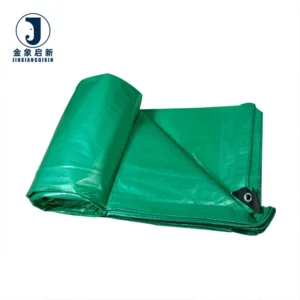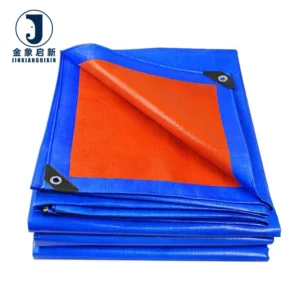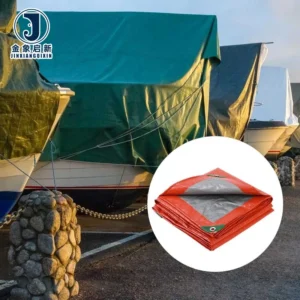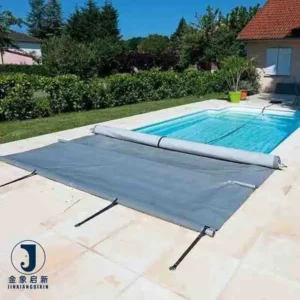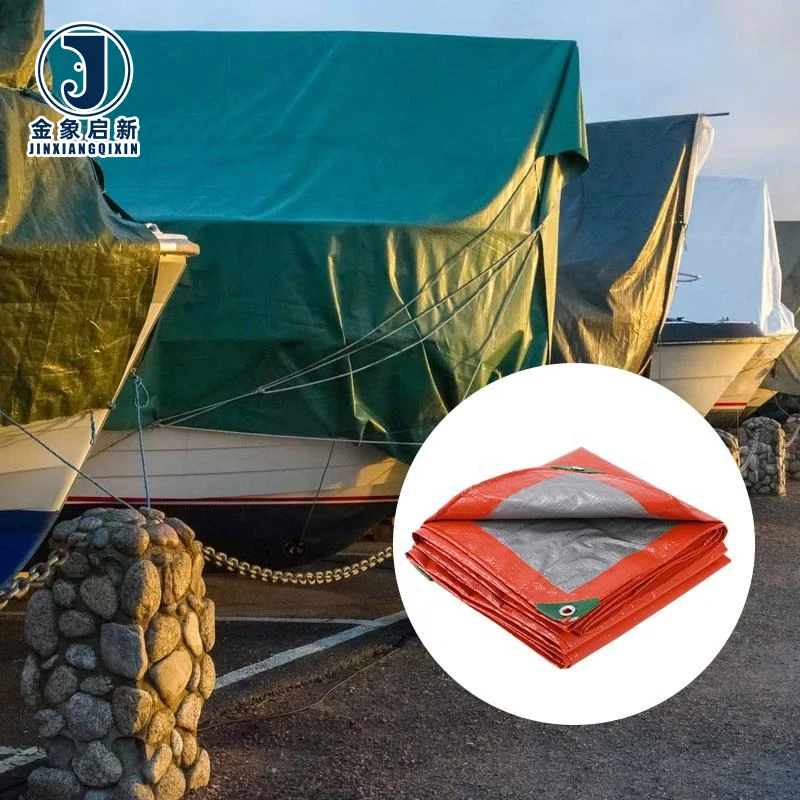
Precision-Fit Transport Covers — Every PE tarpaulin sheet is dimensioned against the actual trailer model before cutting, eliminating the excess fabric that flaps, pools and tears at highway speed.
Technical Specifications
| Parameter | Value |
|---|---|
| Product Type | PE Tarpaulin |
| Material | Polyethylene (HDPE fabric cross weaving, laminated both sides with LDPE) |
| Construction Options | 3 layers (1 fabric + 2 coating) / 5 layers (2 fabric + 3 coating) |
| Weight (GSM) | 80–110 (lightweight) / 120–150 (medium) / 160–240 (heavy-duty) |
| Total Thickness | 0.18–0.22 mm (lightweight) / 0.22–0.28 mm (medium) / 0.30–0.35 mm (heavy-duty) |
| Mesh Count | 8×8 (lightweight) / 10×10 (medium) / 12×12 (heavy-duty) |
| Tensile Strength (N/5cm) | Meridian 300–500 / Latitude 250–450 (lightweight); Meridian 500–800 / Latitude 400–700 (medium); Meridian 900–1200 / Latitude 700–1000 (heavy-duty) (test basis not stated) |
| Size | Custom size |
| Color | Custom color |
| UV Treatment | UV treatment available (test basis not stated) |
| Waterproof | Double waterproof surfaces |
| Edge Reinforcement | Reinforced corners, reinforced rustproof grommets |
| Grommet Spacing | 39.4 inches center to center |
| Weave Density Range | 5×5 to 20×20 |
Application Suitability
| Application | Exposure & Requirement |
|---|---|
| Flatbed truck load cover | Road-speed wind flex, tie-down strap abrasion, rain and UV exposure |
| Side curtain fabric for curtain-siders | Repeated folding and unfolding at rail guides, lateral wind load, daily UV |
| Construction site transport cover | Debris impact, pooling water on uneven loads, site dust and chemical splash |
| Trailer end-wall and tailgate wrap | Tight-radius folding, hardware contact wear, exhaust heat proximity |
| Temporary equipment wrap during transit | Short-term weather barrier, strap compression, stacking abrasion |
Why Generic Sizing Fails on Moving Loads
A cover cut to a catalogue dimension does not account for the rail, buckle and strap hardware that sit between the fabric and the load.
Fleet operators routinely receive PE Tarpaulin for truck and transport cover sheets that are technically the right length and width on paper yet leave gaps at the corners or bunch at the tie-down points. That excess material catches crosswind at speed, accelerating edge fatigue and pulling grommets through the laminate within the first few hundred kilometres [NEED_CITE: field failure patterns in transport tarpaulin covers]. A cover dimensioned to the specific trailer body, including clearance for side rails and load binders, removes that failure path entirely.
Vehicle-Model Sizing Removes the Flap-and-Tear Cycle
Every PE tarpaulin sheet in this range is specified against the buyer’s actual truck or trailer body dimensions rather than a generic stock size. The cutting pattern accounts for the height of side rails, the position of load binders and the drop length needed to cover the full load profile. This approach prevents the loose-edge flapping that causes premature hem failure on long-haul routes.
Grommet Layout Engineered for Tie-Down Systems
Reinforced rustproof grommets are positioned at 39.4-inch centre spacing, a layout that aligns with standard ratchet strap hook intervals on most flatbed and curtain-side trailers. Corner patches carry additional laminate layers so that the concentrated point load from a tensioned strap spreads across a wider fabric area instead of tearing through the LDPE surface.
Three-Layer versus Five-Layer Construction for Route Severity
Standard three-layer PE tarpaulin (one HDPE woven fabric between two LDPE laminates) suits routine regional transport where loads are covered and uncovered daily. The five-layer option adds a second fabric ply and a third coating layer, raising tensile capacity and puncture resistance for long-haul routes with sustained high-speed wind exposure and heavier tie-down loads [NEED_CITE: laminate layer count and tensile performance correlation in woven PE].
Reading the Specification Sheet Beyond GSM
Weight in grams per square metre tells you how much material is present but not how that material is distributed. An 80 GSM PE tarpaulin woven at 8×8 mesh with thin monofilament yarns will behave very differently under strap tension than a 120 GSM sheet at 10×10 mesh using thicker tape yarns. The mesh count and yarn construction together determine how load transfers across the weave when a tie-down strap compresses the fabric, and why two covers of the same GSM can show very different tear propagation behaviour at the grommet line. Lamination on both sides of the HDPE weave locks the yarn intersections, preventing the mesh from opening under bias stress and maintaining waterproof integrity through repeated flex cycles.
The Cost of Underspecifying Transport Covers
When a fleet replaces a heavy-duty cover with a lighter grade to reduce unit cost, the savings disappear at the first seam failure mid-route. Loads arrive wet, claims are filed and the replacement cycle starts again — often at greater total expense than specifying the correct grade from the outset [NEED_CITE: total cost of premature tarpaulin replacement in logistics fleets]. Grommet pull-through, hem delamination and UV embrittlement all accelerate when the material weight and layer count do not match the route severity and strap tension the cover must endure.
Why Source This PE Tarpaulin Here
Three full production lines and 36 sets of professional equipment support bulk roll output with consistent delivery scheduling across custom widths and colours. A 10-person R&D team handles pattern layout and grommet positioning against specific trailer drawings before cutting begins. Dedicated QA at each production stage checks lamination adhesion, mesh density and grommet pull strength. Every roll undergoes 100% inspection before dispatch, with weight verification against the quoted GSM. Samples are developed within days so that fleet operators can confirm fit on an actual trailer before approving the full order.
Documentation & Verification
- Material specification sheet stating GSM, mesh count, layer construction and colour reference
- Weight verification per roll against the stated GSM before dispatch
- Pre-shipment inspection record covering grommet pull strength and hem reinforcement
- UV treatment test report provided where applicable
- ISO and CE certificates accompanying each shipment
- Roll packing list with customs support documentation
Fabrication, Handling & Storage
- Heat-seal LDPE laminated edges at moderate temperature to avoid melting through the HDPE weave
- Position grommets at 39.4-inch spacing to match standard tie-down strap hook intervals
- Store rolls horizontally on pallets to prevent permanent creasing of the laminated surfaces
- Unfold in ambient temperature to avoid cracking the LDPE coating at cold flex points
- Clean with mild detergent only — solvent-based cleaners degrade the LDPE laminate layer
- Patch field damage with compatible LDPE tape applied to both sides of the HDPE weave
Before You Request a Quote
To specify the right PE tarpaulin for your fleet, share the exact trailer make, model and body dimensions along with your standard tie-down strap spacing and hook type. Confirm whether the route profile involves sustained highway speed or primarily urban distribution with frequent cover removal. If UV exposure is a concern for your operating region, state that requirement so the appropriate treatment grade can be included in the sample.
Frequently Asked Questions
Q: How do I specify the right size for my trailer model rather than a generic sheet?
A: Provide the trailer make, model, body length, width and side-rail height. The cutting pattern is then built around those dimensions including clearance for buckles, rails and load binders. A physical sample is recommended before bulk production to confirm fit on the actual vehicle.
Q: What is the difference between 3-layer and 5-layer PE tarpaulin for transport use?
A: Three-layer construction uses one HDPE fabric ply with LDPE laminate on both sides, suiting routine regional routes. Five-layer adds a second fabric ply and extra coating, raising tensile and puncture resistance for long-haul highway exposure with heavier tie-down loads.
Q: Can grommet spacing and reinforcement be matched to my existing tie-down system?
A: Yes. Standard spacing is 39.4 inches centre to centre, matching most ratchet strap intervals. Spacing and corner reinforcement can be adjusted to your hook type and strap tension. Provide your hardware details so the grommet layout is confirmed on the pre-production sample.
Q: How is UV treatment verified — is a test report available with the shipment?
A: UV treatment is available for PE tarpaulin orders exposed to prolonged sunlight. A test report documenting the treatment level is included in the shipment documentation where applicable. State your regional UV exposure requirement during inquiry so the correct grade is specified.
Q: What is the lead time for custom-sized truck covers in bulk quantity?
A: Lead time depends on order volume, colour and any non-standard grommet layout. Samples are developed within days for fit confirmation. Once the sample is approved, production scheduling is confirmed with a specific dispatch date before manufacturing begins.