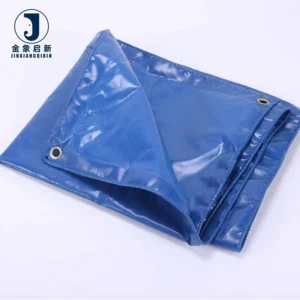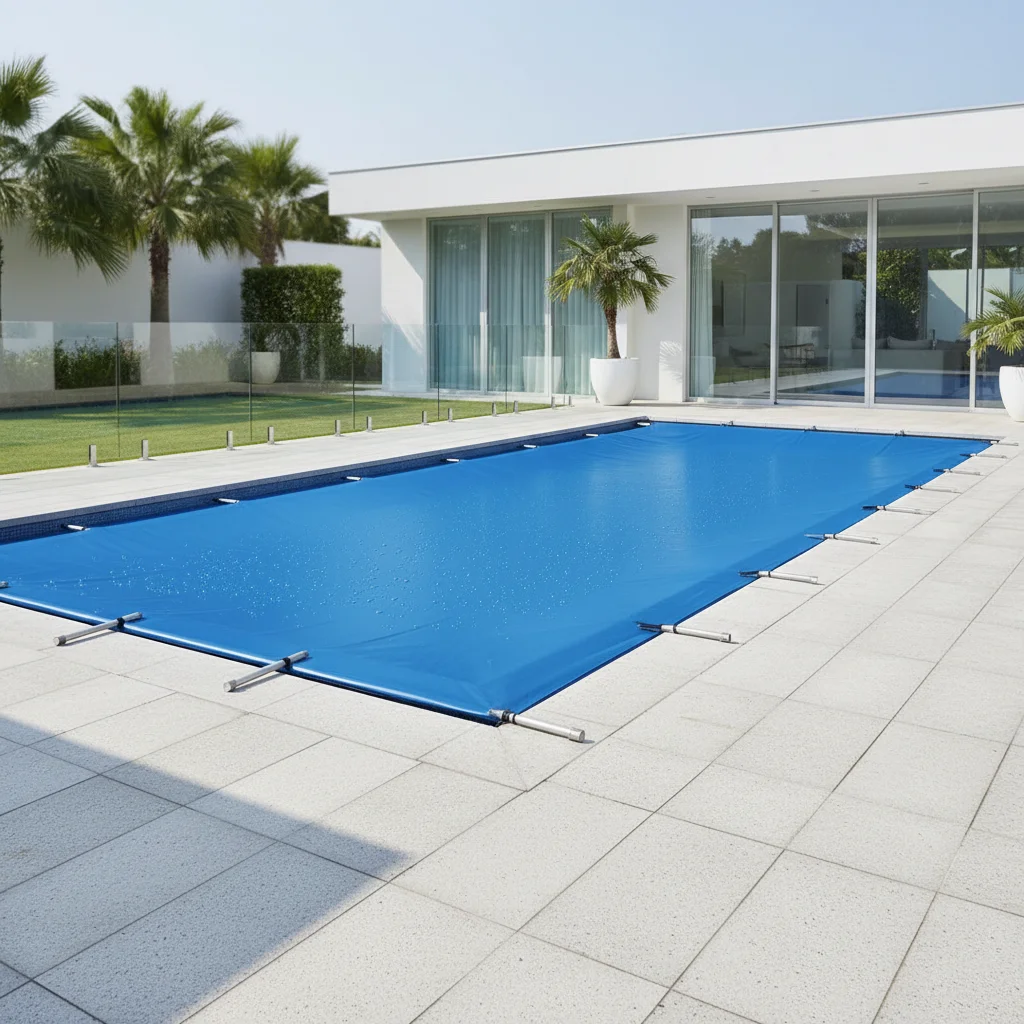
Precision coating control — Every PVC coated tarpaulin cover we produce undergoes in-process weight verification at multiple stages, ensuring the GSM on your specification sheet matches what arrives at your dock.
Technical Specifications
| Parameter | Value |
|---|---|
| Product Type | PVC Coated Tarpaulin Cover |
| Material | PVC coated tarpaulin |
| Waterproof | Yes |
| UV Treatment | Anti-UV (test basis not stated) |
| Weight Class | Medium weight |
| Application Form | Custom cut cover, awning, shade sail, canopy, pet dog house cover |
Application Suitability
| Application | Exposure & Requirement |
|---|---|
| Outdoor awning and shade structure | Continuous sun exposure, wind load, occasional pooling water, UV stability required |
| Pet dog house cover | Daily abrasion from animal contact, moisture, cleaning agents, seasonal temperature shifts |
| Canopy and rain shelter | Direct rainfall, wind-driven water, tension from frame attachment points |
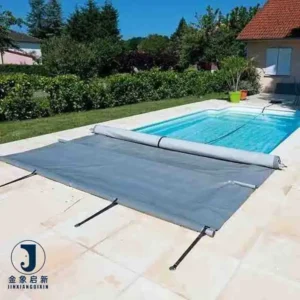
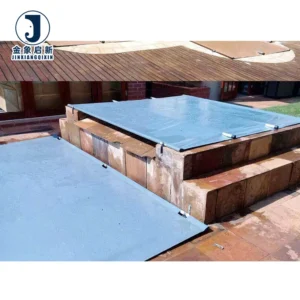
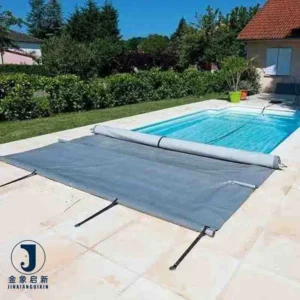
| Pool and water feature cover | Prolonged water contact, chemical splash from treatment agents, debris load |
Why a "Medium Weight" PVC Cover Can Fail Before the Season Ends
The fabric weight alone does not determine how long a cover survives real-world outdoor exposure.
Many buyers specify a medium weight PVC coated tarpaulin for truck and transport applications assuming the GSM figure guarantees durability. In practice, a cover fails at the welded seam or the tie-down hem long before the field of the fabric degrades. When a generic-size cover is forced to fit a trailer it was not cut for, the excess material flaps under highway speed, concentrating fatigue at the eyelets [NEED_CITE: tarpaulin failure modes at attachment points under dynamic wind load]. The coating itself may be intact, but the construction details determine service life.
How Cover Fitment Changes the Stress Map on a Moving Load
A PVC coated tarpaulin for truck and transport applications must account for the specific dimensions of the trailer, the location of tie-down rails, and the flex zones where cargo shifts during transit. When a cover is cut to match these parameters, the load transfers evenly across the fabric plane rather than concentrating at the corners. This reduces the cyclic fatigue that causes coating micro-cracks and eventual delamination at seam junctions.
What Anti-UV Treatment Actually Covers on a Hauled Load
The anti-UV treatment applied to this PVC coated tarpaulin is intended to slow polymer degradation from direct sun exposure during transit and outdoor staging. Without a documented test basis, the protection level should be confirmed against the specific UV index and exposure duration typical of your transport routes [NEED_CITE: UV degradation test methods for PVC coated polyester fabrics]. Fleet operators running long-haul routes across high-altitude or equatorial corridors should request verification before committing to full production.
Reading Beyond the GSM Number on Your Cover Spec Sheet
The weight of a PVC coated fabric reflects the combined mass of the base polyester weave and the applied coating layers. A medium weight designation can encompass a range of constructions: a lighter base fabric with a heavier coating, or a denser weave with a thinner coat. The first tends to be more flexible but less resistant to puncture; the second offers higher tensile values but may be stiffer to handle and fold. Coating adhesion to the base fabric — influenced by whether the PVC is applied by knife coating, lamination, or calendering — determines whether the layers separate under repeated flexing. For covers that are deployed and removed daily, this peel strength matters more than the total GSM [NEED_CITE: ISO 1421 tensile and tear test methods for coated fabrics].
The Hidden Cost of Ordering Covers Without Verified Construction Details
When a shipment of PVC covers arrives with the stated GSM but a lighter base fabric than agreed, the covers may pass a casual visual check yet fail within weeks at the hem and eyelet zones. Similarly, when colour varies between rolls in the same order, the difference becomes visible once two covers are installed side by side on adjacent trailers [NEED_CITE: batch colour consistency standards in coated textile manufacturing]. These defects rarely surface during pre-shipment inspection if the inspection checklist does not specifically call out base fabric denier, coating weight breakdown, and colour reference matching.
Why Procurement Teams Route Their Cover Orders Through This Facility
Deep process control over coating weight and adhesion has been refined across nearly 30 years of focused PVC coated fabric production, meaning the GSM and construction you approve at sample stage carries through to bulk delivery. Three full production lines and 36 sets of professional equipment provide the capacity to fulfil fleet-scale cover orders without splitting production across disparate lines. A 10-person R&D team handles the pattern development, custom sizing, and material selection needed to fit specific trailer models rather than forcing a generic size. Every cover passes through dedicated QA/QC at each production stage, with 100% inspection recorded before dispatch — not a spot-check sample but a full roll-by-roll or piece-by-piece review.
Documentation & Verification
- Material specification sheet confirming GSM, base fabric denier, and PVC coating weight for each cover produced
- Pre-shipment inspection record documenting dimensional accuracy against the quoted truck or trailer model
- Colour reference card matching each roll to the approved batch standard before cutting begins
- UV treatment test report available upon request — confirm the test standard required for your market
- Roll packing list with individual cover identification for traceability from production to installation
Fabrication, Handling & Storage
- Hot-air welding parameters should be matched to the medium weight PVC coating to avoid scorching or incomplete fusion at seams
- Eyelet reinforcement patches must extend beyond the hem fold line to distribute tie-down load across the base fabric
- Store rolled covers horizontally on pallets to prevent permanent creasing in the PVC coating layer
- Allow covers to acclimatise before unfolding in cold conditions to avoid cracking the PVC surface
- Clean with mild detergent only; solvent-based cleaners can soften the plasticiser in the PVC coating
What to Include When Requesting a Cover Quotation
Specify the truck or trailer model, the cargo profile you typically haul, and the tie-down configuration on your fleet. Indicate whether you need cut-to-fit finished covers or roll stock for in-house fabrication, and note any colour or branding requirements for fleet identification. If your routes involve extended high-UV corridors, request the applicable test documentation for the anti-UV treatment.
Frequently Asked Questions
Q: How is the tarpaulin cover sized to fit a specific truck or trailer model?
A: We work from the vehicle’s load bed dimensions, side rail height, and tie-down point locations to generate a cut pattern. The cover is then welded and hemmed to match, rather than adapted from a generic sheet. This eliminates excess fabric that would otherwise flap and fatigue during transit.
Q: What reinforcement options are available at eyelet, hem and tie-down points?
A: Reinforcement patches and doubled hem folds can be applied at specified intervals to match your tie-down strap spacing. The exact construction depends on the load profile and the tension your securing system applies — provide those details so we can engineer the stress points accordingly.
Q: How do you verify the coating weight and material match what was quoted?
A: Each production run includes in-process coating weight checks and a final pre-shipment inspection that records actual GSM against the quoted value. The inspection record ships with your order, giving you a documented basis to verify the material on receipt.
Q: What UV protection level does the fabric provide for long-haul outdoor exposure?
A: The PVC coated tarpaulin carries an anti-UV treatment, but the specific test basis and protection rating should be confirmed for your operating conditions. Request the test report before production so you can validate the treatment against the UV index and exposure duration on your routes.
Q: How are welded seams tested to withstand flex stress under moving loads?
A: Welded seams are inspected as part of the 100% pre-shipment QA process, with attention to fusion completeness at high-flex zones. If your application involves sustained cyclic loading, we can supply seam peel-strength test data — specify this requirement at the inquiry stage.