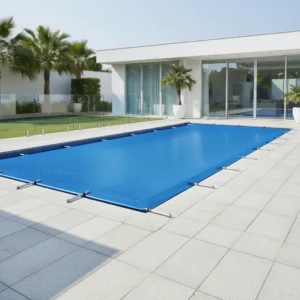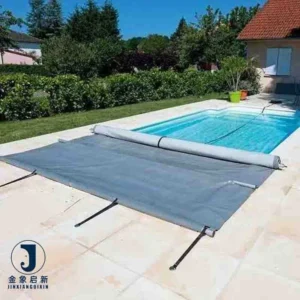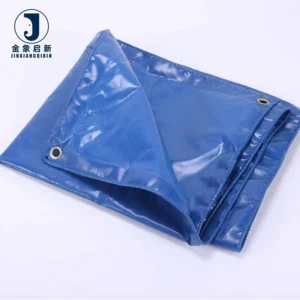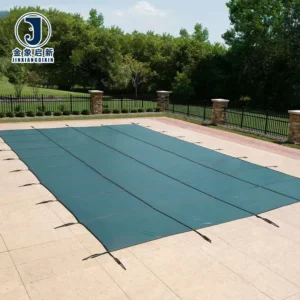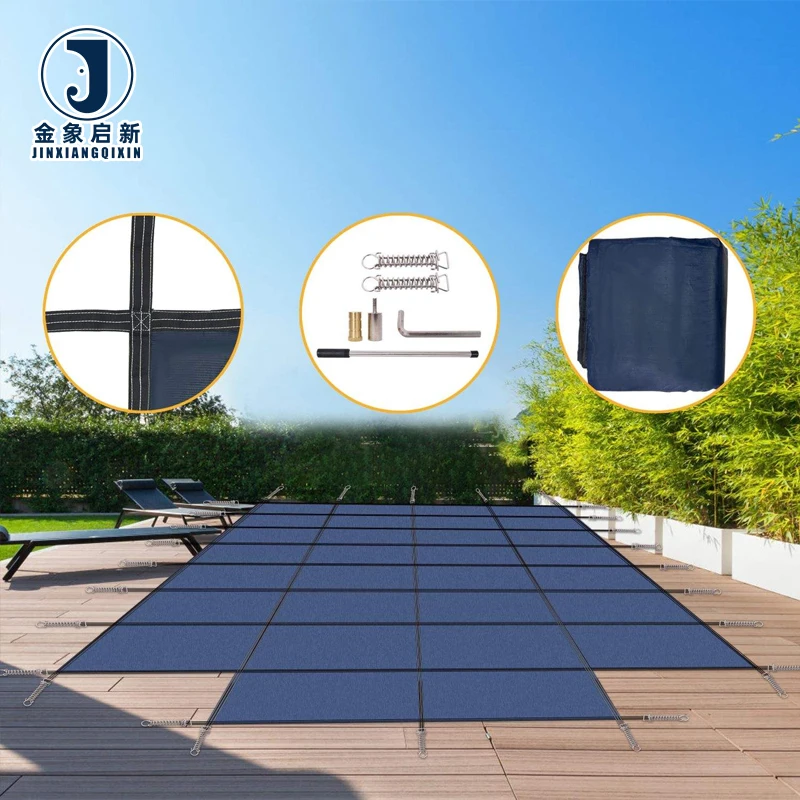
Proven Coating Control — Consistent GSM across every roll verified through in-process QA and pre-shipment inspection before dispatch.
Technical Specifications
| Parameter | Value |
|---|---|
| Product Type | PVC Coated Tarpaulin Pool Cover |
| Base Fabric | High-strength polyester mesh |
| Coating Material | PVC |
| Coating Method | Laminated & Hot-melt coating technology |
| Weight Options | 350gsm / 420gsm / 500gsm / 550gsm / 600gsm / 750gsm |
| Thickness Range | 0.32mm to 0.65mm (varies by weight grade) |
| Roll Width | 2m or 2.1m |
| Roll Length | 75m or 50m |
| Color Options | Blue, Red, Yellow, Light Blue, Grey (custom available) |
| Cold Crack Resistance | Available (grade not stated — confirm for your climate) |
| Flame Retardant | Available (grade not stated — confirm requirement for your market) |
| Anti-Static | Available (surface resistance not stated — confirm standard) |
| Special Treatments | Anti-mildew, Waterproof, Sunproof |
| Mesh Design | Tight weave for drainage while blocking debris and sunlight |
| Standards | ISO, CE |
Application Suitability
| Application | Exposure & Requirement |
|---|---|
| Inground residential pool winter cover | Snow load, standing water, UV during storage, child and pet safety |
| Hotel and resort pool protection | High-traffic installation cycles, chemical splash, year-round outdoor storage |
| Flatbed transport of pool structures | Road abrasion, wind flex, tie-down tension at anchor points |
| Commercial pool contractor supply | Batch consistency across multiple sites, hardware kit completeness |
| Water containment on trailers | Constant water contact, flex at suspension points, UV during transit |
Why Generic Pool Covers Fail Where the Load Flexes Most
A PVC pool cover aftermarket supplier that ships only standard rectangles forces you to improvise on pools with centre steps, spas or irregular decks.
The failure almost always starts where the fabric pulls against an anchor that was not in the original pattern.
Generic covers leave loose edges that collect standing water, and the pooled weight transfers into the nearest stitched seam. On transport applications, the cover flexes with the trailer suspension at points the original pattern never reinforced, causing abrasion that cuts through the coating before the base fabric reaches its tensile limit. [NEED_CITE: coated fabric failure modes at stress concentration points] When a fleet operator covers a water-containing load on a flatbed, the tie-down straps concentrate force into small areas of the PVC coated pool cover for truck and transport, and those areas need double-strap reinforcement with triple stitching to survive the journey.
How Transport Exposure Differs From Static Pool Installation
A pool cover sitting on a residential deck faces UV and snow load but stays largely stationary. The same PVC Coated Pool Cover for truck and transport application on a moving flatbed experiences continuous flex cycles, road debris impact, and wind-driven abrasion against the load surface. The base polyester mesh must absorb repeated bending without delaminating the hot-melt PVC coating, which requires the coating adhesion to hold through thousands of flex cycles.
Reinforcement at the Points That Actually Carry the Load
The brass anchor and stainless steel spring hardware kit transfers pool deck tension into the cover fabric at discrete points around the perimeter. Each anchor point concentrates stress into a small area of the PVC coated pool cover for truck and transport, and without double-strap reinforcement and triple stitching at those locations, the coating cracks first and the mesh frays second. [NEED_CITE: stress distribution at anchor points in tensioned fabric covers] Installation contractors know that the adjustable rope system must accommodate different pool configurations including centre step layouts, which means the reinforcement pattern has to match the specific pool footprint rather than follow a generic grid.
Reading the Weight and Coating Specifications Correctly
GSM tells you the total mass per square metre of the finished fabric, but it does not tell you how that mass is distributed between the base polyester mesh and the PVC coating layers. A 550gsm fabric with a heavy coating over a light base mesh will feel stiff but tear easily at cut edges, while a 550gsm fabric with a denser mesh and thinner coating will flex better and resist tear propagation. The hot-melt coating technology bonds the PVC to the polyester at higher temperatures, which generally improves peel strength for heat-welded seams compared to laminated construction. Tight mesh construction serves a dual role here: it drains rainwater and snowmelt while blocking leaves, debris, and the sunlight that drives algae growth in the water below. Available in flame retardant grades — confirm the grade required for your market before specifying.
The Hidden Cost of Specifying on Price Per Kilogram
When buyers select pool cover fabric based on the lowest cost per kilogram, they often receive rolls where the PVC coating weight meets the minimum but the polyester mesh density falls short. The cover installs fine and looks correct on day one, but after a season of UV exposure and flex cycles, the coating becomes brittle and cracks along fold lines because the base fabric was too light to support it. [NEED_CITE: relationship between base fabric denier and coating longevity] Colour variation between rolls in the same order becomes visible once two panels are heat-welded together and installed side by side on a large commercial pool. Batch-to-batch colour consistency requires controlled pigment dosing at the coating stage, not just a Pantone reference on the purchase order.
Why Sourcing This Cover Through Jinan Jinxiang
Three full production lines with 36 sets of professional equipment support bulk roll output with consistent GSM across every roll in your order. The 10-person R&D team develops custom sizing patterns for pools with centre steps, spas, and irregular deck layouts, with samples produced within days for fitment confirmation. Dedicated QA and QC inspection runs at every production stage, with every roll checked against the stated GSM before dispatch. The hot-melt and laminated coating lines handle the full weight range from 350gsm to 750gsm, so you can specify different grades for different climate zones without switching suppliers. Material specification sheets and pre-shipment inspection records accompany every shipment, giving your receiving team documented verification rather than a label on the roll. [NEED_CITE: ISO 1421 tensile and tear test methods for coated fabrics]
Documentation & Verification
- Material specification sheet stating GSM, base fabric denier, and coating weight per roll
- Weight verification per roll against the stated GSM before dispatch
- UV and flame retardant test reports provided where applicable grades are specified
- Pre-shipment inspection record with roll-by-roll measurements
- Roll packing list and certificate of origin for customs clearance
Fabrication, Handling & Storage
- Hot-weld seams at temperatures matched to the hot-melt or laminated coating method specified
- Double-strap reinforcement at brass anchor points using triple stitching through the 550gsm or heavier grades
- Store rolls upright on pallets to prevent flat spots and permanent creasing in the polyester mesh
- Allow rolls to reach ambient temperature before unrolling in cold weather to avoid coating crack
- Clean surfaces with mild detergent only; solvents degrade the PVC coating bond over time
- Cut panels with sealed edges or heat-welded hems to prevent mesh fraying at exposed edges
What We Need From You to Quote Correctly
Provide the exact pool dimensions including any centre step width and depth, or the trailer bed dimensions if this PVC Coated Pool Cover for truck and transport is for a moving load application. Specify your target market so we can confirm which flame retardant grade or anti-static standard applies to your installation. Tell us whether you need finished covers with hardware kits or roll stock for your own fabrication line, and whether you require samples before committing to the full production run.
Frequently Asked Questions
Q: How do I measure my pool with a centre step for a proper-fitting safety cover?
A: Measure the main rectangular body separately from the centre step, recording length, width, and the step’s offset from each side. Provide the step depth as well. This lets the pattern be cut so the reinforced anchor points align with your actual deck layout instead of a generic template, which is the most common reason covers pull loose at the step corners.
Q: What GSM weight is recommended for my climate zone?
A: Heavier grades such as 550gsm or above suit regions with significant snow load or where the cover must withstand trailer transport flex cycles. Lighter grades around 350gsm to 420gsm work for mild climates with basic debris protection. Confirm the specific GSM at inquiry, as each grade corresponds to a different base mesh density and coating weight combination.
Q: Does the included hardware kit work with pavers or only concrete decks?
A: The standard brass anchor and tamp system is designed for concrete pool decks. For paver or natural stone surrounds, the anchoring method must change to avoid cracking the substrate. Let us know your deck material at the inquiry stage so we can supply the correct anchor type and adjust the spring tension specification accordingly.
Q: Can I order custom colours to match my pool deck or fleet branding?
A: Custom colours are available across the full weight range, with batch-to-batch consistency controlled at the coating stage. Minimum order quantities and lead times apply for non-stock colours. Request a sample swatch for approval before the full production run, especially if multiple rolls will be heat-welded together on a single large installation.
Q: What is the difference between tight mesh drainage and solid PVC covers?
A: Tight mesh construction allows rainwater and snowmelt to drain through while blocking leaves, debris, and sunlight that drives algae growth. Solid covers prevent all water passage but require a pump to remove standing water from the cover surface. The choice depends on your maintenance preference and whether the pool is winterised or kept partially filled during the cover season.