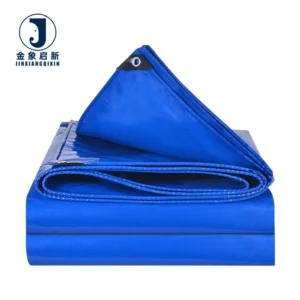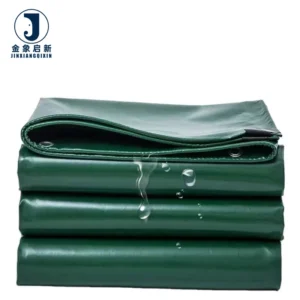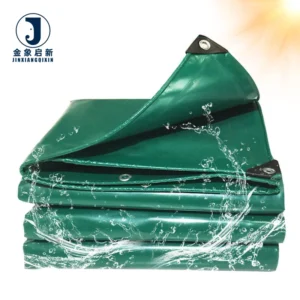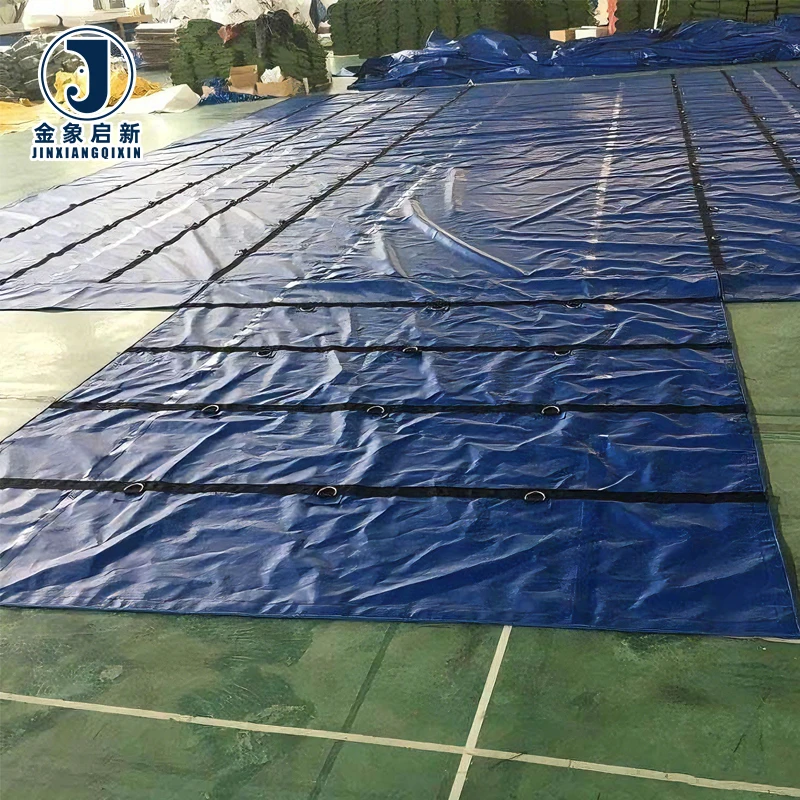
Model-Specific Fitment Control — Custom cut patterns matched to trailer dimensions eliminate edge gaps and wind flap on moving loads.
Technical Specifications
| Parameter | Value |
|---|---|
| Product Type | PVC Coated Tarpaulin Truck Cover |
| Coating Material | PVC |
| Waterproof | Yes |
| Flame Retardant | Available — confirm grade required for your market |
| Anti-Static | Available — confirm grade required for your market |
| Anti-Mildew | Yes |
| Anti-Cold | Yes |
| Outdoor Life Assurance | 1–3 years (verify against project exposure conditions) |
| Standards | ISO, CE |
Application Suitability
| Application | Exposure & Requirement |
|---|---|
| Flatbed truck cargo covering | Direct UV, road splash, wind flex at tie-down points |
| Curtain-side trailer side panels | Constant lateral flexing, abrasion against roller guides |
| Logistics fleet weather protection | Repeated deployment and retraction, temperature cycling |
| Construction site material transport | Dust ingress, mechanical puncture risk, intermittent UV |
| Mining equipment haulage covers | Abrasive particulate, heavy tie-down loads, site fire compliance |
Why Generic-Size Truck Covers Fail at the Flex Points
A cover cut to a standard rectangle cannot follow the geometry of a specific trailer — and the mismatch concentrates stress at every tie-down and hem.
Fleet operators who spec covers by approximate length and width routinely find that the material fits loosely at the corners, flaps in crosswinds, and tears at the eyelet row within a single season. The fabric itself may still be intact, but the welded seam along the reinforced hem fails first because the load path was never aligned to the trailer’s anchor pattern. When a PVC Tarpaulin Truck Cover for transport fleets is sized to the exact trailer model, the tie-down spacing, hem reinforcement and corner geometry all follow the vehicle — not a generic template. [NEED_CITE: field failure analysis of fleet tarpaulin covers at reinforced hem zones]
Trailer Model Fitment and Cut-to-Size Accuracy
Every PVC Tarpaulin Truck Cover for transport fleets produced here starts from the trailer’s actual dimensions — length, width, rail height and anchor point positions — rather than a catalogue size chart. The 10-person R&D team develops a cut pattern for each trailer model, and the sample is verified before bulk production runs. This approach removes the guesswork that leads to covers sitting too high, pulling unevenly at the bow supports, or leaving the rear cargo edge exposed during transit.
Reinforcement at High-Stress Zones
Tie-down eyelets, corner folds and hem edges on a moving truck cover experience repeated load cycling that flat fabric alone cannot sustain. Reinforced hems are welded — not sewn — at the points where the cover flexes most, and the coating adhesion at these joints is checked during in-process QA. For curtain-side applications, the fabric must track smoothly through guide rails without delaminating, which requires consistent coating weight across the entire panel width. [NEED_CITE: weld seam peel strength test methods for PVC coated truck fabrics]
Reading the Specification Beyond GSM
GSM alone does not determine whether a PVC Tarpaulin Truck Cover for transport fleets will survive a season on the road. The base fabric denier and weave density set the tensile and tear resistance; the PVC coating weight and method — knife-over-roll or calendered — determine peel strength, weldability and flexibility at low temperatures. A heavy GSM with a thin coating will delaminate at the fold line; a light GSM with a dense base fabric may outperform it in tear tests. Anti-cold treatment modifies the plasticiser system so the coating remains flexible below freezing, while anti-mildew additives prevent biological growth on covers stored wet. Flame retardant and anti-static treatments are available in grades aligned to specific market requirements — confirm the certification your site or route demands before ordering.
The Cost of Specifying Without Verification
A fleet that orders PVC Tarpaulin Truck Covers based on a quotation GSM alone may receive rolls that measure lighter on arrival — a discrepancy invisible until the cover is deployed and stretches under load. Flame retardant claims without a supporting test report will not pass site safety audits, and colour variation between rolls in the same batch becomes obvious once covers are installed side by side on a uniform fleet. Reinforced eyelets placed at generic intervals rather than matching the trailer’s anchor pattern create new stress points that accelerate tear propagation. [NEED_CITE: pre-shipment GSM verification and batch colour consistency protocols for coated fabrics]
Why Fleet Operators Source This Cover Here
Three full production lines and 36 sets of equipment provide the capacity to fulfil multi-unit fleet orders within reliable lead times, without batching small runs behind larger contracts. Dedicated QA/QC at every production stage includes 100% pre-shipment inspection, so each PVC Tarpaulin Truck Cover for transport fleets is checked against the trailer model dimensions before dispatch. The in-house R&D team develops cut patterns and samples within days, allowing fleet managers to approve fitment before committing to a full order. Material specification sheets, test reports for flame retardant and anti-static grades, and pre-shipment inspection records are supplied with every shipment — documentation that supports site compliance audits and fleet maintenance records.
Documentation & Verification
- Material specification sheet stating base fabric, coating weight and treatment claims per cover
- Pre-shipment inspection record confirming dimensions match the specified trailer model
- Test report for flame retardant and anti-static grades where applicable to the order
- ISO and CE certificates supplied with shipment documentation
- Roll packing list with individual cover identification and batch traceability
Fabrication, Handling & Storage
- Welded seams at reinforced hems require heat-seal temperature matched to the PVC coating type — request the recommended parameter sheet before on-site repair
- Store rolls upright on a dry, flat surface to prevent permanent creasing along the coating face
- Deploy covers at temperatures above the anti-cold rating to avoid micro-cracking at fold lines
- Clean with pH-neutral detergent; solvent-based agents may degrade the PVC coating surface
- When cutting to trailer model on-site, allow a 20–30 mm hem allowance for reinforced eyelet placement
Start Your Fleet Cover Inquiry
To receive an accurate specification and sample for your PVC Tarpaulin Truck Cover for transport fleets, provide the trailer model, exact dimensions and anchor point layout. Indicate any flame retardant or anti-static grade required by your route or site compliance rules, along with the number of covers per batch and whether finished cut-and-sewn units or roll stock is preferred. Sample approval is available before bulk production begins.
Frequently Asked Questions
Q: How are truck covers sized to fit specific trailer models?
A: Each cover is cut from a pattern developed to the trailer’s actual length, width, rail height and tie-down anchor positions. A sample is produced and verified against the vehicle before bulk production runs, ensuring the hem, eyelet spacing and corner geometry all align with the trailer rather than a generic template.
Q: What flame retardant grades are available for transport fleet covers?
A: Flame retardant treatment is available in multiple grades depending on the target market and site compliance requirements. The specific grade and corresponding test standard are confirmed during the inquiry stage, and a test report is supplied with the shipment documentation for audit purposes.
Q: How is abrasion at flex points and tie-down areas addressed?
A: Reinforced hems and eyelet zones are welded rather than sewn, and the coating adhesion at these joints is verified during in-process QA. The cut pattern positions tie-down points to match the trailer’s anchor layout, distributing load across the base fabric rather than concentrating it at a single seam.
Q: How do you verify colour consistency across multiple covers in one fleet order?
A: All covers within a single fleet batch are produced from the same coating run to maintain colour uniformity. Pre-shipment inspection includes a visual check of roll-to-roll and cover-to-cover colour consistency before dispatch, and any variation is flagged against the approved colour reference.
Q: Can I order covers for mixed trailer models in one batch?
A: Yes. Each trailer model receives its own cut pattern and sample approval, and all models can be produced within the same order cycle. The pre-shipment inspection record identifies each cover by trailer model and dimensions for clear on-site identification during fleet deployment.