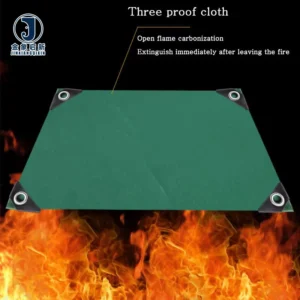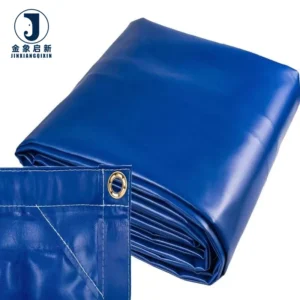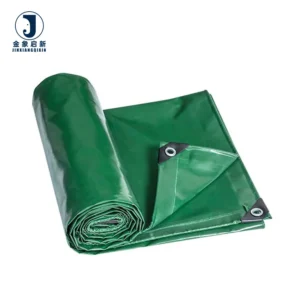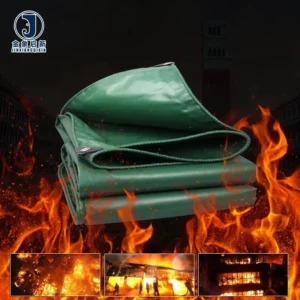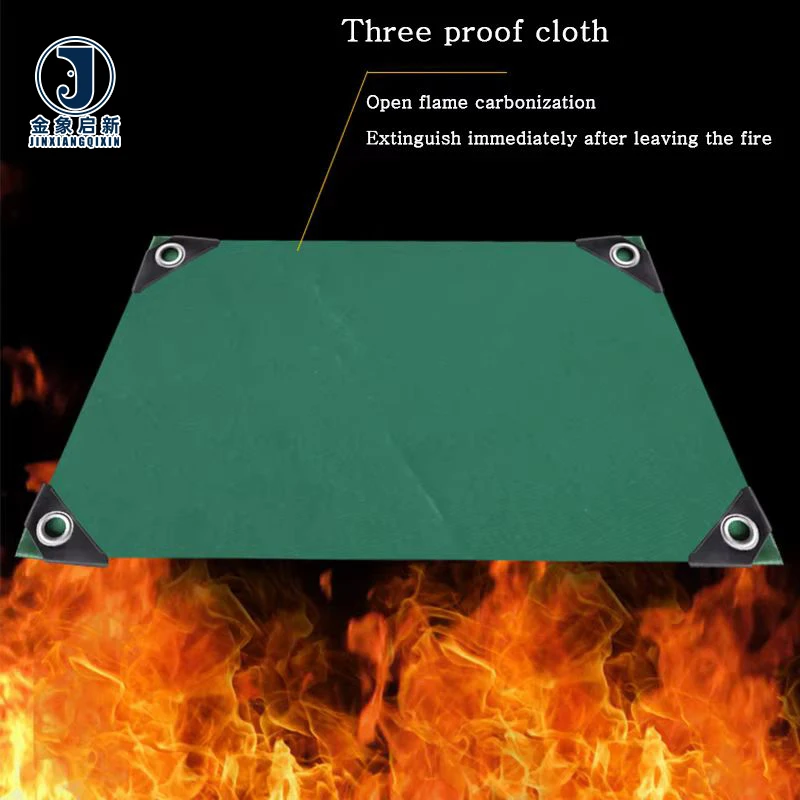
Model-Specific Fitment — truck covers are cut and welded to your exact trailer dimensions, eliminating the road spray gaps and wind flap that generic sizes create.
Technical Specifications
| Parameter | Value |
|---|---|
| Product Type | PVC Coated Tarpaulin Truck Cover |
| Coating Material | PVC |
| Weight Options | 700gsm / 850gsm / 900gsm (confirm grade for your application) |
| Flame Retardant | Available (grade and test standard to be confirmed at inquiry) |
| Anti-Static | Available (surface resistance or standard to be confirmed at inquiry) |
| Anti-Cold Treatment | Available |
| Anti-Mildew Treatment | Available |
| Waterproof | Yes |
| Weather Resistance | Suited to extended outdoor exposure (1–3 years outdoor life claimed — test basis not stated) |
| Application Form | Custom-cut truck cover or roll stock |
Application Suitability
| Application | Exposure & Requirement |
|---|---|
| Highway freight truck covers | Constant road vibration, wind-driven rain, UV exposure, tie-down abrasion at eyelet and hem points |
| Regional and local delivery trailer covers | Frequent loading and unloading flex cycles, repeated folding and unfolding, contact with dock edges |
| Flatbed and curtain-side load protection | Direct weather exposure on all faces, lateral wind load on side curtains, load shift friction at contact points |
| Construction and machinery transport covers | Heavy irregular loads, puncture risk from equipment edges, site dust and chemical residue contact |
Why a Generic-Size PVC Coated Tarpaulin Truck Cover Fails on Your Trailer
A truck cover that is not cut to your trailer model creates gaps at the corners and excess fabric that flaps at highway speed, letting water in and tearing itself apart at the seams.
Fleet operators ordering standard-dimension covers regularly find that the material bunches at one end and pulls tight at the other. The stress concentrates at the eyelet line and welded seams, which are the first points to fail under highway wind load. Water channels through the gaps at the rear corners, defeating the purpose of covering the load entirely. [NEED_CITE: aerodynamic load distribution on truck side curtains at highway speed]
Cut-to-Model Fitment Eliminates the Gap Problem
Every PVC coated tarpaulin truck cover we produce starts from the confirmed dimensions of your specific trailer model. The cover is cut and welded so that the hem sits flush against the trailer frame with no excess material to catch wind and no short-fall that leaves the load exposed. This approach removes the primary cause of seam failure and water ingress on highway transport.
Welded Seams That Outlast the Fabric at Flex Points
The highest stress on a truck cover occurs where the load flexes during transit — typically at the tie-down cross members and the trailer articulation point. We reinforce welded seams at these specific zones rather than applying a uniform weld across the entire panel. The seam strength is verified at the flex locations during pre-shipment inspection, because a weld that holds in the workshop but fails at 90 km/h serves no purpose. [NEED_CITE: seam peel strength test methods for PVC coated fabrics]
Treatment Selection Matched to Your Operating Route
A fleet running year-round in cold northern climates needs anti-cold treatment to prevent the PVC from stiffening and cracking at low temperatures. A fleet operating in tropical humidity needs anti-mildew treatment to stop fungal growth on the fabric surface during long stationary periods. The PVC coated tarpaulin truck cover is available with flame retardant, anti-static, anti-cold and anti-mildew options — confirm the specific grade required for your route and compliance environment before ordering.
Reading the Specification Sheet Beyond the GSM Number
GSM tells you the total weight of coating plus base fabric per square metre, but two covers at the same GSM can perform very differently. A heavier coating with a lighter base fabric will have good water resistance but lower tear strength. A lighter coating on a denser base fabric will resist tearing but may show reduced abrasion life. The balance between base fabric denier, weave density and coating weight determines the real-world durability of the cover on your trucks, not the GSM figure in isolation. When reviewing a material specification sheet, check the base fabric denier and thread count alongside the stated GSM to understand where the weight is coming from.
What Happens When the Wrong Specification Is Chosen
A cover ordered without anti-cold treatment will stiffen and crack at the fold lines during winter transport, creating water entry points that enlarge with every flex cycle. Flame retardant treatment claimed without a supporting test report means the cover may fail a compliance inspection at a regulated depot or border crossing, forcing a costly replacement mid-route. Colour variation between covers ordered at different times for the same fleet becomes visible when vehicles are parked side by side, undermining the corporate image the fleet was specified to project. [NEED_CITE: colour fastness and batch consistency standards for coated fabrics]
Why Fleet Operators Source Truck Covers Here
Nearly three decades of coated fabric production provide the process control needed to hold consistent GSM across a multi-cover fleet order. Three full production lines and 36 sets of professional equipment support bulk volume delivery within agreed lead times. A dedicated 10-person R&D team develops samples for custom sizing, treatment selection and colour matching before production begins. Every cover undergoes 100% pre-shipment inspection with documented results, so you see the verification record before the goods leave the factory. The QA process checks GSM, weld strength and treatment application at every production stage, not only at final packing.
Documentation & Verification
- Material specification sheet stating confirmed GSM, base fabric denier and coating weight for your truck cover order
- Flame retardant or anti-static test report supplied with shipment where applicable — grade and standard stated
- Pre-shipment inspection record with photos showing weld quality, eyelet placement and dimensional accuracy
- Certificate of origin and customs documentation prepared for the destination country
- Roll packing list with individual cover identification matching the purchase order line items
Fabrication, Handling & Storage
- Confirm eyelet spacing and hem reinforcement specifications against your trailer tie-down system before welding begins
- Store PVC coated tarpaulin truck covers flat or loosely rolled to avoid permanent crease marks in the coating
- Allow cold-stored covers to reach ambient temperature before unfolding to prevent coating crack at fold lines
- Use compatible PVC repair tape or solvent weld for field repairs on minor punctures and seam separations
- Match heat seal temperature and dwell time to the specific GSM grade when joining panels or attaching reinforcement strips
- Avoid dragging covers across concrete or gravel during installation to protect the PVC coating surface
What to Include in Your Inquiry
Provide the trailer make, model and year along with measured dimensions so the cover can be cut to an exact fit. Specify the operating climate range and any compliance requirements such as flame retardant grade or anti-static surface resistance for your route. Indicate the quantity of covers needed, any corporate colour or branding requirements, and whether you require finished covers with eyelets and hems or roll stock for your own fabrication.
Frequently Asked Questions
Q: How do you confirm the exact trailer model dimensions before cutting the cover?
A: We request the trailer make, model and production year, and where possible a dimension drawing or on-site measurement. The confirmed measurements are documented in the production specification and signed off before cutting begins. This eliminates the mismatch between a generic cover size and the actual trailer frame geometry that causes gap and flap problems on the road.
Q: What flame retardant grade can be supplied and which test standard does it meet?
A: Flame retardant treatment is available in multiple grades for PVC coated tarpaulin truck covers. The specific grade and corresponding test standard depend on the compliance requirements of your market and operating route. We provide the test report with the shipment once the required grade is confirmed at the inquiry stage, so you have documented evidence for inspections.
Q: How is GSM verified — can I receive a pre-shipment weight test report?
A: GSM is measured on samples taken from the production run before cutting and finishing. The measured value is recorded on the pre-shipment inspection report that accompanies your dispatch documentation. This allows you to verify that the material weight matches the specification agreed at the order stage, rather than relying solely on the quotation figure.
Q: What eyelet spacing and hem reinforcement options are available for tie-down systems?
A: Eyelet spacing, diameter and hem reinforcement width are configured to match your specific tie-down hardware and load restraint method. We confirm these details against your trailer tie-down rail or rope hook layout before production. Reinforced webbing can be added at high-stress points such as corners and tie-down cross members where abrasion and pull-through risk is greatest.
Q: How do you ensure colour consistency across multiple covers ordered for the same fleet?
A: All covers for a single fleet order are produced from the same coating batch to eliminate inter-batch colour variation. The colour reference is matched against a confirmed sample before production starts, and each cover is checked during pre-shipment inspection under consistent lighting. This ensures uniform appearance when vehicles in the same fleet are parked or photographed together.