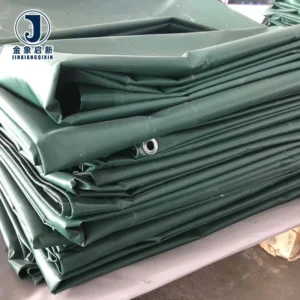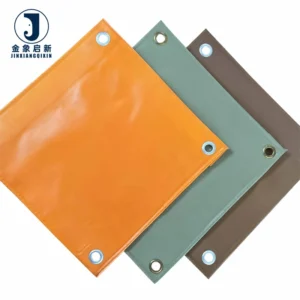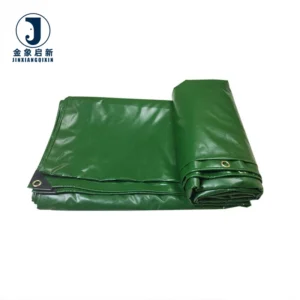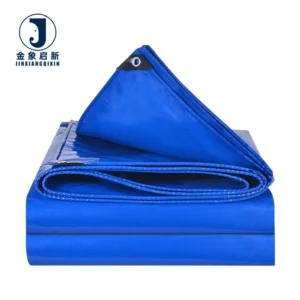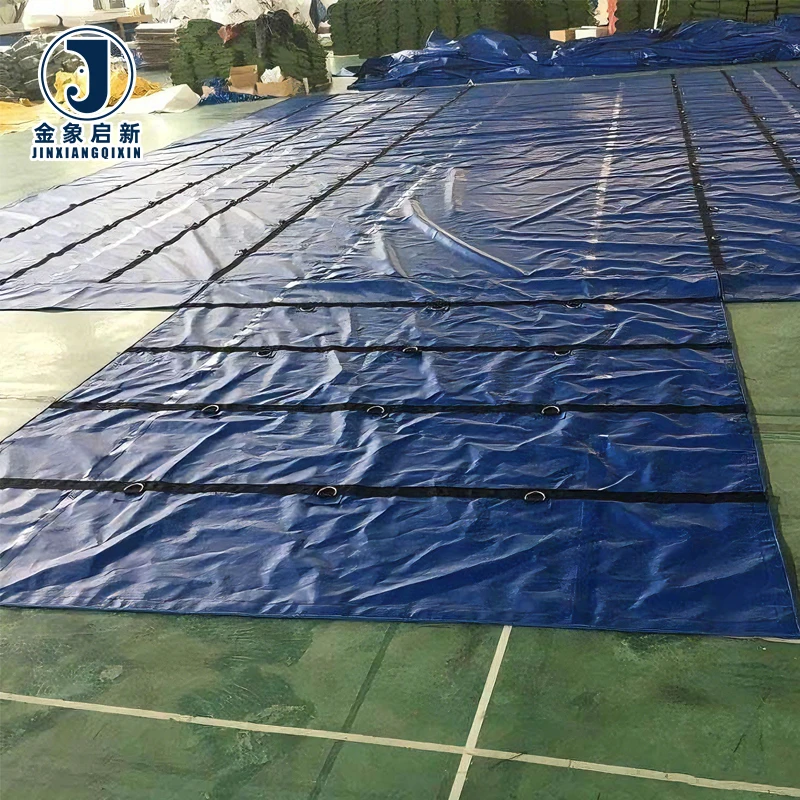
Deep Process Control — coating weight and adhesion verified at every stage on three full production lines to ensure each PVC tarpaulin truck cargo cover meets dimensional and performance targets before dispatch.
Technical Specifications
| Parameter | Value |
|---|---|
| Product Type | PVC Tarpaulin Truck Cargo Cover |
| Coating Material | PVC |
| Waterproof | Fully waterproof coated construction |
| Flame Retardant | Available (grade not stated — confirm the grade required for your market) |
| Anti-Static | Available (test basis not stated — request test documentation for your compliance scope) |
| Anti-Cold | Available |
| Anti-Mildew | Available |
| Weather Resistance | Outdoor rated for extended service exposure |
| Assembly State | Custom cut and welded to truck/trailer dimensions |
| Reinforcement | High-strength base fabric for installation durability |
| Standards | ISO, CE (per company profile) |
Application Suitability
| Application | Exposure & Requirement |
|---|---|
| Flatbed trailer cargo cover | Constant highway wind load, UV exposure, tie-down abrasion at flex zones |
| Curtain-side trailer fabric | Repeated flex cycles at curtain runners, road spray, lateral tension |
| Box truck top and rear cover | Standing water pooling, thermal cycling, edge chafe from frame contact |
| Construction site equipment cover | Prolonged outdoor storage, dust and debris accumulation, forklift contact risk |
| Mining haul truck load cover | Vibration and impact from rough terrain, chemical exposure from cargo dust |
Why Generic Sizing Costs More Than a Custom PVC Tarpaulin Truck Cargo Cover
A cover that matches your trailer model template eliminates flap-induced abrasion and premature seam failure from day one.
Fleet operators routinely replace generic-size truck covers within the first season. The root cause is rarely the fabric itself — it is the gap between the cover edge and the trailer profile. That gap allows wind to get underneath during transit, creating a sustained flapping motion that concentrates stress at the nearest welded seam. I have watched covers fail along the hem line while the main body fabric remained intact. The PVC tarpaulin truck cargo cover aftermarket supplier sees this pattern repeat across operators who buy by lowest unit cost rather than by model-specific pattern. A poorly fitted cover also exposes cargo edges to road spray, defeating the purpose of waterproofing even when the coating specification is correct [NEED_CITE: tensile and tear test methods for coated fabrics per ISO 1421].
Model-Specific Patterning Eliminates the Flap Failure Loop
Every trailer manufacturer produces slightly different frame profiles, runner track positions, and corner radii. A PVC tarpaulin truck cargo cover cut to a generic rectangle cannot account for these differences. Our approach begins with the exact trailer make, model, and year — then maps the cover pattern to the frame geometry. The result is a cover that sits flush against the load edge without excess material to catch wind. This precision matters most on curtain-side trailers, where the fabric travels along aluminium runners and must maintain consistent tension through every opening and closing cycle.
Welded Seam Integrity at Flex and Tie-Down Zones
The seam is the first point of failure on any truck cover that sees daily use. We reinforce welded seams at all high-stress zones — tie-down points, corner folds, and curtain runner attachments — using heat-welded overlap construction with the same PVC coating material. The weld strength is governed by coating adhesion and base fabric integrity, not by thread count. Where mechanical fasteners or eyelets are specified, the surrounding fabric area receives additional PVC patch reinforcement to distribute point loads across a wider base fabric zone [NEED_CITE: peel adhesion test standards for coated fabrics].
Reading the Specification Sheet Beyond the Headline Weight
Coating weight and base fabric denier work together to determine how a PVC tarpaulin truck cargo cover performs under load. A heavier coating applied over a loosely woven base fabric may achieve the quoted GSM but will show poor tear propagation resistance — once a puncture occurs, the tear travels easily through the open weave. Conversely, a tightly woven high-denier base with a moderate coating weight delivers better puncture resistance and weld adhesion because the coating penetrates the weave structure more effectively. The flame retardant and anti-static treatments available for this cover are applied during or after the coating stage, and their effectiveness depends on the coating formulation compatibility — always request the test report matched to your specific market requirements rather than relying on a generic claim. The anti-cold option modifies the PVC plasticiser system to maintain flexibility in low-temperature transit conditions, preventing the brittle cracking that standard formulations exhibit below freezing.
The Hidden Cost of Specifying on Price Per Square Metre
When buyers reduce their specification to the lowest cost per square metre, the manufacturer compensates by reducing coating weight or switching to a lighter base fabric. The cover arrives looking correct and may even match the quoted GSM on a small sample swatch. But in service, the lighter base fabric cannot withstand the cyclic tension of daily tie-down and release, and the thinner coating offers less protection against abrasion at the trailer frame contact points. I have seen fleet operators replace an entire set of covers after a single season because the cost saving per unit was wiped out by the replacement labour and cargo damage claims. The procurement verification step that prevents this is straightforward: require the pre-shipment inspection record to confirm both coating weight and base fabric denier against the original quotation, not just the total GSM [NEED_CITE: DIN 4102 fire classification for building materials].
Why Procurement Teams Consolidate Truck Cover Orders Here
Three full production lines and 36 sets of professional equipment provide the capacity to fulfil multi-unit fleet orders without splitting production across external workshops, maintaining consistent coating parameters from the first cover to the last.
A 10-person R&D team handles pattern development for new trailer models, producing sample covers for fit verification before bulk production begins.
Dedicated QA/QC runs at every production stage with 100% inspection before dispatch, catching dimensional deviations and weld defects that batch sampling would miss.
Samples for custom sizes and treatment combinations are developed within days, allowing procurement teams to validate specifications against physical product rather than relying on data sheets alone.
Full documentation packages ship with every order — specification sheets, test reports, inspection records, and certificates of origin — so your receiving team can verify the delivery against the purchase order without requesting additional paperwork.
Documentation & Verification
- Material specification sheet stating coating material, base fabric type, and treatment options applied
- Pre-shipment inspection record confirming dimensions against your trailer model template
- Test report for flame retardant or anti-static grades matched to your compliance scope
- Roll or piece packing list with individual cover identification for fleet allocation
- Certificate of origin and customs documentation for cross-border logistics
Fabrication, Handling & Storage
- Heat-weld seams using temperature and dwell settings matched to the PVC coating thickness
- Specify eyelet spacing based on the high-strength base fabric to prevent pull-through under tie-down tension
- Store folded covers in dry conditions away from direct sunlight to preserve the anti-mildew treatment
- Unfold anti-cold treated covers gradually in sub-zero conditions to allow the plasticiser system to reach working flexibility
- Clean with mild detergent only to protect the PVC coating surface and any applied treatment layer
- Allow adequate overlap at weld zones to ensure coating-to-coating fusion across the full seam width
What We Need to Quote Your Truck Cover Accurately
Provide the trailer make, model, year, and the type of cover required — full top cover, curtain-side replacement, or rear flap. Specify any treatment requirements tied to your operating routes or compliance obligations, such as flame retardant grade or anti-static certification. Include the quantity per trailer model and whether you need printed branding or a specific colour reference for fleet consistency. If this is a first order, request a sample cover for fit and finish approval before we proceed to bulk production.
Frequently Asked Questions
Q: How do I specify the right cover size for my trailer model?
A: Provide the trailer manufacturer name, model designation, and production year. We use these details to build or retrieve the pattern template for that specific frame geometry. If your trailer has been modified — such as extended side panels or non-standard runner tracks — send photographs and dimensions so we can adjust the pattern before cutting. A sample cover is available for fit verification on your first order.
Q: Can I get a test report for flame retardant or anti-static treatment?
A: Yes. Both treatments are available, but the applicable grade depends on your market and operating environment. Tell us the compliance standard your site or jurisdiction requires, and we will supply the matching test report with your order documentation. If you are uncertain which grade applies, our R&D team can advise based on your route and cargo type.
Q: What reinforcement options are available at tie-down and flex points?
A: High-stress zones receive additional PVC patch reinforcement applied over the base fabric before the final coating layer. Eyelet zones are reinforced with welded patches that distribute tie-down loads across a wider area. At curtain runner attachment points, the hem is doubled and heat-welded to handle cyclic flexing without seam separation.
Q: How is colour consistency maintained across a multi-cover fleet order?
A: All covers in a single fleet order are produced from the same coating batch to eliminate roll-to-roll colour variation. The pre-shipment inspection record includes a colour check against your approved reference. For repeat orders placed months apart, we retain the colour formulation on file and produce a lab dip for your approval before bulk coating begins.
Q: What is the typical lead time for a custom-sized truck cargo cover?
A: Lead time depends on order volume, treatment requirements, and whether a sample approval step is included. Standard custom covers typically ship within multi-week production windows. Covers requiring flame retardant or anti-static treatment with test documentation may need additional time for laboratory testing. We confirm the schedule at the quotation stage based on your exact specification.