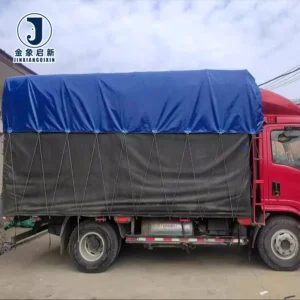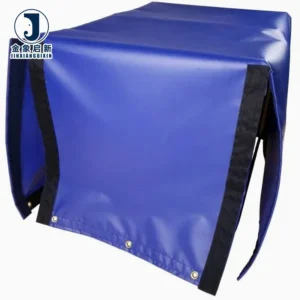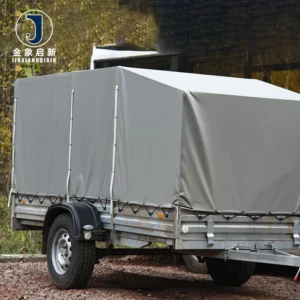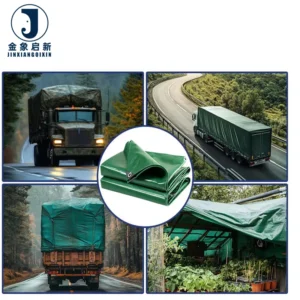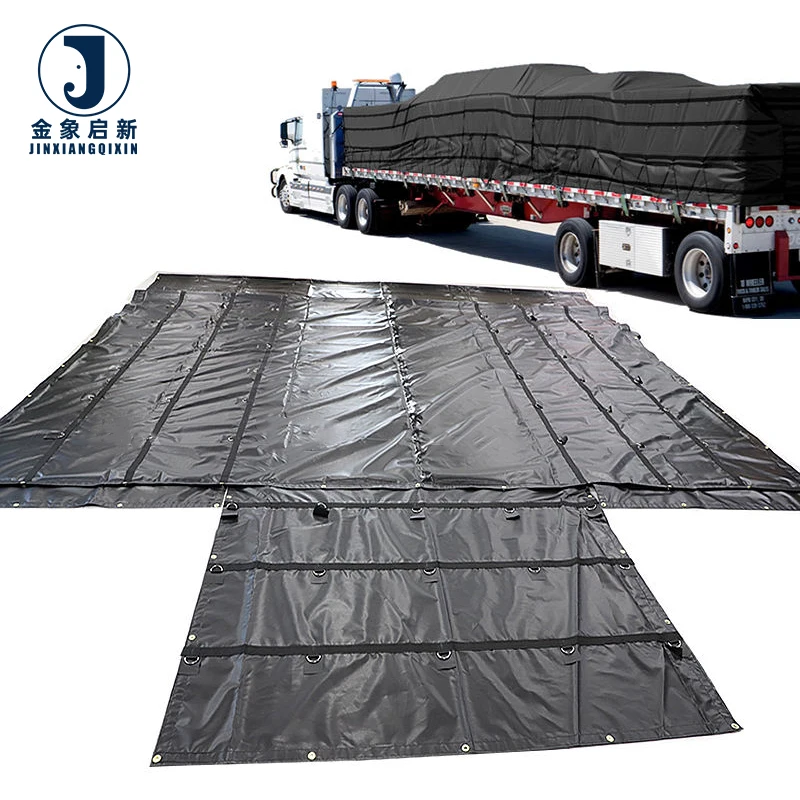
Process Control — Nearly 30 years focused on coated fabric, with dedicated QA/QC validating coating adhesion and weight consistency at every stage, ensuring each PVC truck tarpaulin for flatbed transport meets the specified drop configuration and load profile.
Technical Specifications
| Parameter | Value |
|---|---|
| Product Type | PVC Truck Cover |
| Coating Material | Vinyl (PVC) |
| Base Fabric Type | RipSTOP |
| Weight Grade | 12oz, 14oz, 15oz, 18oz |
| Drop Option | 8′ Drops |
| Configuration | 1PC / 2PC / 3PC |
| Waterproof Rating | Waterproof |
| Abrasion Resistance | Yes |
| Anti-Mildew | Yes |
| Anti-Pull | Yes |
| Finish | Very Heavyweight |
| Customizable Density | Yes |
Application Suitability
| Application | Exposure & Requirement |
|---|---|
| Flatbed lumber transport | Constant road vibration, tie-down tension at grommet lines, weather exposure during multi-day hauls |
| Steel and building material hauling | Sharp edge contact, heavy load flex, abrasion at deck contact points |
| Oversized irregular loads on step-decks | Custom drop lengths needed, wind flap stress at uneven cargo profiles |
| Fleet-wide standardization across mixed trailers | Consistent colour and weight grade across multiple trailer models and orders |
Why Generic-Sized Truck Covers Fail at the Worst Points
A cover that fits the load profile eliminates the edge exposure and seam stress that generic sizing creates.
When a PVC truck tarpaulin for flatbed transport is cut to a universal dimension rather than the actual trailer deck and cargo height, the excess fabric flaps under highway speeds while the short edges leave cargo exposed to driven rain. The real damage happens at the tie-down points: a misaligned grommet line concentrates load into two or three eyelets instead of distributing it across the full reinforced hem. I have reviewed field returns where the fabric was intact but the seams had pulled apart within the first season — not because the material was weak, but because the cover geometry forced stress into locations the construction was never designed to carry [NEED_CITE: field failure analysis of mis-sized flatbed covers]. The solution is not a heavier fabric; it is a cover cut to the vehicle’s actual dimensions and load profile.
How RipSTOP Weave Changes Tear Behaviour Under Load Flex
Standard woven base fabrics allow a tear to propagate in a straight line once initiated — a puncture from a sharp lumber edge or a torn grommet can run the full length of the panel before the driver notices. The RipSTOP base fabric used in this PVC truck tarpaulin for flatbed transport incorporates reinforcement yarns at regular intervals that arrest tear propagation at each grid intersection. On a flatbed hauling building materials, this means a single puncture from a protruding nail or bracket stays contained rather than opening the entire load to weather mid-transit.
Drop Configuration as a Function of Cargo Profile, Not Convenience
The available 1PC, 2PC, and 3PC configurations with 8′ drops exist because different cargo types demand different access patterns. A single-piece cover suits uniform lumber loads where the entire cargo is loaded and unloaded at one stop. Multi-piece configurations allow segmented access — a driver delivering to three sites can uncover only the rear section without exposing the full load to roadside weather. Each piece retains its own reinforced hem and grommet line, so the tie-down security is maintained across every segment. This PVC truck tarpaulin for flatbed transport is configured to match how fleets actually operate, not how tarps are typically stocked [NEED_CITE: segmented tarp deployment in multi-drop logistics].
What Weight Grade and Base Fabric Together Determine
The 12oz, 14oz, 15oz, and 18oz options represent coating weight applied over the RipSTOP base, but coating weight alone does not define the cover’s field performance. Tensile and tear resistance depend on the base fabric denier and weave density working in combination with the coating — a lighter coating over a dense RipSTOP weave can outperform a heavier coating over a loose plain weave in tear resistance. The coating provides waterproofing, abrasion resistance at deck contact points, and UV screening for the base yarns, while the base fabric carries the structural load under tie-down tension and wind flap. Selecting the right grade requires matching both the coating weight and the base fabric construction to the route exposure and cargo type. Very Heavyweight finish options serve long-haul routes with sustained highway speeds and weather exposure, while lighter grades reduce dead weight on shorter regional runs.
The Cost of Overlooking Grommet Spacing and Hem Reinforcement
When grommet spacing does not match the fleet’s standard tie-down hardware positions, the cover is secured using only a fraction of its attachment points. The resulting concentrated load tears individual eyelets free from the hem — a failure mode that appears as material defect but is actually a specification mismatch. I have seen entire fleet orders replaced within months because the grommet layout was based on the manufacturer’s default rather than the carrier’s actual ratchet strap pattern. Batch colour inconsistency compounds the problem: if replacement covers arrive in a visibly different shade, the fleet rejects the entire delivery regardless of material performance [NEED_CITE: batch colour variance rejection criteria in fleet procurement].
Why Sourcing This PVC Truck Cover Here Delivers Consistency
Three full production lines with 36 sets of professional equipment support bulk runs where every cover in a fleet order is cut from fabric produced in the same coating batch, maintaining colour and weight consistency across the entire delivery. The 10-person R&D team handles custom sizing and drop configuration development, producing samples within days so that fitment is validated on your specific trailer model before full production begins. Dedicated QA/QC at every production stage means the 12oz, 14oz, 15oz, or 18oz coating weight stated on your quotation is verified on the finished cover before it ships — not assumed. Full documentation packages accompany each dispatch, providing the material traceability that fleet procurement departments require.
Documentation & Verification
- Material specification sheet stating base fabric type, coating weight grade, and drop configuration for each order
- Pre-shipment inspection record confirming actual weight per panel matches the quoted 12oz, 14oz, 15oz, or 18oz specification
- ISO and CE certificates supporting export compliance for North American and European fleet operators
- Roll and cut-piece packing list with piece count, configuration (1PC / 2PC / 3PC), and net weight per item
Fabrication, Handling & Storage
- Heat-weld seams using temperature and dwell settings matched to the PVC coating grade to prevent delamination at flex points
- Reinforce grommet locations with additional PVC patches sized to distribute tie-down load across the RipSTOP base fabric
- Store rolled covers vertically on their cores to prevent flat spots that create permanent crease lines in the 18oz Very Heavyweight grade
- Allow covers to reach ambient temperature before unfolding in cold weather to avoid cracking the PVC coating at fold lines
- Clean with mild detergent and soft brush; avoid solvent-based cleaners that degrade the waterproof PVC coating surface
- Repair minor punctures with PVC-compatible adhesive patches applied to clean, dry fabric surfaces
What We Need to Quote Accurately
Provide your trailer make, model, deck length, and typical load height so the cover is cut to your actual dimensions rather than a generic size. Specify which weight grade — 12oz, 14oz, 15oz, or 18oz — matches your route exposure and cargo type, and indicate whether you require 1PC, 2PC, or 3PC configuration with 8′ drops. If your fleet operates under specific anti-UV or flame-retardant requirements, state the test standard your market requires so we can confirm availability and supply the supporting documentation with your order.
Frequently Asked Questions
Q: How is the tarp sized to match specific flatbed trailer models and load heights?
A: We require the trailer make, model, deck dimensions, and typical cargo height before cutting. The cover is then produced to those measurements with the specified 1PC, 2PC, or 3PC configuration and 8′ drops. A sample is available for fitment verification on your trailer before the full production run is authorized.
Q: What reinforcement is used at tie-down and eyelet points to prevent seam failure?
A: Grommet locations are reinforced with additional PVC patches bonded over the RipSTOP base fabric to spread tie-down load across multiple weave intersections. Grommet spacing is set to match your fleet’s standard hardware positions so that every attachment point carries its intended share of the load.
Q: How is batch-to-batch colour consistency maintained across a fleet order?
A: Covers for a single fleet order are cut from fabric produced in the same coating batch. The pre-shipment inspection record confirms colour reference consistency across all pieces. For repeat orders, we retain the colour formulation on file to match subsequent deliveries to your original specification.
Q: What anti-UV or flame-retardant treatment is available and on what test basis?
A: These treatments are available in grades that vary by market requirement. Confirm the specific test standard applicable to your operating region — such as the UV exposure duration or flame classification your jurisdiction mandates — and we will supply the corresponding grade with its supporting test documentation.
Q: How are drop configurations (1PC / 2PC / 3PC) selected based on load profile?
A: Single-piece covers suit uniform loads with single-stop delivery. Multi-piece configurations allow segmented access for multi-drop routes, keeping the remaining cargo covered and secured while individual sections are unloaded. The selection depends on your delivery pattern and the cargo types you haul most frequently.