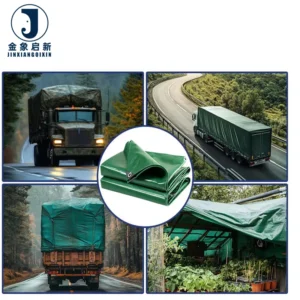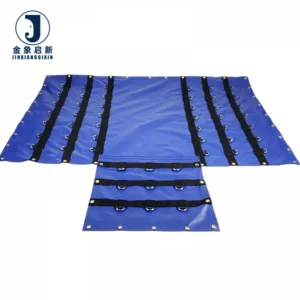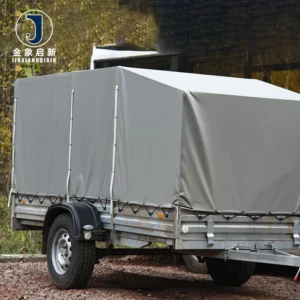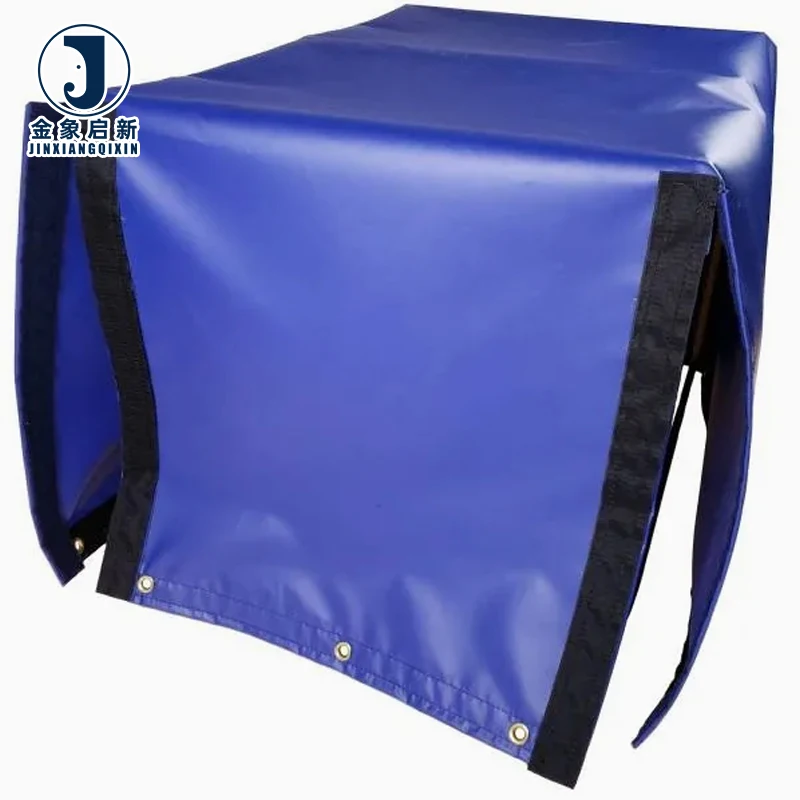
Precision Fitment Engineering — Custom-cut PVC coated truck covers manufactured to match specific trailer dimensions, eliminating edge gaps and high-stress failures common with generic sizing.
Technical Specifications
| Parameter | Value |
|---|---|
| Product Type | PVC Coated Truck Cover |
| Material | PVC Coated Fabric |
| Weight Range | 250gsm-1500gsm (confirm the grade for this item) |
| Base Fabric Denier | 200DX300D / 500DX500D / 840DX840D / 1000DX1000D |
| Surface Finish | Glossy or Matte |
| Treatment | Waterproof, UV, Flame Retardant, Anti-fungal |
| Temperature Range | -15°C to 70°C |
| Standard Sizes | 3×4m, 6×8m, 8×10m, 10×12m or custom made |
| Working Life | 3-10 years (source value — verify against manufacturer catalog) |
| UV Treatment | Customized (test basis not stated in source) |
| Flame Retardant | Yes (grade not stated in source) |
| OEM/ODM | Accepted |
| Printing Option | Custom logo printing available |
Application Suitability
| Application | Exposure & Requirement |
|---|---|
| Long-haul truck and trailer load covering | Constant highway wind flex, road debris abrasion, extended UV and weather exposure |
| Transport fleet weather shielding | Repeated tie-down cycles, dynamic load movement at welded seams, moisture ingress prevention |
| Equipment covering for transport | Point-load stress from irregular cargo shapes, temperature fluctuation during transit |
| New trailer build integration | Precise dimensional match to anchor points, side curtain fabric compatibility, fleet branding consistency |
Why Generic-Size PVC Truck Cover Orders Fail on Real Trailers
A truck cover that does not match your exact trailer model creates failure points before the first mile is complete.
Fleet operators routinely order PVC truck cover for fleet and trailer use based on nominal dimensions, only to find excess material flapping at the edges or insufficient overlap at the rear door. The resulting stress concentrates at the eyelets and welded corners — precisely where load flex demands the most from the fabric. Transport compliance audits then flag covers that do not fully enclose the load [NEED_CITE: load restraint standards for road transport covering]. The cost of a replacement order, plus the downtime waiting for a properly fitted PVC truck Cover aftermarket supplier to deliver, far exceeds the initial savings of buying a generic size.
Trailer-Specific Pattern Matching Eliminates Edge Stress
Every trailer model has unique anchor point spacing, corner radius requirements, and door clearance tolerances. A PVC truck cover for fleet and trailer applications must be cut using confirmed vehicle drawings rather than assumed standard dimensions. The base fabric denier selection — ranging from 500DX500D for regional routes to 1000DX1000D for long-haul highway exposure — directly affects how well the finished cover handles repeated flex cycles without seam degradation.
Welded Seam Placement at High-Flex Zones
The point where cargo shifts and the trailer body twists under load is where most covers fail first. Welded seams positioned without considering these dynamic flex zones will separate before the surrounding fabric shows any wear. Reinforcement at tie-down eyelet rows, corner gussets, and the rear edge hem requires deliberate engineering during fabrication rather than standard straight-line welding. Each PVC truck Cover aftermarket supplier approaches this differently [NEED_CITE: tensile and tear test methods for coated fabrics per ISO 1421], which makes pre-shipment inspection at flex zones essential before the order leaves the factory.
Reading the Specification Sheet Beyond Weight
GSM alone tells you nothing about how a PVC coated truck cover will perform under road conditions. A 650 GSM fabric with 500DX500D base denier has fundamentally different tensile and tear characteristics than the same weight built on a 1000DX1000D base. The weave density of the base fabric determines how a tear propagates once initiated — higher denier yarns in the warp direction resist longitudinal tearing along the trailer length, where wind load is most aggressive. Coating adhesion to the base fabric affects whether delamination begins at the edges or at welded seams. Surface finish selection between glossy and matte influences both long-term dirt retention and the adhesion quality of fleet logo printing [NEED_CITE: PVC coating adhesion test methods for industrial fabrics].
What Happens When Fabric Specifications Do Not Match the Route
A PVC truck cover specified for regional delivery routes but deployed on long-haul interstate runs will show premature wear at the flex points within months rather than years. Conversely, specifying maximum denier and weight for light urban distribution work adds unnecessary cost and dead weight to every trailer in the fleet. Flame retardant treatment claimed without a supporting test report creates compliance risk at roadside inspections, particularly where regional transport codes mandate specific grades. Batch colour variation between rolls becomes visible immediately when covers are installed side by side on a uniform fleet [NEED_CITE: colour consistency standards for fleet vehicle covers].
Procurement Advantages Built into This Product Line
Three full production lines with 36 sets of professional equipment support bulk PVC truck cover for fleet and trailer orders while maintaining dimensional accuracy across every unit. A 10-person R&D team handles pattern development from your trailer drawings, ensuring the cover matches your specific vehicle model before cutting begins. Dedicated QA/QC inspection at every production stage — including flex zone seam checks and GSM verification — provides documented quality control before dispatch rather than after complaints arrive. Sample development within days allows fleet operators to confirm fitment, finish, and colour matching across an entire order before committing to full production volume.
Documentation & Verification
- Material specification sheet stating confirmed GSM, base fabric denier, coating material, and colour reference for each roll
- Pre-shipment inspection record verifying actual weight against the quoted specification per roll
- Test report for UV and flame retardant treatment provided where applicable to your market requirements
- Custom sizing confirmation document matched against your specific truck or trailer model drawing
- ISO and CE certificates included with shipment documentation package
- Roll packing list with customs support documentation and certificate of origin
Fabrication, Handling & Storage
- Heat welding parameters must be adjusted for selected PVC coated fabric weight to prevent seam burn-through on lighter grades
- Eyelet placement should align with trailer anchor points confirmed on the vehicle drawing before fabrication begins
- Rolls stored flat or vertically on core to prevent permanent creasing in the PVC coating layer
- Allow cold-temperature rolls to reach above -15°C before unrolling to avoid coating crack damage
- Use mild detergent cleaning only — abrasive solvents degrade the glossy or matte surface finish treatment
- Field repairs at minor punctures require compatible PVC patch material and heat-activated adhesive
Requesting a Quotation That Matches Your Fleet
Provide your specific trailer model numbers or dimensional drawings so the PVC truck cover can be patterned to exact vehicle specifications rather than generic sizes. Confirm the flame retardant grade required by your regional transport authority, as this affects both material selection and the test reports supplied with your shipment. Specify whether you need finished covers with eyelets and reinforced hems installed, or roll stock for your own fabrication facility. Fleet branding requirements — including logo placement, colour matching across multiple trailer types, and print durability expectations — should be communicated during the inquiry stage for accurate sample development.
Frequently Asked Questions
Q: How do you confirm the cover fits my specific trailer model?
A: We request your trailer model number or detailed dimensional drawings showing anchor point locations, corner radii, and door clearance requirements. The PVC truck cover pattern is then developed against these confirmed dimensions rather than generic nominal sizes. A pre-production sample is available for physical fitment verification before full order cutting begins.
Q: Can I get test reports for UV and flame retardant treatment with my shipment?
A: Test reports are provided for UV and flame retardant treatments where applicable. Specify your regional transport code requirements during inquiry so we confirm which grade meets your compliance standards. The reports are included in your shipment documentation alongside the material specification sheet and pre-shipment inspection record.
Q: What happens if the GSM on arrival does not match the quotation?
A: Every roll undergoes pre-shipment weight verification against the quoted specification, with results documented in the inspection record included in your shipment. If any discrepancy is found before dispatch, the affected rolls are replaced. This documented QA process prevents the situation where material arrives lighter than agreed.
Q: How are seams reinforced at high-flex points?
A: Welded seams at tie-down rows, corners, and rear edge zones receive additional reinforcement based on the load flex pattern of your specific trailer model. The reinforcement design considers the base fabric denier and coating weight to ensure the seam strength matches the surrounding fabric rather than becoming the first point of failure.
Q: Can I order different sizes for mixed fleet trailer models in one shipment?
A: Mixed-size orders covering multiple trailer models within a single fleet are produced in one production run. Each cover is patterned and labelled to its specific vehicle model. Colour matching across the entire order is maintained through batch consistency controls, ensuring uniform appearance when installed across your fleet.