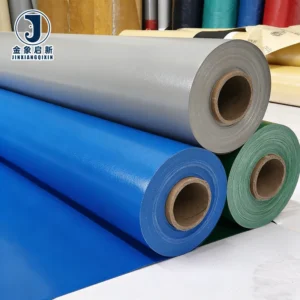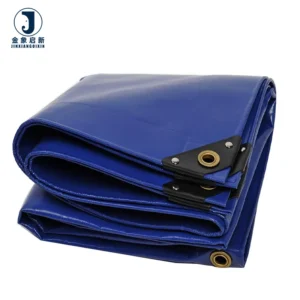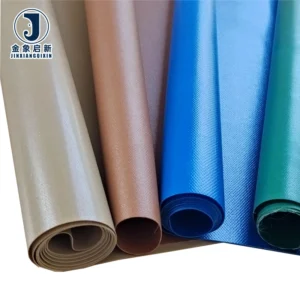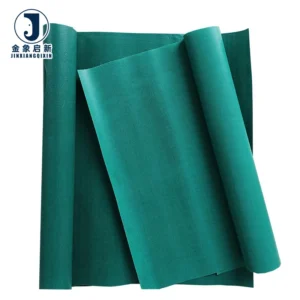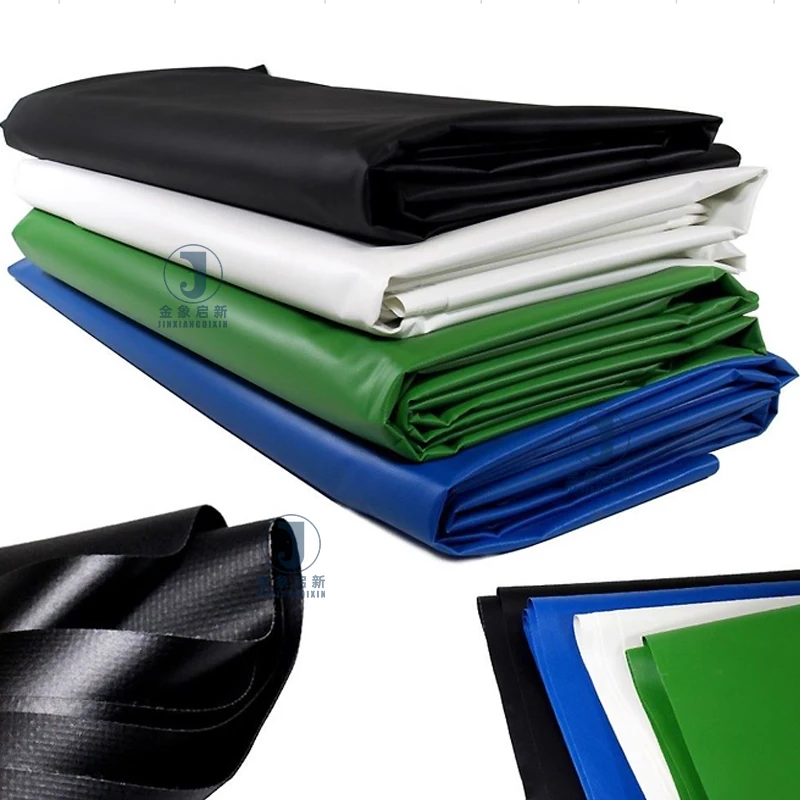
Coating Adhesion Control — Hot-melt and laminated PVC coating applied under controlled temperature and pressure to maintain bond strength at welded seams, verified roll by roll before dispatch.
Technical Specifications
| Parameter | Value |
|---|---|
| Product Type | PVC Coated Tarpaulin |
| Base Fabric | 100% high tenacity polyester yarns |
| Coating Material | PVC |
| Coating Method | Laminated & Hot-melt Coating |
| Waterproof | Yes |
| Anti-Mildew | Yes |
| Anti-Static | Treatment available (grade not stated in source) |
| Flame Retardant | Treatment available (grade not stated in source) |
| Cold Crack Resistance | Yes |
| Color Fastness | Best color fastness (test basis not stated in source) |
| UV Treatment | Available (test basis not stated in source) |
| Outdoor Life Assurance | 3–5 years (source value — verify against manufacturer catalog) |
| Certifications | ISO, CE |
Application Suitability
| Application | Exposure & Requirement |
|---|---|
| Truck side curtain fabric | Constant flexing at load points, road abrasion, UV and weather exposure, tie-down stress at hems |
| Trailer top cover | Direct rainfall, wind uplift tension, thermal cycling from sun to night cooling |
| Fleet-standard roll stock | Batch-to-batch colour consistency, uniform GSM across rolls, compatibility with automated cutting tables |
| Transport equipment OEM build | Custom width and length to vehicle model, reinforced hem and eyelet zones for daily loading cycles |
Why Welded Seams Fail Before the Fabric Does on Truck Covers
Seam failure starts where the load flexes most — not where the fabric is weakest.
A PVC coated tarpaulin for trucks faces repeated bending at tie-down points, corner edges, and wherever the load shifts during transit. When the coating and base fabric separate at the weld line, water enters and the tear propagates quickly. [NEED_CITE: tensile and tear test methods for coated fabrics per ISO 1421] Most transport fleets discover this failure pattern within the first season of use, often blaming the fabric weight when the real cause is coating adhesion and welding parameters. Laminated and hot-melt coating technology addresses this by creating a stronger bond between the PVC layers and the polyester base, so the welded seam holds as long as the surrounding material.
Coating Bond Strength and Its Role in Side Curtain Durability
Truck side curtains flex thousands of times per journey. Each bend tests the adhesion between the PVC coating and the polyester base fabric. Hot-melt coating technology fuses the PVC into the weave structure under heat and pressure, producing a bond that resists delamination even at high-stress flex points. This PVC coated tarpaulin for trucks maintains coating integrity through repeated folding, which matters most at welded seams where two fabric panels meet and the material is locally heated again during fabrication.
Cold Crack Resistance for Year-Round Transport Operations
Fleets operating across seasonal temperature ranges need tarpaulin that stays flexible in freezing conditions. Cold crack resistance means the PVC formulation does not become brittle when temperatures drop, so the cover can be folded, tied down, and handled without cracking at the edges or along welded seams. This property is critical for long-haul routes that cross climate zones within a single trip, where the fabric must perform consistently from loading to delivery. [NEED_CITE: low-temperature flexibility testing standards for PVC coated fabrics]
How Base Fabric and Coating Work Together Under Load
The 100% high tenacity polyester base provides tensile and tear resistance, while the PVC coating adds waterproofing, abrasion protection, and the surface needed for heat welding. Laminated coating locks the PVC into the weave so the two layers act as one composite under tension. When a truck cover is pulled tight over a load, the base fabric carries the structural load and the coating distributes stress across the surface rather than concentrating it at individual yarn crossings. This composite behaviour determines how well the PVC tarpaulin for trucks resists tearing at eyelets and corners.
The Hidden Cost of Specifying GSM Without Checking Coating Adhesion
A heavier fabric with poor coating adhesion will delaminate at welded seams faster than a lighter fabric with strong lamination. When fleet operators specify PVC coated tarpaulin by weight alone, they may receive rolls that meet the GSM target but separate at the weld line within months of use. The cost shows up as premature cover replacement, load damage from water ingress, and downtime while replacement covers are fabricated. [NEED_CITE: coating adhesion test methods for PVC tarpaulin per ISO standards] Verifying both GSM and adhesion strength before dispatch prevents this mismatch between the quotation specification and actual field performance.
Why Sourcing PVC Tarpaulin for Trucks Here Reduces Specification Risk
Three full production lines and 36 sets of professional equipment support bulk roll output with consistent coating weight and colour across batches. A 10-person R&D team handles custom width, length, and treatment specifications matched to specific trailer models rather than generic sizes. Dedicated QA/QC runs at every production stage, checking coating adhesion, colour consistency, and seam compatibility before rolls are cleared for packing. Pre-shipment inspection covers every roll individually, so GSM, surface finish, and treatment presence are confirmed against the order specification before dispatch. This level of process control matters when a fleet order spans multiple rolls that must match visually and perform identically once installed side by side.
Documentation & Verification
- Material specification sheet confirming base fabric denier, PVC coating weight, and treatment type per roll
- Pre-shipment inspection record with roll-by-roll GSM verification against the quoted specification
- Colour reference and batch consistency report for multi-roll fleet orders
- UV and flame retardant test reports where treatment is specified and grade is confirmed
- ISO and CE certificates supporting compliance documentation for import clearance
- Certificate of origin and customs paperwork matched to the shipment
Fabrication, Handling & Storage
- Hot-melt coated rolls respond well to high-frequency welding; test seam parameters on a sample before full production
- Store rolls upright on pallets to prevent flat-spot deformation of the PVC coating surface
- Allow cold-stored rolls to reach ambient temperature before unrolling to avoid coating stiffness damage
- Cut panels with allowance for hem folding; reinforced edges distribute eyelet load across multiple base fabric yarns
- Use PVC-compatible cleaners only; solvent-based products may soften the laminated coating layer
- Plan cutting layout to minimise welded seams across high-flex zones on the truck cover
What to Include in Your Inquiry
Share your trailer model, the number of covers needed, and whether you require rolls or finished cut-to-size panels. Specify any flame retardant or anti-static grades required by your operating sites or regional regulations. Confirm the colour reference and whether batch consistency across multiple rolls is critical for your installation. Let us know if you need sample rolls sent for welding tests before placing the full order.
Frequently Asked Questions
Q: How is GSM verified on arrival to match the quotation specification?
A: Each roll undergoes weight verification during pre-shipment inspection. A record showing the measured GSM per roll is included in the dispatch documentation, so you can cross-check against your quotation on receipt. Any deviation outside tolerance is flagged before the shipment leaves the facility.
Q: What eyelet spacing and hem reinforcement options are available for different trailer models?
A: Custom eyelet spacing and reinforced hem configurations are set according to your trailer model and tie-down system. Share the vehicle specification and loading method, and the R&D team will confirm the reinforcement layout before production begins. Samples with the proposed hem and eyelet pattern can be sent for fitment trials.
Q: How does colour consistency hold across multiple rolls for the same fleet order?
A: Production runs for a single fleet order are scheduled together so all rolls draw from the same coating batch. Colour reference checks are performed between rolls during production, and a batch consistency report accompanies the shipment. This prevents visible variation when panels are installed side by side on adjacent vehicles.
Q: What test reports are provided for flame retardant and anti-static treatments?
A: Test reports are supplied when flame retardant or anti-static treatment is specified in your order. Confirm the grade required for your market or site regulations — available treatments vary by certification standard, and the correct grade must be matched to your compliance documentation before production.
Q: How are welded seams tested to ensure they outlast the fabric at high-flex points?
A: Welded seam samples are tested for peel and shear strength during in-process quality checks. The laminated and hot-melt coating method is designed to produce bond strength at the weld line that matches or exceeds the base fabric tear resistance. Test results are recorded and available in the pre-shipment inspection documentation.