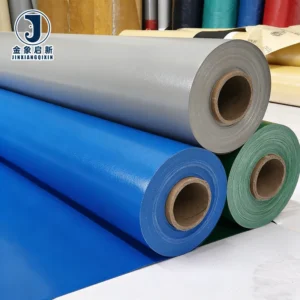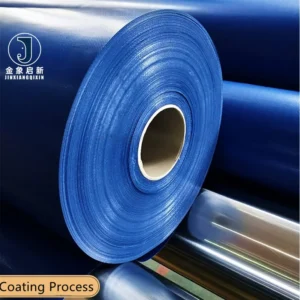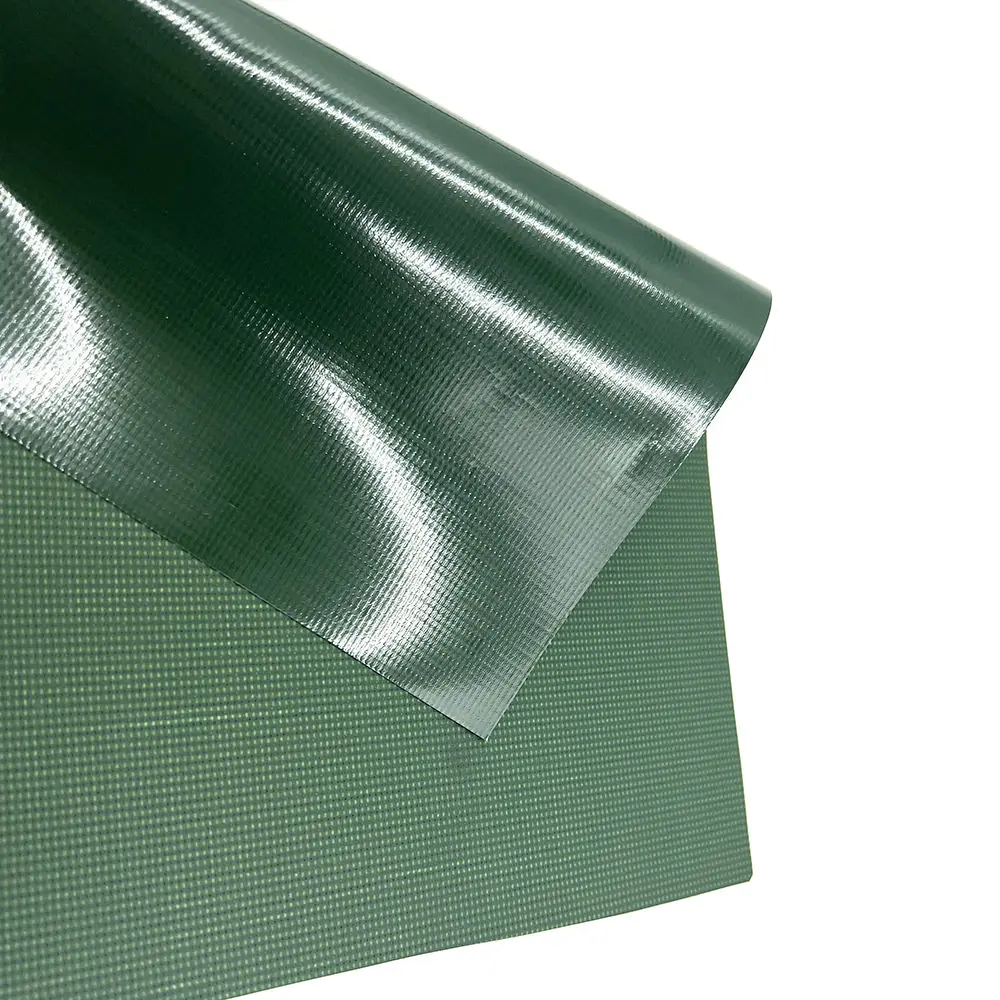
Deep Process Control Over Coating Weight and Adhesion — three full production lines manage every meter of this knife coated PVC to ensure the stated specification matches what arrives at your depot, verified roll by roll before dispatch.
Technical Specifications
| Parameter | Value |
|---|---|
| Product Type | PVC Knife Coated Tarpaulin Roll |
| Coating Method | Knife coated |
| Coating Material | PVC |
| Color | Green |
| Finish | Self-cleaning surface |
| Welding Options | HF, Hot Air, Sewing |
| Fire Retardant | Available in fire retardant grades — confirm the grade required for your market |
| UV Treatment | Available with UV treatment — request test basis for your route climate |
| Anti-Mildew | Antibacterial and mildew proof — confirm standard required |
| Temperature Resistance | High temperature and cold resistance — range available on request |
| Chemical Resistance | Oil and stain resistance, acid and alkali resistance |
| Tensile Strength | Excellent — value and test standard available on request |
| Tear Strength | Excellent — value and test standard available on request |
| Weight (GSM) | Confirm required GSM for your application |
| Base Fabric Denier | Confirm required denier for your load and flex demands |
Application Suitability
| Application | Exposure & Requirement |
|---|---|
| Flatbed truck and trailer load covers | Constant road vibration, tie-down abrasion at contact points, weather and UV cycling across long-haul routes |
| Side curtain fabric for curtain-sider trailers | Repeated flex cycles during open and close operations, road salt and spray exposure, depot wash-down chemicals |
| Portable storage structures and temporary depot covers | Wind loading on large unsupported spans, ground moisture contact, forklift and equipment proximity damage |
| Tensile and architectural membrane structures | Sustained tension loads, prolonged sun exposure, wind-driven rain and pooling water at low-slope areas |
Why "Heavy Duty" Means Nothing Without Verified Coating Adhesion
A heavy coating weight only protects the load if the bond between the PVC layer and the base fabric survives the flex cycle.
Fleet operators routinely find that a truck cover fabric rated as heavy duty fails not because the PVC wore through, but because the coating delaminated from the base fabric at the seam or along a high-flex fold line. The result is a cover that looks intact on the outside but has separated internally, letting water through to the cargo. This failure mode is invisible during a visual inspection at the depot and only shows up after weeks of road vibration and temperature cycling. [NEED_CITE: coating adhesion test methods for PVC coated fabrics]
Seam Integrity Under Road Vibration and Load Flex
The welding options available with this PVC knife coated tarpaulin for truck and transport cover — HF, hot air, and sewing — let fabricators choose the method that matches both their shop equipment and the flex demands of the specific trailer model. A side curtain that opens and closes dozens of times per day needs a seam that can absorb repeated folding without cracking or peeling, which is why HF welding is often specified for curtain-sider applications where the seam must remain as flexible as the panel itself.
Self-Cleaning Surface and Depot Maintenance Cycles
Fleet operators running in dusty, muddy, or industrial environments face a constant maintenance burden keeping covers presentable and functional. The self-cleaning surface on this fabric allows rain and wash-down water to sheet off, carrying loose dirt and road grime with it rather than letting contaminants embed into the coating surface. This reduces the frequency of manual cleaning and helps maintain the professional appearance of a branded fleet livery over extended service periods. [NEED_CITE: self-cleaning PVC surface performance in transport applications]
Chemical Exposure at Cargo and Depot Level
Cargo types and depot environments introduce chemical exposure that goes well beyond simple rain and sun. Oil and stain resistance protects the fabric surface from hydraulic fluid drips, diesel splash, and grease contact common around loading docks and maintenance bays. Acid and alkali resistance addresses exposure to cleaning agents used in depot wash-down routines and to certain cargo types that may off-gas or leak during transit.
How Knife Coating Affects Flex Durability and Weld Performance
The knife coated method applies PVC directly onto the base fabric under controlled blade pressure, forcing the coating material into the weave structure rather than sitting on top as a separate laminated layer. This penetration creates a mechanical bond between coating and yarn that resists delamination under repeated bending — a critical property for side curtain fabric and any truck cover panel that must fold or drape over irregular loads. The same coating penetration also determines how the fabric responds to HF and hot air welding, as the PVC content within the weave structure melts and fuses during the welding process to create a seam that is continuous with the panel.
What GSM and Base Fabric Denier Together Mean for Tensile and Tear Performance
GSM alone does not determine how a truck cover fabric will perform under load. A high GSM achieved through heavy coating on a light base fabric may resist puncture but can crack along fold lines because the base yarn structure lacks the tensile capacity to support the coating weight during flexing. Conversely, a tightly woven high-denier base fabric with moderate coating weight will handle road vibration and tie-down tension more effectively because the yarn structure itself absorbs and distributes the stress. [NEED_CITE: relationship between base fabric denier and coating weight in PVC tarpaulin tensile performance] The correct balance between base fabric denier, mesh count, and coating weight is determined by the specific trailer model dimensions, the load profile, and the tie-down configuration used on each route.
When Batch-to-Batch Colour Variation Forces an Entire Fleet Rework
Ordering covers for a fleet of twenty trailers and receiving rolls with visible colour variation between them creates a problem that is far more expensive than the fabric cost difference between batches. Once the covers are fabricated, fitted with eyelets and reinforcement, and installed on the vehicles side by side at the depot, any shade mismatch becomes immediately obvious to anyone looking at the fleet. The rework cost includes not just replacement fabric but also the fabrication labour, the hardware, and the vehicle downtime while covers are remade. Consistent colour across rolls within a single order requires controlled pigment dosing and coating temperature across the entire production run. [NEED_CITE: colour consistency standards for PVC coated fabrics in fleet applications]
Why Fabricators Choose This PVC Knife Coated Tarpaulin for Truck and Transport Cover
Coating weight and adhesion are controlled across three full production lines, so the GSM stated on the material specification sheet matches the fabric that arrives at your fabrication bench. A 10-person R&D team handles material selection, custom sizing, pattern printing, and sample development, with samples produced within days before any bulk production commitment. Dedicated QA/QC at every production stage means each roll receives 100% inspection before shipment, catching coating inconsistencies, colour variation, and weld-line defects before they leave the factory. Full custom capability on width, length, colour, and surface finish allows fleet operators to specify covers matched precisely to their trailer model dimensions and livery requirements. ISO and CE certified production ensures the manufacturing process meets recognised quality management standards.
Documentation & Verification
- Material specification sheet stating GSM, base fabric denier, coating weight, and colour reference provided with each roll shipment
- UV and fire retardant test reports supplied matching the specific grade quoted, not generic certificates
- Pre-shipment inspection record confirming 100% inspection completion before dispatch
- Certificate of origin and customs documentation included for cross-border shipments
- Roll packing list with individual roll identification for traceability through fabrication
Fabrication, Handling & Storage
- HF welding parameters must be matched to the specific PVC coating thickness and base fabric denier of this knife coated material
- Hot air welding temperature and speed settings should be validated on a test piece before running production seams on truck cover panels
- Sewn seams on high-flex areas such as eyelet lines and hem reinforcements require UV-stable thread matched to the PVC coating colour
- Rolls should be stored horizontally on racks to prevent flat spots and permanent creasing in the knife coated PVC surface
- Cold-temperature transport requires the fabric to reach workshop temperature before unrolling to avoid cracking the PVC coating at fold lines
- Cleaning with mild detergent and soft brush preserves the self-cleaning surface treatment without degrading the PVC coating layer
Request a Specification Matched to Your Fleet
Provide your trailer model dimensions, the typical load profile and tie-down configuration, and the climate conditions your fleet operates in — including sun exposure levels and any chemical contact at cargo or depot level. Specify whether you require fabricated covers with eyelets and reinforcement, or roll stock for in-house fabrication. Confirm the fire retardant or UV treatment grade needed for your operating routes and any fleet livery colour or branding requirements so we can develop a sample for your approval before bulk production.
Frequently Asked Questions
Q: How is the GSM verified on delivery and what documentation accompanies each roll?
A: Each roll ships with a material specification sheet stating the exact GSM, base fabric denier, and coating weight as produced. Our 100% pre-shipment inspection record confirms the measured values against the quoted specification. If your procurement process requires independent third-party weight verification, we can arrange this before dispatch.
Q: Can this tarpaulin be cut and welded to fit my specific trailer model dimensions?
A: Yes. The knife coated PVC construction supports HF, hot air, and sewing, giving fabricators flexibility to match the seam method to their equipment and the flex requirements of the trailer. Custom width and length are available, and we develop samples within days so you can validate fitment and weld performance before committing to a bulk order.
Q: What UV treatment evidence is available for long-haul routes with high sun exposure?
A: UV treatment is available and test reports can be provided matching the specific grade quoted for your order. We recommend confirming the UV exposure conditions of your primary routes so we can match the treatment level accordingly. Request the test basis documentation during the inquiry stage to verify suitability before sample approval.
Q: How is batch-to-batch colour consistency maintained when ordering covers for an entire fleet?
A: Colour consistency is controlled through precise pigment dosing and coating temperature management across our production lines. We recommend approving a pre-production sample and requiring that all rolls for a single fleet order run within the same production batch. A signed pre-shipment inspection record confirms visual colour consistency before dispatch.
Q: What eyelet spacing and hem reinforcement options are available for tie-down and ratchet strap loads?
A: Eyelet spacing and hem reinforcement are specified during the fabrication stage based on the tie-down configuration and load weight of your trailer. The knife coated PVC base fabric denier and coating weight determine the reinforcement method needed at high-stress points. Provide your ratchet strap layout so we can recommend the appropriate hem and eyelet specification.